
William Parsons’ father was employed as a hobbler.
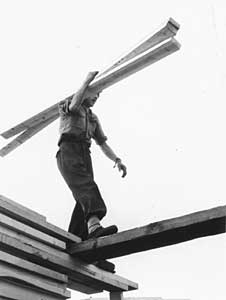
The 1911 census recorded that Edward Britton was working as a deal carrier.
Samuel Treeby’s father, Thomas, was a cordwainer.
In the same way as a lot of today’s job would seem alien to our Victorian and Edwardian ancestors, so too do these long-forgotten roles seem unrecognisable today. In a world where mechanism and automation has taken over much of what was previously done not only by hand, but by someone particularly skilled in that special role.
In the Somerset shoe factories like Clark’s, the roles of boot closer (someone who stitched together all the parts of a shoe upper) and boot finisher (the person who puts the finishing touches to footwear) have disappeared. So too have the lace drawers (children who literally draw out the threads in lace) and lace runners (embroidering patterns in the material) of factories in places like Chard.
The collar cutters and collar ironers (who, as the titles suggest, cut out collars for shirts and those who ironed them in place) of clothing manufacturers in places like Somerton and Shepton Mallet are also gone. Out on the county’s levels, the withy workers and willow plaiters (both making goods from willow switches) have been consigned to history.
Jobs such as chimney sweeps and knocker-uppers are etched into our collective memories because of their portrayals in Dickens’ novels. Some of the other roles that people took on in the late 19th and early 20th centuries are not so well remembered.
In the 21st century, who would be employed as a rink boy, helping ice skaters, like Henry Tottle from Bridgwater? And how easy is it to connect a cowboy from Hollywood’s Wild West with 10-year-old James Butcher tending a herd on the Sussex Downs?
Employment was far more fluid than it is now, and for the average man in the street, careers were harder to come by. In the same way as people took lodgers into their homes to help with the rent, so people took on multiple jobs to get by. In the 1891 census for Buckfastleigh, Devon, James Bowerman was noted as being a grocer, coal dealer and cab proprietor. The 1901 census found Bristol-based Ernest Phillips from Bristol, working as a glass and china shopkeeper, but ten years later he had become an architect’s clerk.
When war came to Europe, seeming menial jobs soon became vital to the military effort. Many agricultural labours would go on to work for the Army Service Corps, although not always staying local. Mine workers, initially placed on reserve status, later found themselves working for the Royal Engineers as sappers. Those who worked with animals in peace time may have been assigned to the Army Veterinary Corps. Those who worked on boats – from fishermen up to Trinity pilots (serving the nation’s lighthouses) were often called up to the Royal Navy or Royal Naval Reserve.
As to the jobs listed at the start, William Parsons’ father worked towing boats on the local canals; Edward shifted loads of wood from the incoming ships to the yards on shore; and Thomas Treeby was a shoemaker.
 Death and Service