
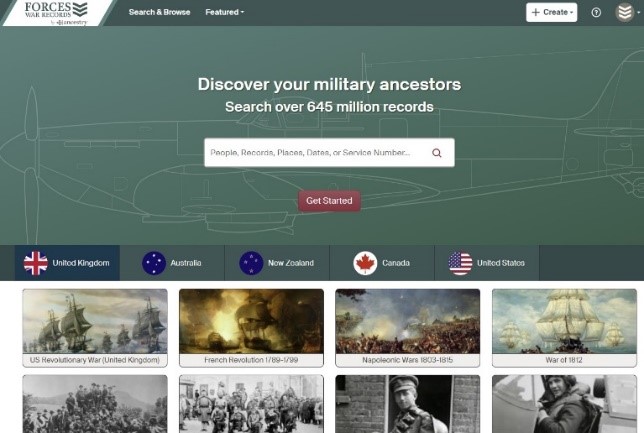
The number of military documents available on Ancestry, and the linked site Forces War Records, is staggering. From attestation papers and service records, to pension records and the records of soldiers’ effects can provide a crucial insight into the life of the person being researched. Where a more general search fails to bring up an information on Ancestry, seemingly insignificant details on military paperwork can – and through personal experience, has – proved to be the piece of the jigsaw that unlocks the whole picture.
How complete the documents are, varies widely from serviceman to serviceman. The bombing of the Second World War destroyed a lot of documentation from the previous conflict, and so for a large number of personnel, their time in the army, navy or air forces is destined to remain lost.
This can mean that information is tantalisingly sparse, although where service records are available, they can build a detailed picture of a serviceman’s life. As a minimum, documents will generally include personal details – name, age or date of birth, place of birth, relationships (parents, spouse, children), pre-enlistment occupation and height, weight and hair/eye colour.

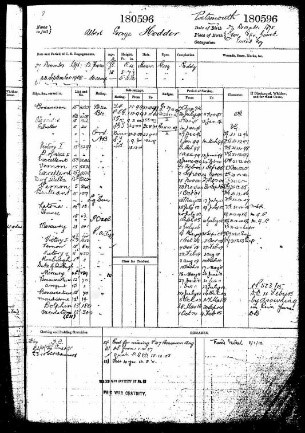
From a service perspective, it is often possible to piece together a chronology of someone’s time in the forces, including rise through the ranks and their place of service (geographical location or ship(s) assigned to). If the serviceman has committed any misdemeanours, these may be highlighted, as are their punishment.
Admissions to hospital might also be recorded and, where someone has been removed from military service because of a medical condition, the documentation may also include their final medical report. When someone has died during the service, it is often possible to find details about their passing: this can vary from the vague ‘death from disease’ to a full inquest report on someone’s suicide. After death there is always paperwork to complete, and it is not uncommon to find a list of the deceased’s personal belongings sent to their next-of-kin, together with a handwritten acknowledgement of receipt from them.
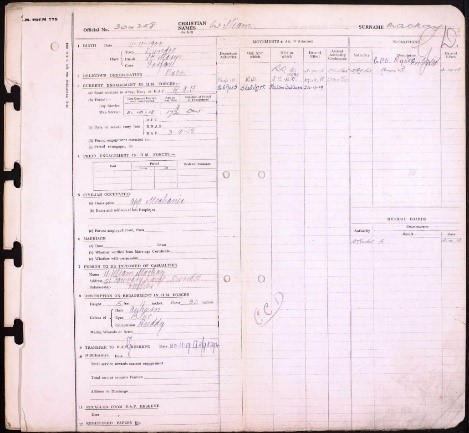
British records can be notoriously sparse, because of the causes listed above, but those from overseas territories are often much more complete. Canadian records are generally much more details, for the simple fact that the paperwork was taken back to North America after the Armistice.
Where service records are absent, the Army Register of Soldiers’ Effects can give clues to the life lived. Alongside the name, rank, service number and regiment, the beneficiary is recorded, as are details of the War Gratuity to be claimed. This was only available once the soldier had completed six months’ service, which can then be used to narrow down when they might have enlisted.
Where army records confirm which regiment and battalion someone was attached to, it may then become possible to identify where they served, and in which battles. Not surprisingly, there is a website that can be used to determine just that…
 Death and Service