
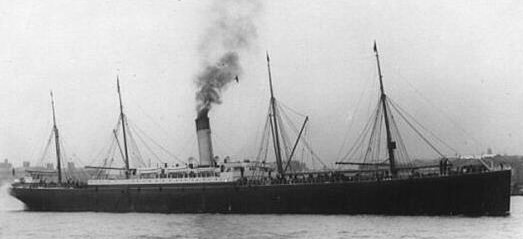
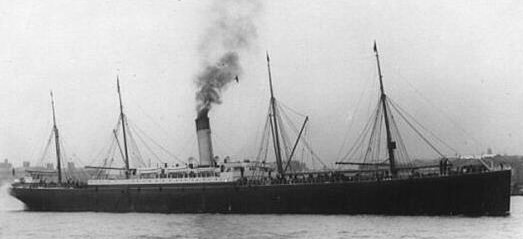
The SS Armenian was a cargo liner, launched in 1895. She had served during the Second Boer War, when she transported prisoners of war and was used to carry horses and mules across from North America to Europe at the start of the First World War.
On 17th June 1915, Armenian left Virginia for Britain: on board were more than 1400 mules destined for the French Army. There were 72 crew on board, as well as 96 hostlers, there to care for the animals during their transport and beyond. Most of the crew were British; the majority of the animal handlers were African American.
On the evening of 28th June, the Armenian was about 20 nautical miles (37km) west of Trevose Head, Cornwall, when she spotted a German submarine. Despite evasive manoeuvres being ordered by the ship’s master, Captain James Trickey, she was hit by around 20 shells. A distress signal was transmitted shortly before the wireless office was destroyed.
After a coupe of hours’ chase, the Armenian was soon dead in the water: the funnel destroyed and the steering gear disabled. Captain Trickey gave the signal to surrendered, by which point thirteen men had been killed. Lifeboats were launched, but two capsized, their occupants thrown into the sea.
In total, 29 people were killed, of which 23 were American. While some were identified – four men from Trickey’s own lifeboat died and were buried at sea – many were not. In the coming days bodies were washed ashore, and were buried unidentified in churchyards closed to where they had been found.
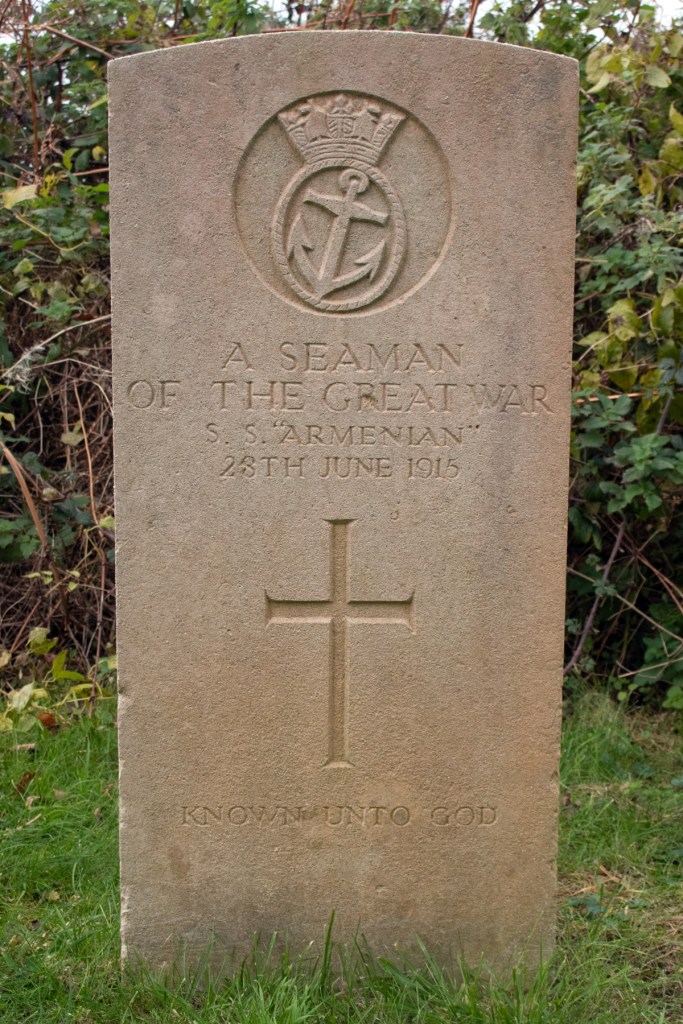
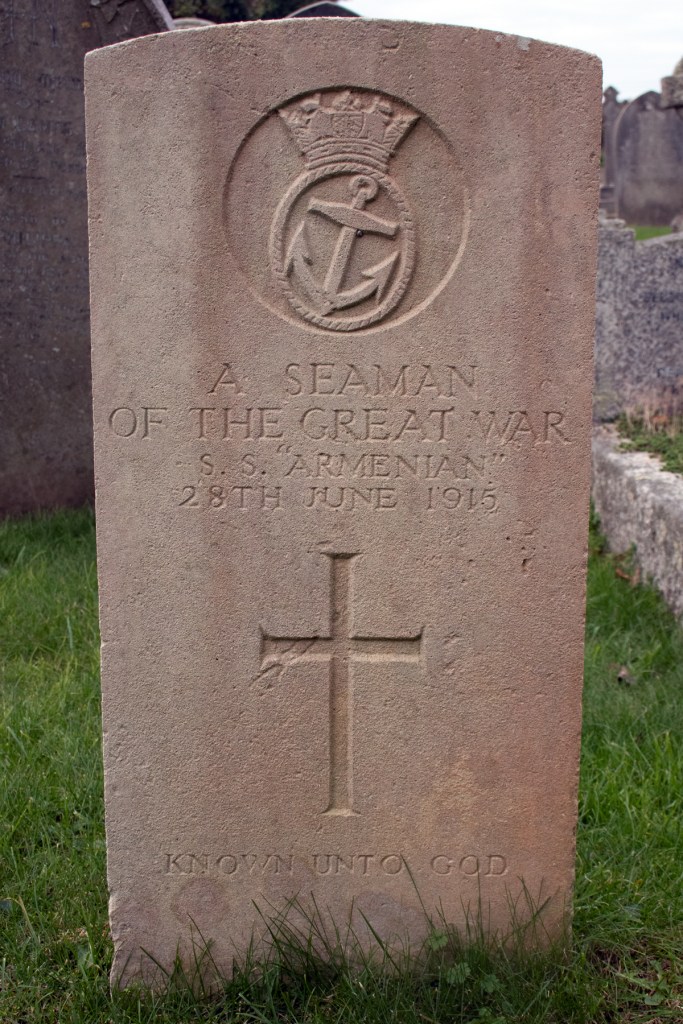
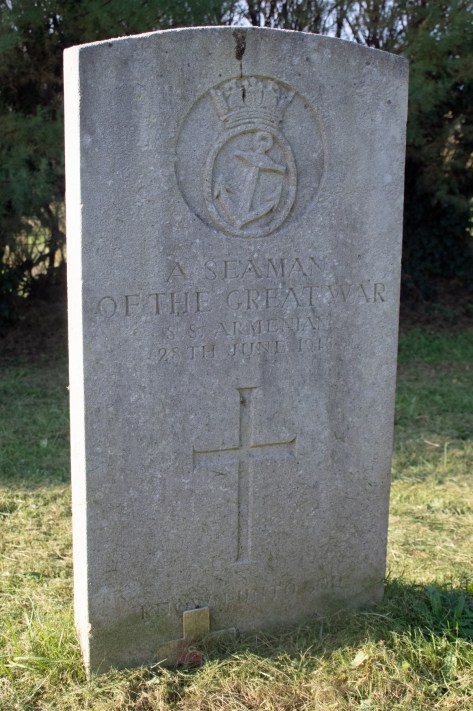
When the Armenian was sunk, the United States was neutral in the European conflict. Her owners – Leyland Line – was majority owned by the US-based International Mercantile Marine Company, and it was suggested that that neutrality had been violated by supplying the allied forces with horses and mules. America was not to declare war on Germany until April 1917.
 Death and Service