
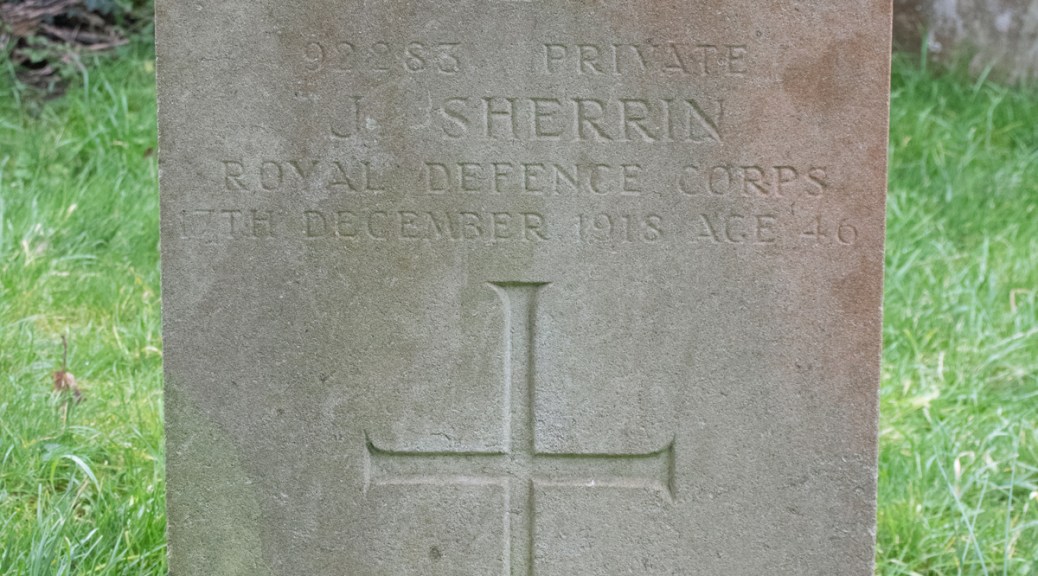
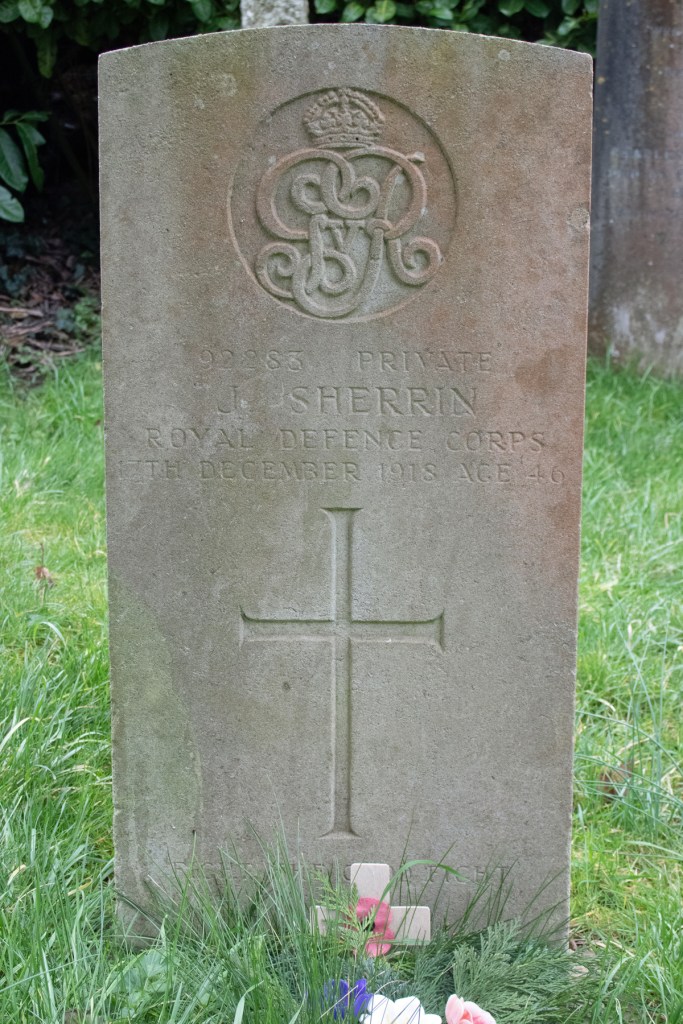
John Sherrin was born in Langport, Somerset, in the summer of 1874. The youngest of three children, his parents were Arthur and Elizabeth Sherrin. Arthur was a cowman and farmer, and John was to follow him into agricultural labouring when he left school.
Arthur took the family where the work was: by the time of the 1891 census, they were living in Broadchalke, a village to the west of Salisbury, Wiltshire. Ten years later, the census notes Arthur and Elizabeth living in Dorset, while John was in Swindon, Wiltshire, working on a farm as a butter churner.
John’s father died in 1906, and Elizabeth went to live with her daughter’s family in Devon. The same year, John returned to Somerset, where he married Bessie Kingsbury. She was a labourer’s daughter from Henstridge, who was working as a domestic servant. The couple went on to have four children – Marleen, Arthur, Albert and Grace.
John’s dairy work kept the family moving, and, according to the 1911 census, the Sherrins were living in a five-room cottage in Sturminster Marshall, Dorset.
When war came to Europe, John had turned 39 years old. He did not initially enlist – presumably because of his farm work – and it seems that he was only conscripted in the closing months of the conflict. He was called up to the Royal Defence Corps during the summer of 1918, and was assigned to 254 Company.
Private Sherrin was sent to an army camp in Tidworth, Wiltshire, and it was here that he served through the Armistice. He was waiting to be demobbed in December 1918, when he was admitted to the camp’s hospital. Details of his condition are unclear, but it was in the hospital that he passed away on 17th December 1918. He was 44 years of age.
While her late husband was serving, Bessie had returned to her family in Henstridge, and it was there that John’s body was brought. He was laid to rest in the graveyard of St Nicholas’ Church in the village.
 Death and Service