Category Archives: Devon

Private Thomas Adams

Private Thomas Adams

Thomas Charles Adams was born on 18th April 1891 in Ilfracombe, Devon. The oldest of four children, his parents were Thomas and Amanda Adams. Thomas Sr was a mason turned builder, but his son seemed keen to carve his own path in life.

On 5th October 1905, Thomas Jr enlisted in the Royal Navy. His papers show that he was 5ft 6ins (1.67m) tall, with dark hair, hazel eyes and a dark complexion. His time with the navy seems to have been brief, he was sent to HMS Impregnable for training, but was discharged on 9th November 1905, the reason given being “Invd”. Later documents suggest that he was dismissed because he was under the regulation chest measurement, but it was likely due to the fact that he had added two years to his age in order to be accepted.

Thomas returned home, and found employment as a fitter. He was not to be deterred, however, and joined the Dorsetshire Regiment as a volunteer. On 30th January 1907 he gave up his job, and enlisted in the army full time. Thomas’ papers give similar physical descriptions to his naval record, but also include his weight, 123lbs (55.8kg).

Private Adams was assigned to the 3rd Battalion, and spent the next two years on home soil. On 5th January 1909, however, the life of adventure he had wanted truly began. His unit was sent to India, and he would remain overseas for more than six years. His time overseas was not without incident, however, and he had four separate admissions to hospital with neuralgia (in April 1909), gonorrhoea (1910 and 1912) and malaria (in 1914).

By May 1915, Thomas was back in Britain. He was still having health issues, however, and he was admitted to Netley Hospital, Hampshire, suffering from tuberculosis. The condition would lead to his discharge from the army, and he was formally stood down on 15th June 1915.

At this point, Thomas’ trail goes cold. It is likely that he returned to his family, who were now living in Combe Martin, Devon. This is where he passed away, on 14th October 1915, at the age of 24 years old.

The body of Thomas Charles Adams was laid to rest in the graveyard of St Peter’s Church, Combe Martin.


Private Augustus Hines

Private Augustus Hines

The funeral of Pte. Augustus Hines, of the Australian Imperial Forces, took place on Monday in Combe Martin Parish Churchyard. Wounded in Northern France, he was sent to a hospital in Middlesex, and when convalescent was granted leave to pay a visit to Mr and Mrs John Dovell, of Glen Cottage, whose two sons, Corpl. Herbert Dovell and Pte. Lewis Dovell, were his comrades in Western Australia, and also in the field of battle. Unfortunately he developed pneumonia, and passed away on August 16th… The coffin was followed by the members of the Parish Council, convalescent soldiers, and a large number of friends, the late soldier’s genial and frank disposition having made him popular during his brief stay in the parish.

[North Devon Journal: Thursday 24th August 1916]

Augustus Hines was born in 1874 in the town of Concord, New South Wales. Details of his early life have been lost to time, but he was the son of Allen and Elizabeth Hines, and had at least one sibling, a sister called Lily.

By the time war was declared, Augustus had moved to the outskirts of Perth, and was employed as a timber worker. He enlisted in the army on 27th September 1915, his service records showing that he was 5ft 6.5ins (1.68m) tall, and weighed 10st 4lbs (65.3kg). He had fair hair, blue eyes and a fair complexion.

Private Hines was assigned to the 28th Battalion of the Australian Infantry and, by the start of 1916, he was on his way to Europe. After a two-month stop in Egypt, Augustus’ unit travelled on to France. They disembarked in Marseilles on 21st March, and headed from there to the Front Line.

Private Hines’ unit was sent to the village of Marle, but he would not remain there for long. Within a matter of weeks he received a gun shot wound to his foot. Initially treated by the 7th Field Ambulance, he was transferred to a hospital in Etaples, then taken to Britain on board the Hospital Ship Brighton.

Augustus was admitted to the 1st Australian General Hospital in Harefield, Middlesex, where he remained for the next six weeks. From there, he was discharged to convalesce, and made his way to his friends’ family in Devon.

It was while he was here that Private Augustus Hines fell ill. He passed away on 16th August 1916, at the age of 42 years old. He was laid to rest in the graveyard of St Peter’s Churchyard, Combe Martin.


Gunner James Cole

Gunner James Cole

James Rees Cole was born in the spring of 1881, and was the oldest of four children to Thomas and Jane. Thomas was a groom from Pembrokeshire, Wales, and, at the time of James’ birth, he and Jane were living the village of Chancery, to the south of Aberystwyth, Ceredigion, Wales.

The 1901 census recorded that the Cole family had relocated to England and had set up home at 15 Woolley Street, Bradford-on-Avon, Wiltshire. Thomas was employed as a domestic coachman, while James, now 19 years old, was an ironmonger’s assistant.

By 1911, James was boarding with widow Sarah Goodman in the Devon village of Withycombe Raleigh, now a suburb of Exmouth. His was engaged by this point, and just a couple of months later, on 5th July, he married his sweetheart, Bessie Livings, in Christ Church, Bradford-on-Avon. The couple went on to have two children, Irene and Dennis.

When war was declared, James stepped up to play his part. He enlisted in December 1915, by which point he and Bessie had moved to Reading, Berkshire. His service papers show that he was 5ft 9ins (1.75m) tall, and weighed 135lbs (61.2kg). He had blue eyes, brown hair and a fresh complexion.

Assigned to the Royal Garrison Artillery, Gunner Cole was not formally mobilised until June 1917. Initially sent to Plymouth, Devon, by the following spring, he had moved to Fareham, ahead of his unit being sent to France. James would spend the next six months in France, before being medically evacuated back to Britain.

Gunner Cole had crushed the metatarsals in his left foot, although his medical notes are difficult to read, it is clear that he was inconsiderable pain. He was admitted to the war hospital in Reading, Berkshire, and remained there for a couple of weeks. When he was discharged, he was transferred to the 2nd Siege Artillery Reserve Brigade in Catterick, North Yorkshire, while he recuperated.

James would only be out of hospital for a matter of weeks. He contracted influenza and was admitted to the camp hospital, but the condition would prove too severe. He passed away on 1st January 1919, at the age of 37 years old.

The body of James Rees Cole was taken back to Wiltshire for burial. He was laid to rest in the graveyard of Christ Church, Bradford-on-Avon, not far from where his widow and children were living.


Stoker 2nd Class George Mead

Stoker 2nd Class George Mead

George Mead was born on 18th September 1900 in the Wiltshire village of Semley. The youngest of eleven children, his parents were police sergeant George Mead and his wife, Rebecca.

The 1911 census recorded the Mead family as having moved to Chapmanslade, near Westbury. George Sr and Rebecca were set up in a five-room cottage, Forest View, with George Jr and two of his older sisters – Edith and Margaret – also living there.

Rebecca passed away when her youngest was just sixteen years of age and, on 12th March 1917, George Jr’s older brother Charlie, a Private in the Worcestershire Regiment, was killed in action while fighting in France. It seems that his younger sibling was keen to prove his mettle before peace was declared and, on the day after his eighteenth birthday, he gave up his job as a carter and enlisted in the Royal Navy.

Stoker 2nd Class Mead’s service records show that he was 5ft 10.5ins (1.79m) tall, with brown hair, blue eyes and a fresh complexion. He was sent off to HMS Vivid – the Royal Naval Dockyard in Devonport, Devon – for his training.

Tragically, George Jr’s time in the navy was to be short. He contracted pneumonia and as admitted to the naval hospital in Plymouth. The illness was to prove too severe, and he passed away on 7th October 1918: he was eighteen years of age, and had been in the Royal Navy for just 18 days.

The body of George Mead Jr was taken back to Wiltshire for burial. He was laid to rest in the extension to St Margaret’s Church, Corsley, not far from where his grieving father still lived.


Private Walter Bourke

Private Walter Bourke

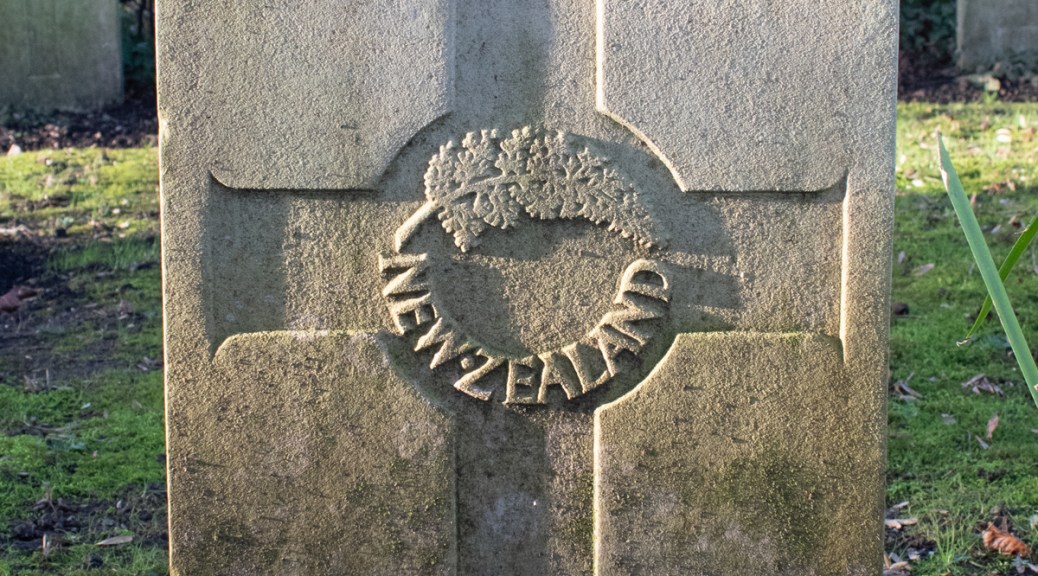
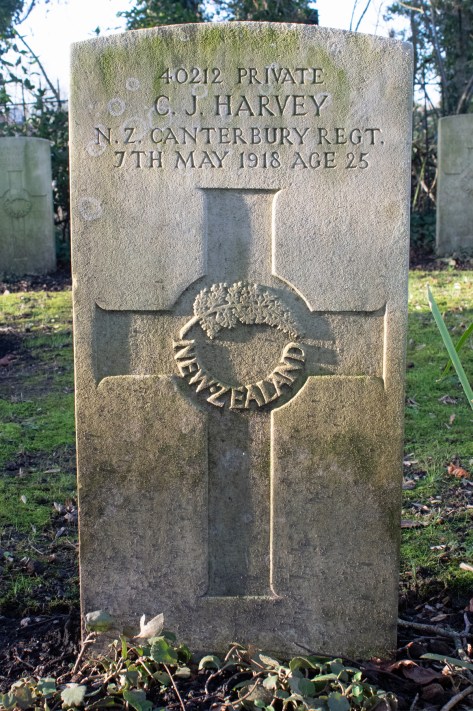
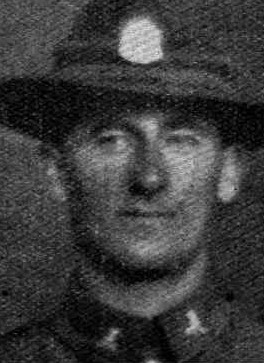
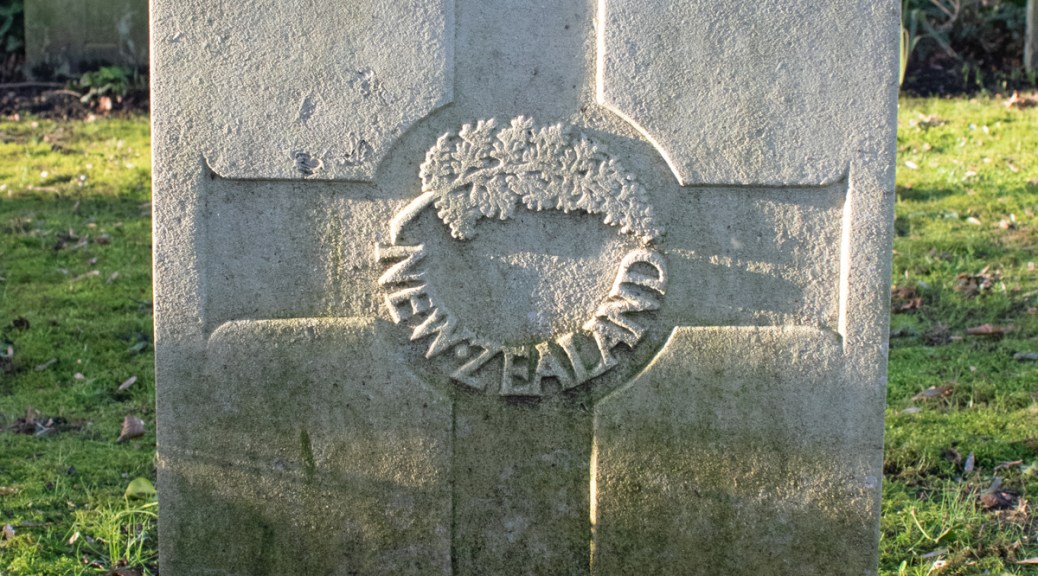
Walter Edward Bourke was born in Whangarei, New Zealand, on 6th May 1885. The fifth of six children, his parents were Patrick and Elizabeth Bourke, who had emigrated from Ireland in the 1870s.

Patrick died in 1911, at the age of 65. Walter, by this point, was working as a chamber hand in a freezing works. When war broke out, however, he was compelled to step up and serve his country. He enlisted on 22nd January 1917, and was assigned to the New Zealand Auckland Regiment.

Trained at Trentham, Private Bourke’s unit set sail for Europe on 12th June 1917. The voyage from Wellington to Devonport would take two months and, from there Walter was marched into a camp in Sling, near Bulford, Wiltshire.

Within a matter of weeks, Walter fell ill. He was sent to the No. 3 New Zealand Hospital near Codford, Wiltshire, but his condition worsened significantly over the next month. His treatment would prove fruitless, and Private Bourke passed away on 25th October 1917: he was 32 years of age.

Thousands of miles from family, Walter Edward Bourke was laid to rest in the extension to St Mary’s Church graveyard, not far from the hospital in which he had passed.


Stoker Herbert Barber

Stoker Herbert Barber

The early life of Herbert Frederick Barber is a challenge to unpick. His navy service papers confirm that he was born on 12th December 1877 in Great Billing, Northamptonshire. His is not an uncommon name for the area, and Herbert Barbers appear on a number of census records. His parents are likely to have been shoe maker Frederick Barber and his wife, Jane.

In the summer of 1898, Herbert married Agnes Wood. He had found work as a bricklayer’s labourer by this point, and had set up home in Weston Favell, to the east of Northampton town centre. Agnes was a farm labourer’s daughter from nearby Great Billing: the couple went on to have six children – of whom four survived infancy.

The 1911 census found the Barber family – Herbert, Agnes and children Edith, Lilian, Fred and James – living in a five-roomed house in Weston Favell. Herbert was still labouring, but gave his employer as the navy.

When war broke out, Herbert stepped up to serve his country. He enlisted on 22nd September 1915, and his service records give his occupation as a gas stoker (although this was crossed out and replaced with “feller’s mate”). He was recorded as being 5ft 8.5ins (1.74m) tall, with grey hair, blue eyes and a fair complexion.

Herbert took on the role of Stoker 1st Class, and was sent to HMS Victory – the Royal Naval Dockyard in Portsmouth, Hampshire – for his training. He remained there for six months – including ten days in the cells for an unrecorded offence – before being sent down the coast to Dartmouth in Devon.

Stoker Barber remained on-shore for his naval career. By July 1917 he had returned to Portsmouth, and this is where he would stay for the next fourteen months. In the summer of 1918 he fell ill, and was admitted to the Royal Naval Hospital in Haslar with pneumonia. The condition would prove his undoing: he passed away on 7th September, at the age of 40 years old.

Barber, Pte. [sic] HF, husband of Mrs Barber of Weston Favell, and son of Mr and Mrs F Barber, Great Billing, died of pneumonia on September 7, after four days’ illness at RN Hospital, Haslar.

[Northampton Mercury – Friday 20 September 1918]

The body of Herbert Frederick Barber was taken back to Northamptonshire for burial. He was laid to rest in the Great Billing Roman Catholic Cemetery.


Agnes was left to raise her children alone. The 1939 England and Wales Register found her living at 10 High Street, Weston Favell, next door to her son Fred and his family. Working as a small shop keeper, she also had two boarders to bring in some additional money.

Agnes lived on until the age of 98: she died on 27th February 1975.


Ordinary Seaman Harold Vernon

Ordinary Seaman Harold Vernon

Harold William Vernon was born on 23rd March 1896. The older of two children, his parents were John and Julia Smith. Harold’s early life is a bit of a mystery: the 1901 census found him living with mother, who was running their newsagent and tobacconist on Wilberforce Road, in their home town of Leicester, Leicestershire. John is absent from the census, and Julia died in 1908. On the following census return, taken in 1911, all of the remaining members of the Vernon family are noticeable only by their absence.

In January 1913, Harold joined the Royal Navy. He had been working as a turner by this point, but a life on the oceans seemed too good an adventure to pass up. Und the age to formally enlist, he was given the rank of Boy 2nd Class, and sent to HMS Vivid, the Royal Naval Dockyard, for his training.

Boy Vernon must have shown promise, because he was promoted to Boy 1st Class just four months after enlisting. He was assigned to the battleship HMS Prince of Wales in May 1913, and transferred to HMS Bulwark, another battleship, that autumn. In March 1914, Harold came of age, and was formally inducted into the Royal Navy. His service papers show that he was 5ft 3ins (1.6m) tall, with light brown hair, brown eyes and a fresh complexion. He was also recorded as having a scar on the middle of his right arm, a large mole above his navel and two further moles on either side of his neck.

When war broke out, Bulwark was assigned to the Channel Fleet, whose task was to protect Britain’s southern shores. On 26th November 1914, she was moored in the River Medway, close to Sheerness, and was being reloaded with ammunition. Deep in the ship’s stores, a number of the charges overheated and detonated, causing a chain reaction in the bowels of the battleship. The resulting explosion ripped through the battleship, and more than 740 crew were killed. Ordinary Seaman Vernon amongst them: he was just 18 years of age.

A mass funeral was held in the Woodlands Cemetery, Gillingham, Kent, not far from the dockyard in Chatham. Harold William Vernon was laid to rest in a marked grave, a burial not afforded to the those unfortunate individuals whose bodies had not been identified.


Able Seaman Albert Freeman

Able Seaman Albert Freeman

Albert John Freeman was born on 11th November 1895 in the Sussex town of Chichester. The twelfth of thirteen children, his parents were bricklayer Richard Freeman and his wife, Fanny.

When Albert finished his schooling, he found work as a barber’s assistant, but, having seen his older brother William make a career at sea, he decided to follow suit. He joined the Royal Navy on 27th January 1913, and, being underage, he was taken on with the rank of Boy 2nd Class.

Albert was sent to HMS Vivid, the navy dockyard in Devonport, Devon, for his training. He was obviously a quick study, and was promoted to Boy 1st Class just four months later. With the rise in rank came a posting, on board the battleship HMS Prince of Wales. He remained aboard for just five months, before being reassigned to another battleship, HMS Bulwark.

Boy Freeman would spend the next year assigned to Bulwark and, during this time, he came of age. Now formally inducted into the Royal Navy, his service papers show that he was 5ft 5ins (1.65m) tall, with brown hair, grey eyes and a sallow complexion. He was also noted as having a small burn scar on the back of his neck.

The now Ordinary Seaman Freeman’s naval career was beginning to take off, although his reviews were not so promising, noting a very good character and a satisfactory ability. Despite this, Albert gained a further promotion, to Able Seaman, on 15th October 1914.

Bulwark was a part of the Channel Fleet, whose task was to protect Britain’s southern shores. On 26th November 1914, she was moored in the River Medway, close to Sheerness, while she was being reloaded with ammunition. Some of the explosives overheated, causing a chain reaction in the stores. The resulting explosion ripped through the battleship, and more than 740 crew were killed. Able Seaman Freeman’s was one of those bodies to be recovered: he was just 19 years of age.

Those who were killed in the explosion were laid to rest during a mass funeral in Woodlands Cemetery, Gillingham, Kent. As his body had been identified, Albert John Freeman was laid to rest in a marked grave.


Able Seaman Albert Freeman
(from ancestry.co.uk)

Albert’s brother, William, also made a career for himself, rising to the rank of Able Seaman a year before his sibling. During the First World War he was assigned to the cruiser HMS Hampshire, and was killed when an explosion caused her to sink off the Orkney Islands on 5th June 1916.

Able Seaman William Freeman
(from ancestry.co.uk)

Able Seaman Albert Dobson

Able Seaman Albert Dobson

Albert Dobson was born in Bridlington, Yorkshire, on 7th April 1896. One of seven children, his parents were John and Annie Dobson. John was a bricklayer, and, when he completed his schooling, Albert was apprenticed to him. The 1911 census found the family living in a small terraced house at 55 St John’s Walk, on the outskirts of the town.

Bricklaying was not what Albert wanted from a career and, on 19th July 1913, he enlisted in the Royal Navy. Below the age to formally enlist, he was taken on with the rank of Boy 2nd Class, and sent to HMS Vivid – the Royal Naval Dockyard in Devonport, Devon, for his training.

Over the next nine months, Albert learnt the tools of his trade. Promoted to Boy 1st Class in October 1913, he spent time on board the battleship HMS Irresistible, before moving to HMS Pembroke, Chatham Dockyard in Kent. While he was there, he came of age, and was fully inducted into the Royal Navy as an Ordinary Seaman. Albert’s service papers show the man he had become: he was 5ft 7ins (1.7m) tall, with brown hair, blue eyes and a fresh complexion.

In April 1914, Ordinary Seaman Dobson was assigned to the new cruiser HMS Lowestoft. She would become his home for the next two years, and, while his annual reviews were average (character varying from good to very good and ability from moderate to satisfactory), he did gain a promotion to Able Seaman on 26th April 1915.

A singular fatality to a naval seaman names Albert Dobson, age 30 [sic], a native of Bridlington, was investigated at the Royal Naval Hospital, Chatham, on Monday. On October 20th, Dobson was one of a working party engaged on a battleship in the Dockyard, when, owing to the breaking of a plank, he and three men fell a distance of about eight feet. The knee of one of the men caught him in the stomach, with the result that he sustained a rupture of the spleen. In hospital he developed pneumonia, and died. A verdict of “Accidental Death” was returned.

[Kent Messenger & Gravesend Telegraph: Saturday 2nd December 1916]

Able Seaman Dobson’s service papers confirm that the incident occurred as the men were transferring a torpedo from HMS Illustrious. He was just 20 years of age when he died on 23rd November 1916.

The body of Albert Dobson was taken to Woodlands Cemetery in Gillingham, Kent, close to the dockyard he had come to know as home. He was laid to rest in the graveyard’s naval section.


Petty Officer 1st Class Edward Grant

Petty Officer 1st Class Edward Grant

The early life of Edward Grant is a challenge to piece together. Born on 14th May 1863 in Newington, Surrey, he was the son of Thomas and Eliza Grant. The family do not appear on any census records, and it is only when Edward joined the Royal Navy in 1878 that he appears on any documents.

Edward’s service papers tell the story of a young man focused on his career. Underage when he joined up, he was given the rank of Boy 2nd Class, and sent to HMS Impregnable, the school ship based in Devonport, for his initial training. He remained on board for over a year, and rose to Boy 1st Class during that time.

Edward’s first full sea-going assignment was on board the screw corvette HMS Ruby. He would be assigned to her for eighteen months, during which time he came of age. Formally inducted into the Royal Navy, he took the rank of Ordinary Seaman. His service records show that he was a little over 5ft (1.53cm) tall, with brown hair, great eyes and a fair complexion.

Ordinary Seaman Grant’s contract was for ten years. During this time, his commitment to the job was clear: serving on a total of right vessels, he was promoted to Able Seaman in December 1882, Leading Seaman in October 1888 and Petty Officer 2nd Class in December 1889.

When his contract came to an end, Edward did not hesitate to re-enlist. He completed another decade of service, spending much of that time as a Boatman for the Coastguard on the Northumbrian coast.

It was while he was serving in Crastor that he met Elizabeth Smailes. She was a grocer’s daughter from nearby Dunstan, and the couple married in Alnwick on 14th February 1893. Edward and Eliabeth would go on to have five children, all girls, between 1896 and 1907.

By the time of the 1901 census, the Grants family were living in the Royal Naval Reserve Barracks in Hartlepool, County Durham. That November Edward was formally stood down to reserve status, having completed 20 years with the Royal Navy.

The 1911 census found Edward and the family living at the Guardians Offices at Hart Road in Hartlepool. A naval pensioner, he was employed as a caretaker for the town’s Board of Guardians, and the accommodation came with the job. Also living with them was Elizabeth’s mother, 83-year-old widow, Jane Smailes.

When war broke out, Edward stepped up to play his part once more. Now 51 years of age, he took on the role of Petty Officer 2nd Class once more: his papers show that he was now 5ft 5.5ins (1.66m) tall and had tattoos of a sailor woman and the words True Love on his left arm.

Petty Officer Grant remained firmly shore based, and was billeted at HMS Pembroke, the Royal Naval Dockyard in Chatham, Kent. He served for three years, and was promoted to Petty Officer 1st Class in May 1916.

On 9th April 1917, Edward Grant collapsed at his barracks. His passing was quick: he died of an aortic aneurysm and haemorrhage. He was 53 years of age. His body was laid to rest in the naval section of Woodlands Cemetery in Gillingham, not far from the naval base he had known for so many years.