Edward William Larraman was born in Rochester, Kent, in December 1882. The third of seven children, he was one of five sons to Alfred and Mary Larraman. Alfred was a mariner who died when Edward was just ten years old.
Mary took work as a housekeeper, moving the family from their home at 4 Davis Square to rooms at 18 Northgate. Edward is missing from the 1901 census but, with later service records suggesting he volunteered with the Royal West Kent Regiment, it is possible that he was training with them when the return was taken.
The military life seemed to suit Edward and, on 4th November 1902, he gave up his job as a riveter to formally enlist, joining the Army Service Corps as a Private. His service papers from that time show that he was 5ft 4.5ins (1.64m) tall and weighed 120lbs (54.4kg). Hr was noted as having light brown hair, blue eyes and a fresh complexion.
Private Larraman spent the next four years on home soil, using the opportunity to gain a 3rd Class certificate in education, and rising to the rank of Lance Corporal.
On 23rd December 1907, Edward married Mabel Green. Born in Chatham, she was the daughter of a carpenter. The couple set up home at 3 Almon Place, Rochester – just a short walk from where Mary was living – and went on to have two children, Irene (born in 1908) and Thora (born in 1915).
Lance Corporal Larraman was medically discharged from the army on 18th May 1908. While it is unclear what affliction meant he was no longer fit to serve, he was awarded a pension for his service.
The next census, taken in 1911, found him and Mabel living in Almon Place with Irene and Mabel’s father Henry, and brother, George. Edward was listed as an army pensioner, while there were two salaries coming into the household: Henry was a carpenter and joiner at Chatham Dockyard, while George was a shop assistant.
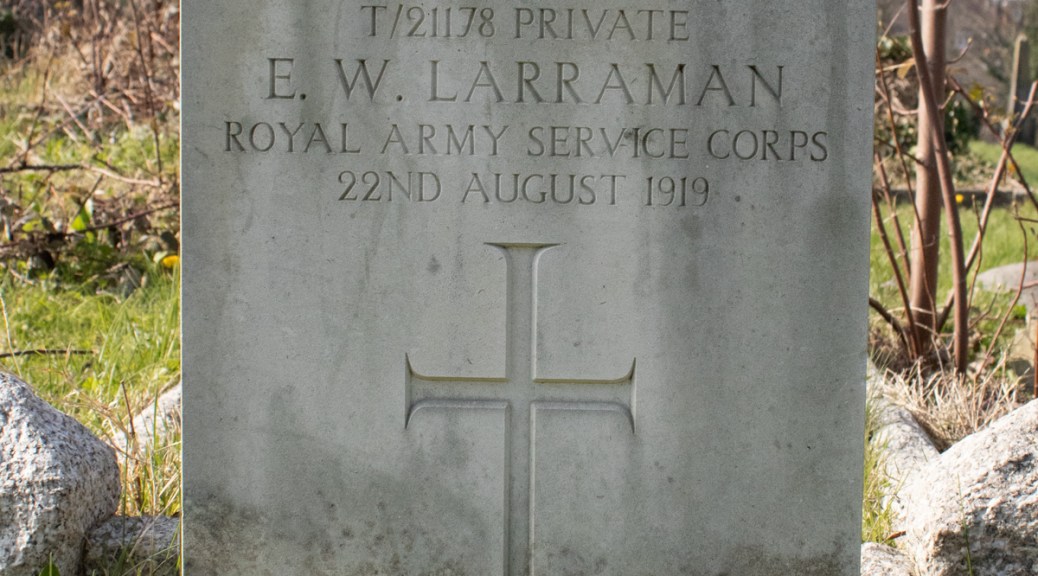
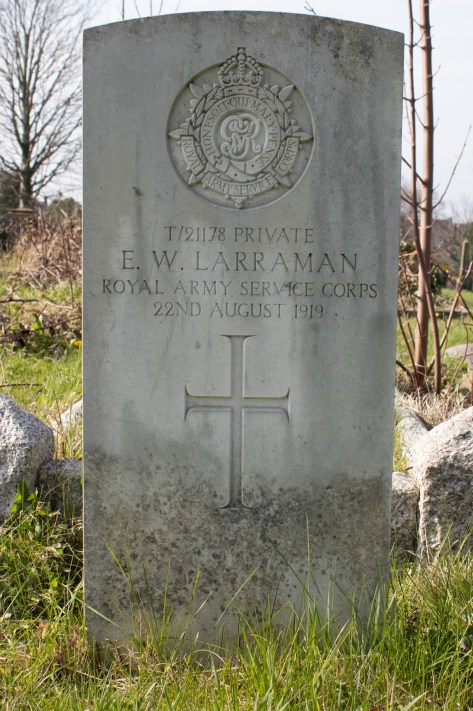
At this point, Edward’s trail goes cold. It is clear that he re-enlisted when war broke out, although in what capacity, and for how long, is unclear. The only other record for him is that of his passing, on 22nd August 1919: he was 36 years of age.
The body of Edward William Larraman was laid to rest in St Nicholas’ Cemetery, Rochester, a short walk from where his family were still living.
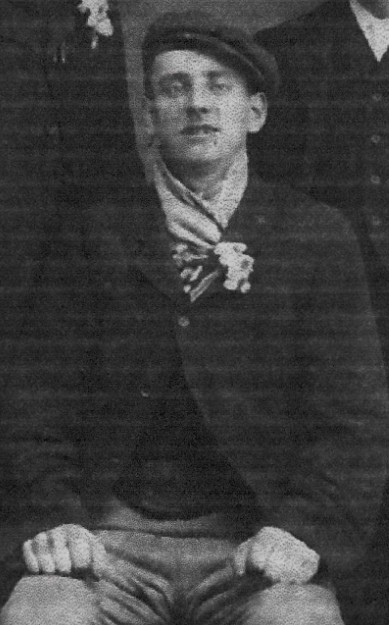
(from ancestry.co.uk)