
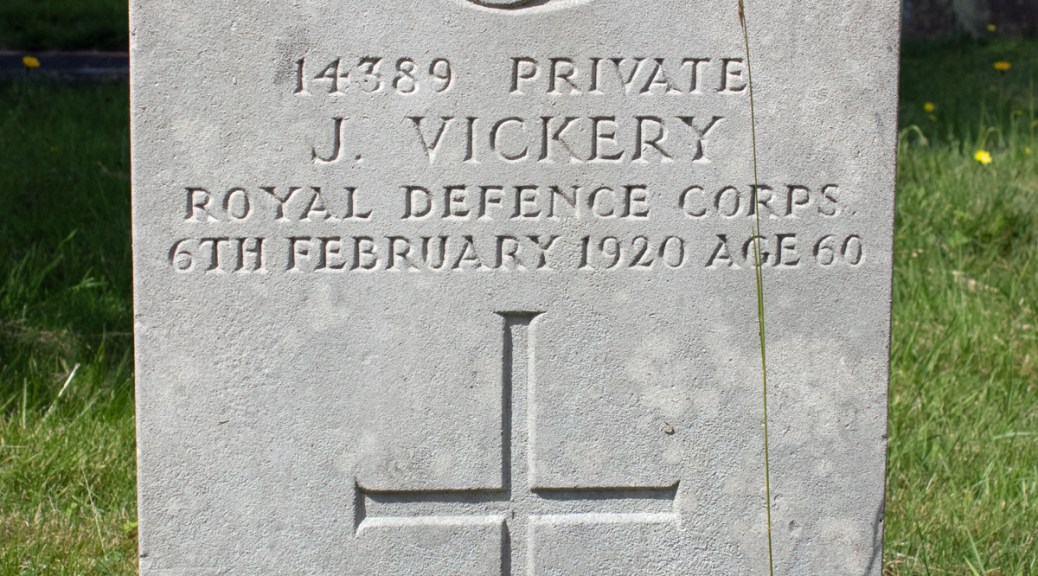
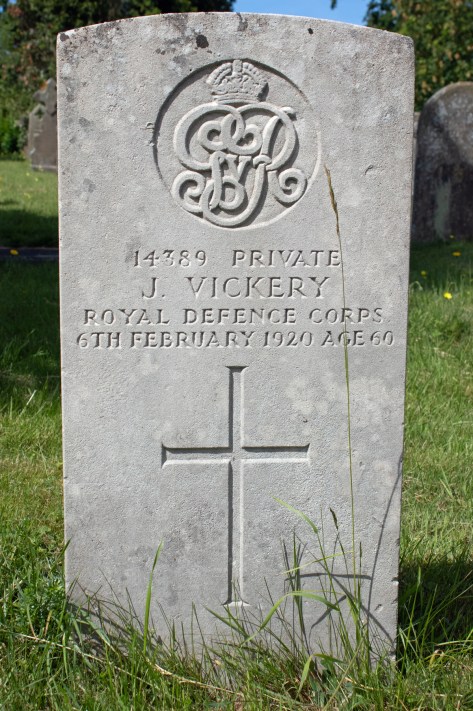
James Vickery was born in the spring of 1859, in the Gloucestershire village of Tidenham. The second of eleven children, his parents were Richard and Ann Vickery. Richard was a quarry worker, and continued in this role into his 60s. It was a job than many of his sons, including James, would go into as well.
James sought a bigger and better life for himself, however, and enlisted in the army. His military records have been lost to time, sadly, but he was absent from the 1881 census, and his marriage certificate gives his profession as soldier. James married Lucy Brown on 25th December 1884, the couple exchanging vows in St Mary and St Peter’s Church in their home village.
By the time of the 1891 census, James had stepped back from army life, and returned to the quarries. He and Lucy had three children by this point, and were living at 4 Pen Moel Terrace in Tidenham.
Lucy died in 1898, and her and James’ children were looked after by her parents, while James was working. They lived in the same row of cottages, and, in fact, were just two doors down, according to the 1901 census. James would find love again, marrying Margaret Roberts in April of that year. The couple would have two children of their own, bringing the extended family to nine siblings.
The 1911 census recorded James and Margaret, who was thirteen years younger than her husband, living at Yew Tree Cottage in their home village. James was still employed as a quarryman, but war was on the horizon, and, being the old soldier that he was, he wanted to serve his country again.
Given his age at the time, James was not required to join up, but he did so anyway, enlisting on 28th July 1915. He was assigned to the Royal Defence Corps – a territorial regiment that had a focus on older recruits -and was attached to the 301st Protection Company.
There is little information about Private Vickery’s time in the army. His unit formed part of the Western Command, and so he would have served close to home, if he had to leave home at all. By this point, his ageing body was starting to rebel. Over the winter of 1916 rheumatism had set in, and this would lead to his ultimate discharge from the service. He was stood down on 28th March 1919, and returned to civilian life.
At this point, James’ trail goes cold. He returned home, but it is unclear whether he was well enough to return to the quarry. Ultimately, time took its toll, and James passed away on 6th February 1920: he was 60 years of age.
The body of James Vickery was laid to rest in the graveyard of St Luke’s Church, Tutshill, not far from where Margaret was now living.
The war had already brought tragedy to the Vickery family. James and Edith’s son George had been born in the summer of 1895 and, when war broke out, he enlisted in the Royal Welsh Fusiliers.
Attached to the 9th (Service) Battalion, Private Vickery quickly found himself on the Western Front. He was injured during the Battles of the Lys in 1918, and died of his wounds in the 64th West Lancashire Field Ambulance on 29th April. He was 22 years of age.
The body of George Vickery was laid to rest in Vlamertinghe New Military Cemetery, Ypres.

