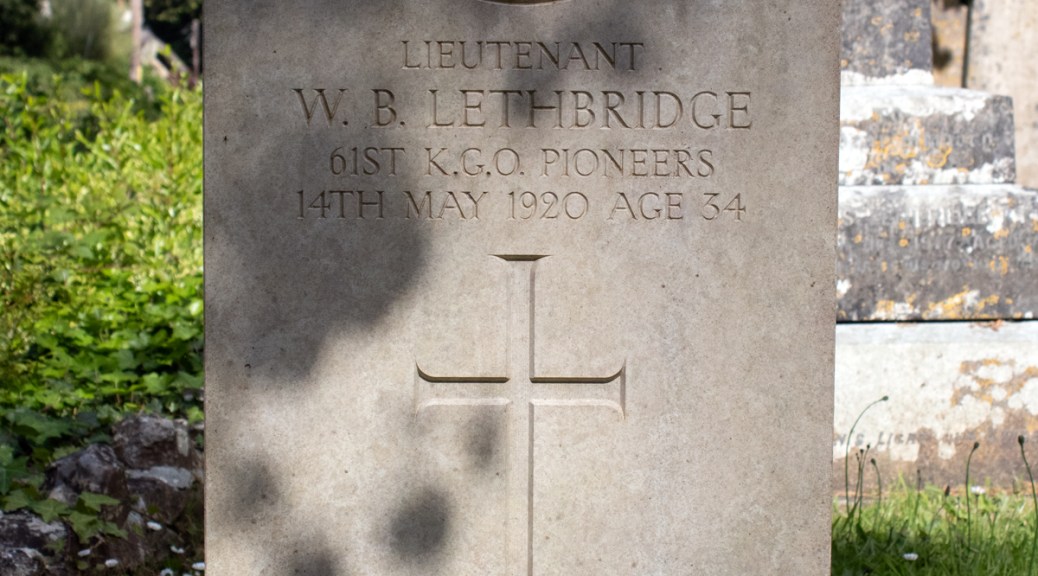
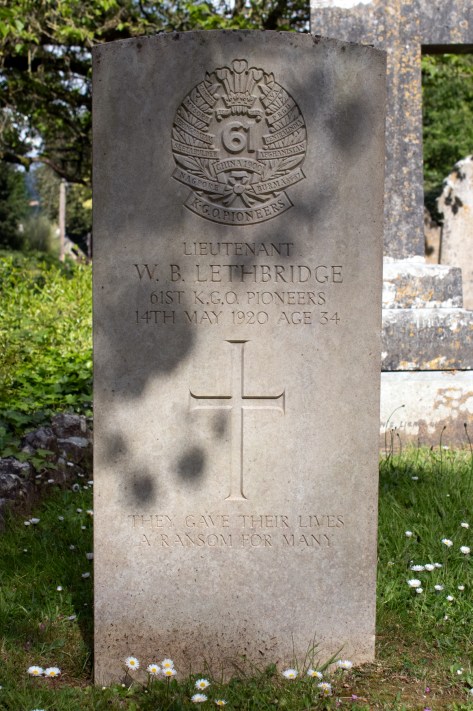
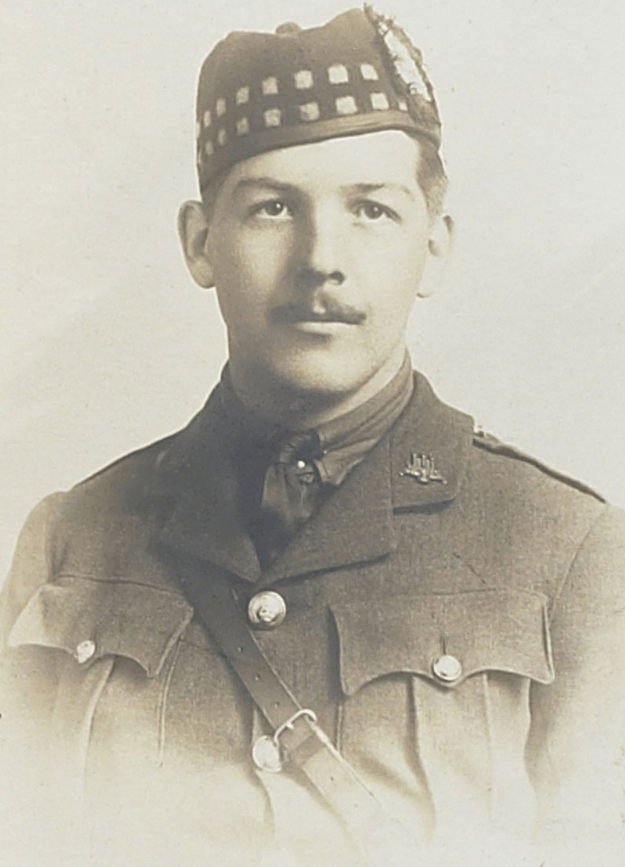
William Bernard Lethbridge was born in Cheltenham, Gloucestershire, in the summer of 1886. The seventh of eight children, his parents were Robert and Mary Lethbridge. William’s baptism record gives his father’s profession as gentleman, while the 1891 census return gives him as being an indigo merchant.
The family were living in Bedford by this point, in a large house on Shakespeare Road. The oldest of the children was 13, but the family had two live-in servants, and shared their neighbourhood with army surgeons, wine merchants and barristers.
Robert died in 1897, and at this point, the family’s trail goes frustratingly cold. Mary and three of her daughters pop up in 1911, living in Kensington, Middlesex, but of William there is no sign. It may be that he travelled abroad, either with the army, or for business, but with no documentation to support this, it remains speculation.
Lieutenant Lethbridge’s probate record confirms that, at the time of his passing, he was living in the Devon village of Musbury, but passed away in the village of Murtle, near Aberdeen, Scotland. The CWGC documentation states that he died on 14th May 1920 from a sickness contracted in German East Africa. During the war he was connected to the 61st King George’s Own Pioneers, and this unit of the Indian Expeditionary Force was based in Africa during the conflict.
The body of William Bernard Lethbridge, who was 33 years old, was taken back to Devon for burial. He was laid to rest in the tranquil setting of St Michael’s Churchyard, Musbury.
William’s younger brother, Patrick, also served in the First World War. A former medical student, he went on to become a Captain in the King’s Own Scottish Borders.
Captain Lethbridge was killed on 25th September 1915, during the Battle of Loos. Just 27 years of age, he is commemorated on at Dud Corner Cemetery.
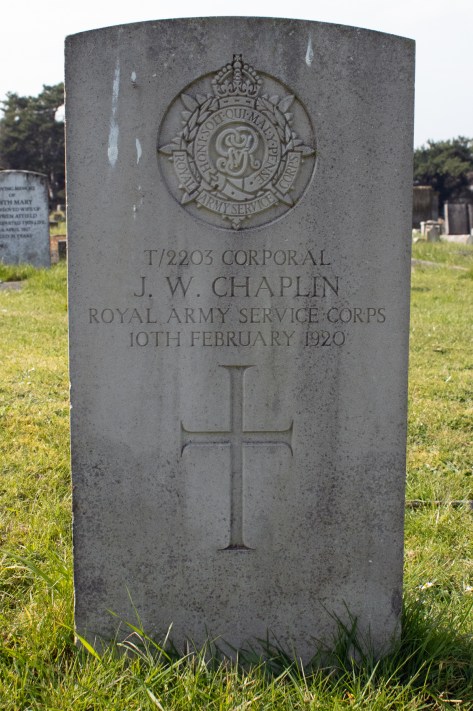
An inquest was held on Thursday at the Guildhall, Rochester… on the body of John William Arthur Chaplin (28)… who hanged himself in the lavatory on Tuesday. Deceased was a demobilised soldier and had served in France and Egypt during the war.
Mrs Sarah Jane Chaplin stated that lately her son had complained of pains in the back of his head. Usually he was of a cheerful temperament. Since leaving the Army he had spent his grstuity and being without money and our of employment he became depressed.
George William Lewis Paterson, deceased’s cousin who occupied the same bedroom with deceased, stated that at 10.40pm on Monday, deceased was reading a paper in the kitchen. Witness when to bed and awoke at 5.30am to find deceased had not been to bed. The light downstairs was still burning. In the lavatory he found deceased handing by the neck…
A verdict of “Suicide whilst of unsound mind” was returned.
[Chatham, Rochester and Brompton Observer: Saturday 14th February 1920]
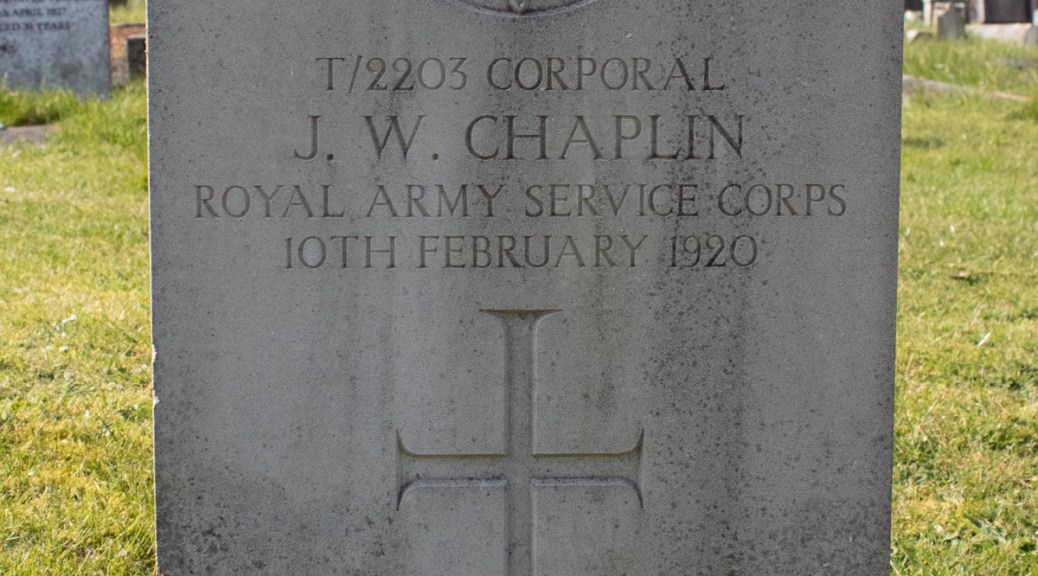
The life of John William Arthur Chaplin remains frustratingly elusive. He does not recognisably appear on any census return, and, while it is clear that he served in the Army Service Corps as a Corporal, his military records are no longer available.
The body of Corporal Chaplin, the former solder with nowhere to turn, was laid to rest in St Margaret’s Cemetery, Rochester, Kent.
William Henry John Hancock was born in the autumn of 1896 in the Wiltshire village of Semington. One of three children – although one of his siblings had died before he was born – his parents were Henry and Alice Hancock. Henry’s line of work seemed to change over time: William’s baptism record notes he was a baker; the 1901 census suggests he was a poulterer and fishmonger; by 1911 he is recorded as being a market gardener.
William was recorded in census records as John, although his family and friends called him Jack. The 1911 document confirms that, at 14 years of age, he had completed his schooling and was employed as a rubber worker at the local India Rubber factory. His older brother, Richard, was also working, though as a wood trellis maker in a local saw mill. The Hancock family had also taken in two lodgers: William Haines was also a rubber worker, while Herbert Reynolds was employed at the saw mill as well.
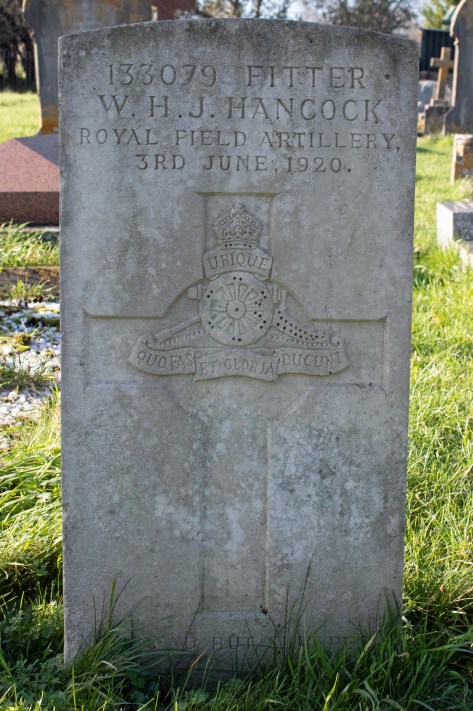
When conflict broke out in Europe, William – Jack – was called upon to play his part. Full details of his service have been lost to time, but it is clear that he enlisted in the Royal Field Artillery as a Fitter, and was assigned to B Battery of the 2nd Reserve Brigade. A territorial unit, it seems likely that he was assigned to them while recovering from an illness contracted overseas. By 21st December 1918, Fitter Hancock had been discharged from service, as he was physically unfit to continue.
Jack returned home to Wiltshire, and is likely to have tried to pick up on his previous life. His health had been impacted, however, and he passed away after “a short illness” [Wiltshire Times and Trowbridge Advertiser: Saturday 12th June 1920] on 3rd June 1920: he was 23 years of age.
The body of William Henry John Hancock – Jack to his friends – was laid to rest in the graveyard of St George’s Church in his home village.
As an interesting aside, a newspaper reported on a luck escape that Henry had had back in 1911:
Last week Mr Hancock, of Semington, on going to the fowl cote found a snake quite a yard and a half long, and as thick as one’s arm. It had a toad in is mouth, and was seen to make a hasty meal of this. Mr Hancock killed the unwelcome visitor with a hay-fork
[Devizes and Wilts Advertiser: Thursday 13th July 1911]
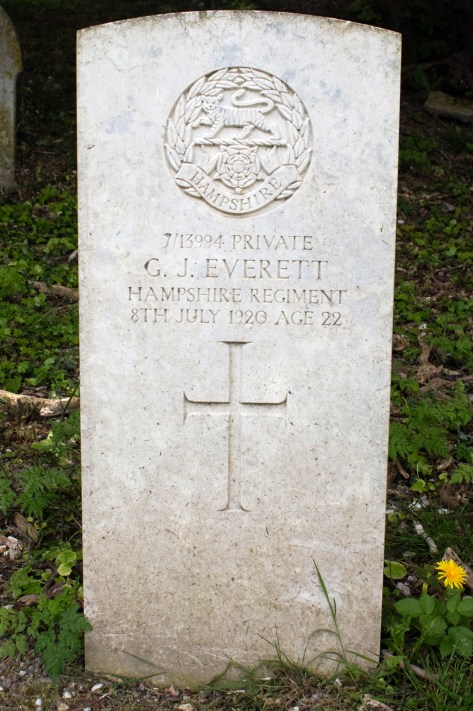
George James Everett was born in Fordington, Dorset, on 3rd July 1898. The fifth of six children, his parents were Frank and Jane Everett. Frank was a shepherd, and farm work was a trade into which at least two of George’s older siblings went.
George was only sixteen at the outbreak of the First World War, and so had to bide his time before he could serve his country. This he did, however, enlisting in the Hampshire Regiment on 24th July 1916. Assigned to the 52nd (Graduated) Battalion, he was sent to Canterbury, Kent for his training.
Private Everett’s time in the army was not to be as much of an adventure and he might have hoped. He spent his time on home soil, and, by the end of 1917, his health wasn’t standing up to the rigours of army life. George had contracted tuberculosis, and the contagious health condition led to his discharge from the military service on 5th December.
At this point, George’s trail goes cold. He returned to home to recuperate, and back at home, he fell in love. Amelia Aylen had been born in Beckenham, Kent, and it seems that she may have moved to Dorset to live with her brother, , Thomas, who had found farm work there. George and Amelia married in Blandford Forum on 3rd March 1919, and had a son, George Jr, that September.
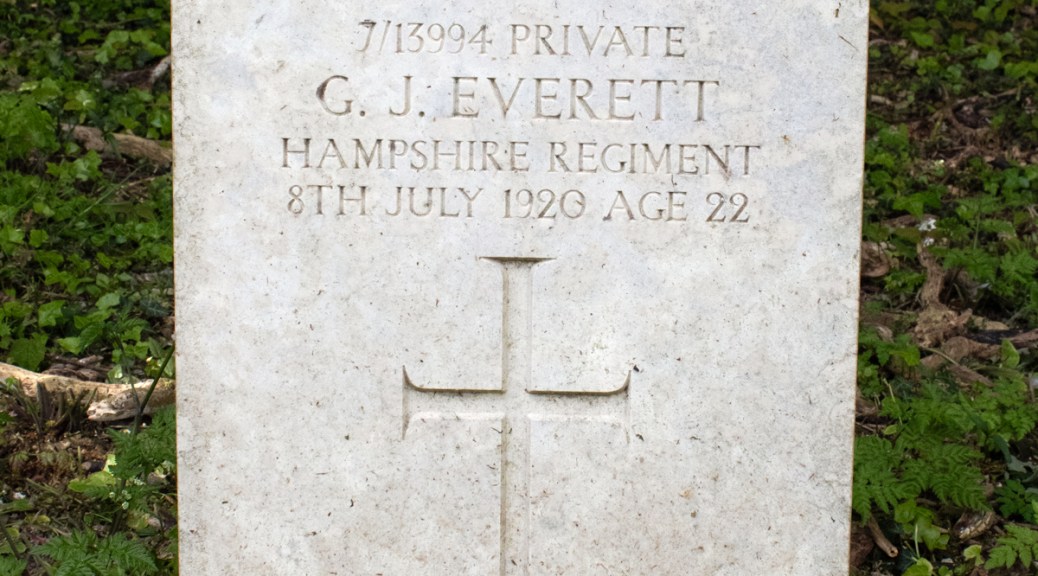
George’s health would ultimately get the better of him. He passed away from tuberculosis and exhaustion on 8th July 1920: he had turned 22 years old just a few days before.
The body of George James Everett was laid to rest in the graveyard of St Peter’s Church in the village of Pimperne, to the north of Blandford.
As George and Amelia had been married after his discharge from the army, she was not eligible for his war pension. The 1921 census found her working as a servant for a retired army major in Wiltshire, while George Jr was being raised by her brother’s family.
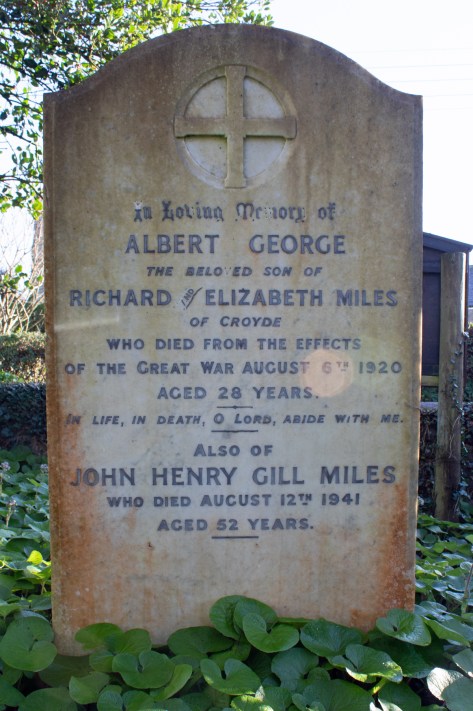
Albert George Miles and his twin Judith Ann Miles were born on 8th August 1893 in the Devon village of Georgeham. Two of five siblings, their parents were labourer and road contractor Richard Miles and his wife, Elizabeth.
When Albert finished his schooling, he found work as a farm labourer, but when war broke out, he was keen to play his part. There is little information about his time during the conflict, but it is clear that he enlisted in the Royal Engineers and attached to the 315th Field Company. According to a later newspaper report, he served in both France and Germany.
Pioneer Miles survived the war, and was medically discharged from army duties on 10th November 1919, almost exactly a year after the Armistice was signed. He returned home, but was dogged by illness.
Great sympathy has been manifested towards Mr and Mrs R Miles, of Croyde, in the loss of their youngest son, Albert George, who passed away last Friday, aged 27. The deceased served in the RE… during the war, but had not been well since he came home. However, he took to his bed only a fortnight before he died. He then sank rapidly.
[North Devon Herald: Thursday 12th August 1920]
Albert George Miles died on 6th August 1920, two days before his and Judith’s 28th birthdays. He was laid to rest in the graveyard of St George’s Church, in his home parish of Georgeham.
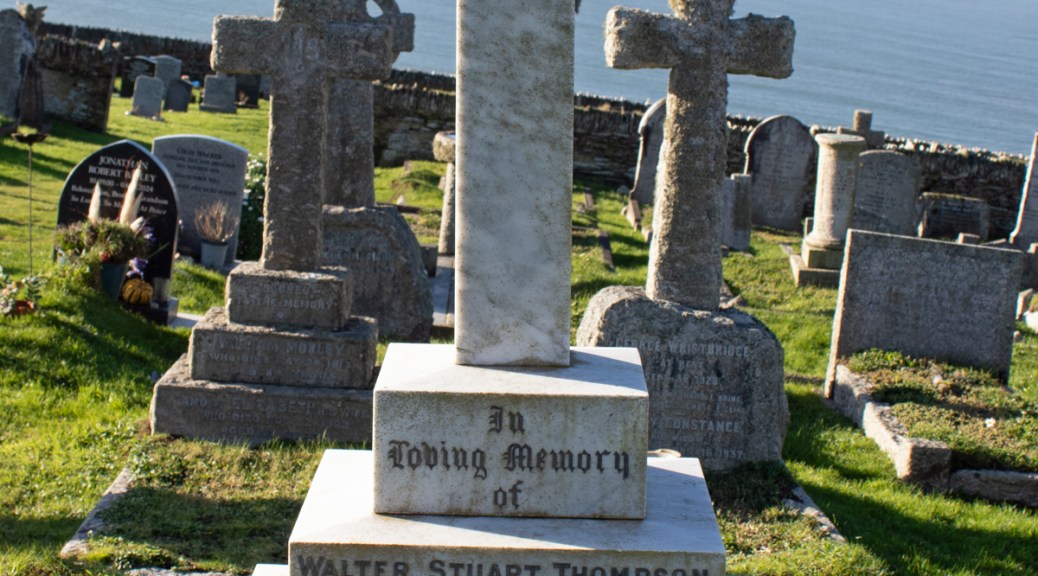
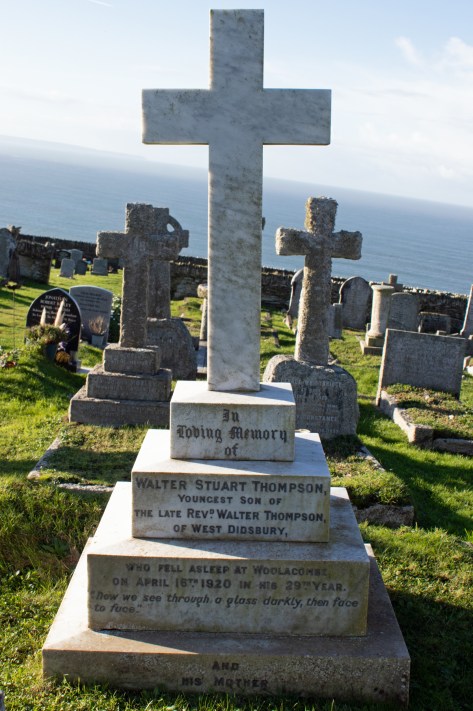
In the picturesque cemetery of St Mary’s Church, Mortehoe, Devon, is a headstone commemorating Walter Stuart Thompson. The stone notes that he died on the 16th April 1920, and that he was in his 29th year. He is recorded as being the youngest son of the late Reverend Walter Thompson from West Didsbury, Lancashire. His mother is also noted as being buried with him.
A baptism record for Christ Church, Didsbury, confirms that Walter was christened on 22nd November 1891, and gives his parents’ names as Walter and Mary Elizabeth Thompson. The family do not appear in any census records but, given that the Commonwealth War Graves Commission records note that Walter was a Lieutenant in the 2nd King Edward’s Own Gurkha Rifles, it is possible that they emigrated in the years following his birth.
During the First World War, Lieutenant Thompson’s regiment fought on the Western Front, in Egypt and in India. As his service records no longer exist, it is unclear when or how Walter served, but it is clear that he survived the conflict, and returned to Britain at the end of the war.
What the connection was to Devon is again unclear, although it seems possible that Walter was sent there for health reasons. His passing does not appear in any contemporary newspapers, so is unlikely to have been anything out of the ordinary.
The life of Walter Stuart Thompson, therefore, is destined to remain a mystery, buried with him in the tranquil cemetery on the north Devon coast.
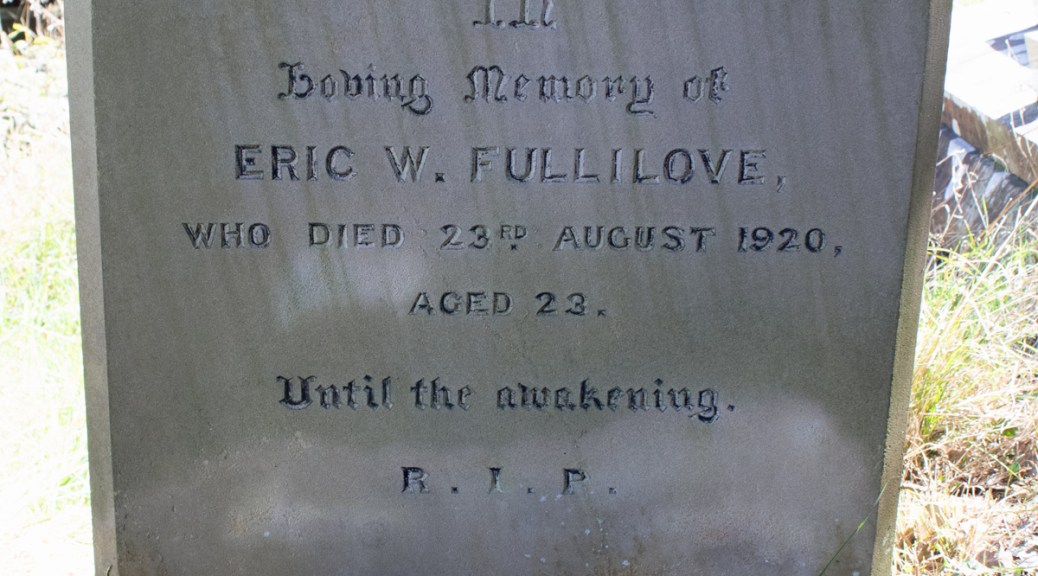
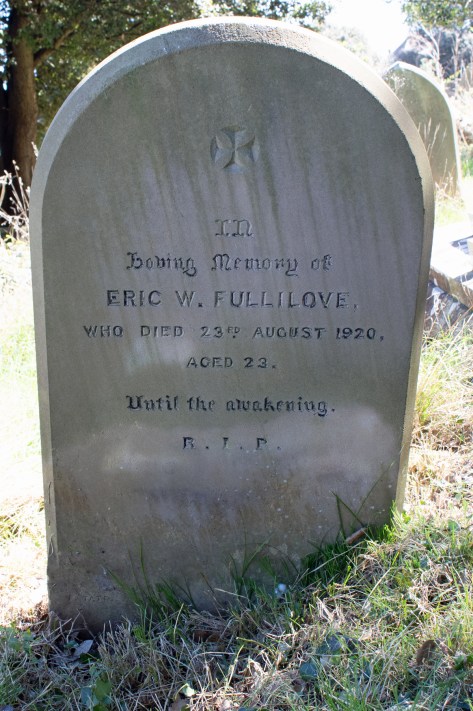
Eric William Fullilove was born in the Kent town of Deal on 25th April 1897. The middle of three children, his parents were Harry and Sarah Fullilove. Harry was a Sergeant in the Royal Marine Light Infantry, and by the turn of the century, the family had rooms at 16 Victoria Street, not far from the seafront.
Harry retired from military service, and the family moved to West Sussex. The 1911 census found the family living in a house on West Street in Worthing. Harry was now working as a bath attendant for the borough council, while Eric was being paid for being an errand boy when he wasn’t at school. The family had four visitors, Henry and Stanley Parsloe from Devon, and Florence and Margaret Gill from London.
Eric sought adventure in his life, and, on the day after his fourteenth birthday, he enlisted in the Royal Marine Light Infantry as a Bugler. His service papers show that he was just 5ft (1.52m) tall, with brown hair, brown eyes and a fair complexion.
Bugler Fullilove was assigned to the newly commissioned HMS Princess Royal, and would remain attached to her for the next four years. n the spring of 1915, he moved ashore, and was based in barracks in Portsmouth, Hampshire. While there, he came of age, and formally inducted into the Royal Marines. Now a Private, his papers show that he had grown 8.5ins (22cm).
Over the next five years, Eric served on two different vessels, returning to his Hampshire base in between assignments. His annual reviews noted a very good character, and a satisfactory/superior ability. Private Fullilove survived the conflict, but his health seems to have been impacted, and he was invalided out of the service on 1st April 1920.
Eric William Fullilove returned home, and his trail goes cold. He passed away on 23rd August 1920, through causes unconfirmed: he was 23 years of age. He was laid to rest in Broadwater Cemetery, to the north of Worthing, West Sussex.
Arthur Noad was born in Wiltshire in January 1888, the younger of two children to butcher Joseph Noad and his wife, Cecilia.
On Friday one of the largest attended funerals for years past took place at [Rode]. It was that of Mr Joseph Noad, youngest son of Mr John Noad, butcher, of Lower Street.
[Wiltshire Times and Trowbridge Advertiser: Saturday 21th April 1888]
The now widowed Cecilia was left in a precarious position, with two young children to raise. But a solution was at hand:
MESSRS. HARDING & SONS are instructed by the Executors of the Will of the late Mr Joseph Noad, to SELL by AUCTION.. the whole of the Valuable LIVE & DEAD STOCK, Comprising:
HORSES: Powerful Grey Gelding, 8-years-old; Grey Mare, 7-yrs.-old, in foal; promising Black Filly, rising-yrs.-old…
PIGS: 10 capital Stores
IMPLEMENTS & MACHINES, &c: Spring wagon, nearly new; 2 spring traps, nearly new; spring cart… 3 sets trap and 1 set thrill harness, saddle and bridle, covered sheep rack… hurdles… chaff machine… turnip cutter, meal bins, hog tubs, iron and wood pig troughs, cake breaker, oat bruiser, horse rake, 6 large meat hampers and other effects…
Quantity of Maize, Potatoes, Barley Straw; stack of prime Pasture Hay, with liberty of removal.
[Trowbridge Chronicle: Saturday 21st April 1888]
Cecilia sold up and moved on and, by the time of the 1891 census, she and the boys were on Lower Street, Southwick, near Trowbridge, next door to her late husband’s sister and family, and her former mother-in-law.
She was unable to support herself indefinitely on the proceeds of the auction, however, and, in the summer of 1899, she married again, to commercial piano tuner Samuel Haskell. The next census return, taken in 1901, found the family still living next to Arthur’s aunt and grandmother: just thirteen years of age, his occupation was listed as a monitor at school (although this was subsequently crossed out).
Arthur would set out to carve his own path in life. By the time of his early 20s, he had left home, and taken on work as a grocer’s assistant in Hungerford, Berkshire. His accommodation was the gasworks on Charnham Street, as he was boarding with the manager and his family.
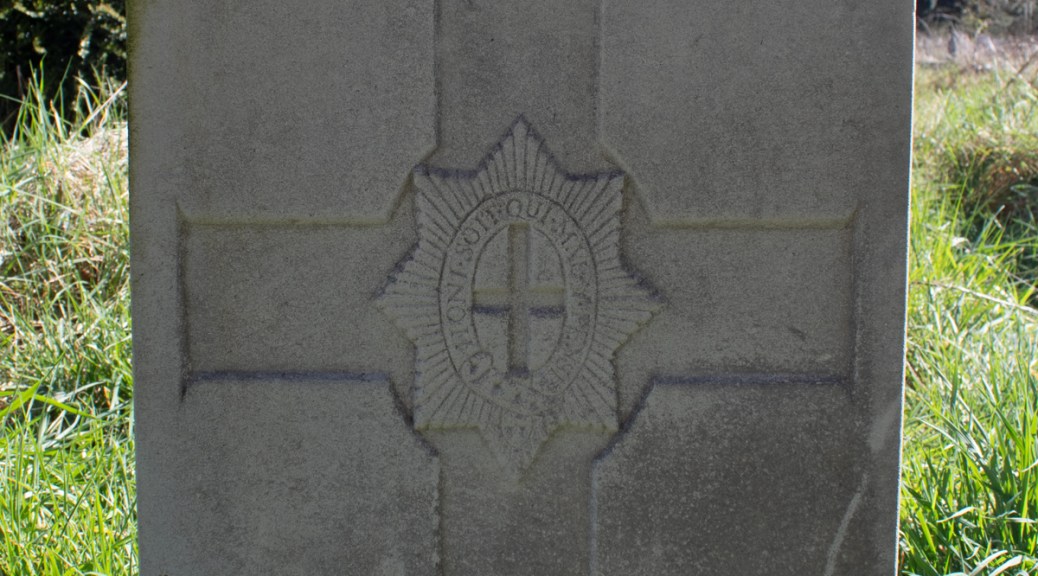
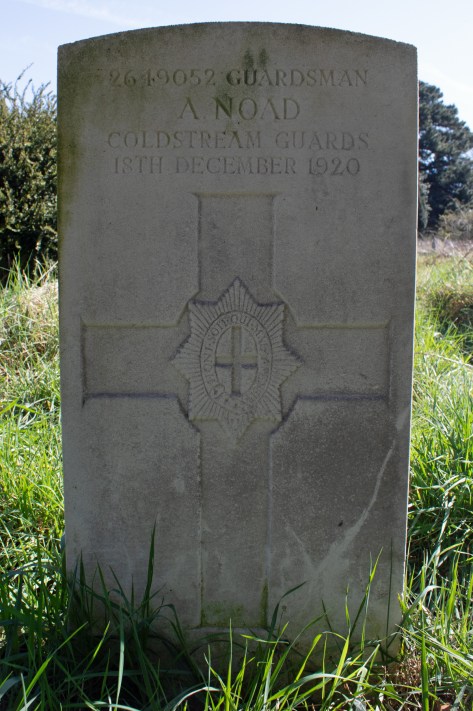
When war broke out, Arthur was quick to step up, joining the Coldstream Guards on 22nd December 1914. Sadly, there is little information about his time in the army, but it is clear that he was lucky to survive the conflict.
Arthur’s older brother, Henry, had joined the Royal Naval Volunteer Reserve, and rose to the rank of Able Seaman. When the war began, there were too many sailors for ships, and so he was re-assigned to the Nelson Battalion of the Royal Naval Division. Henry found himself on the Western Front, and was caught up at Arras and Ypres. He was killed on 31st December 1917, during the action of the Welsh Ridge, and was buried at Flesquières Hill British Cemetery, near Cambrai.
Guardsman Noad married Amelia May in the spring of April 1916: the daughter of a woodsman from Longparish, Hampshire, sadly there is little additional information about her. The couple did go on to have a child together, daughter Kathleen, who was born on 4th April 1918.
There is little further information about Arthur’s life. He survived the conflict and, when peace returned to Europe, he relocated to Worthing, West Sussex. There is little confirmation as to why this move happened: the 1939 Register records Amelia and Kathleen living on Meadow Crescent to the east of the town, but it isn’t clear who went there first.
The last documents for Arthur Noad relate to his passing. He died on 18th December 1920 at the age of 33 years old. He was laid to rest in Broadwater Cemetery, to the north of Worthing.
Amelia had lost her husband, but Cecilia had now lost both of her sons, and had outlived two husbands, Samuel having passed away nine years earlier. The 1921 census found her still living on Lower Street, Southwick. She lived until the age of 87, and passed away in Lothingland, Suffolk.
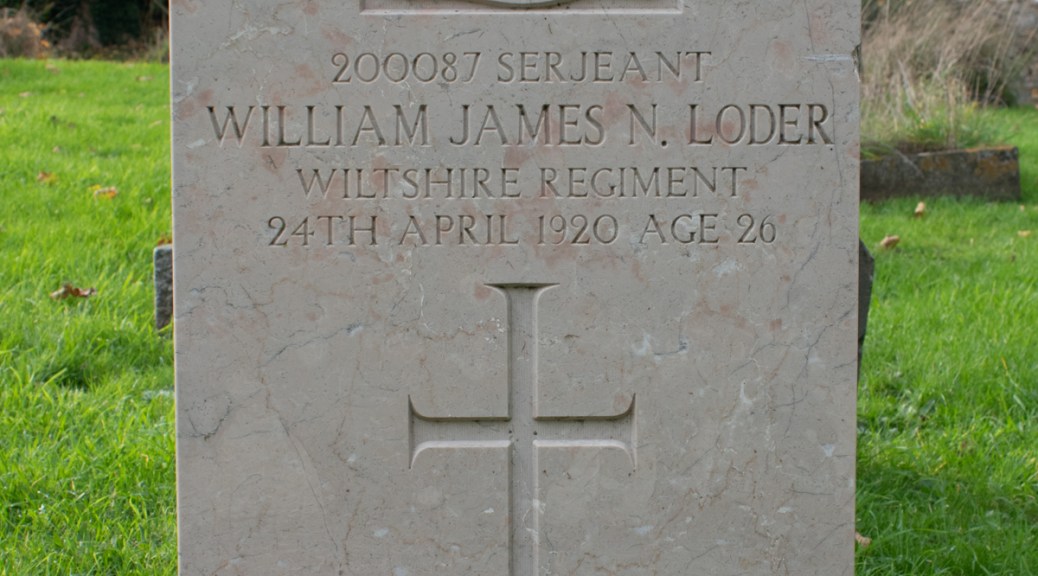
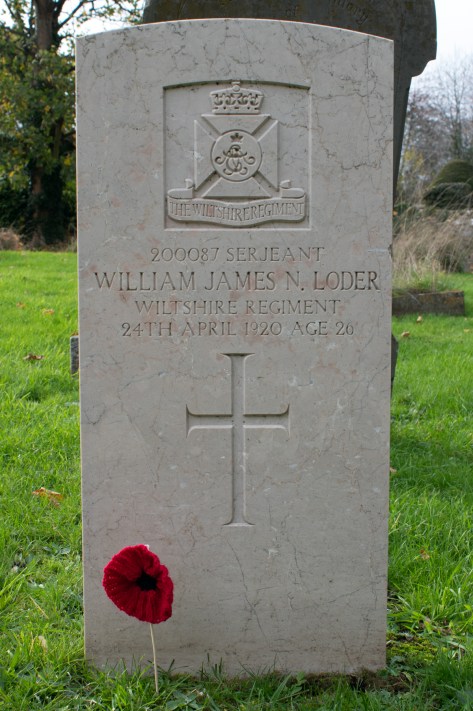
William James Nelson Loder was born in the summer of 1893 in Trowbridge, Wiltshire. The oldest of seven children, his parents were Harry and Rosina. Harry was an engineer at a wool mill, and his son obviously followed in his father’s practical footsteps: the 1911 census found him employed as a coach builder’s apprentice.
The document found the Loder family living at 1 Canal Road, a five-roomed cottage on the outskirts of town. Alongside Harry and his son, William’s younger sister, Ethel was also working as an apprentice dress maker.
Away from work, it seems that William also joined the local militia, with a later document showing that he enlisted in the Wiltshire Regiment on 4th February 1909. When war broke out, he was called upon to play his part. He was assigned to the 4th Battalion, and was sent to India in September 1914. While his service papers have been lost to time, it is clear that he rose to the rank of Serjeant, but by the start of 1917, he was back in Britain.
On 27th January 1917, William married Angelin Gliddon. She was a coachman’s daughter from Holt, Wiltshire, and was working as a draper’s assistant when she and her husband exchanged vows.
William’s health was failing by this point and, on 21st May 1917, he was formally discharged from the army on medical grounds. His trail goes cold as this point, and it is only three years later that documents confirm his passing. He died on 24th April 1920 at the age of 26 years old.
The body of William James Nelson Loder was laid to rest in Holt Old Cemetery, not far from where his grieving wife still lived.
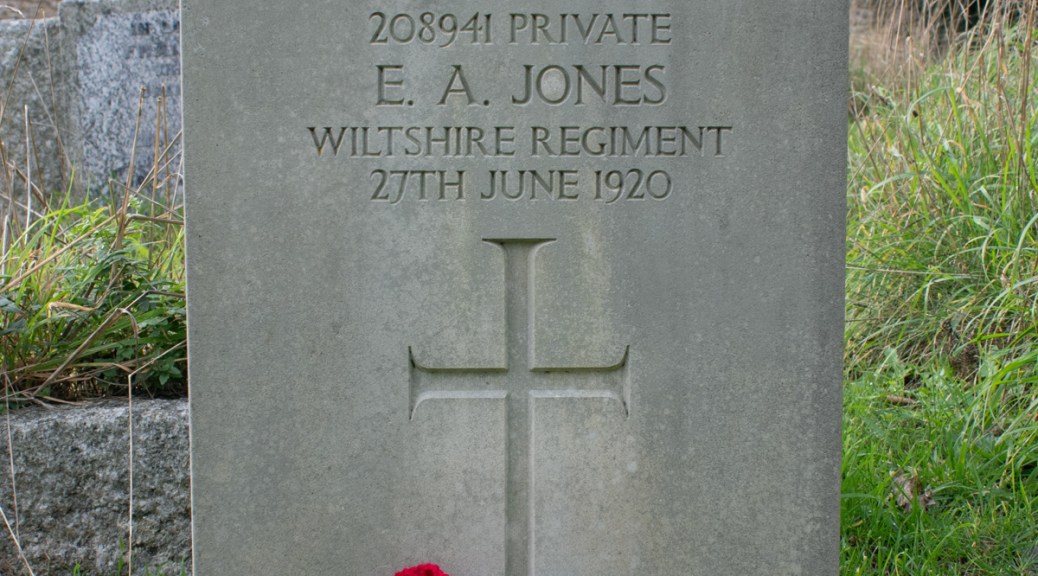
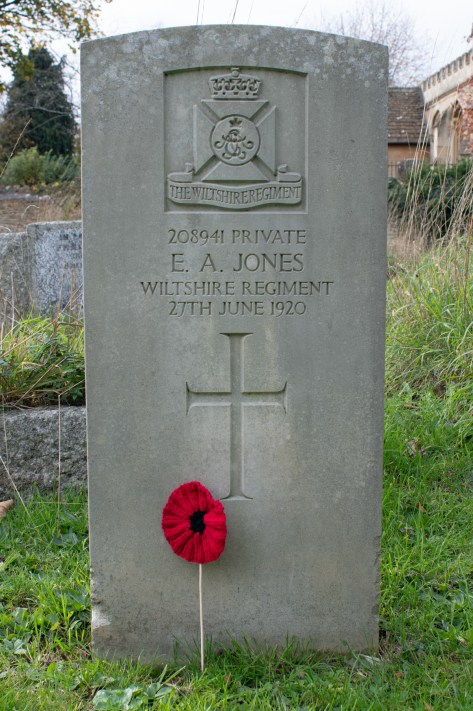
Ernest Albert Jones was born in the spring of 1878. The sixth of seven children, he wad the youngest son to Thomas and Maria Jones. Thomas was an agricultural labourer, and the family lived in a cottage on The Rank in the Wiltshire village of Holt.
Ernest found work as a gardener’s assistant when he completed his schooling, but, by the time of the 1911 census, he was employed as a leather dresser for a local fellmonger. According to the document, he was the only one of the Jones children to still be living at home, bringing in money to support his parents.
Maria died in the spring of 1911, and it is likely that Ernest remained at home to support his father. When war broke out, he stepped up to serve his country and, although his service papers have been lost to time, the documents that remain suggest he joined the Royal Warwickshire Regiment. He wasn’t with them for long, however, as he transferred to the Wiltshire Regiment.
It is unclear where or how Private Jones served. He was attached to the 6th (Royal Wiltshire Yeomanry) Battalion, who served on the Western Front from 1915 onwards, but nothing in Ernest’s remaining records suggest he spent any time overseas.
Ernest survived the war, and returned to the family home. He passed away on 27th June 1920, through causes unknown, at the age of 42.
The body of Ernest Albert Jones was laid to rest in Hold Old Cemetery, not far from the home in which his family had lived for more than four decades.
Thomas passed away nearly two years after his son, at the age of 87 years old. By this point, his granddaughter, Nellie, had moved in to look after him: it was she who Ernest had nominated as his next of kin.