
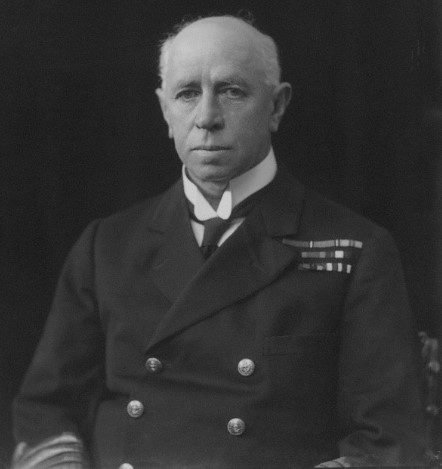
George Astley Callaghan was born in London on 21st December 1852, the third of six children to Frederic and Georgiana Callaghan. Frederic was born in Ireland and was the son of MP and landowner Daniel Callaghan. He built a career for himself as a magistrate and set up home in Bath, Somerset with Cheltenham-born Georgiana.
The family had means and the 1861 census records them living at a five-storey Georgian house in Catharine Place, Bath, with five live-in servants: a butler, cook, housemaid, nursemaid and nurse.
George enlisted in the Royal Navy in January 1866, and was assigned to the training ship HMS Britannia. From here, his career was to prove meteoric. He was promoted to the rank of Midshipman in October 1867 and by 1870 he was serving in the East Indies. On 15th April 1872 he gained the rank of Sub-Lieutenant, and was promoted to full Lieutenant exactly three years later.
In 1877, Lieutenant Callaghan received a commendation for saving the lives of sailor whose boat had capsized in the Irrawaddy River. George was assigned to HMS Excellent, a gunnery school, in 1880, and formally joined the staff there in 1882. Back on the open seas by 1885, he was promoted to Commander on 31st December 1887 and given control of the battleship HMS Bellerophon. By 1894, George had been promoted again, to the rank of Captain, and took on the additional duties of naval advisor to the War Office.
As the new century dawned, George was mentioned in dispatches for his support during the Boxer Rebellion. Further commands followed, including HMS Edgar and HMS Caesar, both in 1901. He was made Captain of Portsmouth Dockyard and then naval aide-de-camp to the King in 1904. By the following year, he was given the rank of Rear Admiral, became Second-in-Command of the Channel Fleet in 1906, Second-in-Command of the Mediterranean Fleet in 1908. In December that year he was awarded Knight Commander of the Royal Victorian Order for the aid he provided to survivors of the Messina earthquake.
In April 1910, George was knighted and promoted to Vice Admiral, and within eighteen months he was made Commander-in-Chief of the Home Fleet, gaining the rank of Admiral in November 1911.
During this time of military promotion, George had also had his own family. On 2nd February 1876, he had married Edith Grosvenor in St Andrew’s Church, Walcot, Bath. The couple went on to have four children: Dorothy, Cyril, Noël and Stella.
A naval officer’s wife was destined to be a lonely life, and the census records seem to reflect this. In 1881, Edith and Dorothy were visiting a curate and his family in Wiltshire. Ten years later, Edith and her four children were living at the family home in Bathwick, with one visitor and three servants. The 1901 census found Edith, Cyril (who was now a midshipman himself) and Noël living in Devonport with a cook and two other servants. By 1911, Edith had moved again. She was 54 by this point, and based at a house in Havant, Hampshire, with a cook and two maids. All of this time, of course, George was away at sea, performing his duties.
George, by this point, had spent years preparing for the war he knew was coming. However, in July 1914, the First Lord of the Admiralty, Winston Churchill, commanded Sir John Jellicoe to relieve George of his position as Commander-in-Chief of the Home Fleet. Whether Churchill believed that Sir Callaghan was now too old to successfully carry out the duties the advancing conflict would impose upon him is unclear. It must have disappointed the 62-year-old George, however.
His work continued, however: he was appointed First an Principal Naval Aide-de-Camp to the King in September 1914, and became Commander-in-Chief of The Nore in three months later. He was promoted again, to Admiral of the Fleet, in April 1917, but subsequently retired less than a year later.
George’s life over the next couple of years goes a little quiet. Indeed it is only in November 1920 that further information is available.
The death occurred in London yesterday afternoon of Admiral of the Fleet Sir George Callaghan KCB. He had been ill for some months, and the immediate cause of death was an affection of the heart.
The Scotsman: Wednesday 24th November 1920
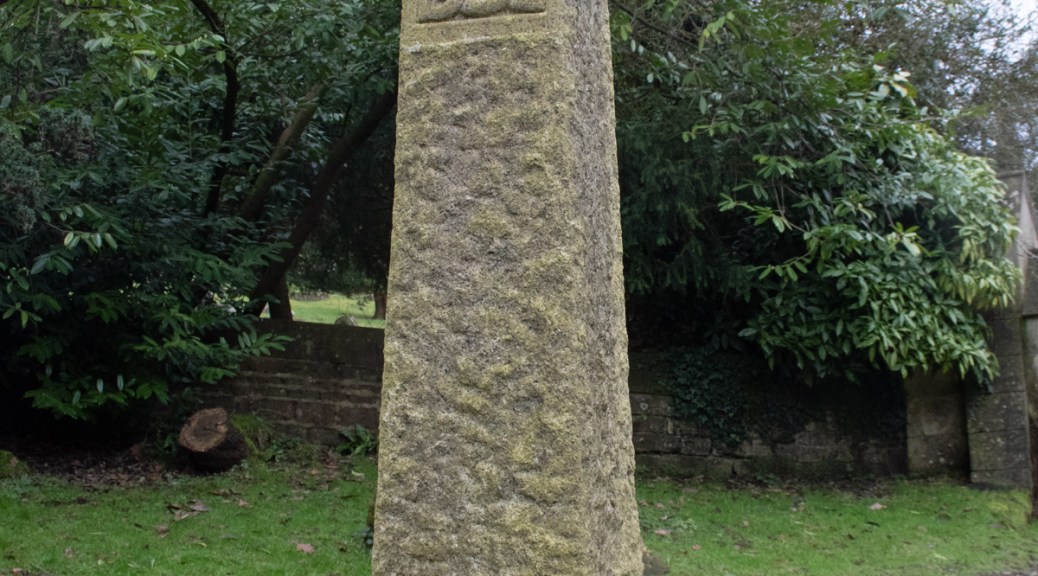
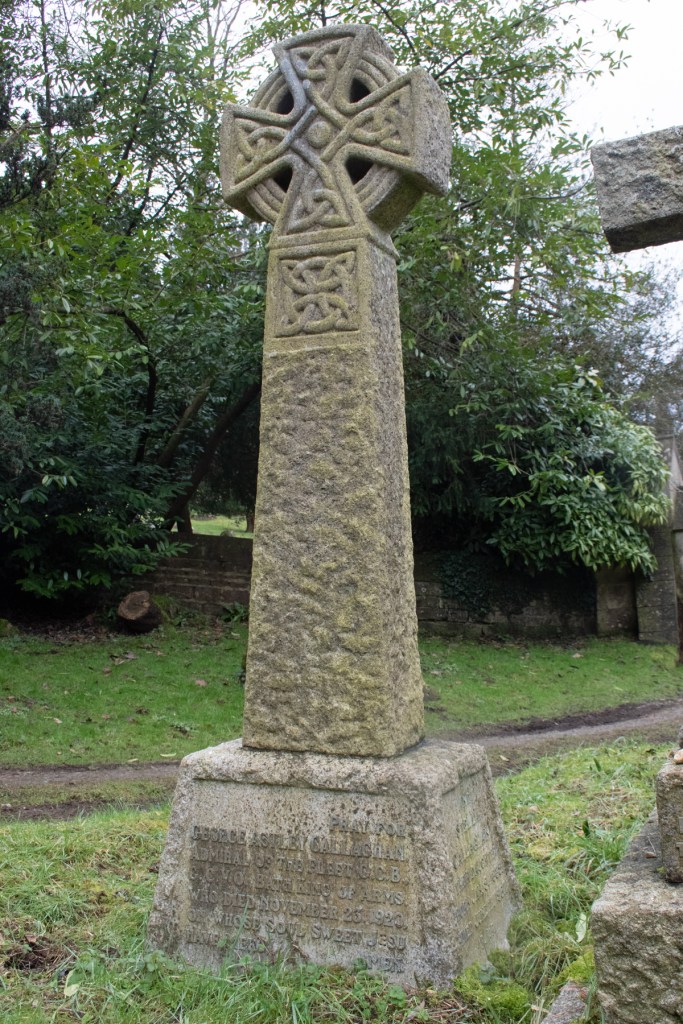
Sir George’s passing at his London home was reported in most of the press, highlighting his military achievements and decorations. His funeral was held at Westminster Abbey, and he was then laid to rest in the graveyard of St Mary’s Church in Bathwick, not far from his and Edith’s main home.
 Death and Service