
Tag Archives: Guernsey

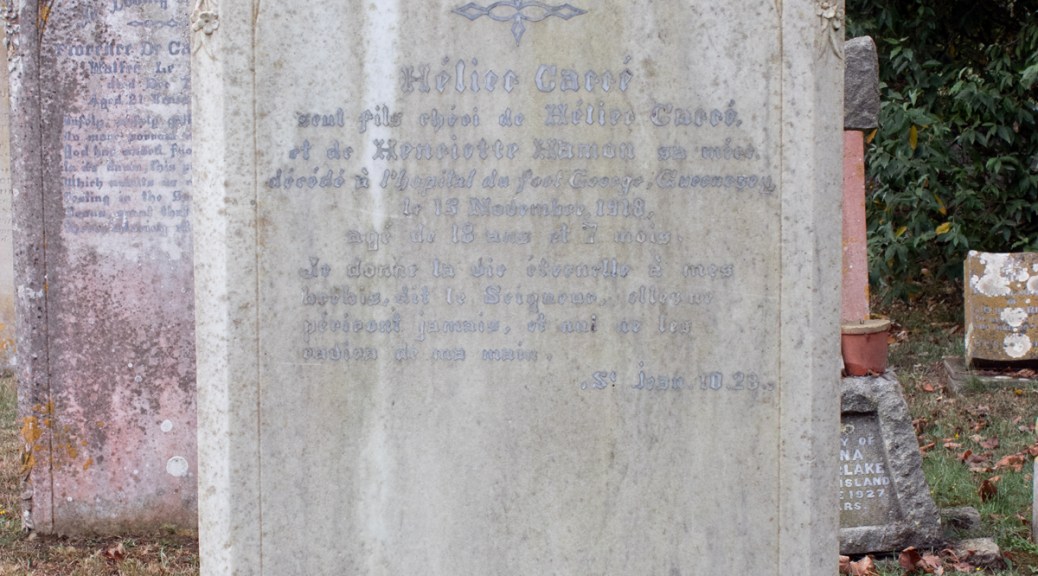
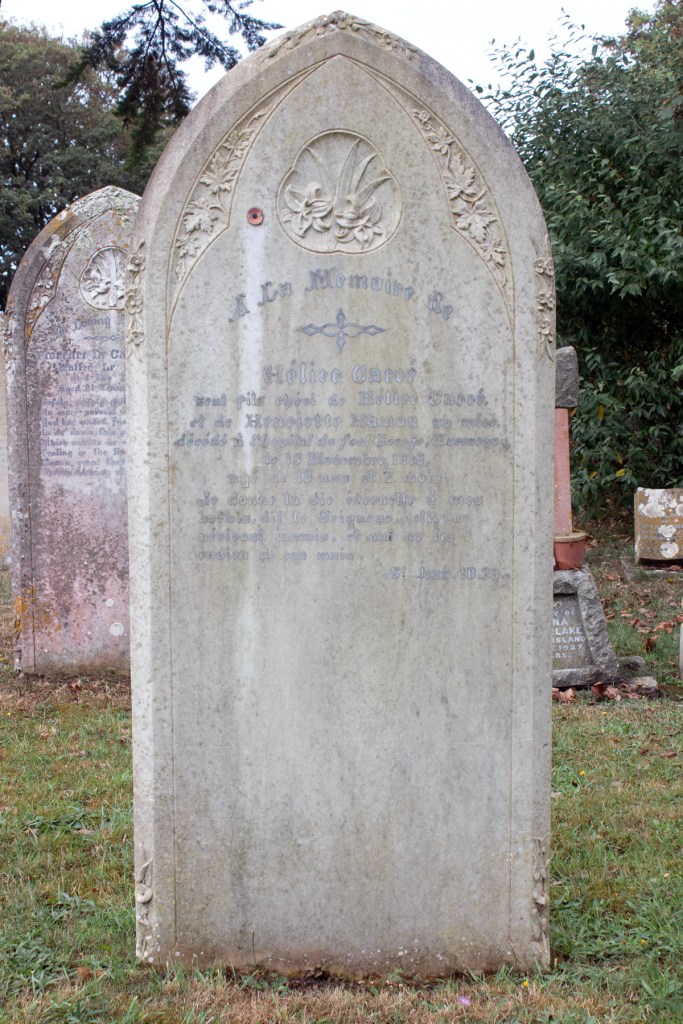
Private Hélier Carré

Private Hélier Carré

Hélier Carré was born in April 1900, on the Channel Island of Sark. He was the second of two children to Hélier and Henriette (also known as Harriet) Carré. Hélier Sr was a fisherman, and the family, including siblings Hélier Jr and Harriet Jr, lived in a four-roomed cottage, La Collinette, with Henriette’s widowed mother, also called Henriette/Harriet.

Hélier Jr was just 14 when war broke out but, with France just 25 miles (39km) across the water, he was obviously keen to play his part. It was not to be until the summer of 1918 that he enlisted, and he joined the Royal Guernsey Light Infantry as a Private. His service records confirm that he had become a fisherman like his father, and they he was 5ft 3ins (1.6m) tall.

Little additional information is available about Private Carré. He was sent to Guernsey for training, and it was there, on 13th November 1918 – just two days after the Armistice was signed – that he passed away. The cause of his death is not freely available, but he was just 18 years of age.

The body of Hélier Carré was taken back to Sark for burial. He was laid to rest in the graveyard of the island’s church, St Peter’s.
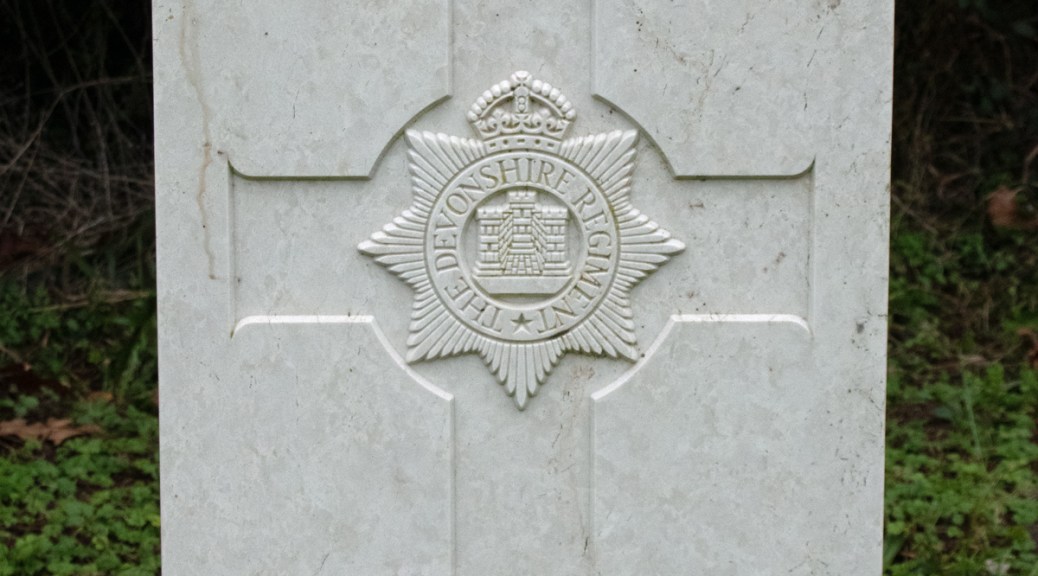

Private William Lamacraft

Private William Lamacraft

William Morrish Lamacraft was born in Guernsey in 1888, the only son of John and Annie Lamacraft. Annie passed away when William was just 4 years old, and John brought his son back to England, returning to Devon, where he himself had been born. John found employment as a porter at St Thomas’ Union Workhouse in Exeter and lived in here, while William was taken in by his paternal grandmother, Mary, who was also in Exeter.

In 1909, John also passed away. William, by this time, had left school and found work as a bootman at the Queen’s Hotel in Newport, Gwent. War was on its way to Europe by this point and, when it broke out, William enlisted as a Private in the Labour Corps.

At some point William transferred across to the Devonshire Regiment, but there is little tangible evidence to document when and where he served. What is clear is that Private Lamacraft survived the war, and had returned to Newton Abbot when he was demobbed.

Sadly, William Morrish Lamacraft was not to live a long life after the Armistice was declared. He passed away on 6th June 1919, aged just 31 years old; the cause of death lost to time. He was laid to rest in Newton Abbot Cemetery.