
Tag Archives: Loos

Private William Loxley

Private William Loxley

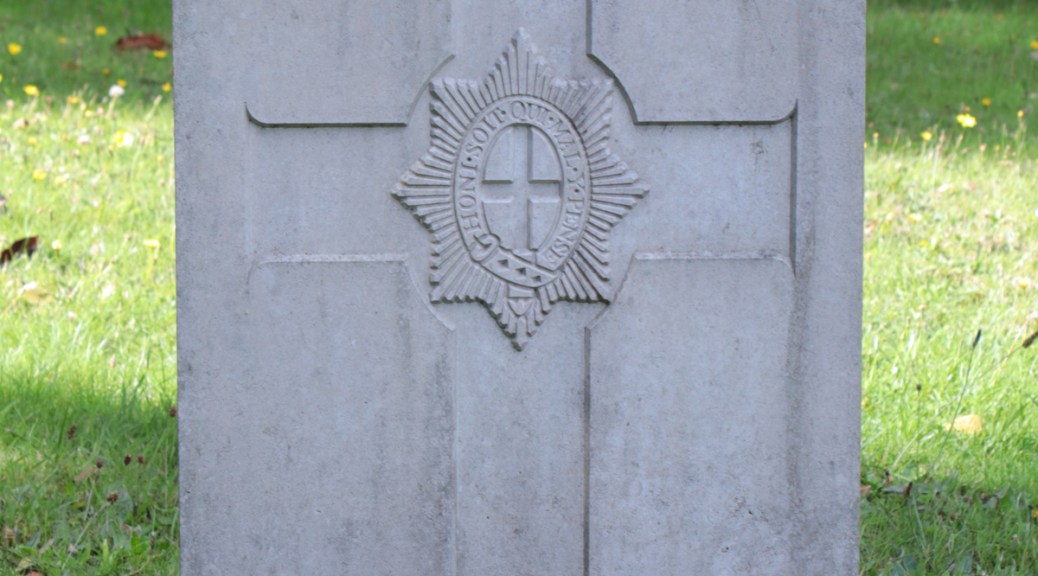
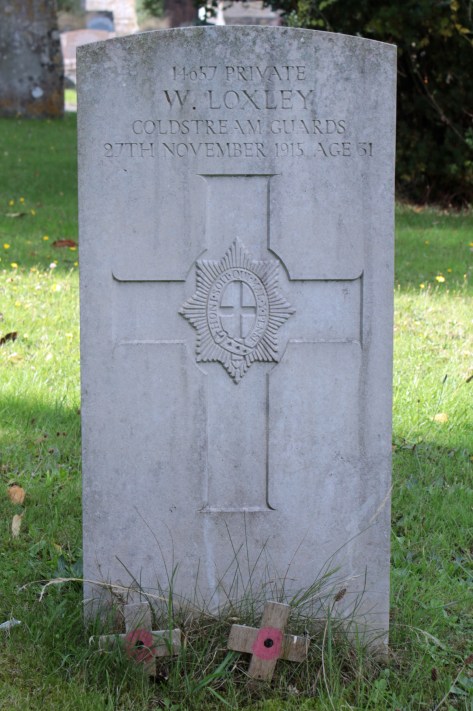
LOXLEY, WILLIAM, Private, No. 14657, 4th Battn. Coldstream Guards, eldest s. of the late William Loxley, Engine Fitter, by his wife, Ellen, dau. of the late Edward Stringer; b. Ecclesfield, co. York, 26th Oct. 1885; educ. there; was a stove and grate fitter; volunteered and enlisted 9 Jan. 1915; went to France, 15 Aug. 1915, and died in Convalescent Home, Westbury, co. Wilts, 27 Nov. 1915, of wounds received in action during the Battle of Loos, 27-29 September 1915. He m. at Grimsby, 4 Aug. 1912, Edith Mary (3, Burton Street, Langsett Road, Sheffield, widow of Philip Munty, and dau. of the late Frederick Charles Unwin.

De Ruvigny’s Role of Honour

William was the second of four children to William and Ellen. The family lived at 50 Town End Road in Ecclesfield, a small stone-built cottage overlooking grassland on the edge of the village.

Aside from his entry in de Ruvigny’s Role of Honour, there is no further information about his widow, although the British Army Register of Soldiers’ Effects names both Edith and William’s nephew – Faedon Muntz – as beneficiaries.

Injured at Loos, a local newspaper provided an obituary:

Giving up his profession for the Army, [William] was drafted out to France, and received a bullet through the forehead. After a long treatment in hospital he was, a fortnight ago, invalided home for ten days, leaving only a few days ago, then appearing to making rapid progress. He had a relapse, and on Friday his memory left him. Later he became delirious and passed away.

[Sheffield Daily Telegraph: Monday 29th November 1915]

William Loxley died at the Haywood House Hospital in Westbury, Wiltshire, on 27th November 1915: he was 30 years of age. His body was laid to rest in the town’s cemetery.

Private William Harcombe

Private William Harcombe

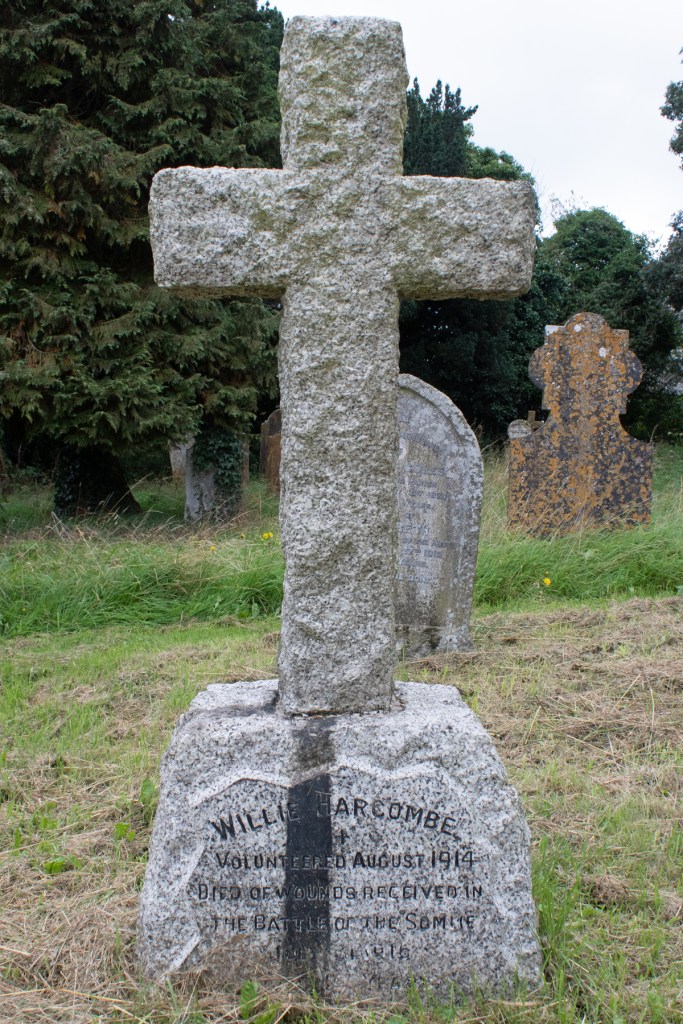
William Harold Harcombe was born on 25th September 1897 in Sampford Arundel, Somerset. One of twelve children, his parents were William and Jane Harcombe. William was an agricultural engine driver who, by the time of the 1911 census, had moved the family five miles north west to Ashbrittle.

When war came to Europe, William was one of the first to enlist, joining the Devonshire Regiment in August 1914. He was assigned to the 8th Battalion, and after nine months’ training, he found himself in Northern France.

Private Harcombe’s troop was involved in some of the fiercest skirmishes of the conflict, at Loos in the autumn of 1915, and at the Somme the following year. It was during this battle – probably at Delville or High Wood – that he was injured.

William was medically evacuated to Britain for treatment, and was admitted to a military hospital in Mile End, London. His injuries were to prove too severe, however, and he succumbed to them on 31st July 1916: he was just 18 years of age.

The body of William Harold Harcombe was brought back to Somerset for burial. He was laid to rest in the tranquil graveyard of St John the Baptist Church in Ashbrittle.


Guardsman Bertie Thomas

Guardsman Bertie Thomas

Bertie John Thomas was born in Penarth, Glamorgan, in 1890, one of twelve children to Henry and Elizabeth Thomas. Henry was a ship’s rigger, but much of Bertie’s life remains a mystery.

The 1901 census recorded the family living together in a small terraced house in Cliff Street, but ten years later, with the family having grown, many had dispersed. Bertie’s older sisters had moved on – Hannah as a live-in barmaid in nearby Barry; Gladys working as a dressmaker in the Rhondda, living with her aunt and uncle. Of Bertie himself, however, there is no record.

When war came to Europe, Bertie would have played his part. He had enlisted in the Welsh Guards by the spring of 1916, and was a Guardsman in the 1st Battalion. The Guards Division were involved in many of the key conflicts of the war, including at Loos in 1915 and at the Somme the following year.

Guardsman Thomas was caught up in the Battle of Flers-Courcelette in September 1916, and was badly wounded. He was medically evacuated to home soil for treatment, and was admitted to a hospital in Cardiff. His wounds were to prove too severe, and he died on 26th September 1916, aged just 26 years of age.

Bertie John Thomas was brought back to Penarth for burial. He was laid to rest in the graveyard of St Augustine’s Church in the town.