

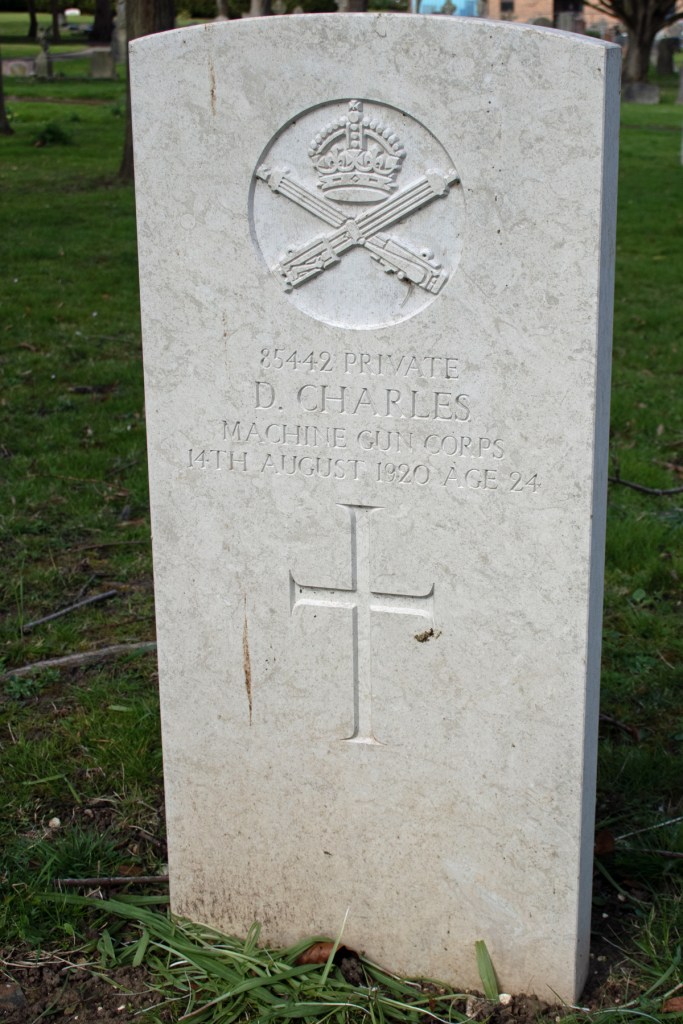
David Charles was born towards the end of 1893 and was one of eight children. His parents – David Sr and Elizabeth Charles – both came from Wales, and moved their young family to Kent in 1891. David Sr worked at a torpedo factory, and the move may have been determined by employment at the Naval Dockyard in Chatham, Kent.
When he left school, David Jr found work at an ironmonger’s, but storm clouds were forming over Europe, and he was soon called up on to do his duty for King and country.
David Jr enlisted in July 1915, joining the 23rd Reserve Battalion. He transferred to the Machine Gun Corps in February 1917 and was posted to the Western Front a month later.
Private Charles was wounded in action on 7th October 1917, although the injury did not prevent him from returning to duty after three weeks’ rest. He was readmitted to hospital on 23rd November, eventually being transferred home on a hospital ship before Christmas.
On 11th January 1918, Private Charles was transferred to No. 5 Battalion in Grantham, where he was promoted to Acting Lance Corporal within a couple of months. Sickness dogged him, however, and he was eventually discharged from military service for medical reasons on 7th August 1920.
By this time, David had been admitted to Fort Pitt Hospital in Chatham with endocarditis – enlarged heart – and this is where he sadly passed away from the condition just a week after being discharged from the army. He died on 14th August 1920, at the age of 27 years old.
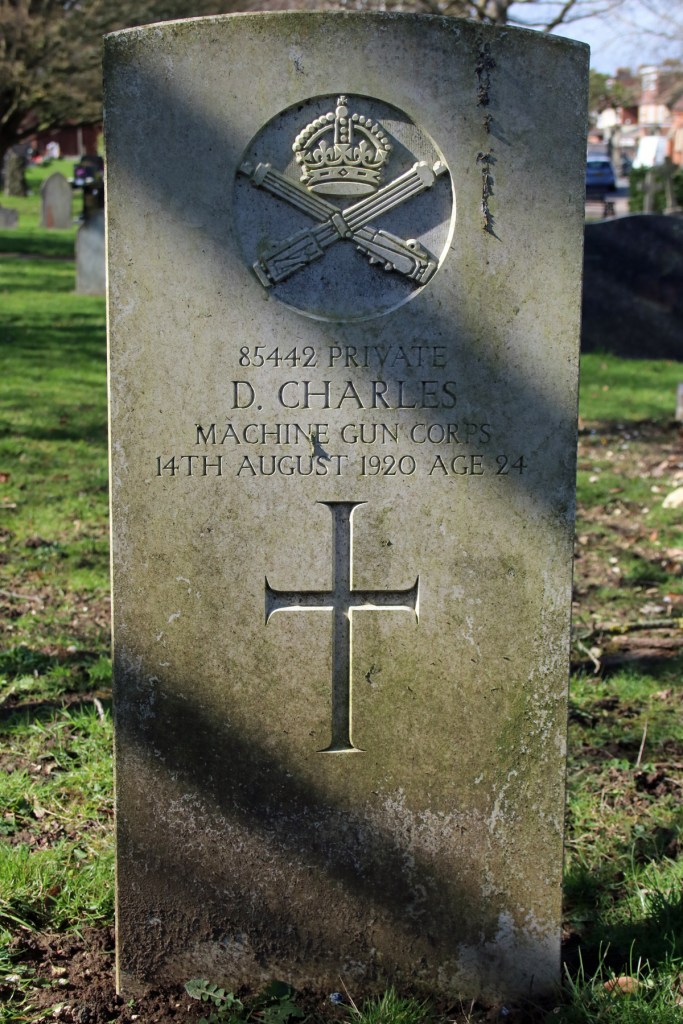
David Charles lies at rest in the Woodlands Cemetery in Gillingham, Kant.
David seems not to have been originally commemorated by the Commonwealth War Graves Commission. I can find no record of why this might have been the case, but this was eventually rectified 10th February 2016, and his name was immediately added to the United Kingdom Book of Remembrance.
The United Kingdom Book of Remembrance commemorates United Kingdom casualties of the two World Wars who were not formerly recorded by the Commonwealth War Graves Commission. The men and women remembered on it are recent additions to the list of war dead and are presently commemorated solely by their database record and register entry.
The register is maintained at the Commonwealth War Graves Commission’s Head Office, Maidenhead, and the names remain recorded there until such time as The Commission has investigated the grave location details.
David’s grave was identified and a headstone now placed in its rightful position.


 Death and Service