


Percy Reginald Coplestone was born in Torquay, Devon, on 17th August 1890. The oldest of four children, his parents were bakers William and Louisa Coplestone. The family moved to Kinkerswell in 1895, and, by the time of the 1911 census, they had moved to Paignton.
The Copplestones had set up business in Church Street and Louisa’s widowed mother, Louisa Smallbone, had moved in with them. Percy, now 20 years of age, was helping in the business, while his younger sister, Gladys, was employed as a draper’s assistant.
When war came to Europe, Percy was called upon to play his part. Details of his service are tantalisingly scarce, but they suggest that he had enlisted no earlier than April 1915. He joined the Royal Devon Yeomanry, and was assigned to the 3rd/1st Battalion, although his time in the military was to be brief.
The funeral took place Friday of Pte. Percy Coplestone, eldest sone of Mr and Mrs Coplestone, Church-street, Paignton, who joined 1st Devon Yeomanry, sustained an injury while undergoing gymnastic training, was operated upon on Monday, and died in the evening.
[Western Times: Tuesday 23rd November 1915]
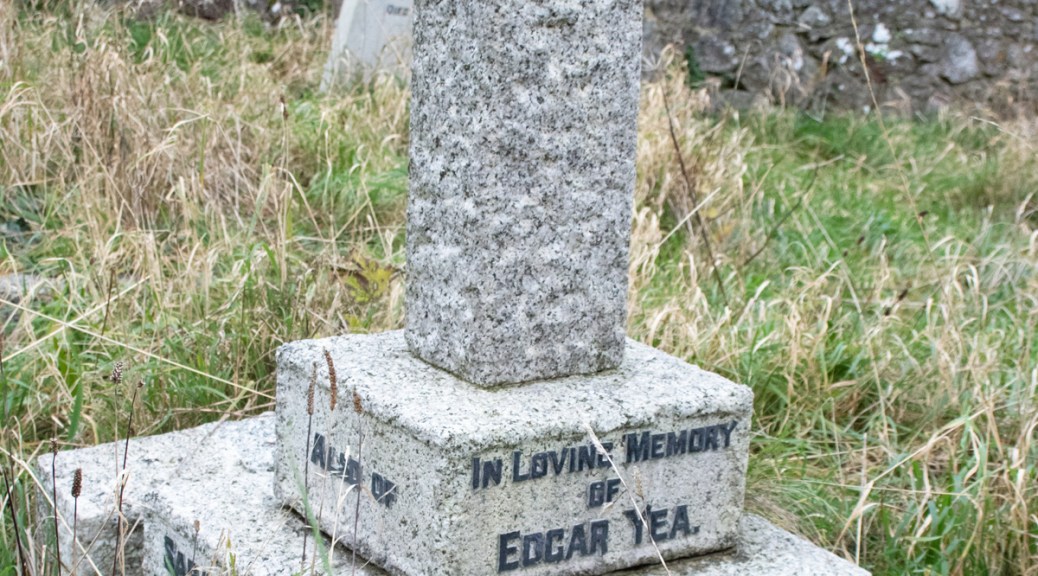
Percy Reginald Copplestone died on 15th November 1915: he was 25 years of age. He was laid to rest in Paignton Cemetery, a short walk from where his family still lived.
While researching Percy’s life, I came across a couple of articles relating to a legal action taken against his father, William, by Edward Elkington, for damaged caused in a car accident. Edward was suing for £15 damaged, while William counter-sued for £65.
The case was initially heard in November 1915 – sadly, a week after Percy’s passing – before being adjourned until the following January. In amongst a number of witness statements, a local newspaper reported William’s evidence:
William Joseph Coplestone… baker and confectioner, said he left the Gerston [Hotel] between 11.5 and 11.10 in his single motor, with Mr Tolcher and Mr Hicks. It was a rather heavy car for his size, very reliable and very slow. They went on second speed, about six or seven miles an hour, and at the corner of Hyde-road witness [William] sounded the hooter, nothing then being visible. Taking a wide turn following the Torquay lines leading to Torquay, witness got on the left side, the proper side. He saw the lights of a car approaching, also a tram-car, the car being 140 yards away and 50 yards ahead of the tram. The car was approaching on the wrong side, and there was practically an end-on collision. Witness expected every moment the other car would have gone over to its proper side. Witness had driven about 100 feet when the collision took place and his car was stationery at the time. Witness and his friends were thrown out. The car cost him about £80 and the estimate of repairs was £63 5s. Mr Elkington said, “It is a bad job.” Witness replies, “It is your fault absolutely; you are on the wrong side of the road.” Plaintiff said, “You were crossing the road fast,” and witness replied that he was bound to cross the road. Elkington remarked, £I did my best to avoid the accident. Immediately I saw you I applied my brakes, but the roads were greasy, and the wheels would not grip.” PC Clarke was not there when the collision took place. Later he suggested to the constable that measurements should be taken, and went back to look after Mr Hicks. Before he got back they had moved his car. Coplestone said he had often driven two people in the car. When his son left for the Dardanelles, witness drove his wife and son to Southampton in comfort.
[Western Times: Tuesday 25th January 1916]
The case was adjourned once again, to 11th February. Frustratingly, there seems not to have been any follow-up newspaper report, so there is no confirmation of the outcome of William’s case.



 Death and Service