Tag Archives: tuberculosis

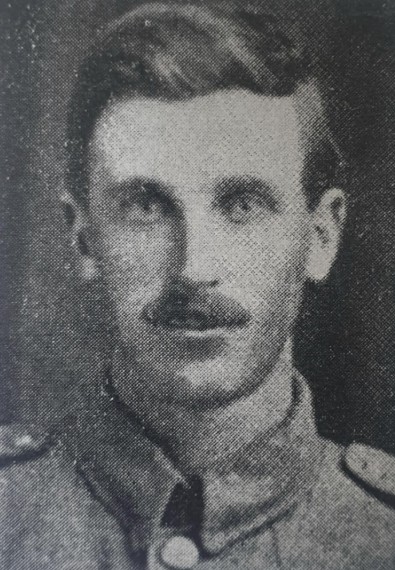
Serjeant Frederick Bewley

Serjeant Frederick Bewley

Frederick John Edwin Bewley was born in Calne, Wiltshire, on 10th May 1882. Noticeably absent from the 1891 and 1901 census records, his parents were Chelsea pensioner John Bewley, and his wife, Annie.

Following in his father’s footsteps, Frederick was drawn to a life in the army. Having already been a volunteer in the local militia, on 20th November 1900, he enlisted in the Wiltshire Regiment. His service papers show that, at 5ft 6ins (1.68m) tall, he weighed 125lbs (56.7kg). He sported brown hair, grey eyes and a fresh complexion. He was also noted as having a scar on his right thigh and calf.

Private Bewley’s contract was for 12 years. During that time, he travelled the world spending three years in South Africa, and more than five in India. He was back in South Africa when his initial term of service came to an end, and he re-enlisted without thinking about it.

In May 1904 Frederick has been promoted to Lance Corporal, a rank he would hold for the next 12 years. During his second term of service, war broke out, but he would only spend short periods of time overseas.

…a member of the regular army, [Frederick] crossed to France with Lord French’s Expeditionary Force in August, 1914, and was wounded in the thigh at the battle of Mons. After a short period at Netley Hospital he went to Flanders in the following November. The awful conditions prevailing in the trenches was responsible for an attack of frost-bite, and tuberculosis following, he was treated at Winsley and Harnwood Sanatoriums…

[Wiltshire Times and Trowbridge Advertiser: Saturday 27th December 1919]

From 1th January 1915, Lance Corporal Bewley would remain on home soil. The sharp clarity of near-death experiences, along with a reconnection with home life, led to love blossoming and, on 6th May, he married labourer’s daughter Lilian Fidler. Both were living in Holt, Wiltshire, by this point, and it was in the village’s church that the couple exchanged vows.

Back on home soil, a new opportunity had opened up for Frederick, and he transferred to the Military Provost Staff Corps, a unit set up to police the army. In January 1916, he was promoted to Corporal; just weeks later, Vivian gave birth to their first child, Eric. and he rose to Sergeant eighteen months later.

On 1st August 1917, Corporal Bewley was promoted again, taking the rank of Serjeant. By this point, however, his bouts of poor health were coming back to haunt him, and, just six weeks after his promotion, he was medically discharged from the army.

After returning to Holt, Frederick welcomed a second son with Lilian on New Year’s Eve 1918, when Vivian was born. The following winter, his tuberculosis struck again, and this time it was clear the illness would prove fatal. He passed away on 21st December 1919, aged 37 years old.

The body of Frederick John Edwin Bewley was laid to rest in Hold Old Cemetery.


Lance Corporal Stanley Gosnell

Lance Corporal Stanley Gosnell

Joseph Roger Stanley Gosnell was born in Birmingham, Warwickshire, in the autumn of 1895. He wad the only child to William and Florence Gosnell. William was a draughtsman, who died when his son was just 4 years old.

Florence was left to raise her son on her own and moved back to Bradford-on-Avon, Wiltshire, where her family lived. On 14th April 1903, she remarried, her new husband being head teacher of Holt Congregational School, John Longstaff. The 1911 census found the family living at Eglington Villa, not far from the school.

When war broke out, Joseph was quick to step up and play his part. Now going by Stanley, he enlisted in the Wiltshire Regiment on 17th September 1914, and was assigned to the 4th Battalion. His service papers show that he was 5ft 11ins (1.8m) tall, with brown hair, blue eyes and a fair complexion. He was noted as having normal vision and good physical development.

Private Gosnell seemed to impress his superiors, and, on 12th December 1914, he was promoted Lance Corporal. The following day his unit was dispatched oversees, and he was sent to India. He would go on to spend the next eight months in Pune, but not in the way he might have hoped.

On 27th February 1915, Stanley was admitted to hospital, suffering from pneumonia. He would remain admitted for nearly three months. Sent back to his unit in mid-May, he was taken back into hospital just three weeks later with tuberculosis. This time, he would only be there for three weeks before being sent back to his unit.

Lance Corporal Gosnell was sent back to Britain in August 1915, and he would remain on home soil for the next year. During this time his health deteriorated, to the point that, no 25th August 1916, he was medically discharged from the army.

At this point, Stanley’s trail goes cold, and it is only a later newspaper report that confirms what happened:

Mrs Longstaff, of Eglington Villa, who a short time since was called upon to mourn the loss of her husband, Mr JC Longstaff, was on Wednesday further bereaved by the death of her only son, Mr Stanley Gosnell. Mr Gosnell’s constitution was never of the most robust kind, and though he volunteered for service and proceeded to India with the Territorials, he was unable to withstand the climate and the work entailed, and was invalided home. His death so soon after reaching manhood’s estate is a heavy blow to his mother and the utmost sympathy will go out to her in her irreparable loss.

[Wiltshire Times and Trowbridge Advertiser: Saturday 10th May 1919]

Details of John’s passing are unclear, but he died just a few months before his stepson. Joseph Roger Stanley Gosnell was just 23 when he died on 7th May 1919. He was laid to rest in Holt Old Cemetery, not far from where his twice-grieving mother lived.


Florence had now been widowed twice, on top of losing her only child. She found some solace in her grief, however, and, in the autumn of 1923, she married for a third time. Her new husband, Joseph Scarisbrick, was a widow thirteen years her senior, and worked as a customs and excise man.

Joseph died in 1938, at the age of 85: Florence had outlived all three of her husbands. She passed away on 4th October 1954, at the age of 88 years old.


Stoker 1st Class Herbert Lee

Stoker 1st Class Herbert Lee

Herbert Lee was born in the Herefordshire village of Dilwyn on 16th August 1896. The sixth of eight children, he was one of five sons to Charles and Frances Lee. Charles was a waggoner on a local farm and, when he finished his schooling, his son found work as a farm hand there.

When war broke out, Herbert was quick to step up and play his part. He enlisted in the Royal Navy on 14th October 1914, taking on the role of Stoker 2nd Class. His service papers show that he was 5ft 4.5ins (1.64m) tall, with brown hair, blue eyes and a fresh complexion.

Stoker Lee was sent to the Royal Naval Dockyard in Chatham, Kent – also known as HMS Pembroke – for his training. Over the next five years, he seems to have been mainly shore-based, transferring between units in Chatham and at HMS Victory, the navy dockyard in Portsmouth, Hampshire. In August 1915, he was promoted to Stoker 1st Class, and his records note a very good character with a superior ability.

Herbert survived the war and, by the start of 1919, he was back in Chatham. He had fallen ill by this point, and, having contracted the highly contagious tuberculosis, he was medically discharged from navy service on 19th March 1919.

Herbert Lee battled his condition bravely, but would ultimately succumb to it. He passed away on 8th October 1920, at the age of 24 years old. He was laid to rest in the tranquil surrounds of St Mary’s Churchyard in his home village of Dilwyn.


Sapper John Ayre

Sapper John Ayre

John MacDonald Ayre was born in Hemel Hempstead, Hertfordshire, in 1891. His father – also John MacDonald Ayre – had been born in Edinburgh, but had moved south to take up a job as a passenger clerk for the railways. He had met his wife, Rosa, there, and they had married in 1890. John Jr was their eldest child, and they would go on to have five more although, tragically, only three survived childhood.

John Jr also found employment with the railway company when he finished his schooling. The 1911 census found him working as a goods clerk, and he was living with his family at 16 Bridge Road in Hemel Hempstead town centre.

On 8th September 1915, John Jr married Mabel Langdon. She was a postman’s daughter from Westbury, Wiltshire, and, at the time of the 1911 census, she was working as an under-housemaid for Edward Innes, a barrister in her future husband’s home town. The couple married in Westbury Parish Church.

When war broke out, John Jr was called upon to play his part. Little information is available about his time in the army, but is it clear that he had enlisted by the end of 1916, and had joined the Royal Engineers as a Sapper. His background made him ideal for the regiment’s Railway Operating Division.

There is no evidence that Sapper Ayre spent any time overseas, and, by the spring of 1917, he was based in Shropshire. He had been unwell and was admitted to a military hospital in Shrewsbury, suffering from tuberculosis. The condition was to get the better of him, and he passed away on 27th May, at the age of 26 years old.

The body of John MacDonald Ayre was taken back to Wiltshire for burial. He was laid to rest in Westbury Cemetery.


Tragically, Mabel was pregnant when her husband died. She gave birth to their son, who she named John, on 14th July 1917.


Plumber’s Mate William Hodge

Plumber’s Mate William Hodge

William James Hodge was born on 23rd November 1896 in Portsmouth, Hampshire. The oldest of seven children, six of whom were boys, his parents were James and Edith Hodge. James was a carpenter and labourer and, when he finished his schooling, William initially found work as a grocer’s errand boy.

William went on to find work as a plumber’s mate and, when war was declared, he saw an opportunity to put his stills to good use. The Royal Navy offered career prospects and, on 14th December 1915, he enlisted. His service papers show that he was 5ft 6ins (1.67m) tall, with black hair, brown eyes and a dark complexion.

Initial training took place not far from home at the Portsmouth shore based HMS Victory and HMS Fisgard. In November 1916, however, Plumber’s Mate Hodge was given his first sea-faring assignment, on board the battleship HMS Zealandia. She would remain his home for the next six months.

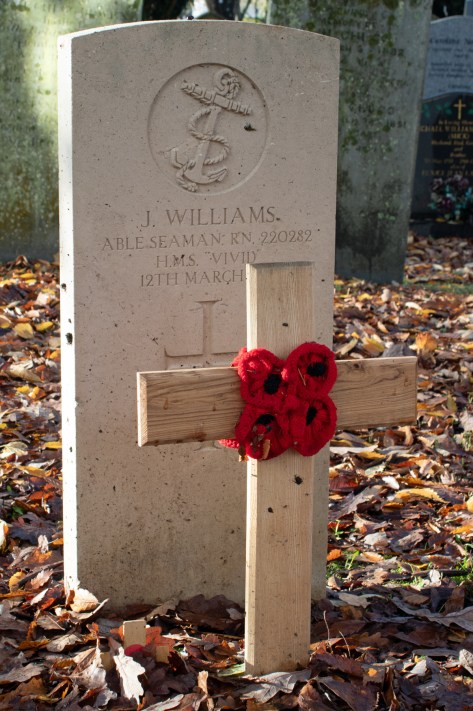
In the spring of 1917, William came down with tuberculosis. He was admitted to the Royal Naval Hospital in Chatham, Kent, but the condition would prove too severe. He passed away on 19th April 1917, aged just 20 years old.

The body of William James Hodge was laid to rest in the naval section of Woodlands Cemetery, Gillingham, Kent.


Sergeant Charles Chown

Sergeant Charles Chown

Charles Allen Chown was born in the Sussex village of Lyminster, at the start of 1882. The tenth of eleven children, his parents were Samuel and Mary Chown. Samuel was a general labourer, and when he passed away in 1898, Charles and his siblings rallied to support his now widowed mother.

The 1901 census found Mary, Charles and his brother Jesse living at 32 Lennox Road, Worthing, West Sussex. Jesse was employed as a brickmaker, while Charles had found work as a solicitor’s clerk. The family had two boarders, Helen and Rosie Bulbeck, and Charles’ niece, Minnie, was also staying with them.

Away from work, Charles was a music lover, and joined the local operatic society. In 1904 he appeared in a local version of Iolanthe, his “piece of portraiture being described as one of the successes of the occasion, for his facial play was good, and the drolleries of the character were displayed in an each and natural manner.” [Worthing Gazette: Wednesday 12th September 1917] In the following year’s Mikado, he took the role of the Lord High Executioner, and he was noted as being a “born comedian, with the most mobile countenance and a singularly dry form of humour…” [Worthing Gazette: Wednesday 12th September 1917]

By the time of the 1911 census, Charles had moved on with work, and moved out of home. Taking a room at 7 Tarring Road, Worthing, his landlords were Harold and Rose Ward. Still employed as a clerk, he was now employed by one of the estate agents in the town, although it is clear that his passion was elsewhere. When he joined up in the autumn of 1914, he gave his trade as musician.

Charles enlisted on 7th October 1914 in Ashton-under-Lyme, Lancashire. What took him north is unclear, although a theatre tour is a possibility. His service records note that he was 5ft 8.5ins (1.74m) tall and weighed 138lbs (62.6kg). He had dark brown hair, brown eyes and a sallow complexion.

Initially assigned to the Manchester Regiment, Private Chown was soon transferred to the 8th (Service) Battalion of the East Lancashire Regiment. He was obviously dedicated to his job: by the end of October 1914 he had been promoted to Lance Corporal, and within six weeks he rose to Sergeant.

In July 1915, Charles’ unit was dispatched to France. That autumn, they remained based near Tilques, in Northern France, but Sergeant Chown’s health was beginning to suffer. After just three months overseas, he was medically evacuated to Britain to receive treatment for pleurisy, and was hospitalised in Chatham, Kent.

When he recovered, Sergeant Chown was reassigned to the 10th Battalion of the East Lancashire Regiment, before being transferred to the 47th Training Reserve Battalion in September 1916. That winter, however, his health received a setback, and he contracted tuberculosis. He would spend the first half of the following year in hospitals in Aldershot in Hampshire, Sutton Veny in Wiltshire and, from May 1917, the 3rd Southern General Hospital in Oxford.

Sergeant Chown’s health would continue to deteriorate, and he was formally discharged from the army on 6th July 1917. He returned to Worthing, and his mother’s home, 2 Montague Place. Charles would eventually succumb to his medical condition, and he passed away on 31st August 1917, at the age of 35 years old.

The body of Charles Allen Chown was laid to rest in the family plot in Broadwater Cemetery, Worthing.


Officer’s Steward 2nd Class Alfred Best

Officer’s Steward 2nd Class Alfred Best

Alfred Henry John Best was born on 17th November 1883. The second of ten children, his parents were William and Alice Best. William was an engine driver and both he and Alice were from Ipswich, Suffolk. Alfred was born in Dovercourt Essex, but by the time of the 1901 census the family had settled in the village of Ramsey, near Harwich.

When he finished his schooling, Alfred was set on a life of adventure. Living so close to the sea, a life on the ocean drew him in, and he found employment on the steamships as a steward. Absent from the 1901 census, the following return, taken in 1911, found him back at home with the family, and employed as a ship’s steward.

When war broke out, Alfred stepped up to serve his country. He enlisted in the Royal Navy as an Officer’s Steward 3rd Class, and was sent to HMS Pembroke, the Royal Naval Dockyard in Chatham, Kent. His service records give his year of birth as 1884, but show that he was 5ft 4.5ins (1.64m) tall, with light brown hair, blue eyes and a fresh complexion. He was also noted as having a mole under his right eye.

Within a matter of days, Alfred’s previous experience gained him a promotion to Officer’s Steward 2nd Class. He would spend the next couple of years on shore, his time being split between Pembroke and HMS Wildfire, a similar establishment just along the coast in Sheerness.

By the spring of 1917, Officer’s Steward Best was back in Chatham, and had been admitted to the town’s Royal Naval Hospital with tuberculosis. The condition would prove fatal, and he breathed his last on 31st May 1917: he was 33 years of age.

The body of Alfred Henry John Best was buried in the naval section of Woodlands Cemetery, Gillingham, Kent, not far from the base he had called home for some time.


Officer’s Steward 2nd Class Alfred Best
(from ancestry.co.uk)

Leading Seaman Henry Hudson

Leading Seaman Henry Hudson

Henry John Gerrard Hudson was born in Whitechapel, Middlesex, on 11th November 1873. The fourth of seven children – and one of five boys – his parents were John and Emma Hudson. John was a paper stainer, and the family were raised in rooms at 62 Fern Street, Tower Hamlets.

Money was seemingly tight, and Henry sought an escape. On 5th January 1889 he enlisted in the Royal Navy, and was sent to the Devon school ship, HMS Impregnable, for his training. As he was below the age to full enrol, he was given the rank of Boy 2nd Class.

Over the next couple of years, Henry learnt the tools of his trade. He spent a year training at HMS Ganges, the shore establishment near Ipswich, Suffolk, and rose to the rank of Boy 1st Class. On 20th November 1890, he was given his first sea-faring assignment, aboard HMS Ruby, and she would remain his home for the next eighteen months.

During his time with Ruby, Henry came of age. His service records show that he was 5ft 5ins (1.65m) tall with light brown hair, brown eyes and a fair complexion. He was also noted as having a number of abscess scars under his left arm.

The now Ordinary Seaman Hudson definitely showed signs of promise as, after just three months, he was promoted to Able Seaman, a rank he would hold for the next five years. During that time, he served on four further ships, including the torpedo boat depot ship HMS Vulcan.

On 1st June 1897, Henry was promoted to Leading Seaman, although he reverted to his previous role just nine months later, at his own request. In October 1898 he transferred to HMS Caesar and, presumably with further support, he was promoted to Leading Seaman again in August 1899.

By May 1902, Henry’s initial term of service came to an end, and he was stood down to reserve status.

In January 1907 Henry married Alice Martin. She was a carpenter’s daughter, and the couple were living on Grosvenor Terrace in Newington, Middlesex, when the exchanged vows. They would go on to have three children.

The 1911 census found the Hudsons living in Weymouth, Dorset. Henry, by this point, was working as a motor boat driver, and the family had a small cottage on South View Road, not far from the town centre. The document shows how they had travelled to where Henry’s work took them: their first child, Nancy, had been born in Walworth, Surrey, in 1908, while her sister, Gladys, was born in nearby Camberwell the following year.

The next couple of years provided a big upheaval for the Hudsons and, by the spring of 1914 the family had moved to Rugby, Warwickshire. There seems to be no family connection to the area on either Henry or Alice’s side. It can only be assumed, therefore, that an opportunity of work arose.

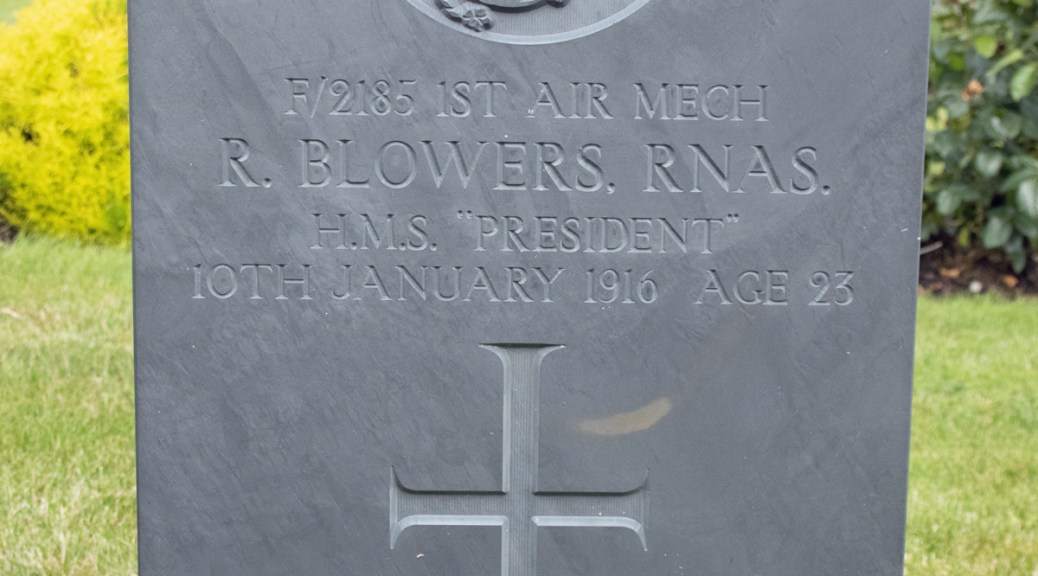
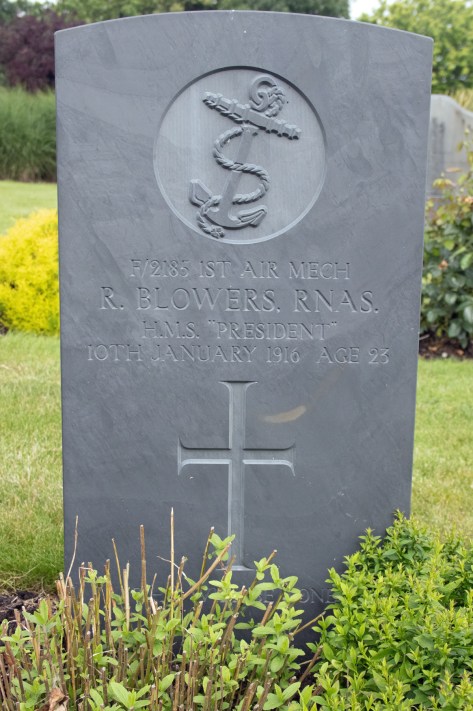
In June 1914, Alice gave birth to the couple’s third son, John. Just two months later, war was declared, and Henry was called back into service. Taking up his previous role, Leading Seaman was to spend the next few years on land. Initially sent to HMS Victory, the Royal Naval Dockyard in Portsmouth, Hampshire. From there he moved to a base in Gorleston, Norfolk, and would remain there until the autumn of 1916.

Leading Seaman Hudson spent six month at HMS President in London, before moving to the Royal Naval Dockyard in Chatham, Kent, also known as HMS Pembroke. By this point – the spring of 1917 – his health was suffering and, that May, he was admitted to the town’s Royal Naval Hospital, suffering from tuberculosis.

The condition was to prove too severe for Henry: he passed away from a combination of the lung condition and a gastric ulcer on 20th May 1917. Henry was 43 years of age.

Alice was still living in Warwickshire at this point. Her husband, Henry John Gerrard Hudson, was therefore laid to rest in the naval section of Woodlands Cemetery, Gillingham, Kent.


Fleet Surgeon Edward Ward

Fleet Surgeon Edward Ward

Edward Copley Ward was born in Charleville, County Cork, Ireland, on 2nd November 1862. The middle of three children, his parents were Thomas and Elizabeth Ward. Thomas died in 1868, and there is scant information about Edward’s life until he reached his early 20s.

It is clear that he had a focus on education, and a leaning towards the medical side of things. By December 1883, he had qualified as a Master Surgeon at the Royal University of Ireland, and was licenced in midwifery through the King & Queen’s College of Physicians.

Edward was not one to rest on his laurels, however, and he soon tasked himself to a naval career. On 21st August 1900 he was recorded on the Navy Lists as being a Fleet Surgeon, although there is little specific information about this service at this time.

MARRIAGES: WARD-CROWE

October 28, by special licence, at Kill Church… Staff-Surgeon Edward C Ward, RN, to Eleanor, daughter of the late Michael F Crowe, JP, of Melfield, Blackrock, County Dublin.

[Northern Whig: Saturday 1st November 1902]

Edward and Eleanor’s trail goes cold again at this point, and it is not until the 1911 census that we are able to pick them up again. By this point, Eleanor, now 45 years old, is living with four of her sisters, Kate, Charlotte, Isabella and Susanna in a house in Monkstown, Dublin. The family are supported by a domestic servant, Mary Collins.

Edward, meanwhile, was serving on board the battleship HMS Jupiter, which was moored in Weymouth Bay, Dorset. There were 548 crew members on board, and the now Fleet Surgeon Ward was one of seventeen commissioned officers, serving under Rear Admiral Arthur Limpus.

Over the next three years, Edward would serve on six further ships, but, by the time war was declared in the summer of 1914, he found himself shore-based. From December of that year, he served at HMS Pembroke, the Royal Naval Dockyard in Chatham, Kent. His role: to oversee the treatment of incoming wounded troops, and their preparation for onward transport to whichever hospital they would end up.

Fleet Surgeon War would spend the next three years fulfilling this task, but, by the summer of 1917, it would be Edward himself who needed support. Admitted to the Royal Naval Hospital in Chatham, he was suffering from tubercular disease of the kidney, and it would be this condition to which he would succumb. He passed away on 7th August 1917, at the age of 54 years old.

The body of Edward Copley Ward was laid to rest with a simple headstone in Woodlands Cemetery, Gillingham, Kent, not far from the dockyard he had come to know as home.


Interestingly, when Edward’s estate went to probate, he left his estate – worth £1257 7s 11d (approximately £111,500 in today’s money) to Geoffrey Holt Stillwell, with no mention of Eleanor. Geoffrey was a member of a banking family from the south of England, who served as a Lieutenant Colonel in the 4th Hampshire Regiment.


Fleet Surgeon Edward Ward
(from ancestry.co.uk)

Deck Hand John McDonald

Deck Hand John McDonald

Born in Laxay (Lacasaigh) on the Isle of Lewis, Scotland, John Murdo McDonald was the son of Donald and Maggie McDonald. He can be readily identified on the 1901 census, which suggests that he was born in January of that year. The family do not appear on the 1911 census, and John’s trail quickly goes cold.

When war broke out, it would seem that John stepped up to play his part. He joined the Royal Naval Reserve – suggesting that he had some seafaring experience, but his service papers have been lost to time. There are at least four John Murdo McDonalds born around 1901, who all served in the Royal Naval Reserve. None of their service numbers match that of John’s, however.

By the summer of 1917, Deck Hand McDonald was serving on board the motor drifter Ocean’s Gift. The boat, little more than a trawler requisitioned by the Royal Navy, was used as a patrol ship around the Thames Estuary.

That July, John was admitted to the Royal Naval Hospital in Chatham, Kent. He was suffering from tuberculosis, and this would ultimately take his life. He died on 2nd July 1917, aged just 17 years old.

The Isle of Lewis was an unimaginable distance from Kent, and so the body of John Murdo McDonald was not returned to his family. Instead, he was laid to rest in the naval section of Woodlands Cemetery in Gillingham, Kent, not far from the dockyard in Chatham, that had briefly been his home.