Category Archives: accident

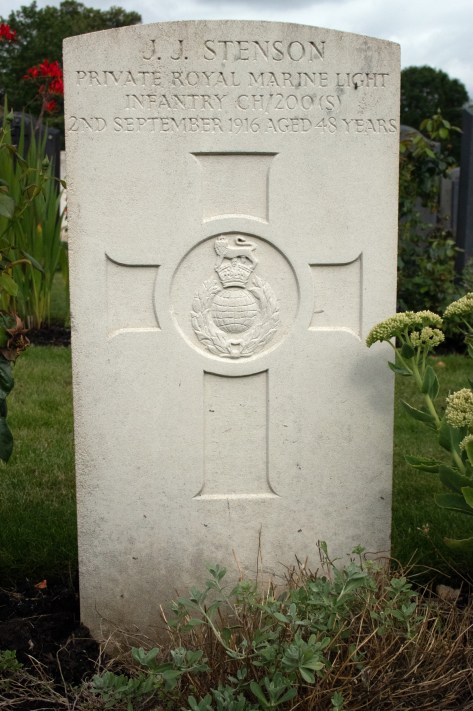
Private John Stenson

Private John Stenson

John Joseph Stenson was born in the Derbyshire village of Crich on 27th October 1869. He was the younger of two children to Jane and Joseph Stenson. Jane had been married and widowed before, and John had a number of half-siblings in his extended family.

Tracing John’s early life is a bit of a challenge, and he is missing from a number of census records. By 1901, he was working as a blacksmith in Nottingham, and living at 94 Park Street, to the west of the town centre. He was married to Rose Moon, and they had exchanged vows in 1896.

By 1911, the couple had moved to the Bulwell area of Nottingham, and were living at 23 Padley Street. John was still working as a blacksmith, Rose as a dressmaker, and their adopted son, 18-year-old John Daley, was also living with them, and was employed as a hosiery washer.

When war broke out, and despite his age, John stepped up to play his part. He enlisted on 5th September 1914, joining the Sherwood Foresters as a Private. His service records show that he was just under 5ft 8ins (1,72m) tall, with brown hair and grey eyes.

Private Stenson did not stay with the army for long and after just ten days he was transferred to the Royal Marine Light Infantry. His time was split between two bases, the Royal Naval Dockyard in Chatham, Kent, and the equivalent in Portsmouth, Hampshire. He did see time overseas, with a later report confirming that he had fought at Gallipoli.

ACCIDENTAL DEATH OF A SLEEP WALKER

At an inquest at Chatham on Tuesday on Pte. John Joseph Stenson… belonging to Bulwell, Nottingham, whose body was found in an area beneath the barrack rooms, it was stated that he walked in his sleep. A verdict of “Accidental Death” was returned.

[Kentish Gazette: Saturday 9th September 1916]

Other reports suggested that Private Stenson had started sleep walking in recent weeks. The coroner reported that he was killed “either by falling our of his bedroom window or over the passage-way railings…” [Hull Daily Mail: Wednesday 6th September 1916]

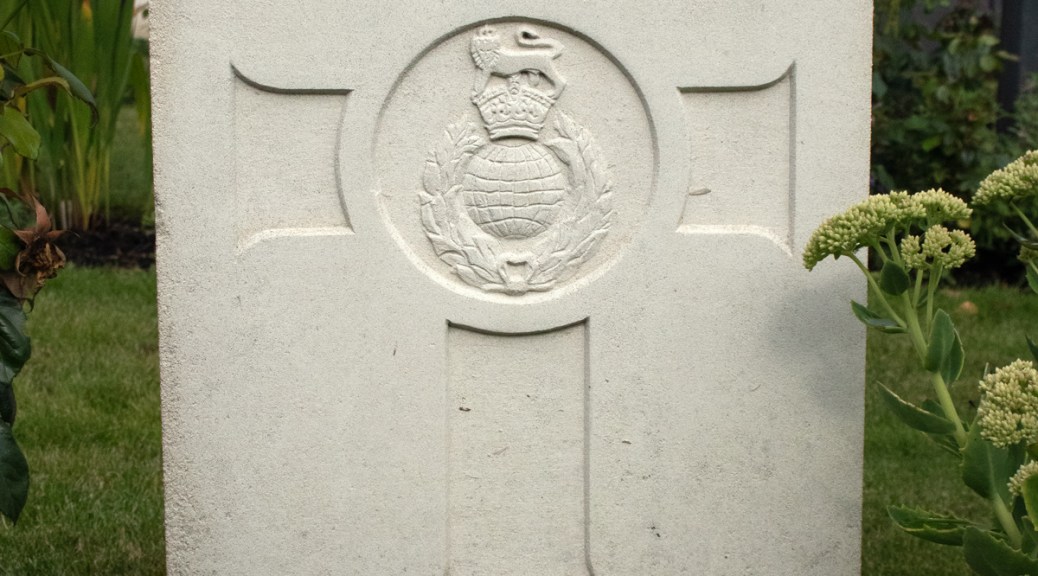
John Joseph Stenson was 46 years of age when he died on 2nd September 1916. His body was laid to rest in the naval section of Woodlands Cemetery, Gillingham, Kent, not far from the dockyard at which he had been based.


Gunner James Cole

Gunner James Cole

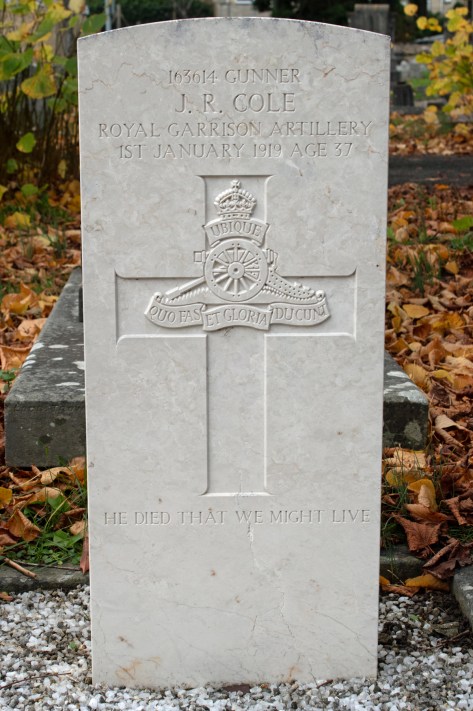
James Rees Cole was born in the spring of 1881, and was the oldest of four children to Thomas and Jane. Thomas was a groom from Pembrokeshire, Wales, and, at the time of James’ birth, he and Jane were living in the village of Chancery, to the south of Aberystwyth, Ceredigion, Wales.

The 1901 census recorded that the Cole family had relocated to England and had set up home at 15 Woolley Street, Bradford-on-Avon, Wiltshire. Thomas was employed as a domestic coachman, while James, now 19 years old, was an ironmonger’s assistant.

By 1911, James was boarding with widow Sarah Goodman in the Devon village of Withycombe Raleigh, now a suburb of Exmouth. His was engaged by this point, and just a couple of months later, on 5th July, he married his sweetheart, Bessie Livings, in Christ Church, Bradford-on-Avon. The couple went on to have two children, Irene and Dennis.

When war was declared, James stepped up to play his part. He enlisted in December 1915, by which point he and Bessie had moved to Reading, Berkshire. His service papers show that he was 5ft 9ins (1.75m) tall, and weighed 135lbs (61.2kg). He had blue eyes, brown hair and a fresh complexion.

Assigned to the Royal Garrison Artillery, Gunner Cole was not formally mobilised until June 1917. Initially sent to Plymouth, Devon, by the following spring, he had moved to Fareham, ahead of his unit being sent to France. James would spend the next six months in France, before being medically evacuated back to Britain.

Gunner Cole had crushed the metatarsals in his left foot, although his medical notes are difficult to read, it is clear that he was inconsiderable pain. He was admitted to the war hospital in Reading, Berkshire, and remained there for a couple of weeks. When he was discharged, he was transferred to the 2nd Siege Artillery Reserve Brigade in Catterick, North Yorkshire, while he recuperated.

James would only be out of hospital for a matter of weeks. He contracted influenza and was admitted to the camp hospital, but the condition would prove too severe. He passed away on 1st January 1919, at the age of 37 years old.

The body of James Rees Cole was taken back to Wiltshire for burial. He was laid to rest in the graveyard of Christ Church, Bradford-on-Avon, not far from where his widow and children were living.


Second Lieutenant Cecil Buckland

Second Lieutenant Cecil Buckland

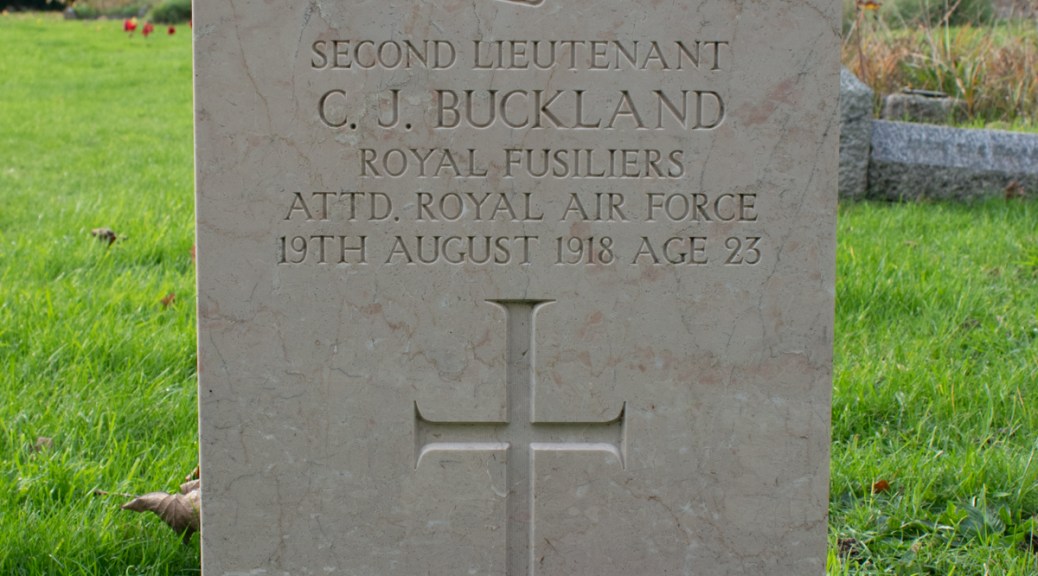
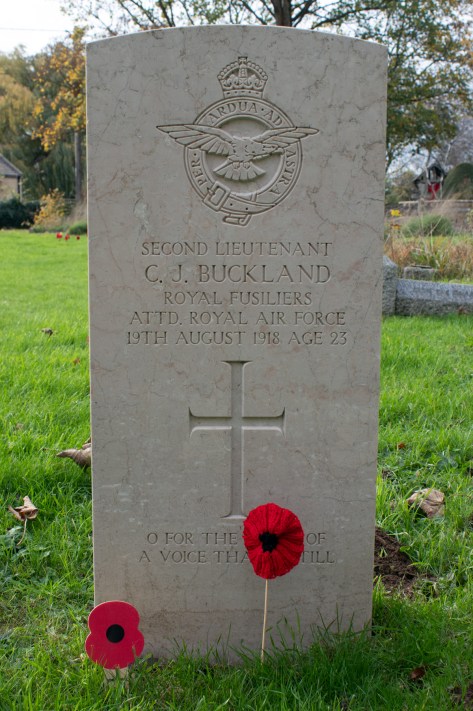
Cecil John Buckland was born on 5th July 1895 in Holloway, Middlesex. The third of four children, his parents were bicycle salesman Arthur Buckland, and his wife, Mary. The 1901 census found the family in rooms at a terraced cottage at 8 Burrard Road, Hampstead.

By 1911, things had changed for the family. They had moved to 73 Finchley Road, which was a ten-roomed property. Arthur was now recorded as being a commercial traveller for a motor company, and they employed a domestic servant, Mary Jones, to help support the family. Cecil had followed in his father’s footsteps and was an apprentice salesman for the same motor company. His older brothers, Arthur Jr an Harold, were also working as salesmen in the same business.

When war broke out, Cecil was called upon to play his part. Full service details have been lost to time, but it seems that he initially joined the Royal Fusiliers, and was attached to the 5th Battalion. It isn’t clear where or when he served, but by the spring of 1918 – just weeks after its formation – he gained a commission in the Royal Air Force.

Second Lieutenant Buckland was stationed at 44 Training Depot Station at Holt Airfield in Wiltshire, and it was here that he learnt the ropes using a Bristol F.2b Fighter. On the 19th August 1918, Cecil took off on a practice flight. Shortly after take-off, he attempted to turn the aircraft and got into a spin as too low height to recover. The aeroplane crashed to the ground, and he was killed instantly: he was just 23 years of age.

The body of Cecil John Buckland was laid to rest in Holt Old Cemetery, not far from the airfield at which he had been based.


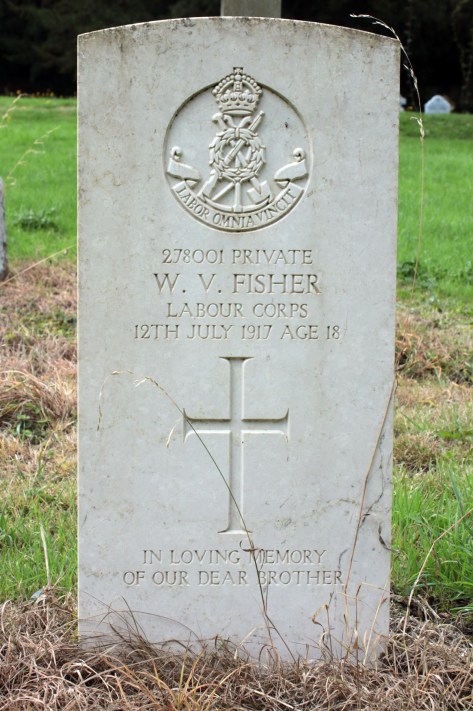
Private William Fisher

Private William Fisher

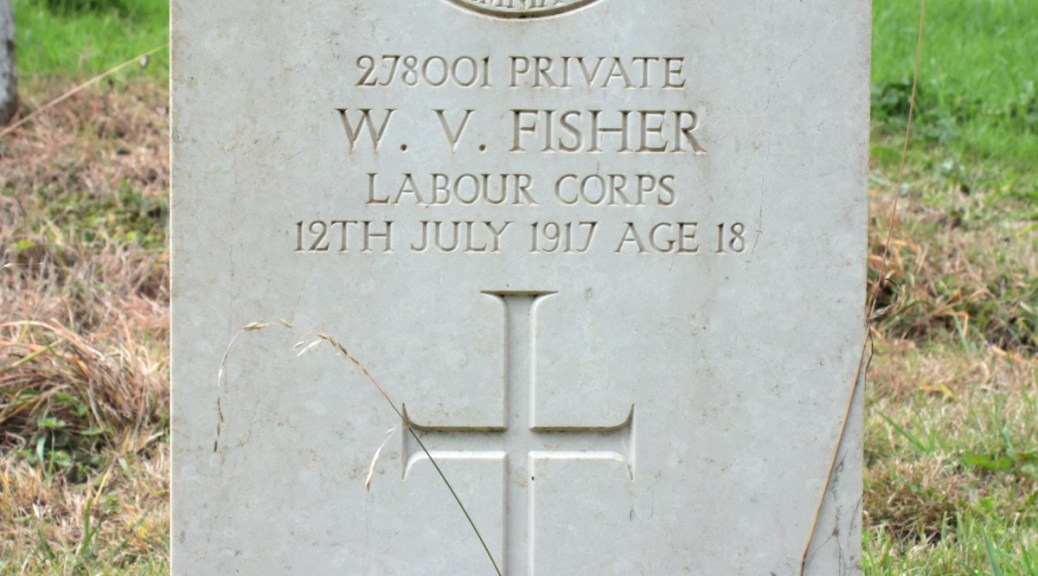
William Victor Fisher was born in Battersea, Surrey, at the beginning of 1899. The youngest of nine children, his parents were William and Julia Fisher. William Sr was a blacksmith and farrier, and, when William was born, the family were living in rooms at 9 Gladstone Street.

Julia died in 1902, and William Sr was left to raise the children on his own. This he seemed to have done well, and by the time of the 1911 census, he was still living in the same house, with five of his children. William Jr’s eldest brother, Mark, was assisting their father in the business.

When war broke out, William Jr was still at school. However, he was keen to play his part and enlisted on 29th August 1915, lying abut his age to do so. As happened at the time, the recruiting officer took the age he stated – 19 years, 255 days – as being correct. He was assigned as a Private in the Royal West Surrey Regiment, and remained in Battersea for training.

Private Fisher’s time in the army was to be a brief one, but it was not without incident. He was confined to barracks for three days on 12th October, when he lost a pair of boots. Just a month later, he was reprimanded again for being absent without leave for nearly six hours on 17th November: he was again confined to barracks, this time for four days.

William’s lie was to catch up with him, and, on 27th November 1915, he was discharged for giving an incorrect age on his recruitment papers.

Two years later, William stepped up to play his part once more. This may have been a result of the death his older brother – Francis. A Private in the 2nd Battalion of the Royal Fusiliers, he was killed in action on the Western Front on 28th February 1917: he was just 20 years of age.

Details of William’s second stint in the army have been lost to time, but it is clear that he was initially assigned to the 46th Training Reserve Battalion. Private Fisher then transferred to the 626th Home Service Employment Company of the Labour Corps, and was billeted in Wiltshire.

Tragically, Private Fisher’s time in the army was also to be brief. His entry in the British Register of Soldiers’ Effects show that he died on 12th July 1817, and, intriguingly, that the cause was asphyxiation. His death certificate confirms that this was asphyxia from inspiration of vomited matter, and that he died at No. 12 Camp in Longbridge Deverill: he was just 18 years of age.

The body of William Victor Fisher was laid to rest in the tranquil grounds of St Peter & St Paul’s Church, not far from where he had passed away.


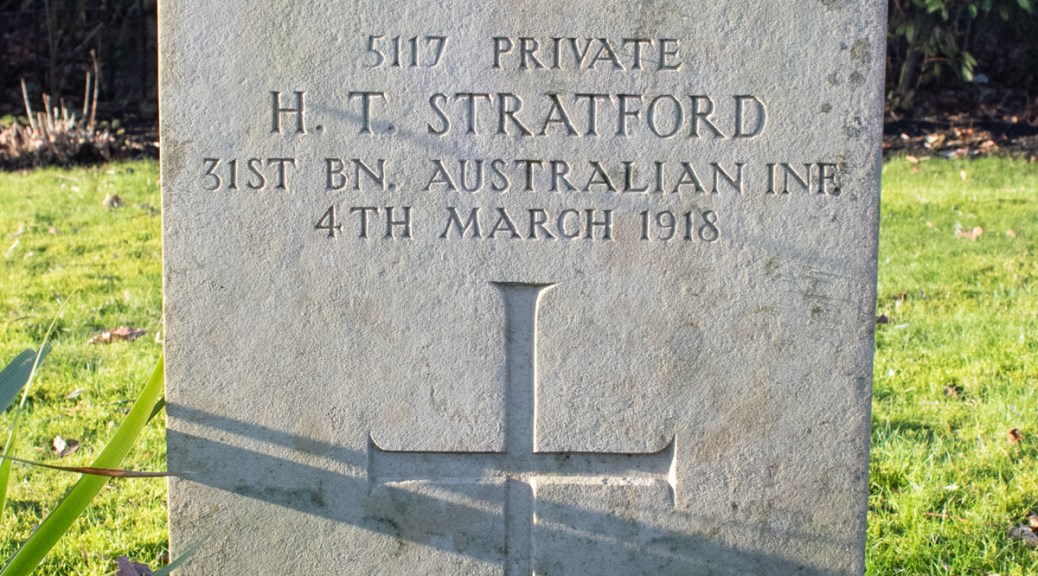
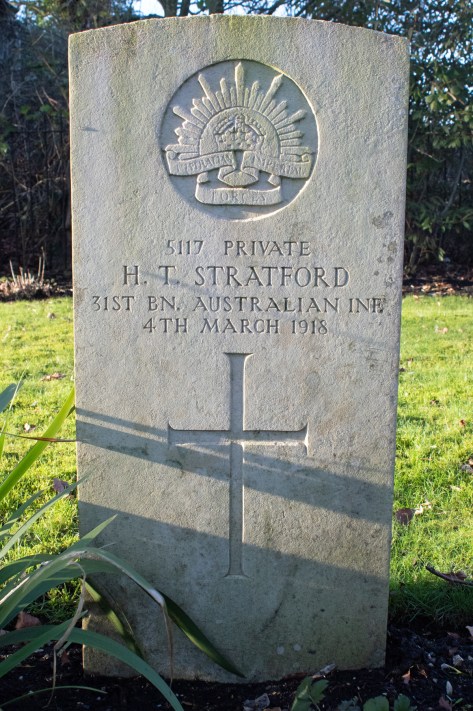
Private Henry Stratford

Private Henry Stratford

Henry Thomas Stratford was born in Southampton, Hampshire, in the autumn of 1870. The youngest of three children, his parents were John and Maria Stratford. When Henry’s father died in 1876, Maria re-married, and went on to have a further child with her new husband, James Simmons.

Maria’s husbands worked away, and likely served on ships: John was absent from the 1871 census, while James was missing from the 1881 return.

By the 1901 census, Maria had been widowed a second time. She was living at 29 Dock Street with her three youngest children – Henry, his older brother John, and his younger half-brother William. By this point, John was employed as a waterman on a barge, while Henry had also taken to the water, and was employed as a seaman.

Maria passed away in 1904, and there is little further information about Henry’s earlier life. His later army records suggest that he served in the Royal Navy for 14 years, although there are no records for his service at that time.

At some point, presumably after his time in the navy had expired, Henry emigrated to Australia. Again, details are scarce, but he was definitely there by the spring of 1917, having settled in Brisbane, and taken up work as a sailmaker.

When war broke out in Europe, Henry stepped up to serve his country, enlisting in the Australian Imperial Force on 3rd Mary 1917. His records confirm that he was 5ft 4ins (1.62m) tall, and weighed in a 152lbs (69kg). With light brown hair and blue eyes, he had a fair complexion and tattoos on both of his forearms.

Assigned to the 31st Battalion of the Australian Infantry, Private Stratford set sail from Sydney on 14th June 1917. After a ten week voyage, he was marched in to Hurdcott Camp near Fovant, Wiltshire, and would remain in the ANZAC base for his training.

On 23rd February, Henry was admitted to the No. 3 New Zealand General Hospital in Codford, Wiltshire, having fallen from a train. He remained in hospital for the next week, but his head injuries would ultimately prove fatal.

An inquest was held at the New Zealand Military Hospital on Wednesday concerning the death of Henry Thomas Stratford…

Mr FAP Sylvester (coroner) conducted the inquiry, and the evidence went to show that on the night of February 23rd last the deceased man met with an accident by trying to leave a train while it was in motion, before reaching Codford GWR Station. He was picked up in an unconscious state and conveyed to the Military Hospital where he died on Monday.

Corporal John Brooks, ASC Cyclist Section, of Codford, stated that he proceeded from Warminster on the 9:45pm train to Codford on February 23rd. He was in the company of Gunner E Ford, RFA, of Boyton, and they were in the came corridor carriage as the deceased man. After leaving Warminster deceased walked down the corridor, and some time later witness found that deceased had opened the carriage door and was sitting with his feet hanging outside, apparently trying to alight from the train. Just after passing Upton Lovel [sic] crossing, he suddenly disappeared, and witness just saw him fall off the footboard. Deceased never spoke or shouted, and when the train pulled up at Codford, witness reported the matter to the military police and stationmaster, and accompanied them to the spot where deceased was found lying face downwards, his head against the main line rail. First aid was rendered and he was moved to the military hospital.

Private Claude E Thompson, Australian military police, stated that deceased had a road pass, but he had no right to travel by train. He had probably endeavoured to leave the train before it reached Codford to evade the military police.

The jury returned a verdict that deceased came to his death by trying to alight from the train and that he accidentally fell and sustained a compound fracture of the skull.

[Warminster & Westbury Journal – Friday 08 March 1918]

Henry Thomas Stratford was 47 years of age when he passed away. His body was laid to rest in the ANZAC extension to St Mary’s Churchyard in Codford, Wiltshire, close to the hospital in which he had breathed his last.


Acting Bombardier Walter Ricketts

Acting Bombardier Walter Ricketts

Walter James Ricketts was born in the summer of 1893, the fifth of ten children to James and Elizabeth (and, tragically, the first to survive childhood). James was a farm labourer from the Herefordshire village of Dilwyn, and this is where the family were born and raised.

When he completed his schooling, Walter found work as a groom. The 1911 census recorded him as living at the Moorhampton Hotel, seven miles (11km) to the south west of his home. His employer, Edith Pearman, is recorded as a hotel keeper and farrier, and he was one of two live-in staff.

Walter married Lucy Godwin in the spring of 1918. The oldest daughter of a clerk, she had been born in Lugwardine, near Hereford. By the time the couple married, Walter had enlisted in the army, and was serving in the Royal Field Artillery.

Full details of Gunner Ricketts’ service have been lost, but it is clear that he made the move to the Royal Garrison Artillery at some point. By the summer of 1918, the newly promoted Acting Bombardier was attached to the 57th Company, and based at a gun station in Dulwich, Surrey.

The only other record for Walter is his Pension Ledger card. This confirms that he died on 9th August 1918, following accidental contact with an electric current. There is no further information about the incident, but he was 25 years of age when he died.

The body of Walter James Ricketts was taken back to Herefordshire for burial. He was laid to rest in the tranquil setting of St Mary’s Churchyard in his home village, Dilwyn.


Second Lieutenant Ernest Hargrave

Lieutenant Ernest Hargrave

Ernest Lawton Hargrave was born in the spring of 1899 in Clapham, Surrey. One of three children, his parents were Ernest and Ada Hargrave. Ernest Sr was a letterpress machine mender from Leeds, Yorkshire, but when he died in 1910, Ada was left to raise her children alone.

The 1911 census found Ada working as a boarding house keeper. The property she ran – a seven-roomed property at 65 Elspeth Road, Battersea, Surrey – was home to her and her two surviving children. Alongside them lived five boarders – Walter Bland (of no employment), William Gray (a clerk at the Scottish Office), Norman Pierce (an engineer’s draughtsman), William Henderson (a temporarily unemployed government clerk) and Maria Baugh (living on her own means). Edgar Gray – possibly William Gray’s father – was also visiting at the time the census was taken.

When war broke out, Ernest was 15 years of age. Too young to enlist straight away, his Medal Roll Index Card notes that he took a commission as a Second Lieutenant. Initially added to the General List, he was soon assigned to the Royal Flying Corps and sent to 79 Squadron in Hampshire.

Training to be a pilot, Second Lieutenant Hargrave practiced in an Avro 504J biplane. By 22nd September 1917, he had completed six solo flights, totalling 16 hours. That day he was under instruction, when the accident that was to take his life occurred. A later report reached the verdict that an error of judgement on Ernest’s part caused the aircraft to crash:

[He was] climbing too steeply with an insufficient bank, thus stalling the wash. As the wash was only 175ft from the ground he failed to recover and struck the ground practically nose-on. Passenger met his death through being jammed between the engine and petrol tank.

Ernest Lawton Hargrave was just 18 years of age when he was killed. His body was laid to rest in the peaceful graveyard of St Paul’s Church, East Boldre, not far from the airfield he had so briefly called home.


While the Commonwealth War Graves Commission records give Ernest’s rank as Lieutenant, other documents suggest he held the rank of Second Lieutenant when he died.


Second Lieutenant Joseph Wood

Second Lieutenant Joseph Wood

Joseph Clark Wood was born in Horning Mills, Ontario, Canada, on 26th October 1897. The second of six children, his parents were farmers Richard and Bella Wood.

Details of Joseph’s early life are sketchy, and the information that is available contradictory.

By the end of 1917, however, Joseph had stepped up to serve his King and Empire, and had joined the Royal Flying Corps. His service papers no longer exist, so it is not clear how and when he joined, or came over to Britain. As the new year took over the old, Second Lieutenant Wood was attached to the No. 1 Training Squadron, and based in East Boldre, Hampshire.

A newspaper report outlined what became of him:

The Hampshire County Coroner… held an inquest on Monday into the circumstances attending the death of Second-Lieutenant Joseph Clark Wood… which occurred as the result of a flying accident on the previous day.

Lieut. Alexander Gibson Gilroy, RFC, who gave evidence of identification, said that the deceased was a pilot under advanced instruction, quite capable of flying alone.

AM Cecil Bryant spoke to testing the machine just before deceased flew and finding everything in order, Rigger Mechanic Henry Williams, giving similar evidence.

Second-Lieutenant Oswald George Brittorous RFC, told how he was just getting out of another machine when he heard a crash in the air, and looking up saw a machine without wings, the latter having evidently folded back. It hung for a few seconds and then went into a spinning nose-dive. The machine seemed between 1,500 and 2,000 feet up , and it crashed to hearth half a mile away from where witness was. Witness went to the scene after deceased had been removed, and found the machine practically matchwood. The crash he heard in the air was caused by the wings folding back and breaking. There was no collision.

Capt. William Ramsay Nasmyth, RAMC, spoke to the removal of the body. Death was instantaneous and was caused by severe injuries to the head.

The jury returned a verdict of accidental death.

[Hampshire Advertiser: Saturday 19th January 1918]

Second Lieutenant Joseph Clark Wood was just 20 years of age when he died on 13th January 1918. He was laid to rest in the graveyard of St Paul’s Church in East Boldre, Hampshire, not far from the airfield at which he had been based.


Second Lieutenant Richard Wood

Second Lieutenant Richard Wood

Richard Shaw Wood was born in London, Ontario, Canada, in 1891. The middle of three children his parents were Bermudan Benjamin Wood and his Canadian wife, Mary. Benjamin was a farmer, but his son would seek out bigger and better things for himself.

On 12th November 1913, he married Alice Duggan. There is little specific information about her early life, but she had been born and raised in Toronto. They wend to to have a son, Richard Jr, the following year.

With war raging across Europe, Richard felt compelled to play his part. He gave up his job as a car salesman and, on 30th July 1917, he enlisted in the Canadian Royal Flying Corps. As an Air Mechanic 3rd Class, he was soon sent to Britain, but took a commission in the Royal Flying Corps in December of that year.

The now Second Lieutenant Wood was attached to No. 1 Training Squadron and was based in East Boldre, Hampshire. On 17th March 1918, after just a few months in the unit, he was flying a Sopwith Camel from the Hampshire airfield, when disaster struck. His aircraft nosedived and crashed to the ground. A subsequent inquest concluded that: ‘the smash was caused by the Pilot losing control of the machine… 2nd Lt R Shaw Wood was a steady [skilful] and reliable pilot. He had performed the manoeuvre… on previous occasions. The Court are of opinion that the Pilot [must have] fainted thus losing control.’

Richard Shaw Wood was 27 years of age when he died on 17th March 1918. He was laid to rest in the tranquil graveyard of St Paul’s Church, East Boldre, not far from the airfield that hat become his home.


Second Lieutenant Richard Wood
(from findagrave.com)

Second Lieutenant Arthur Taylor

Second Lieutenant Arthur Taylor

Arthur Rowland Taylor was born on 21st March 1896 in Ilford, Essex. He was the third of five children – all of them boys – to land agent Robert Taylor and his wife, Edith. Robert’s work took the family around the country: the 1901 census found them living in Connah Quay, Flintshire, and this is where Arthur’s two younger brothers were born.

By 1911, the family had moved again, to the 15-roomed Bagle Gate House in Bridlington, Yorkshire. Robert and Edith were living with their three youngest children – including Arthur – and two servants: cook Sarah Leatham and housemaid Lucy Patchett.

At some point after leaving school, Arthur was also drawn to a new adventure. By the time war broke out, he had moved to America and settled in Denver, Colorado.

In June 1917, with war raging across Europe, Arthur had stepped up to play his part. He crossed the border to Toronto, Canada, and enlisted in as an Air Mechanic 3rd Class in the Canadian Royal Flying Corps. Sent to Britain, just three months later, he accepted a commission, taking the rank of Second Lieutenant in the British Royal Flying Corps.

Arthur was based in East Boldre, Hampshire, and was attached to the 79th Training Squadron. On 19th January 1918, he had taken off in his Sopwith 5F1 Dolphin, when the engine stalled. He did not have enough height to try and restart the engine, and the aircraft crashed to the ground, bursting into flames on impact. Second Lieutenant Taylor was killed: he was 21 years of age.

The body of Arthur Rowland Taylor was laid to rest in the peaceful graveyard of St Paul’s Church in East Boldre, not far from the base at which he had served.