


Henry Thomas Preece was born in the summer of 1884, one of seven children to agricultural labourer Tom Preece and his wife, Sarah. Thomas had been born in the Somerset village of Nunney, and it was here that he raised his family.
When Henry left school, he chose not to follow in his father’s agricultural footsteps. By the time of the 1911 census, he was recorded as a baker and, as such, would have been at the heart of village life in Nunney.
Henry married local woman Ellen Stone in 1909, who was a dressmaker with her own account. The couple would go on to have four children between 1909 and 1916.
With war looming, Henry felt the need to play his part. He joined the King’s Royal Rifle Corps in January 1916 and, after training, was sent to France a couple of months later.
He was wounded on July 25th, when out with a wiring party erecting barbed wire obstacles. He received a gun-shot wound in the abdomen, which also injured the spinal cord and his back. He was first taken to the South African Hospital at the base, and after being there for several days he was removed to England and take to the Netley Hospital where he died…
Somerset Standard: Friday 8th September 1916
Lance Corporal Preece died on 3rd September 1916, at the age of 32 years old. His body was brought back to Nunney, where he was laid to rest in the family grave at All Saints’ Church.
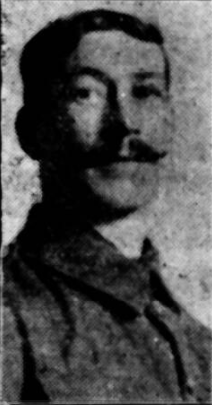
(from britishnewspaperarchive.com)
Henry’s brother Walter also served in the First World War:
Last weekend Mrs Preece, of the Market-place, Nunney, was officially informed of the death of her son, Pte. Walter Preece, of the 1st Wilts, and the sad news was confirmed in the following letter received by Miss Preece from Segt. Banning…
“Just a few lines to let you know how poor Walter was killed in action, as I know you are very anxious to learn. Well, he was killed by a bit of shell, which killed him almost instantly. The poor chap did not suffer any pain at all. You don’t know how I felt it when I saw him lying dead on the ground. It made me feel ill for days, and I am sure is must have broke you and your mother’s hearts when you heard of it, but cheer up and bear it well. I only wish I was coming home, as then I would tell you more about it. I received a parcel which you sent to him. As they won’t send back any parcels which were intended for any killed or wounded, I took it, and must thank you very much for it. I am sending back all Walter’s photos to you, as I thought you would like them. I am very sorry I cannot stop to say any more, so I will now close, with my deepest sympathy with you and your mother in the loss of your dear brother, Walter.”
Pte. Preece had served nine years with the Colours, and of these three were spent in India and three in South Africa. He had just started work at Hallatrow Station as a porter when the war broke out and he was called up to join his regiment. He went through the battle of Mons, in which the Wilts suffered badly. He was slightly wounded at Loos, and was in hospital at Rouen some months with bronchitis. Pte. Preece was one of five brothers serving with the Colours, and the greatest sympathy is felt for Mrs Preece and family in their loss.
[Somerset Standard: Friday 28th July 1916]
While he was obviously a military man, full details of his prior service have been lost to time. The 1911 census found him in South Africa, and based on the newspaper report, he would have enlisted in 1905, as soon as he turned 18 years of age.
When war broke out, Walter was called upon to play his part once more. Attached to the 1st Battalion of the Wiltshire Regiment again, he was sent out to France during the first weeks of the conflict.
Private Walter Preece , he was killed at the Battle of Albert on 6th July 1916: he was 29 years of age. He was buried at the Thiepval Memorial.
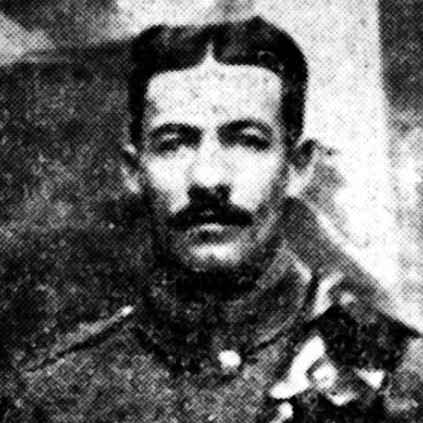
(from britishnewspaperarchives.com)
The Sergeant who had written to Walter and Henry’s sister was Frederick John Banning. Born in Stow-on-the-Wold, Gloucestershire, in 1893, he was one of five children to John and Caroline.
Frederick joined up in the early weeks of the war, and had reached the rank of Sergeant by that fateful summer of 1916. Medically discharged from the army on 3rd July 1917, Frederick survived the war, and returned to Gloucestershire.
The autumn of 1918 was a tragic one for the Banning family, with three of Frederick’s siblings dying over a matter of weeks. No details are available about their deaths, but, given the time period, it seems likely that they succumbed to the flu pandemic running rampant at the time. Frederick’s older sisters Polly and Dora were 30 and 29 when they passed, while his younger brother, George, was just 17 years of age.
After the war had ended, Frederick married Mary Ann Brennan (known as Annie). A dock labourer’s daughter from Liverpool, it is unclear how the couple met. They exchanged vows in June 1919, and would go on to have ten children.
The 1921 census recorded the family living on Well Lane in Stow-on-the-Wold, with Frederick now working as a cattle dealer with his father. This he continued to do through to the 1939 Register, and the outbreak of the Second World War.
During the conflict, Frederick and Annie’s son, Frederick Jr, joined the Royal Navy, rising to the rank of Able Seaman. HMS Manners, the ship he was serving on was sunk by the German submarine U-1051 on 26th January 1945. His parents were desperate for news of their son:
BANNING – Frederick Anthony Banning AB No. 62490, reported missing at sea January 1945. Can anyone help with information? If so, kindly reply to Mr FJ Banning, No. 1 King George’s Field, Stow-on-the-Wold.
[Gloucestershire Echo: Friday 2nd February 1945]
News later came that Frederick Jr had been killed in the attack.
Frederick John Banning lived on until 1964. He died in Warwick on 2nd September that year: he was 71 years of age.
Henry Preece’s brother-in-law, James Robert Parsons, also served his country.
James – who was known by his middle name – was born in Frome, Somerset, in the summer of 1873, and was the middle of nine children to Nunney farm labourer Henry Parsons, and his wife, Mary.
Robert sought out a career, and enlisted in the 1st Battalion of the Somerset Light Infantry. Details of his service have been lost, but a later report suggests he spent sixteen years in the army.
It seems that Robert had returned to Somerset by the spring of 1912 taking up a job as a farm labourer. On 27th April he married Henry’s older sister Bessie. They lived in Nunney, but did not go on to have any children.
In March [1915] he volunteered for active service and joined the 6th Somersets, and he had only been 17 days at the Front when he met his death.
[Somerset Standard: Friday 17th September 1915]
James Robert Parsons was 42 years of age when he died. He is commemorated at the Menin Gate in Ypres. His suprerior wrote to Bessie as soon as he was able.
“Dear Madam, Just a line as I think it my place to write to you on behalf of your beloved husband, who was in my section. I am sorry to inform you that he was killed on Friday morning, 3rd September, and I may say we put him to rest in peace respectfully. I was very sorry to lose him, and the other men were also, as he was respected by all here. It is very hard luck on your part and his, as he was the only one we lost while up in the firing line. I am also sending photo, which I took from his pocket. I knew it was there, as he showed it to me a few days before we went into the trenches, so I thought it was my place to send it to you, as very likely you will be pleased to receive it. I sympathise with you in your loss and hope you will bear it as best you can. I should have written before, but we have only just come out of the trenches, so this is my first chance of writing. I remain, yours respectfully, Corpl. E Jones, 1st Co. 6th Somts.”
[Somerset Standard: Friday 17th September 1915]
His brother-in-law, Henry, died a year to the day after him.
Three members of the same family – two brothers, and a brother-in-law – had died within exactly a year. The impact on the Preece and Parsons families, and on Nunney as a community, must have been immeasurable.

