Harold Francis Ford was born on the 12th November 1896, and was the older of two children to George and Alice. George was a domestic gardener, and the family were raised in Buckland, Somerset.
When Harold completed his schooling, he joined his father in the gardening business. The 1911 census recorded that the family had moved to Axmister, Devon, and were living in Old Park Cottage (although Alice and Harold were actually staying with her brother in Buckland St Mary when the return was taken).
By the time war broke out, Harold had found work as an assistant mechanic. He was keen to play his part, however, and enlisted in the Royal Fusiliers in May 1915. His service papers show that he was 5ft 10ins (1.77m) tall, with brown eyes and dark brown hair.
Sent to Devonport for training, Harold seemed to impress his superiors. On 4th February 1916, he was made an Acting Lance Corporal, and this rank was formalised just a week later.
In April 1916, Lance Corporal Ford came down with bronchitis, and was hospitalised for two months. During that time he developed a heart condition, and this would prove severe enough for him to be discharged from military service. He was formally stood down on 14th June 1916.
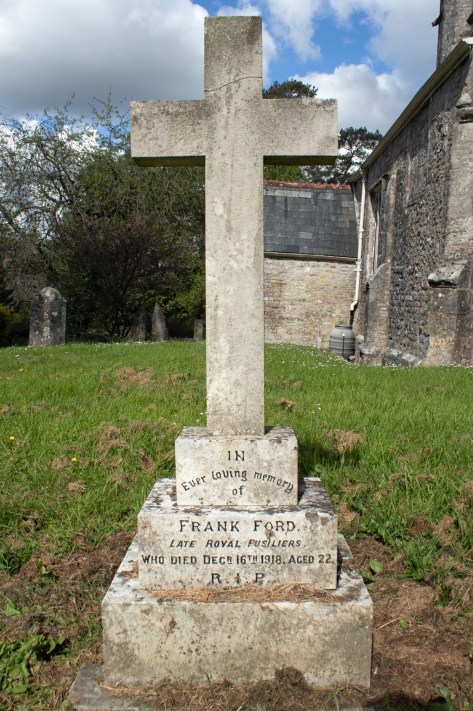
At this point, Harold’s trail goes cold. He appears to have returned home, as this is where he died, on 16th December 1918. He had not long celebrated his 22nd birthday.
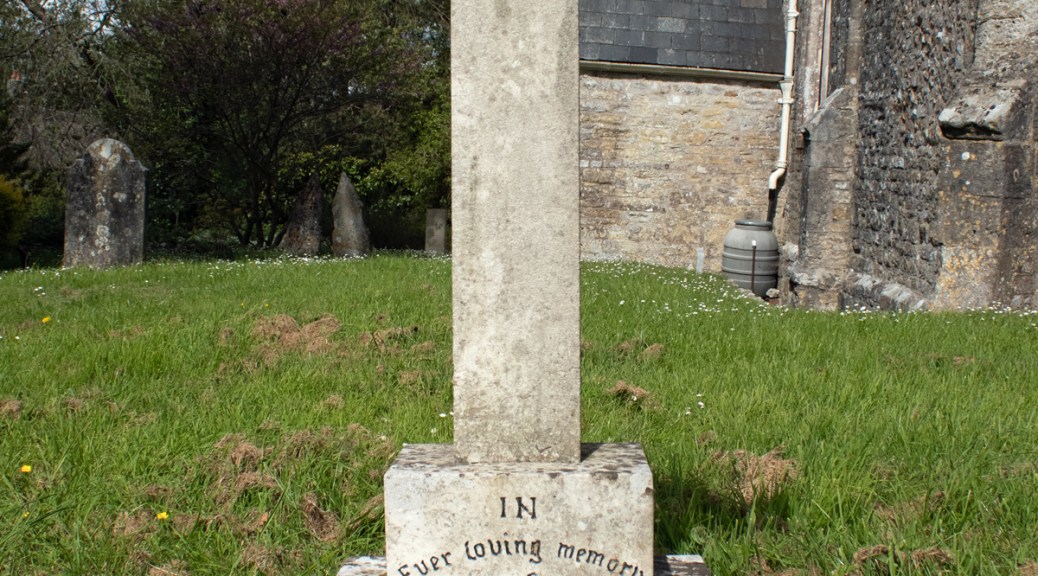
The body of Harold Francis Ford was laid to rest in the tranquil setting of St Michael’s Churchyard in Musbury, close to where his family were living. His headstone remembers “Frank”, an affectionate nod to what he was known as to family and friends.
Edward William Larraman was born in Rochester, Kent, in December 1882. The third of seven children, he was one of five sons to Alfred and Mary Larraman. Alfred was a mariner who died when Edward was just ten years old.
Mary took work as a housekeeper, moving the family from their home at 4 Davis Square to rooms at 18 Northgate. Edward is missing from the 1901 census but, with later service records suggesting he volunteered with the Royal West Kent Regiment, it is possible that he was training with them when the return was taken.
The military life seemed to suit Edward and, on 4th November 1902, he gave up his job as a riveter to formally enlist, joining the Army Service Corps as a Private. His service papers from that time show that he was 5ft 4.5ins (1.64m) tall and weighed 120lbs (54.4kg). Hr was noted as having light brown hair, blue eyes and a fresh complexion.
Private Larraman spent the next four years on home soil, using the opportunity to gain a 3rd Class certificate in education, and rising to the rank of Lance Corporal.
On 23rd December 1907, Edward married Mabel Green. Born in Chatham, she was the daughter of a carpenter. The couple set up home at 3 Almon Place, Rochester – just a short walk from where Mary was living – and went on to have two children, Irene (born in 1908) and Thora (born in 1915).
Lance Corporal Larraman was medically discharged from the army on 18th May 1908. While it is unclear what affliction meant he was no longer fit to serve, he was awarded a pension for his service.
The next census, taken in 1911, found him and Mabel living in Almon Place with Irene and Mabel’s father Henry, and brother, George. Edward was listed as an army pensioner, while there were two salaries coming into the household: Henry was a carpenter and joiner at Chatham Dockyard, while George was a shop assistant.
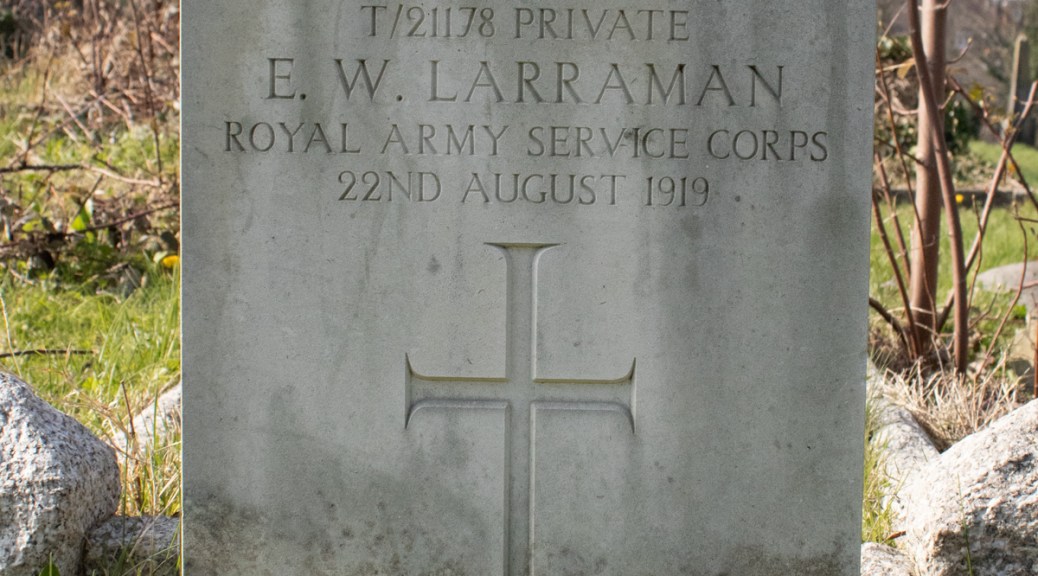
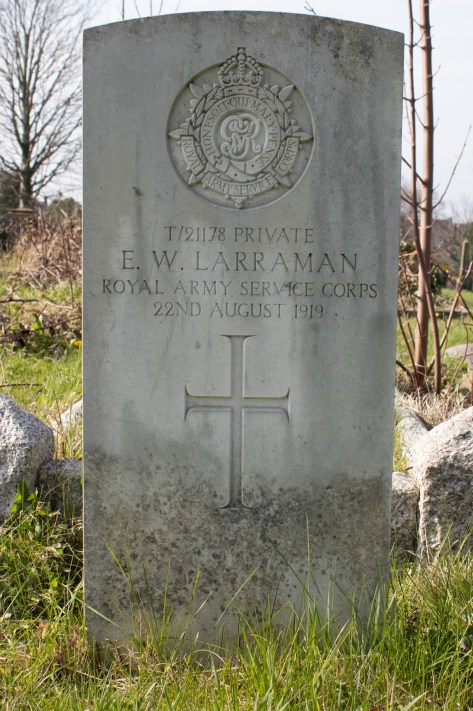
At this point, Edward’s trail goes cold. It is clear that he re-enlisted when war broke out, although in what capacity, and for how long, is unclear. The only other record for him is that of his passing, on 22nd August 1919: he was 36 years of age.
The body of Edward William Larraman was laid to rest in St Nicholas’ Cemetery, Rochester, a short walk from where his family were still living.
Stephen Smith was born in Hilperton Marsh, Wiltshire, in 1890. The fourth of eight children, he was the second of three sons to Thomas and Vashti Smith. Thomas was a hawker, and the family were living at 14 Islington Place when Stephen was born.
By the time of the 1901 census, the family had moved to 65 Shails Lane, slightly closer to Trowbridge town centre. Three of the family – Thomas, Vashti (who went by her middle name, Sarah), and their oldest child, Selina – were all employed in hawking. Stephen, just 12 years of age, was still at school, but his older brother, Alfred, was earning a little by collecting rags.
On 30th August 1908, Stephen married Beatrice Harding. They were both just 18 years of age at the time, and it seems to have been a love match: they went on to have three children, but their eldest, daughter Annie, was not born until 1911.
By the time of that year’s census, the young were renting a tenement at 5 Burbidge’s Yard. Just around the corner from Stephen’s Parents in Shails Lane, it was small courtyard filled with dyers, needleworkers, carpenters and hawkers.
Stephen also wanted to do his bit in the service of his King and, on the 14th June 1908, he enlisted in the 3rd Battalion of the Wiltshire Regiment. His service papers show that he was 5ft 7.5ins (1.71m) tall, and weighed 155lbs (70.3kg). He was noted as having brown hair and brown eyes.
Over the next four years, Stephen remained on home soil. He proved his mettle, and was appointed to Lance Corporal on 21st June 1911, and Corporal less than a year later. In October 1912, he extended his service for another four years. By June 1913, Stephen had been promoted again, his exemplary service resulting in him being made Sergeant.
War broke out in the summer of 1914, and Sergeant Smith found that his rank meant that he wouldn’t be able to serve with his men. At his own request, he reverted to the rank of Private and, on 11th September, he transferred to the 1st Battalion and was sent to France.
Private Smith’s unit fought at the Battle of Messines, and he was injured there. A gunshot wound to his right foot meant a medical evacuation to Britain, and he was admitted to the 2nd Western General Hospital in Manchester, Lancashire, for treatment.
Following his discharge, Stephen remained on home soil, but his health was becoming affected in unexpected ways. He had developed varicose veins in late childhood, and these developed to the point where he was not longer fit for military duty. He was discharged on 15th April 1916, and returned home to Trowbridge. The condition was declared not to be related to his service, so he did not receive any recompense for it.
By the spring of 1917, another issue had presented itself. Stephen was suffering from tuberculosis, and the prognosis was not good. “In my opinion [Private Smith] acquired the disease whilst in the service and the disease was aggravated in consequence of his military duties. He is suffering from the disease in rather an advanced stage and it does not appear to me probable that he will live for another year.” Signed Leonard Crossley MD, County Tuberculosis Officer. [Medical Report on Stephen Smith: 28th March 1917]
Ultimately, Dr Crossley’s prediction would prove correct:
The death occurred on Saturday at Lower Broad Street of Stephen Smith, aged 27, who served for some time in the Army and was discharged nearly two years ago on account of a wound in the leg. For some time past he had suffered from tuberculosis, but he was out of doors as recently as Friday. He leaves a widow and four young children.
[Wiltshire Times and Trowbridge Advertiser: Saturday 8th December 1917]
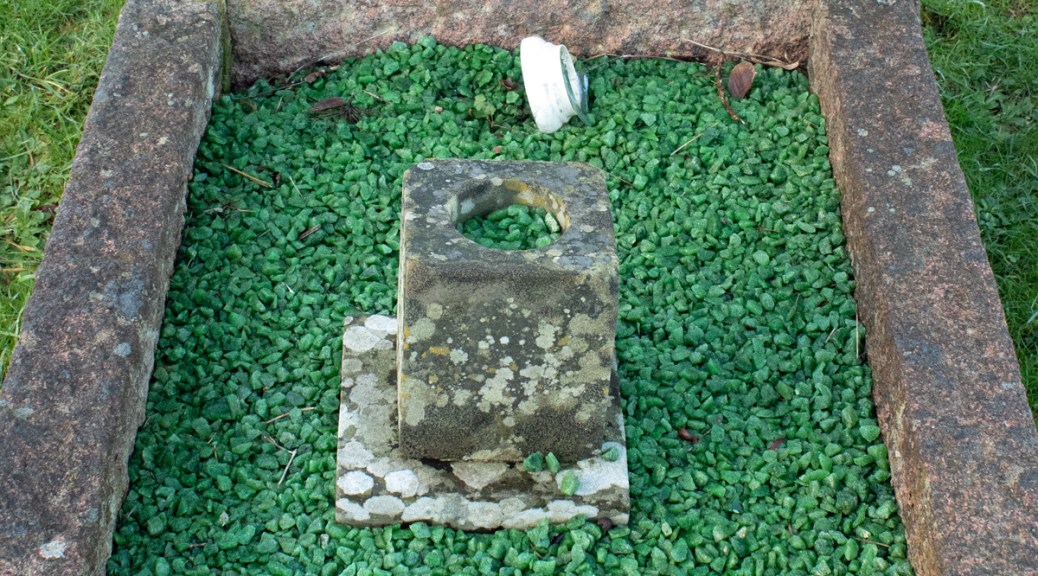
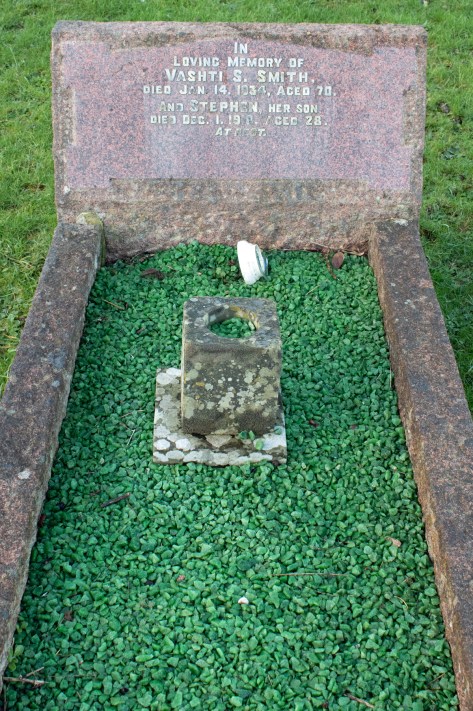
The body of Stephen Smith was laid to rest in Trowbridge Cemetery, not far from where his grieving family were still living.
While Stephen’s father disappears into history, his mother, Vashti, lived on until 1934. She was laid to rest with her son, mother and son reunited after 17 years.
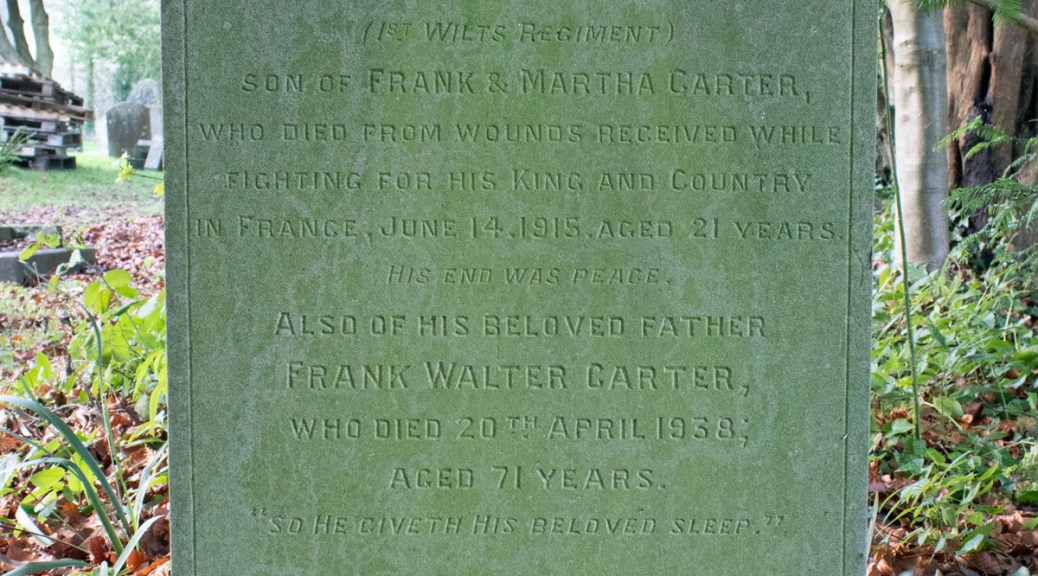
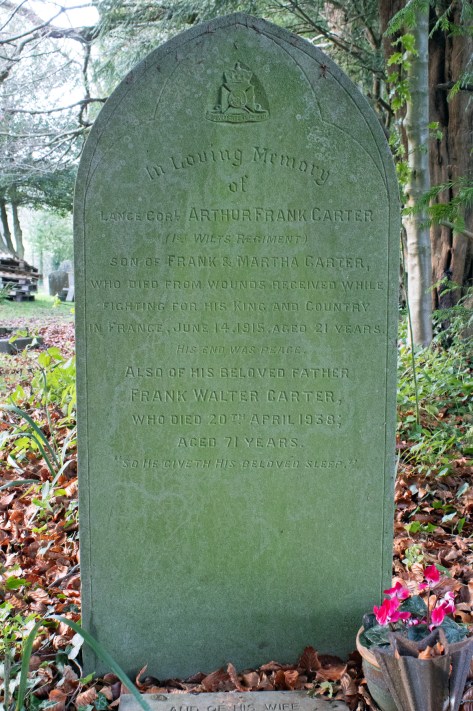
Arthur Frank Carter was born in the 10th July 1893 in Bratton, Wiltshire. The third of seven children, he was the oldest of four sons to Frank and Martha Carter. Frank was a farm labourer, and the family lived on Lower Street, to the north of the village centre.
When Arthur finished his schooling, he found work as a carter, probably unintentionally living up to his family’s name. When war broke out, however, he stepped up to play his part. Serving in the Wiltshire Regiment as a Private, he was attached to the 1st Battalion and, by the 19th January 1915, he found himself in France.
Full details of Private Carter’s service have been lost to time, but during his time overseas, he received a promotion to Lance Corporal. In June 1915 he was wounded, and was sent back to Britain for treatment. Admitted to hospital in London, Arthur’s injuries would prove to be too severe. He passed away on 12th June 1915, at the age of just 21 years old.
The body of Arthur Frank Carter was taken back to Wiltshire for burial. He was laid to rest in the family plot in St James’ Churchyard, Bratton.
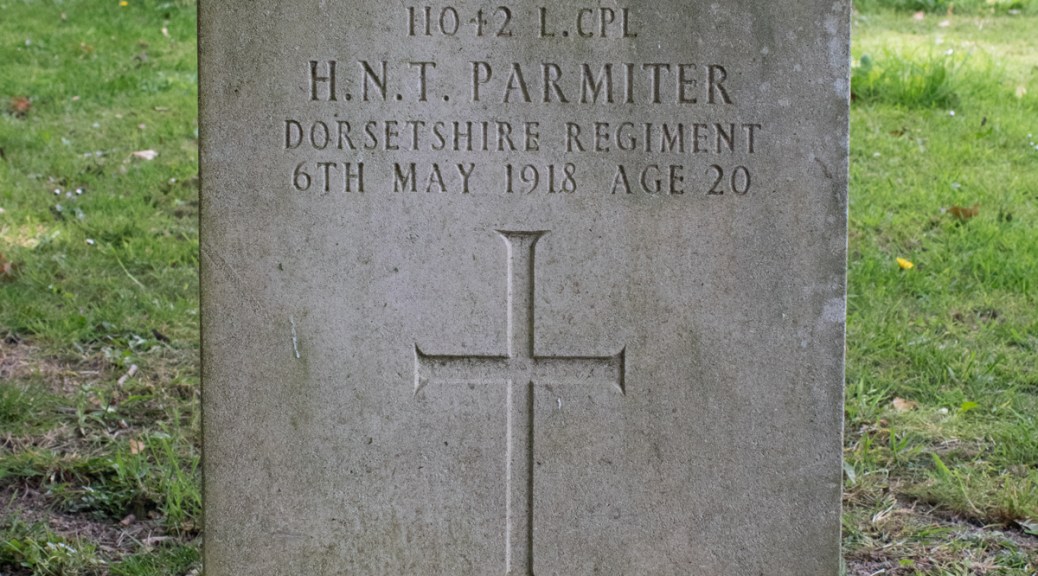
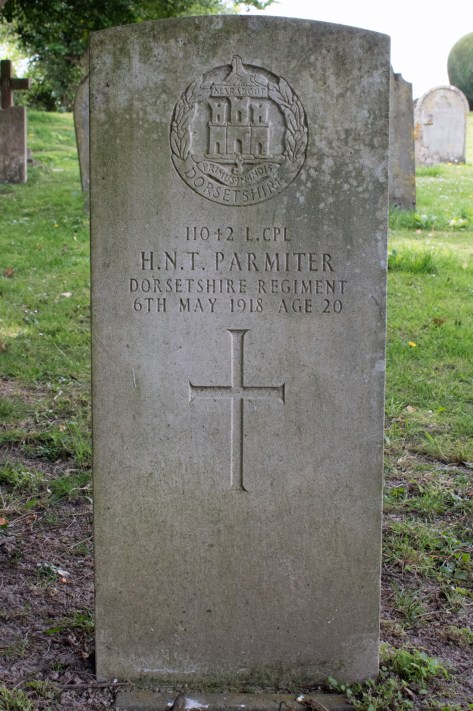
Hugh Norman Trivick Parmiter was born on 21st February 1898, and was the sixth of ten children. His father, James, was a Sergeant in the Dorsetshire Regiment, and the family travelled to where the army needed him. Hugh was the third of the children to be born in Bangalore, India, while his mother, Annie, gave birth to his oldest two siblings in Egypt.
By 1900 the Parmiters had returned to Britain, Annie and the children living in family barracks in Dorchester, while James was being trained in Hythe, Kent.
The 1911 census records the family living in the rural Dorset village of Gussage St Michael. Having been pensioned from the army, James was employed as a dairyman, and the family lived in a modest village cottage. At thirteen years of age, Hugh was still attending school, growing up in the peaceful surroundings of the Dorset countryside.
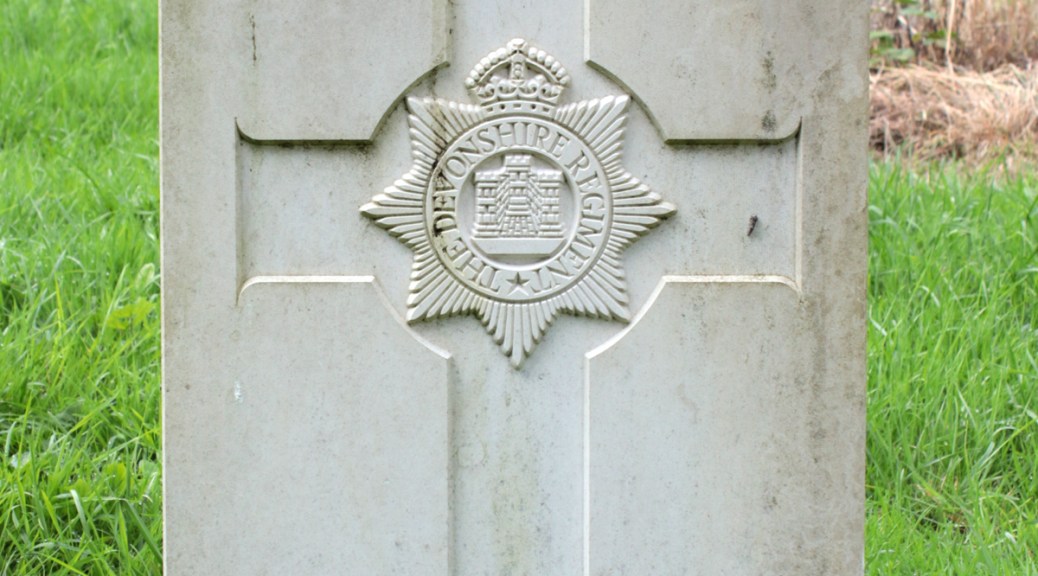
When war broke out, Hugh stepped up to play his part. Full details of his service have been lost to time, but from what remains it is clear that he enlisted in the Devonshire Regiment in the opening weeks of the war. By 11th July 1915, Private Parmiter’s unit was ensconced in the Balkans.
Hugh was caught up in the fierce fighting at Gallipoli, and rose to the rank of Lance Corporal. He would not come out unscathed, however, and was medically evacuated to Britain for treatment. While details of his injuries are unclear, they were severe enough for him to be medically discharged from the army: he was formally stood down on 17th January 1916, a week after the final evacuations from the Dardanelles Strait.
At this point, Hugh’s trail goes cold. James had passed away in 1914, and Annie had moved to Pimperne, a village on the outskirts of Blandford Fordham. Hugh’s health still dogged him however, and he passed away on 6th May 1918: he was 20 years of age.
The body of Hugh Norman Trivick Parmiter was laid to rest in St Peter’s Churchyard in Pimperne.
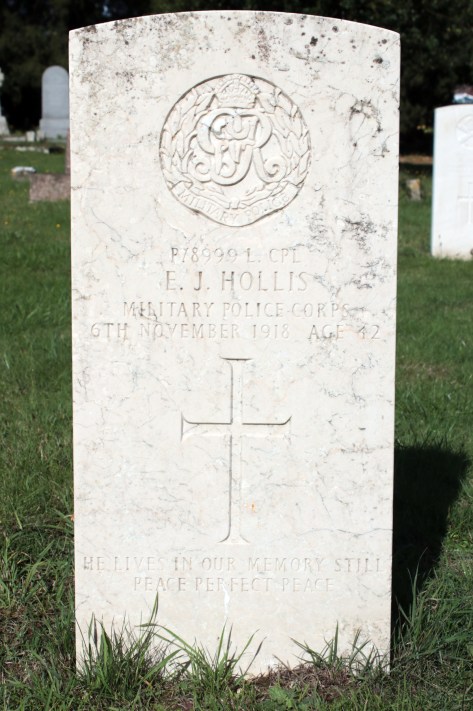
Edward Joseph Hollis was born in the village of Cogges, Oxfordshire, in the spring of 1876. The youngest of four children, his parents were Joseph and Rebecca Hollis. Joseph was a blacksmith, who died shortly before Edward’s birth, leaving a son who would never know his father.
Rebecca had children to raise, and did so while continuing her job as a gloveress. The 1881 census found the family living on Oxford Road, with her widowed father, cowman James, also residing at the house.
Edward remained living with his mother through to the 1901 census, records suggesting that they stayed living in the same property. By this point, Rebecca had give up her work making gloves, and was listed as a charwoman. Her son, however, had found employment as a gardener’s assistant.
Rebecca died in 1902, at the age of 60 years old. Soon after, her son moved to Wiltshire, having found work as a labourer in Trowbridge. On 20th January 1907, he married local woman Rose Banks in the parish church. A cloth worker, she was nine years her new husband’s junior. The couple set up home at 9 Court Street, to the south of the town centre, and went on to have three children, daughters Elsie, Margaret and Bessie.
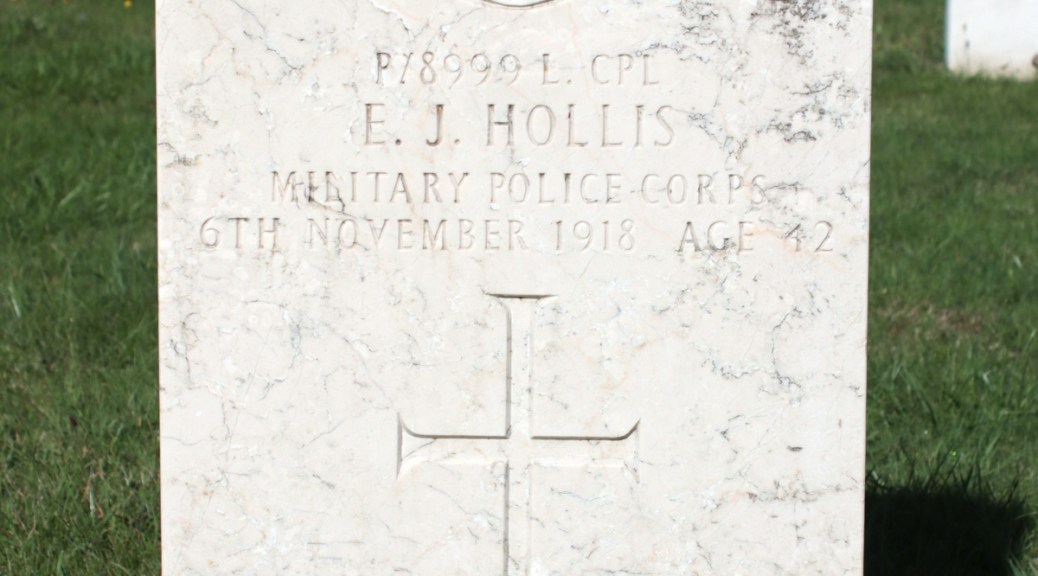
War broke out in the summer of 1914, and Edward stepped up to play his part. There is little information about his time in the military, but it is clear that he had enlisted by the summer of 1918. He saw the war out as a Lance Corporal in the Military Police Corps, and was based at Chiseldon Camp, near Swindon, Wiltshire.
While there, Edward’s health was becoming impacted. He was admitted to the camp hospital with a combination of influenza and bronchial pneumonia, but his heart gave out. He died on 6th November 1918, at the age of 42 years old.
The body of Edward Joseph Hollis was taken back to Trowbridge for burial. He was laid to rest in the town’s cemetery.
Like her mother-in-law before her, Rebecca was now a widow, with young children to raise. She took the risk of emigrating, and moved the family to Ontario, Canada. Here she met farmer James Morgan, and the couple married on 5th July 1920. She died in 1918, also aged 42.
Her and Edward’s legacy were their children. All three married and had families in Canada.
The early life of Charles Henry Waller is a challenge to piece together, and it is easier to work backwards.
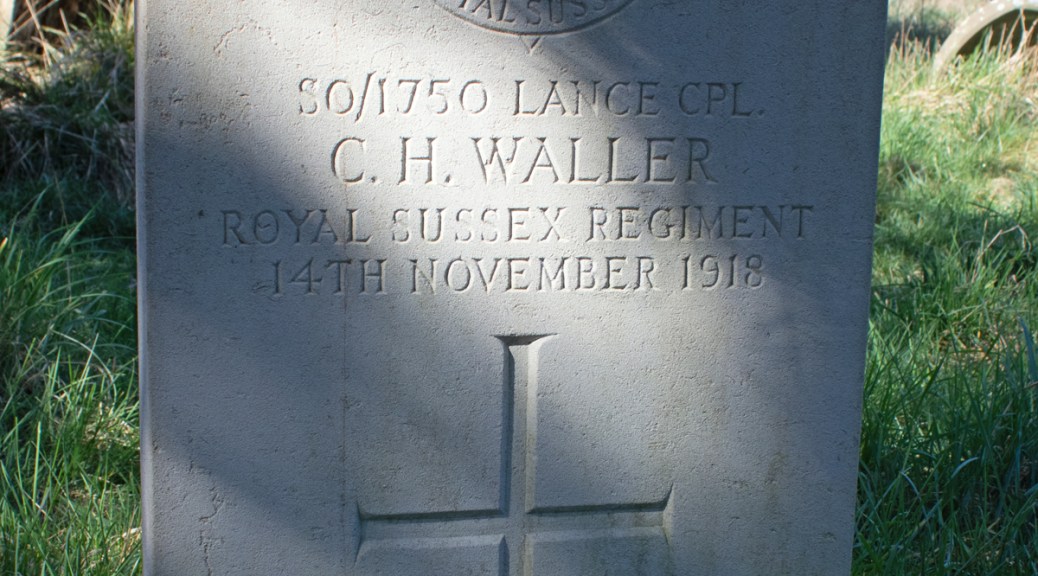
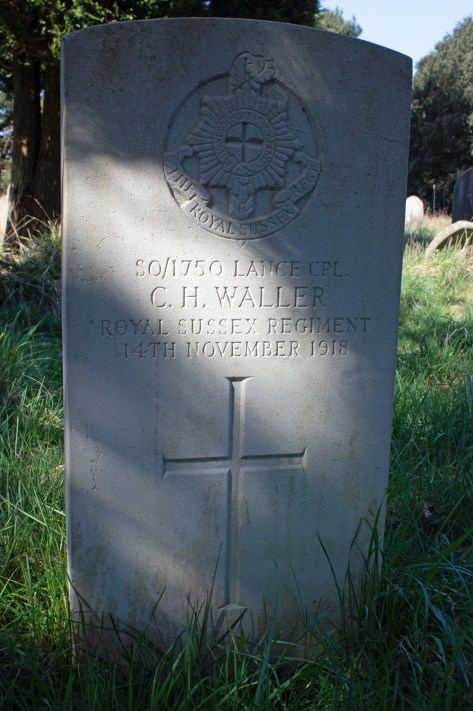
A Lance Corporal in the Royal Sussex Regiment, Charles died from influenza in the 2nd Eastern General Hospital, Brighton, Sussex, on 14th November 1918. His entry in the British Army Register of Soldiers’ Effects show that he had enlisted before the spring of that year, and gave his beneficiary as Elsie.
Lance Corporal Waller’s Dependents’ Pension card expanded on this, giving her details as Mrs Elsie Smith, of 91 High Street, Worthing. The card, however, states that the pension was refused, as she had attained the age of 16.
Intriguingly, while it has not been possible to trace Charles in the 1911 census, Elsie does appear. She is recorded as living with her husband, carter Arthur Smith, and son, three-year-old James. The three are also recorded in the 1921 census, with another child, Arthur. The family, who were living at 35 Lyndhurst Road, Worthing, by this point, had a boarder, George Frederic Waller – possibly a relation of Charles.
As to Charles himself, his life looks to remain a mystery. There are records for people with the same name in the area, but without an age it isn’t possible to definitively identify him. When he passed away, he was laid to rest in Broadwater Cemetery, Worthing, not far from Elsie and her family.
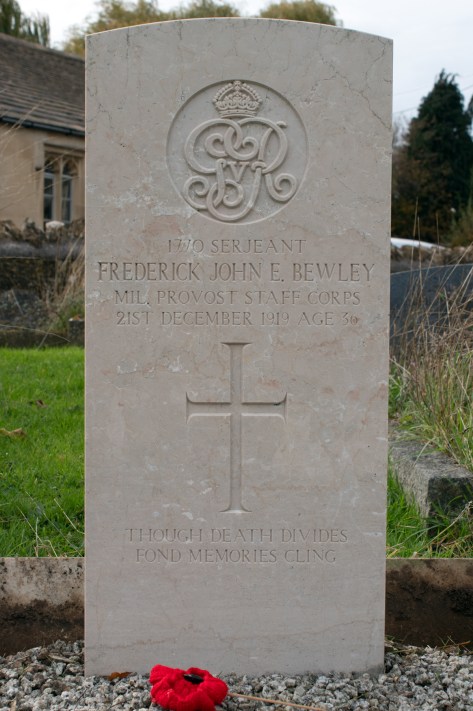
Frederick John Edwin Bewley was born in Calne, Wiltshire, on 10th May 1882. Noticeably absent from the 1891 and 1901 census records, his parents were Chelsea pensioner John Bewley, and his wife, Annie.
Following in his father’s footsteps, Frederick was drawn to a life in the army. Having already been a volunteer in the local militia, on 20th November 1900, he enlisted in the Wiltshire Regiment. His service papers show that, at 5ft 6ins (1.68m) tall, he weighed 125lbs (56.7kg). He sported brown hair, grey eyes and a fresh complexion. He was also noted as having a scar on his right thigh and calf.
Private Bewley’s contract was for 12 years. During that time, he travelled the world spending three years in South Africa, and more than five in India. He was back in South Africa when his initial term of service came to an end, and he re-enlisted without thinking about it.
In May 1904 Frederick has been promoted to Lance Corporal, a rank he would hold for the next 12 years. During his second term of service, war broke out, but he would only spend short periods of time overseas.
…a member of the regular army, [Frederick] crossed to France with Lord French’s Expeditionary Force in August, 1914, and was wounded in the thigh at the battle of Mons. After a short period at Netley Hospital he went to Flanders in the following November. The awful conditions prevailing in the trenches was responsible for an attack of frost-bite, and tuberculosis following, he was treated at Winsley and Harnwood Sanatoriums…
[Wiltshire Times and Trowbridge Advertiser: Saturday 27th December 1919]
From 1th January 1915, Lance Corporal Bewley would remain on home soil. The sharp clarity of near-death experiences, along with a reconnection with home life, led to love blossoming and, on 6th May, he married labourer’s daughter Lilian Fidler. Both were living in Holt, Wiltshire, by this point, and it was in the village’s church that the couple exchanged vows.
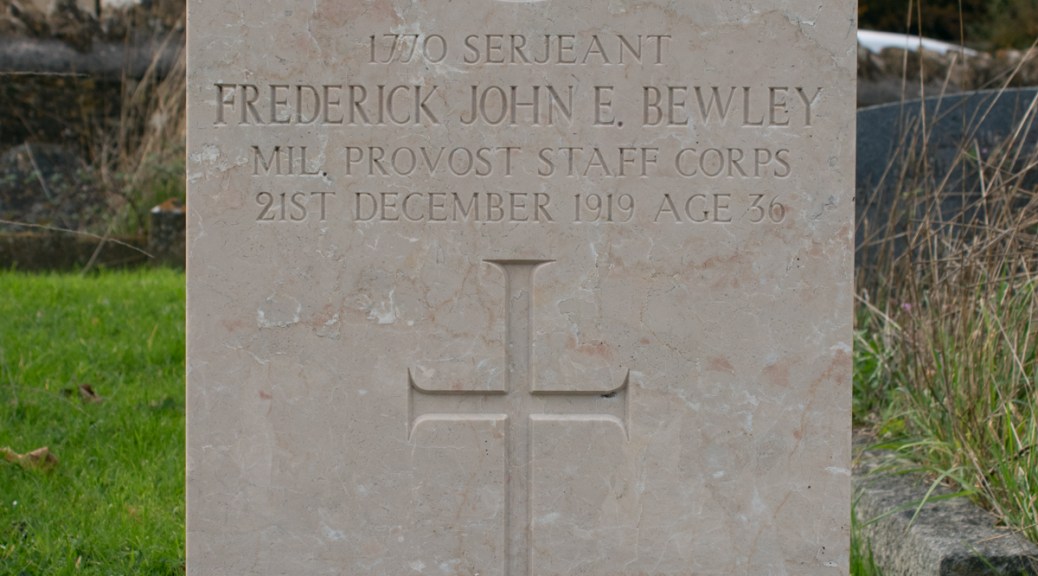
Back on home soil, a new opportunity had opened up for Frederick, and he transferred to the Military Provost Staff Corps, a unit set up to police the army. In January 1916, he was promoted to Corporal; just weeks later, Vivian gave birth to their first child, Eric. and he rose to Sergeant eighteen months later.
On 1st August 1917, Corporal Bewley was promoted again, taking the rank of Serjeant. By this point, however, his bouts of poor health were coming back to haunt him, and, just six weeks after his promotion, he was medically discharged from the army.
After returning to Holt, Frederick welcomed a second son with Lilian on New Year’s Eve 1918, when Vivian was born. The following winter, his tuberculosis struck again, and this time it was clear the illness would prove fatal. He passed away on 21st December 1919, aged 37 years old.
The body of Frederick John Edwin Bewley was laid to rest in Hold Old Cemetery.
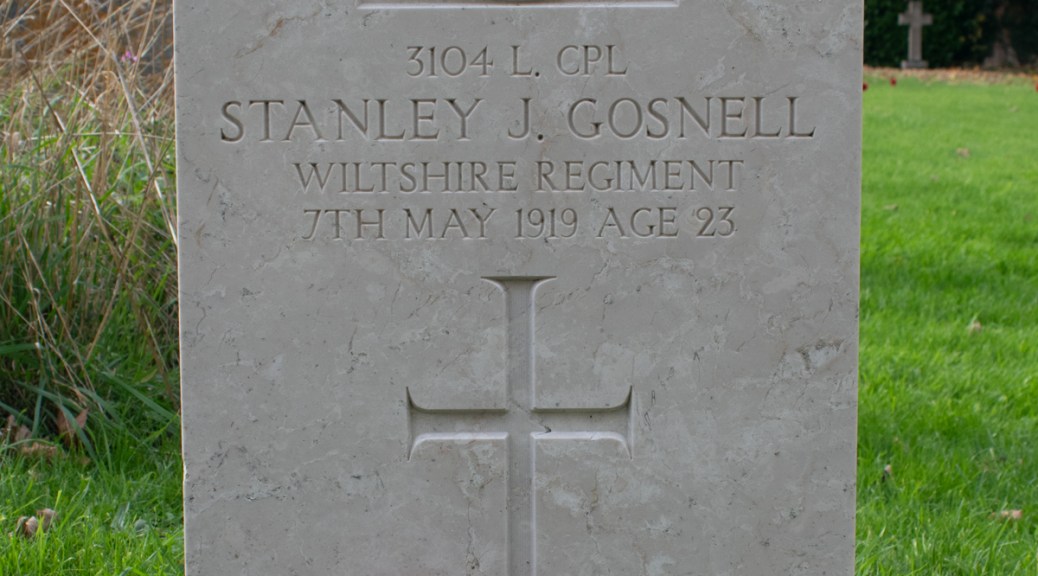
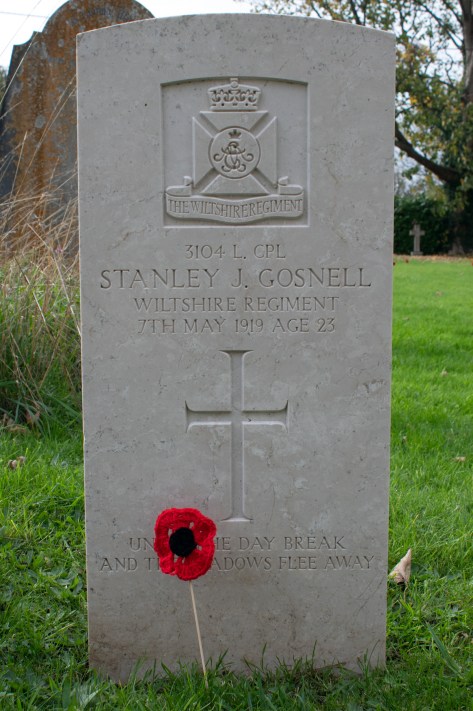
Joseph Roger Stanley Gosnell was born in Birmingham, Warwickshire, in the autumn of 1895. He wad the only child to William and Florence Gosnell. William was a draughtsman, who died when his son was just 4 years old.
Florence was left to raise her son on her own and moved back to Bradford-on-Avon, Wiltshire, where her family lived. On 14th April 1903, she remarried, her new husband being head teacher of Holt Congregational School, John Longstaff. The 1911 census found the family living at Eglington Villa, not far from the school.
When war broke out, Joseph was quick to step up and play his part. Now going by Stanley, he enlisted in the Wiltshire Regiment on 17th September 1914, and was assigned to the 4th Battalion. His service papers show that he was 5ft 11ins (1.8m) tall, with brown hair, blue eyes and a fair complexion. He was noted as having normal vision and good physical development.
Private Gosnell seemed to impress his superiors, and, on 12th December 1914, he was promoted Lance Corporal. The following day his unit was dispatched oversees, and he was sent to India. He would go on to spend the next eight months in Pune, but not in the way he might have hoped.
On 27th February 1915, Stanley was admitted to hospital, suffering from pneumonia. He would remain admitted for nearly three months. Sent back to his unit in mid-May, he was taken back into hospital just three weeks later with tuberculosis. This time, he would only be there for three weeks before being sent back to his unit.
Lance Corporal Gosnell was sent back to Britain in August 1915, and he would remain on home soil for the next year. During this time his health deteriorated, to the point that, no 25th August 1916, he was medically discharged from the army.
At this point, Stanley’s trail goes cold, and it is only a later newspaper report that confirms what happened:
Mrs Longstaff, of Eglington Villa, who a short time since was called upon to mourn the loss of her husband, Mr JC Longstaff, was on Wednesday further bereaved by the death of her only son, Mr Stanley Gosnell. Mr Gosnell’s constitution was never of the most robust kind, and though he volunteered for service and proceeded to India with the Territorials, he was unable to withstand the climate and the work entailed, and was invalided home. His death so soon after reaching manhood’s estate is a heavy blow to his mother and the utmost sympathy will go out to her in her irreparable loss.
[Wiltshire Times and Trowbridge Advertiser: Saturday 10th May 1919]
Details of John’s passing are unclear, but he died just a few months before his stepson. Joseph Roger Stanley Gosnell was just 23 when he died on 7th May 1919. He was laid to rest in Holt Old Cemetery, not far from where his twice-grieving mother lived.
Florence had now been widowed twice, on top of losing her only child. She found some solace in her grief, however, and, in the autumn of 1923, she married for a third time. Her new husband, Joseph Scarisbrick, was a widow thirteen years her senior, and worked as a customs and excise man.
Joseph died in 1938, at the age of 85: Florence had outlived all three of her husbands. She passed away on 4th October 1954, at the age of 88 years old.
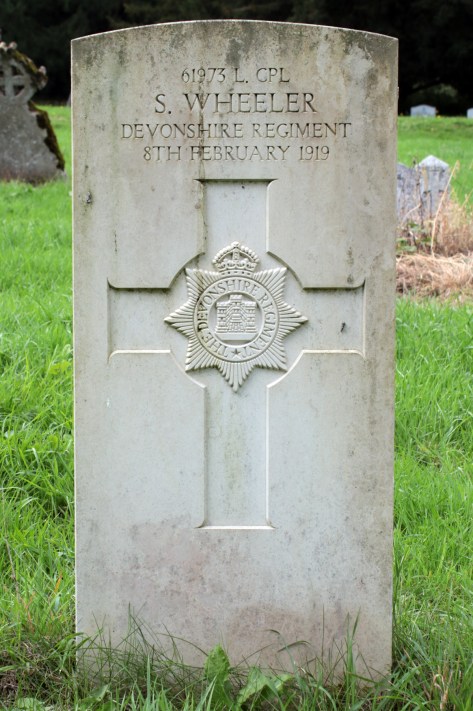
Walter Sydney Wheeler was born in the autumn of 1887 in Crockerton, Wiltshire. The oldest of three children, his parents were Walter and Lore Wheeler. Walter Sr was an agricultural labour, but when his son – who was known by his middle name – finished school, he found work as a stable boy. The 1901 census found the family living at 12 Church Street, Longbridge Deverill.
Sydney married a woman called Mary in 1907. There is little information about her, and the couple did not go on to have any children. By the time of the 1911 census, the couple were living at Priors Cottages, Semley, where Sydney had found farm work.
War came to Europe in 1914, and Sydney stepper up to play his part. Full details of his service have been lost to time, but it is clear that he had joined up no later than the summer of 1918. He initially joined the Devonshire Regiment, but later transferred to the 651st Agricultural Company of the Labour Corps. By the end of the conflict he had risen to the rank of Lance Corporal.
Sydney survived the war, and by the start of 1919, he was back in Wiltshire. His health was impacted, however, and that February he was admitted to the VAD Hospital in Trowbridge. While his condition is unknown, it was one to which he would succumb. Lance Corporal Wheeler passed away on 8th February 1919, at the age of 31 years old.
The body of Walter Sydney Wheeler was taken to Longbridge Deverill for burial: he was laid to rest in the graveyard of St Peter & St Paul’s Church.