Tag Archives: Devonshire Regiment

Private Herbert Pittard

Private Herbert Pittard

Herbert Leonard Pittard was born in 1896, the youngest of two children – both boys – to Frederick and Lily Pittard. Frederick was a bootmaker, employed by the Clark’s factory in the town.

Herbert’s mother died in 1910, and by the time of the 1911 census, he was living with his father, brother and grandmother in Park Terrace, Glastonbury. All three of the household’s men were bootmakers, all were working at the Clark’s factory in Street.

Frederick Pittard was out to seek pastures new, emigrating to America in 1912. Herbert is recorded as having visited his brother a year later.

Herbert’s military records are sparse; it seems that he enlisted in the Devonshire Regiment, joining the 3rd Battalion as a Private, before transferring to the Southern Command Labour Centre of the Labour Corps. When this happened, and for how long he enlisted, is not known, but he survived through to the Armistice in 1918.

A short notice in the Central Somerset Gazette (Friday 29 November 1918) confirmed that “Mr Pittard, Park Terrace [Glastonbury], has just lost his younger son through the influenza epidemic. Private Bert Pittard died in Bath War Hospital from pneumonia subsequent to influenza at the age of 22.

Herbert Leonard Pittard died on 26th November 1918. He lies at rest in the cemetery in Street, Somerset.


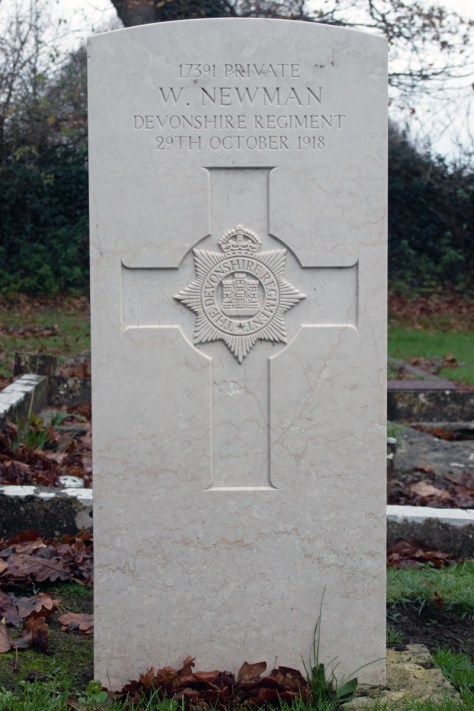
Private William Newman

Private William Newman

William Newman was born in Dorset in 1880, the oldest of six children to George and Margaret Newman. George worked as an agricultural labourer and a carter, and, after leaving school, William followed suit.

William’s life has been a challenge to piece together; however, I have managed to sketch together some information from a number of sources.

By the 1911 census, he was living with his now widowed father and three of his siblings. Listed as single, he was working as a labourer.

When William joined up, he enlisted in the Devonshire Regiment, before being transferred over to the Labour Corps. He was assigned to 652 Agriculture Company, serving on the home front, presumably somewhere close to home.

There are no details of Private Newman’s death – contemporary newspapers do not highlight anything out of the ordinary or sudden about his passing. I can only assume, therefore, that he passed through natural causes, perhaps influenza or pneumonia.

He died on 29th October 1918, in the village of Martock, Somerset. He was 37 years old.

It appears that William did not marry – his war pension was allocated to his sisters Edith, Alice and Louisa and no spouse is mentioned (nor is his father).

William Newman lies at rest in the quiet churchyard of St Margaret’s in the Somerset village of Tintinhull.


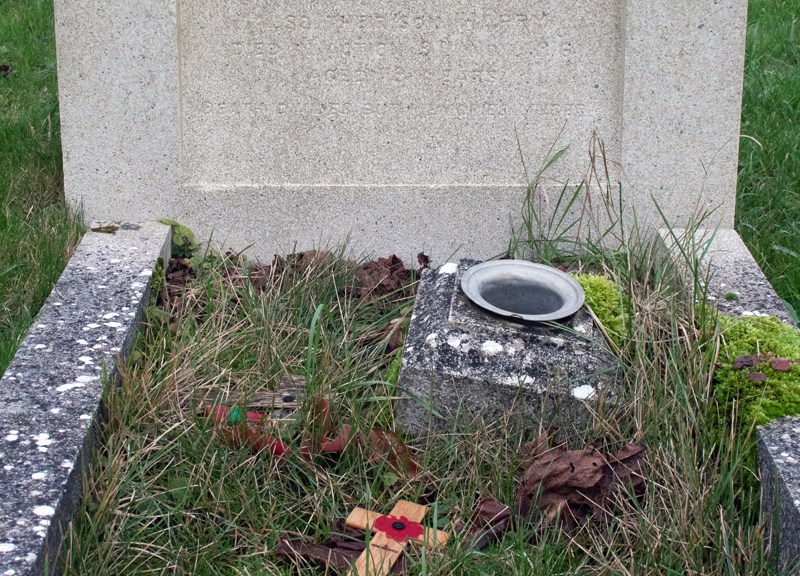
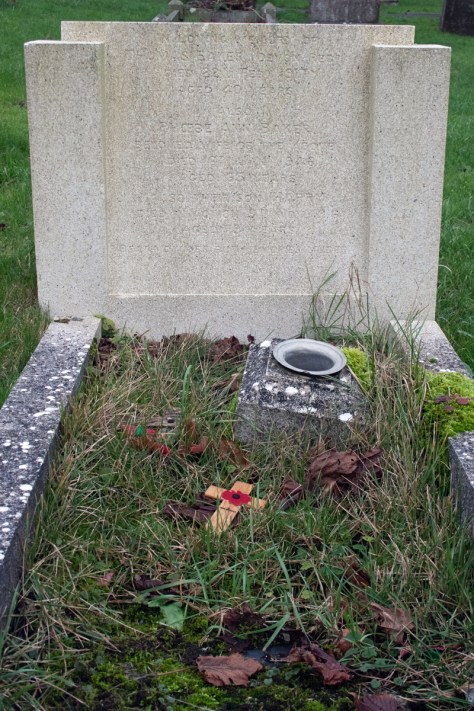
Private Frank Antell

Private Frank Antell

Frank Antell was born in 1880, one of seven children – six sons – to Thomas and Harriett Antell. Thomas was a groom, and Harriett a dressmaker and the family lived in the village of Martock in Somerset.

After Thomas died in 1893, Frank left school and became a carpenter. By the time of the 1901 census, he was living with his mother and youngest brother. Income seems to have been short – there were three other people boarding and lodging with the family.

In August 1904, Frank married Augusta Ring, and together they had five children – Lily, Ada, Leslie, Ronald and Freda.

Frank enlisted in the 13th (Works) Battalion of the Devonshire Regiment; this had been formed in the summer of 1916, so it can only be assumed that he was called up at the start. The battalion was based in Plymouth, so it is likely that Private Antell did not see fighting on the Western Front.

Private Frank Antell’s death is also a bit of a mystery. All that there is to confirm what happened is one stark sentence on his pension ledger:

Wounds self-inflicted during temporary insanity whilst on active service.

This one statement covers a multitude of sins, but does nothing to explain the mystery of what happened. There is no coverage of the incident or funeral in contemporary newspapers, so I have been unable to find any further explanation.

Frank Antell was a man with a young family. His regiment was based in England and was to be so for the duration of the war. One cannot imagine what thoughts were going through his head at the time he took his own life. That the 37 year old felt this was his only option is tragic.

Frank Antell lies at rest in the graveyard of All Saints’ Church in his home village of Martock in Somerset.


Frank’s widow Augusta went on to marry again in 1919, to a Joseph Maunder. She died in 1951 at the age of 73 years old.


Private James Burnett

This image has an empty alt attribute; its file name is img_4008s.jpg
Private James Burnett

James Burnett was born in 1888, the second son of James and Sarah Ann Burnett. James Sr was a farm labourer, and his son quickly followed his line of work.

James enlisted in the Devonshire Regiment in February 1916. He was noted as being 5ft 2ins (1.58m) tall, and weighed in at 7.5st (47.6kg).

Private Burnett’s medical record notes that his sight was such that he should wear glasses constantly, and, in fact, he was signed off medically as Category B1 (“Free from serious organic diseases, able to stand service on Lines of Communication in France, or in garrisons in the tropics. Able to march 5 miles, see to shoot with glasses, and hear well.”)

After training, Private Burnett was mobilised in September 1916, but transferred to the Agricultural Company (of the Labour Corps) in the summer of 1917.

Sadly, however, I have been unable to locate any details of James’ passing. He died on 29th February 1920 and lies at rest in the local churchyard of his home village, Lydeard St Lawrence, Somerset.

Private Charles Stodgell

Private Charles William Stodgell

Charles William Stodgell was born in Somerset in 1878, the eldest son of Samuel and Mary Stodgell. His father was an agricultural labourer, while his mother was a glover. Charles followed into farm work, becoming a carter by time of the 1901 census.

Charles married Mabel Duke in 1898 and the young couple had two daughters – Ida and Florence – in the following few years.

When war came, Charles was called up. He enlisted in June 1916, joining the Devonshire Regiment before being transferred to the Agricultural Company. His record shows that he stood at 5ft 6ins (1.67m) and weighed 10st 2lbs (64kg) and his build, health and experience is probably why he ended up in service where he did.

Private Stodgell was demobbed at the end of the war, and returned home on furlough (a word not just linked to everything 2020 has thrown at us!). Sadly, before he was fully demobbed, he contracted influenza, and died on 2nd February 1919.

Charles William Stodgell lies at rest in his home village of North Curry, in the churchyard of St Peter & St Paul.

Private Samuel Cook

Private Samuel Cook

Samuel Cook was born in Bedfordshire, the eldest of two children to Alfred and Phoebe Cook.

Alfred was a forester, which saw the family move around the country; the 1881 census found them living in Rutland, ten years later the family was recorded in Northamptonshire and by the 1911 census, they were in Dorset.

Samuel was quick to follow in his father’s footsteps, supporting his mother and sister after Alfred died in 1906.

The war was underway when Samuel was called up. His Devonshire Regiment service records show that he enlisted on 11th December 1915. His fitness seemed to have determined the path his military career would take.

Initially Private Cook was classified as C1 (free from serious organic diseases and able to serve in garrisons at home, able to walk 5 miles, see to shoot with glasses, and hear well), but was upgraded to B2 within six months. This identified that he was free from serious organic diseases, able to stand service on lines of communication in France, or in garrisons in the tropics and able to walk 5 miles, see and hear sufficiently for ordinary purposes.

Samuel was first enrolled in 13th (Works) Battalion of the Devonshire Regiment, before being transferred to the 311th (HS) Labour Company in Plymouth.

Private Cook was one of the thousands of soldiers who contracted influenza and subsequently died of pneumonia on 1st November 1918.

There seems to be some dispute over how and when Samuel fell ill. A request for a detailed medical report was sent, “as he appeared to have contracted the disease from which he died whilst on leave for the purpose of getting married”. The same request confirms that he was never admitted to hospital while in the company. (There are no records oh Samuel having married, so I am assuming that his leave may have been for wedding preparations, of normal leave.)

The report came back confirming that he has died from “pneumonia complicating influenza which was contracted whilst on service at Beaulieu”.

However and wherever it happened, the disease claimed Private Samuel Cook’s life; he lies at rest in Sherborne Cemetery, Dorset.