
Tag Archives: torpedo

Fireman Arthur O’Keefe

Fireman Arthur O’Keefe

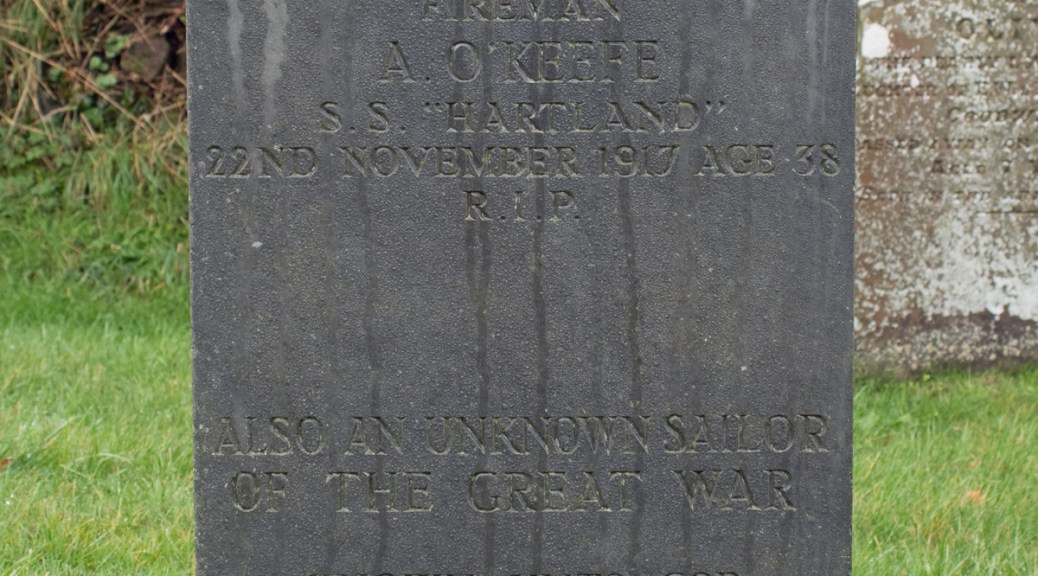
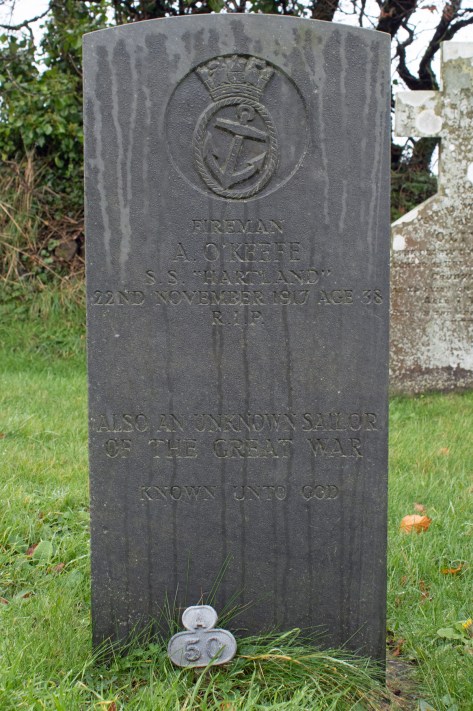
O’KEEFE Fireman Arthur. SS “Hartland.” 22nd Nov., 1917. Age 38. Son of John and Mary O’Keefe of Cork.

The search for information about Arthur O’Keefe has proved a challenging one. He does not appear with his parents on any census records, and there is precious little documentation about his life.

Arthur found work as a Fireman in the Mercantile Marine, and served on board at least four ships. In the autumn of 1917, he was based out of Glasgow, Scotland, and was attached to the SS Hartland. She had been requisitioned by the Admiralty, and was put to use transporting wheat from India.

On 22nd November the Hartland was travelling from Glasgow to Barry, South Wales, when she was hit by a torpedo from the submarine U-97, 21 miles south west of Bardsey Island. The ship was damaged, and two of the crew – Fireman O’Keefe and Fireman Thomas McGaw – were killed.

An American destroyer, the USS Conyngham, was at the head of the Hartland’s convoy, and managed to rescue the remaining 28 members of the crew, taking them to Holyhead. The Hartland was towed to Fishguard Harbour and refloated.

Arthur O’Keefe was 38 years of age when he was killed. He was laid to rest in Llanwnda Cemetery, not far from Fishguard, Pembrokeshire.


Arthur’s headstone notes that he was buried with an unknown sailor of the Great War. There is no indication who this might have been, but there are no records of his colleague Thomas McGaw being laid to rest. Given both men died in the same incident, and their bodies were transported to Fishguard with their ship, it seems possible that they may have been buried together.

Private William Earrey

William George Earrey was born in 1900, the eldest of three children to William George and Rosina Earrey. While he was baptised William George, later records – including those for his military service – show him as George William; presumably this had avoided any confusion with his father as the young William was growing up.

William Sr worked as a ships boiler maker and, while they appear somewhat disparate over the census records, the Earreys were based in Gillingham, Kent. (Given his employment, this would ensure William Sr’s proximity to the dockyard in Chatham.)

While his enlistment records are not readily available, William Jr appears to have signed up as soon as his age allowed. He enlisted in the Surrey Yeomanry and was shipped to Ireland, where the regiment has two reserve bases.

On 10th October 1918, aged 18 years old, William was returning home on leave from Ireland. He was one of 500 military personnel on board the RMS Leinster, which also had around 200 civilian passengers and 77 crew on board. Just after 10am the ship was around Kish Bank, just off the coast from Dublin, when passengers reported seeing a torpedo pass just in front of the ship’s bow. This was quickly followed by a second torpedo, which hit the ship on the port side. While it was being turned about to seek shelter back in port, a third torpedo struck, causing an explosion and the RMS Leinster sank.

The crew had managed to launch a number of lifeboats, while other passengers were able to get into the sea, clutching life rafts. Many people – William included – died during the sinking, while some of the survivors also subsequently perished.

The exact number of dead in the torpedoing of the RMS Leinster is not known, but it is estimated that at least 560 souls were lost, making it the biggest maritime disaster in the Irish Sea.

Newspapers of the time heralded the nation’s uproar at such a maritime tragedy – the sinking of the Leinster was the largest loss of life at sea around the British coast since the Lusitania three years earlier. The Derry Journal reported on the ‘fiendish crime’, that had occurred as a result of the ‘German policy of frightfulness at sea’.

The article went on to describe some of the challenges facing Dublin in the immediate aftermath of the disaster.

Owing to a strike in the undertaking trade, considerable difficulty is experienced in making arrangements for the burial of the victims. There is an insufficiency of coffins in Dublin, and all but three posting establishments are closed. The Lord Mayor is endeavouring to arrange the suspension of the strike till the Leinster victims are buried. It is stated that on a very rough estimate about three hundred bodies have been recovered…

Derry Journal: Monday 14th October 1918

Sadly, William Earrey’s body was not one of those to have been recovered; this undoubtedly left a lack of closure for his family at the lost of their young son.

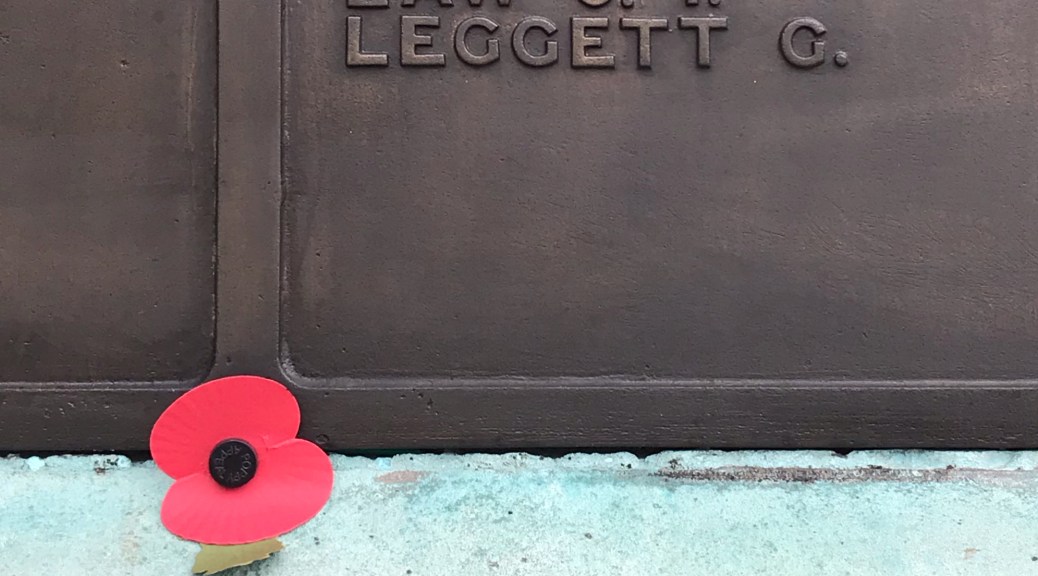
Private Earrey is commemorated at the Hollybrook War Memorial in Southampton.


William George Earrey was my first cousin twice removed.