
Stephen Smith was born in Hilperton Marsh, Wiltshire, in 1890. The fourth of eight children, he was the second of three sons to Thomas and Vashti Smith. Thomas was a hawker, and the family were living at 14 Islington Place when Stephen was born.
By the time of the 1901 census, the family had moved to 65 Shails Lane, slightly closer to Trowbridge town centre. Three of the family – Thomas, Vashti (who went by her middle name, Sarah), and their oldest child, Selina – were all employed in hawking. Stephen, just 12 years of age, was still at school, but his older brother, Alfred, was earning a little by collecting rags.
On 30th August 1908, Stephen married Beatrice Harding. They were both just 18 years of age at the time, and it seems to have been a love match: they went on to have three children, but their eldest, daughter Annie, was not born until 1911.
By the time of that year’s census, the young were renting a tenement at 5 Burbidge’s Yard. Just around the corner from Stephen’s Parents in Shails Lane, it was small courtyard filled with dyers, needleworkers, carpenters and hawkers.
Stephen also wanted to do his bit in the service of his King and, on the 14th June 1908, he enlisted in the 3rd Battalion of the Wiltshire Regiment. His service papers show that he was 5ft 7.5ins (1.71m) tall, and weighed 155lbs (70.3kg). He was noted as having brown hair and brown eyes.
Over the next four years, Stephen remained on home soil. He proved his mettle, and was appointed to Lance Corporal on 21st June 1911, and Corporal less than a year later. In October 1912, he extended his service for another four years. By June 1913, Stephen had been promoted again, his exemplary service resulting in him being made Sergeant.
War broke out in the summer of 1914, and Sergeant Smith found that his rank meant that he wouldn’t be able to serve with his men. At his own request, he reverted to the rank of Private and, on 11th September, he transferred to the 1st Battalion and was sent to France.
Private Smith’s unit fought at the Battle of Messines, and he was injured there. A gunshot wound to his right foot meant a medical evacuation to Britain, and he was admitted to the 2nd Western General Hospital in Manchester, Lancashire, for treatment.
Following his discharge, Stephen remained on home soil, but his health was becoming affected in unexpected ways. He had developed varicose veins in late childhood, and these developed to the point where he was not longer fit for military duty. He was discharged on 15th April 1916, and returned home to Trowbridge. The condition was declared not to be related to his service, so he did not receive any recompense for it.
By the spring of 1917, another issue had presented itself. Stephen was suffering from tuberculosis, and the prognosis was not good. “In my opinion [Private Smith] acquired the disease whilst in the service and the disease was aggravated in consequence of his military duties. He is suffering from the disease in rather an advanced stage and it does not appear to me probable that he will live for another year.” Signed Leonard Crossley MD, County Tuberculosis Officer. [Medical Report on Stephen Smith: 28th March 1917]
Ultimately, Dr Crossley’s prediction would prove correct:
The death occurred on Saturday at Lower Broad Street of Stephen Smith, aged 27, who served for some time in the Army and was discharged nearly two years ago on account of a wound in the leg. For some time past he had suffered from tuberculosis, but he was out of doors as recently as Friday. He leaves a widow and four young children.
[Wiltshire Times and Trowbridge Advertiser: Saturday 8th December 1917]
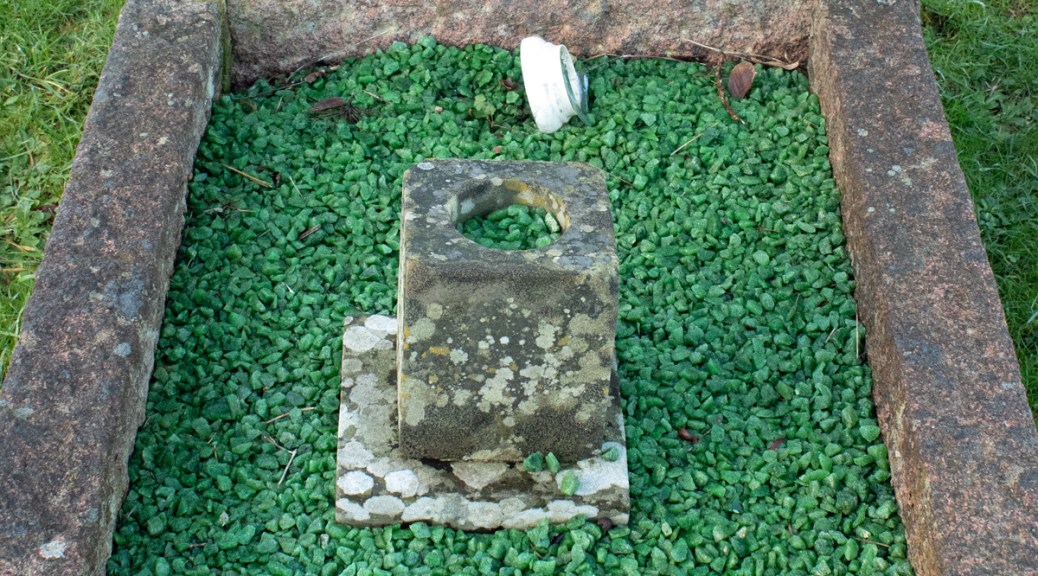
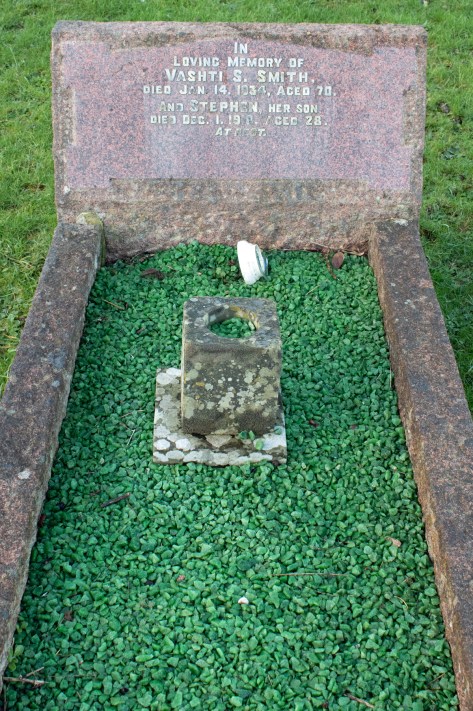
The body of Stephen Smith was laid to rest in Trowbridge Cemetery, not far from where his grieving family were still living.
While Stephen’s father disappears into history, his mother, Vashti, lived on until 1934. She was laid to rest with her son, mother and son reunited after 17 years.

