Category Archives: Sergeant

Second Lieutenant Arthur Phripp

Second Lieutenant Arthur Phripp

Arthur Frederic Thornton Phripp was born in Gillingham, Dorset, in the summer of 1894. The middle of three children, and the only son, his parents were Frederick and Kate Phripp. Frederick was a farmer, and the family lived in Slaughter Gate, to the west of the town centre.

The 1911 census recorded Frederick and Kate managing the farm, and raising their youngest child, daughter Lucy. Arthur, however, is missing, and it seems that he had taken started working for the Post Office as a boy clerk. Where he was living is unclear, but later documents suggest that he may have moved to London.

When war broke out, Arthur stepped up to play his part, joining the 1/21st (County of London) Battalion of the London Regiment, which was also known as the First Surrey Rifles. Private Phripp arrived in France on the 16th March 1915 and, over the next couple of years, fought at Loos, the Somme and Messines. He rose through the ranks, reaching Sergeant and, in the autumn of 1917, he was awarded a commission to Second Lieutenant.

Arthur returned to Britain to formally take the commission, and was transferred to the Duke of Wellington’s (West Riding) Regiment. Back on home soil, it was a chance to see family again, but tragedy was to strike.

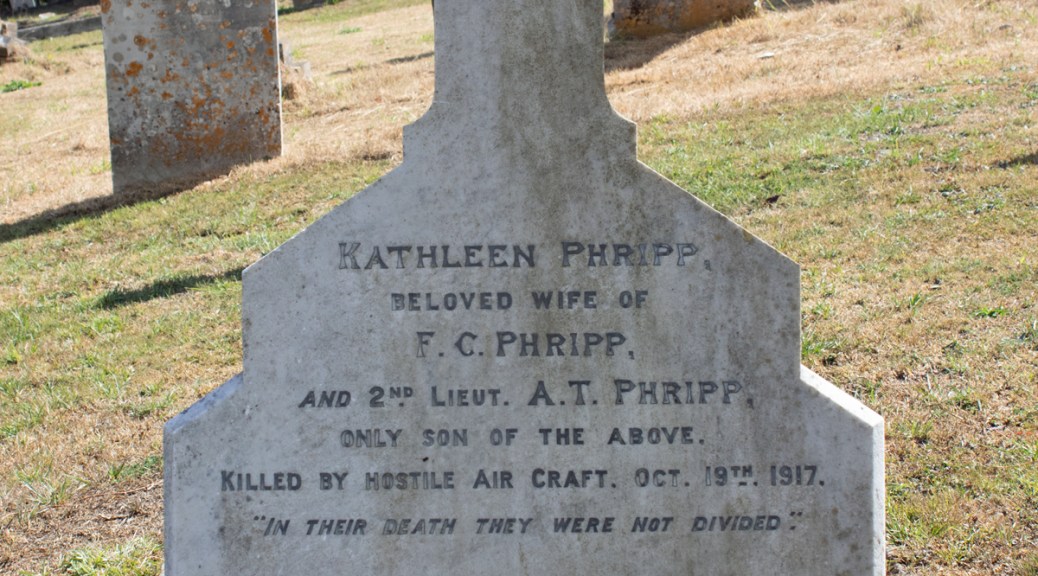
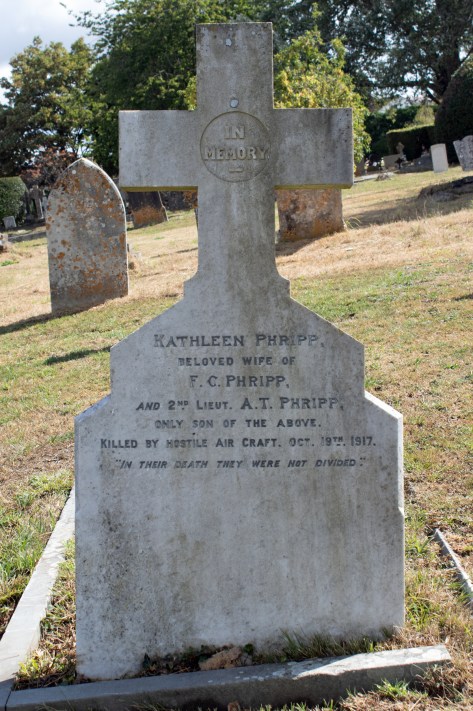
A painful sensation was created in the town when it became known that Mrs Kate Phripp, 65, of Slaughtergate Farm, and her son, Arthur TF Phripp, 23, had been killed in the Zeppelin raid on Friday.

At the inquest on seven of the victims on Monday evidence was given that Mr Phripp was stopping with some friends, and his mother went up from Gillingham on Friday to see him. Evidence given by the police showed that warning had been given in every principal thoroughfare in the district where the fatalities occurred, and the theatres had been warned. The bomb came quite unexpectedly. Besides the killed nine people were seriously injured and nine slightly injured. A great amount of glass was smashed. It was mentioned that Mrs Phripp and her son had been attending the theatre, where is was announced that the warning had been given, and that the play would continue until the guns were heard. The play was continued to the end, and the deceased left at their own risk. The Coroner observed that it was clear that some people took the optimistic view that the raid was over. If people went out into the street after a warning they did to at their own risk. A formal verdict was returned, and they commended the work of the police, special constables and ambulance workers, who, they said, had acted promptly and pluckily…

[Bridport News: Friday 26th October 1917]

The Zeppelin that raided London that night had originally been one of eleven aircraft tasked with attacking Britain’s northern industrial towns. But strong winds disrupted the operation, and one airship – L45, commanded by Kapitänleutnant Waldemar Kölle – was blown south instead.

Meanwhile, Second Lieutenant Phripp and his mother had just left His Majesty’s Theatre in the Haymarket, where they had been watching the comedy Chu Chin Chow, and were making their way across Piccadilly Circus, returning to their friend’s house.

By ill twist of fate, at that moment Kölle released a 100kg (220lb) bomb, which exploded in the road outside the Swan & Edgar department store. The resulting explosion destroyed the building’s frontage and left a crater in the road some 10ft (3m) across and 4ft (1.2m) deep. Seven people were killed: this included Kate and her son.

The bodies of Kate and Arthur Phripp were taken back to Dorset for burial. They were laid to rest together in Gillingham Cemetery, not far from where Frederick and Lucy were grieving.


[Note: My thanks go to Tony Otton for his insight into the event that led to the passing of Arthur and his mother.]

Farrier Serjeant William Inkpen

Farrier Serjeant William Inkpen

In the cemetery of the Dorset town of Gillingham, is a headstone dedicated to the memory of Farrier Sergeant William Inkpen of the Royal Field Artillery, who died on 13th July 1915. Despite his unusual name, it is a challenge to piece together his early life. There are a number of men by the name William Inkpen in the Dorset area, and without confirmation of his age or his parents’ details, there are too many varying records to construct a timeline.

William’s entry in the British Army Register of Soldiers’ Effects suggests that his beneficiary was his widow, Rose, but there are no documents on which they both appear.

An entry in the Southern Times and Dorset County Herald notes that Farrier Sergeant Inkpen died at the Bourton Military Hospital in Gillingham, Kent, and that he was 50 years old when he passed. There is a paper trail for a William Charles Inkpen who worked as a farrier in London and Middlesex, but Rose does not appear in them, and he was, in fact, married to Helen Wood, with four children: Charles, Elsie, Ivy and Cecil. This William was one of six children, and all of them were boys.

Ultimately, with no documentation relating to his time in the army, it is impossible to piece together William’s life for certain. Much of that life he took with him to his grave, in the Dorset cemetery.


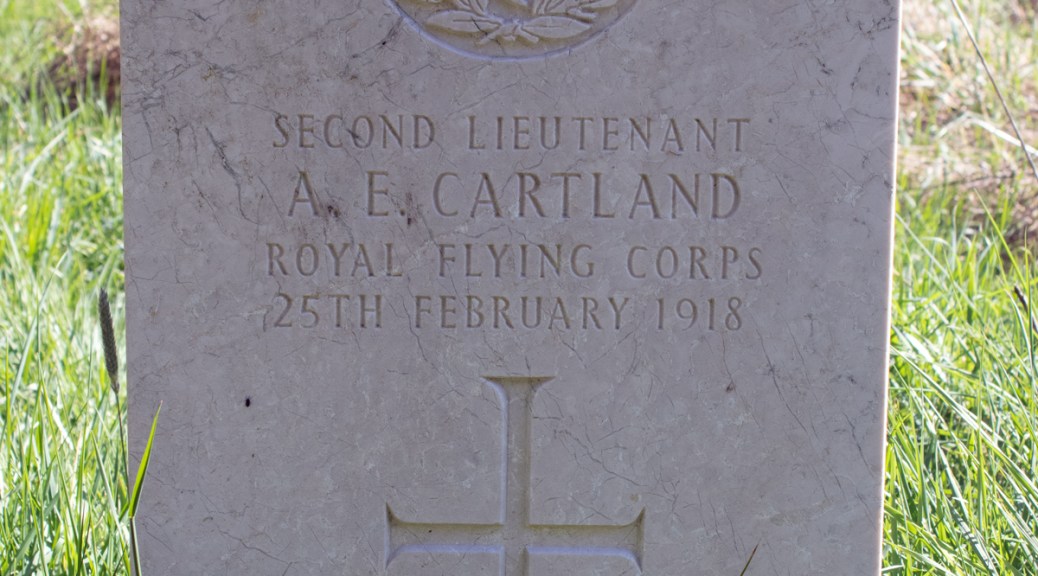
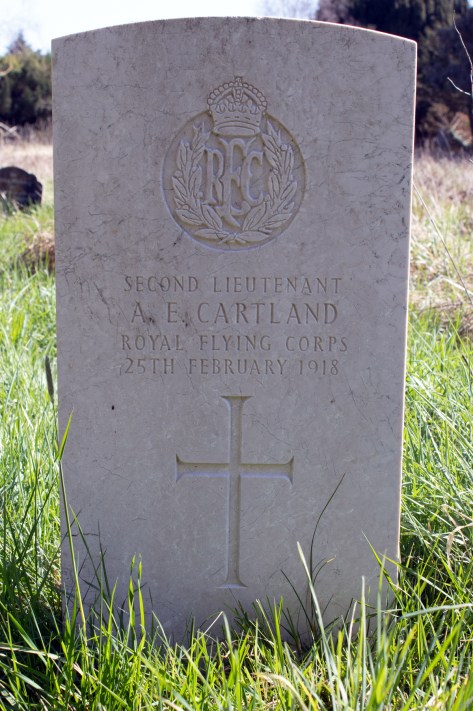
Second Lieutenant Arthur Cartland

Second Lieutenant Arthur Cartland

Military honours were accorded at the funeral, on Saturday, of Lieutenant Arthur Edwin Cartland, of the Royal Flying Corps, who was killed in a flying accident near Newcastle.

The deceased officer was a son of Mrs FA Cartland, of Wentworth House, Western-place, and although only twenty-one years of age, he had seen considerable active service in France, having joined the Flying Corps in July, 1913, or some thirteen months before the outbreak of the War.

He took up his Commission in September last, and was home on leave only three days before his death, in order to see his brother, who is in the Motor Transport Section of the Army Service Corps.

[Worthing Gazette: Wednesday 6th March 1918]

Arthur Edward Cartland was born in Winkfield, Berkshire, on the 12th January 1897. One of seven children, his parents were general labourer William Cartland and his wife, Ann.

When Arthur left school, he found work on a local farm, although from here on in, his trail becomes more of a challenge to decipher. While some of the information in the newspaper article is incorrect, he definitely joined the Royal Flying Corps on 17th July 1913. By this point, the family had moved to West Sussex.

When war broke out, the now Air Mechanic 1st Class Cartland was sent to France, although he did have two months out in 1915, due to an operation on a hernia. In May 1916, Arthur had been promoted to Sergeant, with his commission following eighteen months later.

In February 1918, Second Lieutenant Cartland was attached to the 75th Training Squadron at Cramlington Airfield, Northumberland. He was flying a de Havilland DH4 on the 25th February, when the accident that ended his life occurred. The Casualty Card noted that:

…the accident was due to 2L Cartland attempting to turn back to [the] aerodrome when only 50ft up. He stalled on [the] turn and nose dived into the ground. The adjustable tail plane control was right back in the landing position, this would tend to make the machine stall on a turn. As far as was possible to ascertain from the examination of the crash the controls were okay.

Arthur Edward Cartland was laid to rest in Broadwater Cemetery, to the north of Worthing town centre.


The brother Arthur had come home to visit – Stephen Cartland – had found work as a page when he completed his schooling. In December 1908 he enlisted in the Royal Navy, spending five years as an Officer’s Steward and Cook. When war broke our he joined the Army Service Corps.

Another brother, William, had also served in the First World War, rising to the rank of Corporal in the 1st Battalion of the Royal Berkshire Regiment. He was badly wounded at Ypres in the autumn of 1914, succumbing to his injuries on the 9th November. Also 21 years of age, Corporal Cartland was laid to rest in Poperinghe Old Military Cemetery.


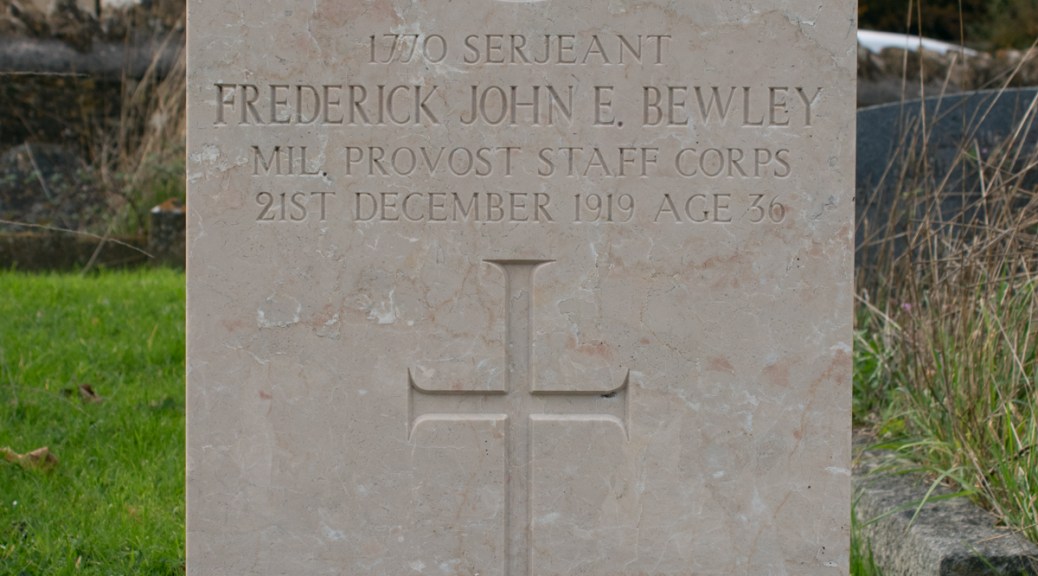
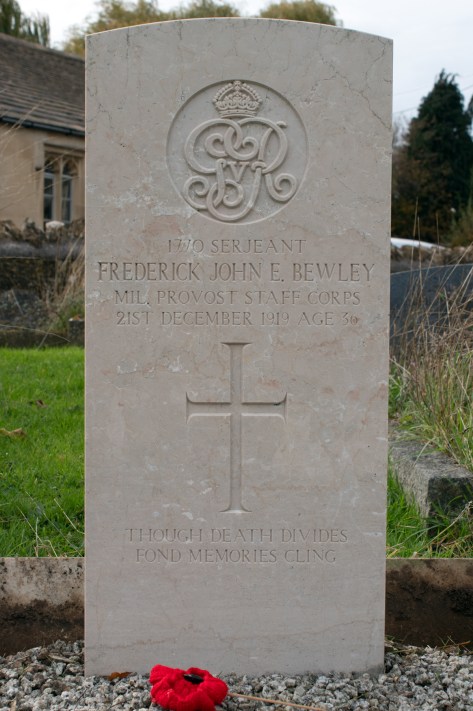
Serjeant Frederick Bewley

Serjeant Frederick Bewley

Frederick John Edwin Bewley was born in Calne, Wiltshire, on 10th May 1882. Noticeably absent from the 1891 and 1901 census records, his parents were Chelsea pensioner John Bewley, and his wife, Annie.

Following in his father’s footsteps, Frederick was drawn to a life in the army. Having already been a volunteer in the local militia, on 20th November 1900, he enlisted in the Wiltshire Regiment. His service papers show that, at 5ft 6ins (1.68m) tall, he weighed 125lbs (56.7kg). He sported brown hair, grey eyes and a fresh complexion. He was also noted as having a scar on his right thigh and calf.

Private Bewley’s contract was for 12 years. During that time, he travelled the world spending three years in South Africa, and more than five in India. He was back in South Africa when his initial term of service came to an end, and he re-enlisted without thinking about it.

In May 1904 Frederick has been promoted to Lance Corporal, a rank he would hold for the next 12 years. During his second term of service, war broke out, but he would only spend short periods of time overseas.

…a member of the regular army, [Frederick] crossed to France with Lord French’s Expeditionary Force in August, 1914, and was wounded in the thigh at the battle of Mons. After a short period at Netley Hospital he went to Flanders in the following November. The awful conditions prevailing in the trenches was responsible for an attack of frost-bite, and tuberculosis following, he was treated at Winsley and Harnwood Sanatoriums…

[Wiltshire Times and Trowbridge Advertiser: Saturday 27th December 1919]

From 1th January 1915, Lance Corporal Bewley would remain on home soil. The sharp clarity of near-death experiences, along with a reconnection with home life, led to love blossoming and, on 6th May, he married labourer’s daughter Lilian Fidler. Both were living in Holt, Wiltshire, by this point, and it was in the village’s church that the couple exchanged vows.

Back on home soil, a new opportunity had opened up for Frederick, and he transferred to the Military Provost Staff Corps, a unit set up to police the army. In January 1916, he was promoted to Corporal; just weeks later, Vivian gave birth to their first child, Eric. and he rose to Sergeant eighteen months later.

On 1st August 1917, Corporal Bewley was promoted again, taking the rank of Serjeant. By this point, however, his bouts of poor health were coming back to haunt him, and, just six weeks after his promotion, he was medically discharged from the army.

After returning to Holt, Frederick welcomed a second son with Lilian on New Year’s Eve 1918, when Vivian was born. The following winter, his tuberculosis struck again, and this time it was clear the illness would prove fatal. He passed away on 21st December 1919, aged 37 years old.

The body of Frederick John Edwin Bewley was laid to rest in Hold Old Cemetery.


Serjeant William Loder

Serjeant William Loder

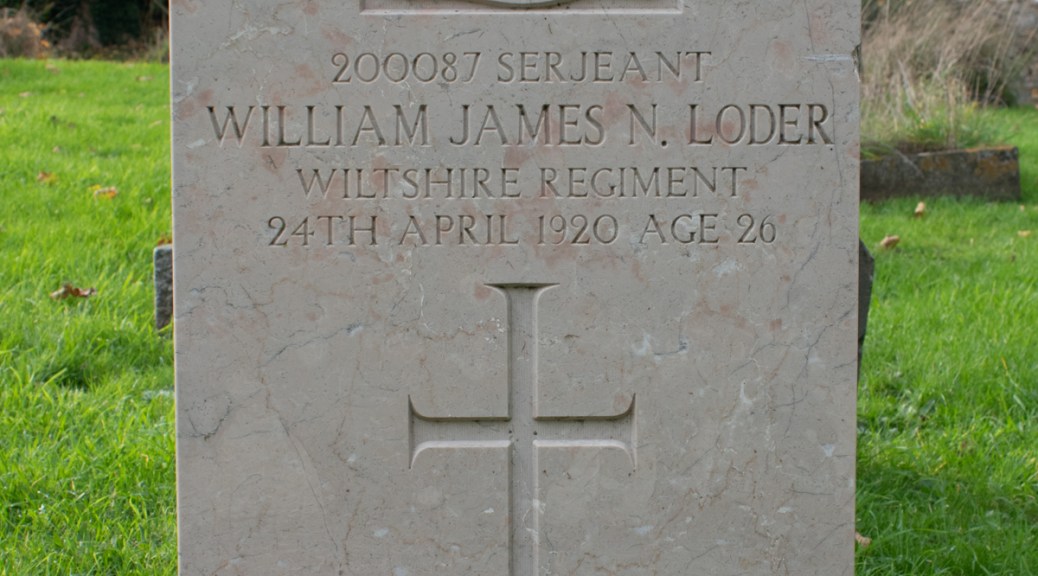
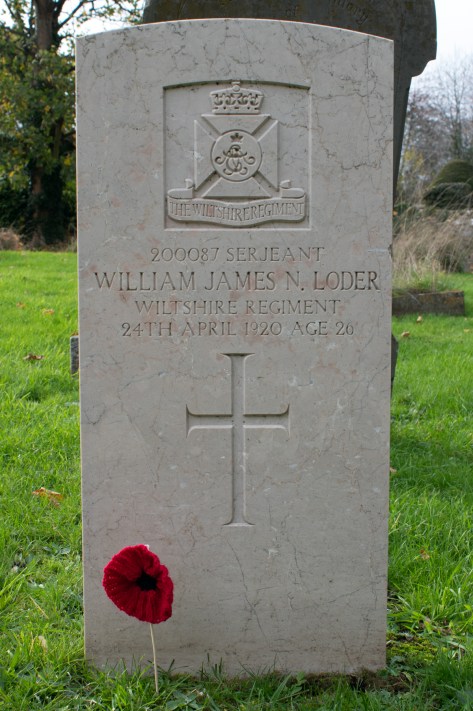
William James Nelson Loder was born in the summer of 1893 in Trowbridge, Wiltshire. The oldest of seven children, his parents were Harry and Rosina. Harry was an engineer at a wool mill, and his son obviously followed in his father’s practical footsteps: the 1911 census found him employed as a coach builder’s apprentice.

The document found the Loder family living at 1 Canal Road, a five-roomed cottage on the outskirts of town. Alongside Harry and his son, William’s younger sister, Ethel was also working as an apprentice dress maker.

Away from work, it seems that William also joined the local militia, with a later document showing that he enlisted in the Wiltshire Regiment on 4th February 1909. When war broke out, he was called upon to play his part. He was assigned to the 4th Battalion, and was sent to India in September 1914. While his service papers have been lost to time, it is clear that he rose to the rank of Serjeant, but by the start of 1917, he was back in Britain.

On 27th January 1917, William married Angelin Gliddon. She was a coachman’s daughter from Holt, Wiltshire, and was working as a draper’s assistant when she and her husband exchanged vows.

William’s health was failing by this point and, on 21st May 1917, he was formally discharged from the army on medical grounds. His trail goes cold as this point, and it is only three years later that documents confirm his passing. He died on 24th April 1920 at the age of 26 years old.

The body of William James Nelson Loder was laid to rest in Holt Old Cemetery, not far from where his grieving wife still lived.


Serjeant Thomas Harrison

Serjeant Thomas Harrison

The life of Thomas Harrison, buried in Holt Old Cemetery, Wiltshire, is a challenge to unpick. No service papers remain, but the Commonwealth War Graves Commission note that he was married to Annie Harrison, who lived in Trowbridge, Wiltshire.

The couple do not appear together in the 1911 census, so it is likely that they exchanged vows after this date. There is a Thomas Harrison recorded in the return: he was an Acting Bombardier in the Royal Horse Artillery, billeted in the barracks in Trowbridge. It is likely that he is the gentleman buried in Holt Cemetery, but it cannot be confirmed either way.

Acting Bombardier Harrison was born in Motherwell, Lanarkshire, in around 1889, but his name is not uncommon, so it is not possible to identify his parents or early life.

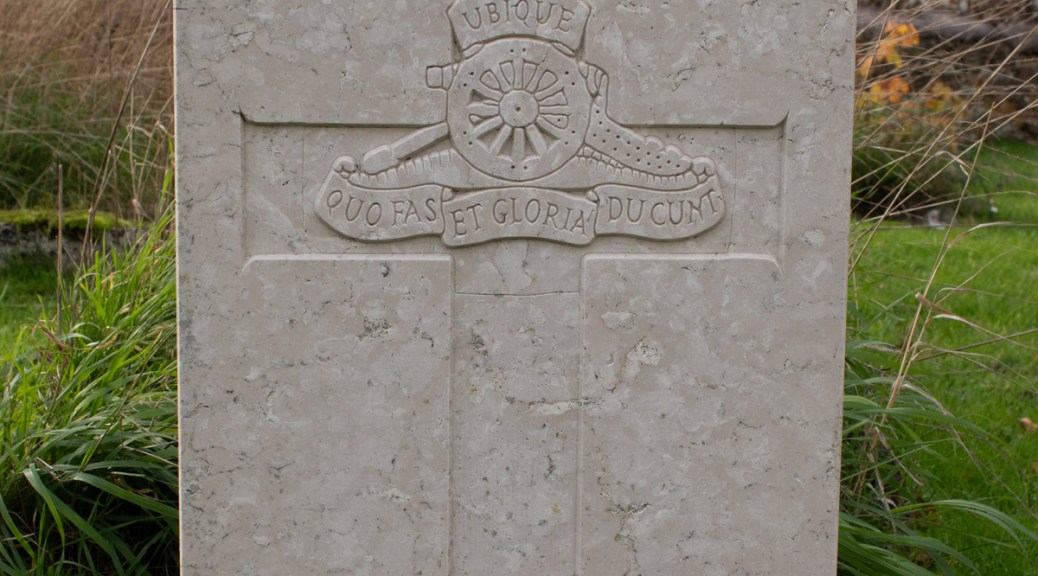
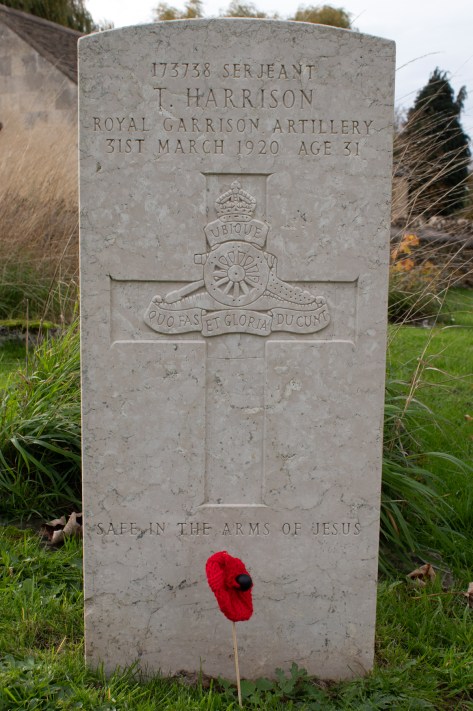
Thomas served during the First World War, rising to the rank of Serjeant in the Anti-Aircraft Depot of the Royal Garrison Artillery. He and Annie had two children: Vera, who was born in 1912, and Ivy, who was four years younger.

When the Armistice was declared, Serjeant Harrison returned home, but, in the spring of 1920, he suffered a bout of gastritis. The condition was to prove fatal, and he passed away on 31st March 1920. He was 31 years of age.

The body of Thomas Harrison was laid to rest in Holt Old Cemetery, not far from where Annie and the girls lived.


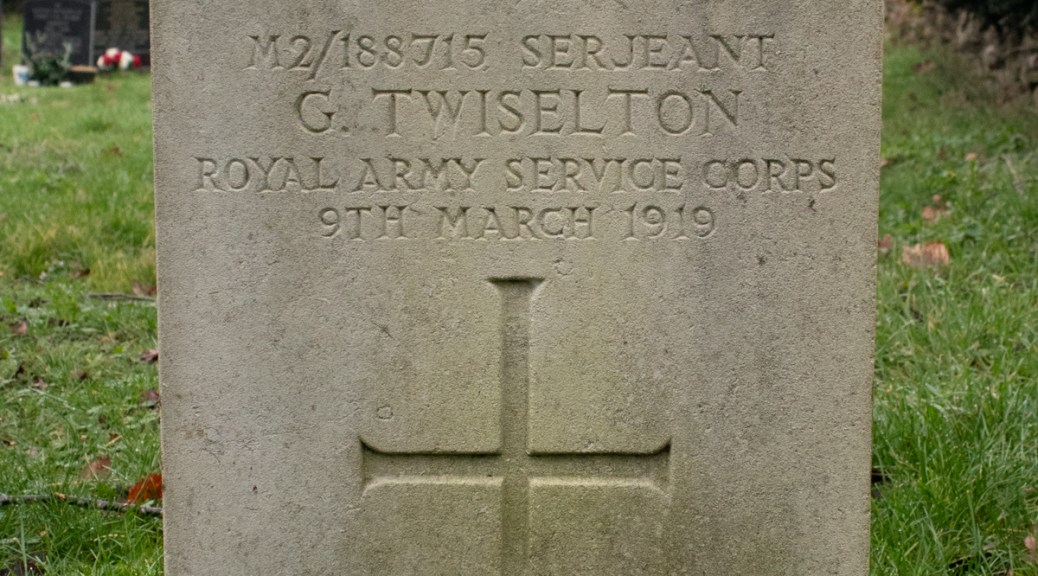
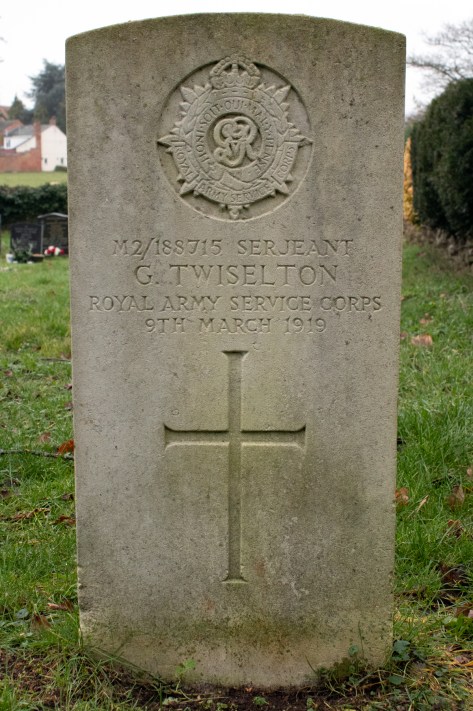
Serjeant George Twiselton

Serjeant George Twiselton

George Twiselton was born in Milton Malsor, Northamptonshire, in the spring of 1878. The third of nine children, he was the second of two sons to Reuben and Eliza Twiselton. Reuben was a general labourer, working for the local railway and brewer, and his son was to follow suit, taking up employment as a drayman.

In 1903, George married Annie Branson. She was a cooper’s daughter from Northampton, and it seems likely that George and his future father-in-law knew each other through their combined work. By the time the young couple married, Annie was working as a domestic servant for the Burnham family, and was living at 50 Middle Street, Bradwell, Buckinghamshire (now part of Milton Keynes).

The 1911 census found George and Annie living in Milton Malsor. They had four children by this point: Edith, Doris, Reuben and Clara. George was still employed as a brewer’s drayman, and this would stand him in good stead when war broke out a few years later.

Details George’s time in the army have been lost to time, but it is clear that he had enlisted by 1916, and was assigned to the Royal Army Service Corps. His previous time with horses led him to be attached to the 381st Mechanical Transport Company, and he spent time in France, eventually rising to the rank of Serjeant.

George survived the war, and returned home after the Armistice. However, he contracted influenza early in 1919, and would succumb to the condition on 9th March: he was 40 years of age.

The body of George Twiselton was laid to rest with full military honours in the graveyard of Holy Cross Church, in his home village of Milton Malsor.


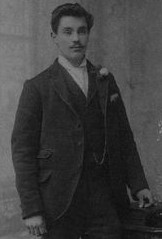
Serjeant George Twiselton
(from miltonmalsorhistory.org.uk)

With her husband dead, and six children to raise, Annie had to find the strength to continue. The 1921 census found her living with her four youngest – including her only son, Reuben. She was employed on home duties, while her 13-year-old boy was working as a farm servant.


Reuben’s story is a testament to his father’s determination:

At the outbreak of WW2 Reuben, the only son of George, joined his father’s old RASC regiment and went to France as an ambulance driver with the British Expeditionary Force. Along with many others, he withdrew to the Dunkirk beaches but turned down evacuation back to the UK, choosing instead to stay behind and give assistance to the many wounded. He was later taken prisoner and held a Prisoner of War for 5 years until released by American soldiers in 1945. He died in 1988 aged 81 years.

[Milton Malsor History website]


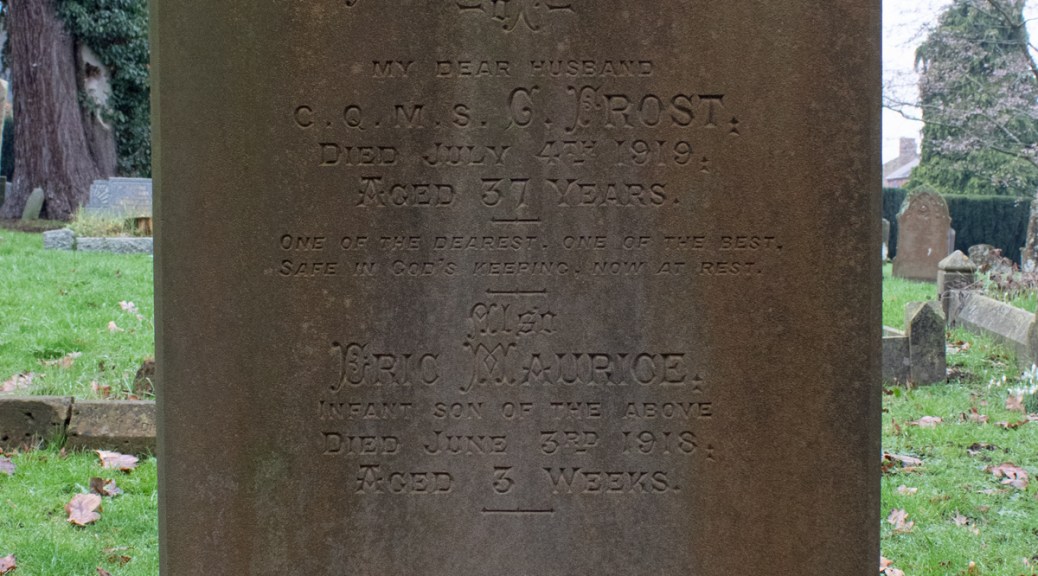
Company Quartermaster Serjeant Charles Frost

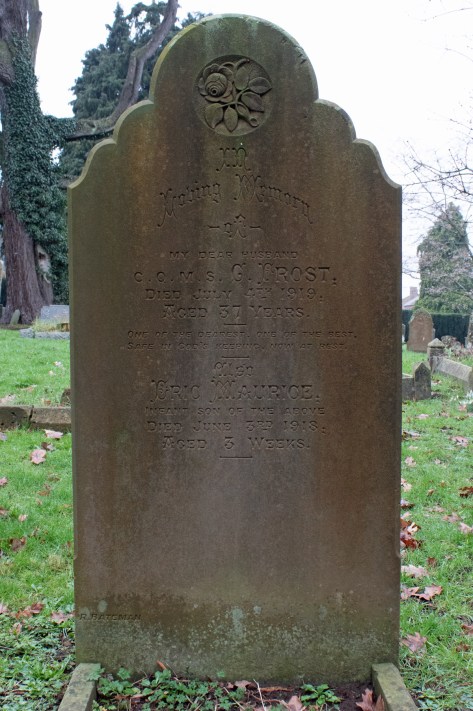
Company Quartermaster Serjeant Charles Frost

Charles Albert Frost was born in Daventry, Northamptonshire, at during the winter of 1882/3. The third of eight children, his parents were William and Louisa Frost. William was a foreman at a shoe factory in Northampton and, at the time of the 1891 census, the family were living at what looks to be 47 Ardington Road or Abington Road (the return is not clearly legible).

Charles also found work in the shoe trade when he completed his schooling, but his is not a career he wanted to make for himself. Instead he was drawn to the army and, on 26th January 1900, he joined up. The now Driver Frost’s service records show that, at 18 years of age, he was 5ft 4.5ins (1.63m) tall and weighed 127lbs (57.6kg). He had brown hair, blue eyes and a fresh complexion.

Assigned to the Army Service Corps, Charles spent the next few years on home soil. Attached to the 17th Company, he would work hard and that dedication would pay off. He was promoted to Lance Corporal in April 1902, and 2nd Corporal just six months later. By January 1903 he had risen to Corporal, extending his term of service the same month.

Interestingly, in March 1904, Charles reverted to the role of Driver at his own request. He would remain at that rank until for the next four years, when he was stood down to reserve status.

The 1911 census found Charles living back home with his parents and siblings. By this point there were six adults and three children living at 74 Hood Street, Northampton, a seven-roomed terraced house on the east of the town centre. Charles had found work as a blouse cutter in a local factory, and with his father and older siblings all involved in factory work in some way.

Life on civvy street seemed not to appeal, however, and in November 1911 Charles was re-engaged with the Army Service Corps. This was initially planned to be for four years, but he would remain in the army for nearly twice that long.

In August 1914, Driver Frost was shipped out to France. and, barring leave, he would remain there for the next three years. In the summer of 1915, he returned home briefly, marrying Daisy Harris at St Edmund’s Church in Hardingstone, Northamptonshire, when he did so. He was soon sent back out to France, however, and remained on the other side of the Channel until April 1917.

Back on home soil, Charles’ career had taken a surprising turn. In January 1915 he was promoted to Acting Corporal, rising to Acting Sergeant just four months later. By November 1916 he had been promoted to Acting Quartermaster Sergeant, a role that was formalised just four months later.

In May 1918, Daisy gave birth to their first – and only – child, a boy they called Eric. Tragically, he passed away just three weeks later, from a combination of pemphigus and asthma: with Charles away, Daisy had to register the death.

Quartermaster Sergeant Frost survived the war, but was admitted to the Mill Road Hospital in Liverpool, Lancashire, on 28th June 1919. He was suffering from a cerebral tumour, but his treatment would prove ineffectual. He died at 3:20am on 4th July 1919: he was 37 years of age.

The body of Charles Albert Frost was taken back to Northamptonshire for burial. He was laid to rest in the graveyard of St Edmund’s Church, Hardingstone, alongside Eric: a father and son reunited.


Daisy had not lost her son and husband in just over a year. The 1921 census found her back living with her father and sister, carrying out home duties while they worked.


Serjeant Jack Hogan

Serjeant Jack Hogan

The personal life of Jack Hogan is a challenge to piece together, and much of the information is pulled from his service record. This confirms that he was born in 1890 in Cork, Ireland, and gives his next of kin as his mother, Annie Hogan, who was living in Southsea, Hampshire. He seems to have been born John Hogan, Jack being a common nickname, but there are too many census records with potential matches to narrow down a definite connection.

A Roman Catholic, Jack was 5ft 5.5ins (1.66m) tall. He had dark hair, brown eyes and a fresh complexion. He was also noted as having two small moles on his left cheek. He enlisted in the Royal Flying Corps as an Air Mechanic 2nd Class on 1st October 1915, leaving his job as a motor and cycle fitter to do so.

Jack seemed to have been proficient at what he was doing, and was promoted to Air Mechanic 1st Class less than a year after enlisting. On 5th February 1918 he rose again, taking the role of Acting Sergeant. When the Royal Air Force was formed in April that year, his rank was made permanent.

Sergeant Hogan was attached to the 29th Training Depot Station near East Boldre, Hampshire. On 4th August 1918, he was piloting an Avro 504, when it collided with another aircraft. There is little recorded about the incident, and his RAF Casualty Card does not give details of the other vehicle or its pilot. Jack’s biplane fell to the ground and he was killed. He was 28 years of age.

The body of Jack Hogan was laid to rest in the graveyard of St Paul’s Church in East Boldre, not far from the base that had become his home.


Lieutenant Austin Blackie

Lieutenant Austin Blackie

Austin Wyard Blackie was born in Spring Bay on Ontario’s Manitoulin Island on 17th November 1895. The seventh of eight children, his parents were farmers John and Mary Blackie. John took the family to where the work was: by the time of the 1901 census they had relocated to Algoma, 190km (120 miles) to the north west.

Little further information is available about Austin’s early life. When war broke out, he stepped up to play his part. His military records take a bit of unpicking, but he joined the Canadian Expeditionary Force on 10th April 1916, and was assigned to the 227th Battalion as a Sergeant. He was dismissed from service on 15th December 1916, as he was deemed medically unfit.

Undeterred, Austin’s service papers confirm that he re-enlisted on 7th March 1917, and that he was a student at the University of Toronto Officers’ Training Corps at the time. This document also gives his year of birth incorrectly as 1894.

Austin’s medical in 1917 confirmed that, at 22 years of age (based on the incorrect year of birth), he was 5ft 7.5ins (1.71m) tall and weighed 143lbs (64.9kg). He had fair hair, grey eyes and a fair complexion, good hearing and 20/20 vision. He was also recorded as having a number of scars: two either side of his stomach from an operation, and a third on the right side of his left ankle.

Sergeant Blackie’s time in the army was not destined to be a lengthy one, and there is a sense of his determination to better himself. On 5th May 1917, he was discharged from service again, but this time because he mad the transfer to Canadian Royal Flying Corps.

At this point, Austin’s trail goes frustratingly cold. He was shipped out to Britain, and was based at the 29th Training Depot Station in East Boldre, Hampshire. When the Royal Air Force was formed, he transferred across, and, at some point during this time, he was promoted to the rank of Lieutenant.

Mr A C Hallett, Deputy County Coroner, held inquests on Tuesday, of Lieut. Austin Wyard Blackie, RAF, of California, and Second-Lieut. Arthur Fred Belyea, RAF, of Calgary, Canada, who met thwir deaths while flying. The evidence showed that their machines collided at a great height, and that death in each case must have been instantaneous. Verdicts of “Accidental death” were returned.

[Hampshire Advertiser: Saturday 21st September 1918]

The report’s suggestion that Austin was from California is incorrect, although his parents had, by this point, moved there from Canada.

The RAF’s own report gave a little more detail on what happened:

The court considered the evidence, found that the cause of the accident was entirely due to misadventure in that the [Lieutenant Blackie’s] foot became entangled behind the rudder bar, the machine thus being our of control.

It appears that Austin had been offered a different aircraft to the Sopwith Camel in which he he had been killed. “He apparently took his machine up without asking his Flight Commander’s permission or his Instructor’s, contrary to standing orders.”

Second Lieutenant Belyea’s report card adds a stark twist to the crash: “The cause of the accident was in our opinion an error of judgement on one pilot (unknown) in flying his machine into the other machine from the rear, causing the left hand frame of Camel C8322 and the right hand frames of Camel C96 to collapse, thus causing each machine to spin to the ground. The one pilot was probably attempting to obtain good photographs of the other machine.”

Austin Wyard Blackie was just 22 years of age when he died on 17th September 1918. He was laid to rest alongside Second Lieutenant Belyea in the graveyard of St Paul’s Church, East Boldre, not far from the base in which he had served.


You can read about Second Lieutenant Belyea’s life here.


Lieutenant Austin Blackie
(from findagrave.com)