Category Archives: Flight Lieutenant

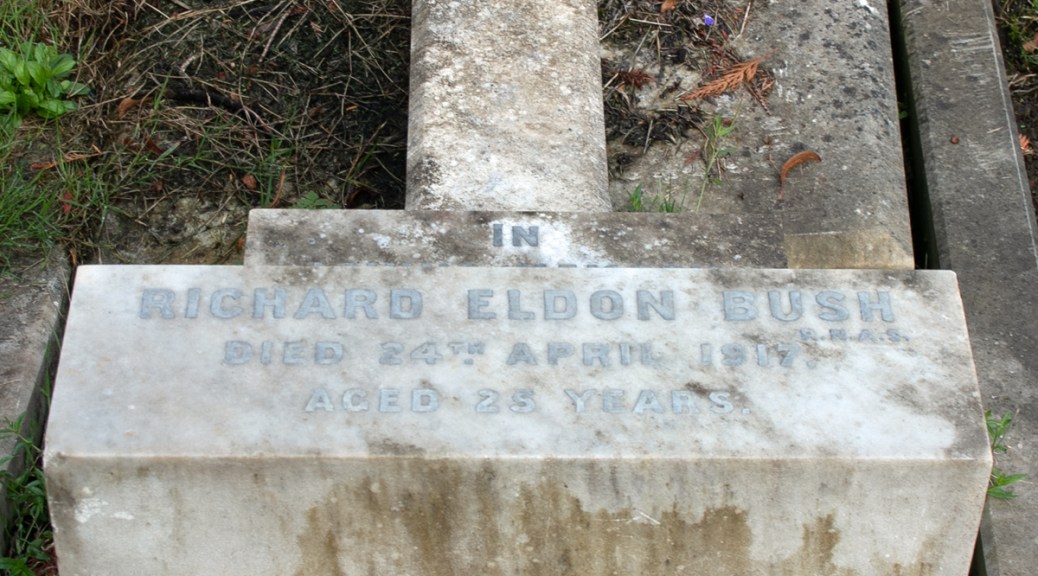
Flight Lieutenant Richard Bush

Flight Lieutenant Richard Bush

Richard Eldon Bush was born on 16th June 1891 in Keynsham, Somerset. The second of four children (all of whom were boys), his parents were Philip and Maria Bush. Philip was a solicitor, and with that status came opportunity for his children.

The 1911 census recorded the Bush family living in Keynsham with two servants – cook Clara Jones and parlour maid Laura Day. The two older boys – Richard and his older brother, Whittington, were both listed as Cambridge undergraduates, while his two young brothers were boarding at a private school in Repton, Yorkshire.

Richard had aspirations for a good life. In March 1914, he set sail for a life in Canada, looking to take up architecture in the colony. His time overseas wasn’t to be long, though, and, when war broke out in Europe, he returned home.

Full details of Richard’s military service are not available, but he joined the Royal Naval Air Service and, on 20th August 1915, he gained his wings. Richard rose to the rank of Flight Lieutenant, but tragedy was ahead.

On 24th April 1917, he was piloting a scout seaplane around the harbour in Fishguard, Pembrokeshire.

[He] failed to clear some overhead wires, and the seaplane swerved against the cliff with considerable violence, smashing the machine, which the petrol set alight, and crashed to the earth. When liberated from the blazing machine Lieutenant Bush rolled and extinguished his burning clothes.

Somerset Guardian and Radstock Observer: Friday 27th April 1917

Sadly, Flight Lieutenant Bush’s injuries proved too severe. He passed away a couple of days later, on 24th April 1917, at the age of 25 years old.

Brought back to Somerset for burial, Richard Eldon Bush was laid to rest in the cemetery of his home town, Keynsham.
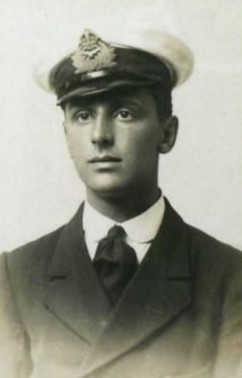

Flight Lieutenant Richard Bush
(from astreetnearyou.org)

The same newspaper report noted that Richard’s brother Graham was an officer in the Royal Flying Corps. He had also been badly injured in a flying accident, but was, according to the report, “flying again now.


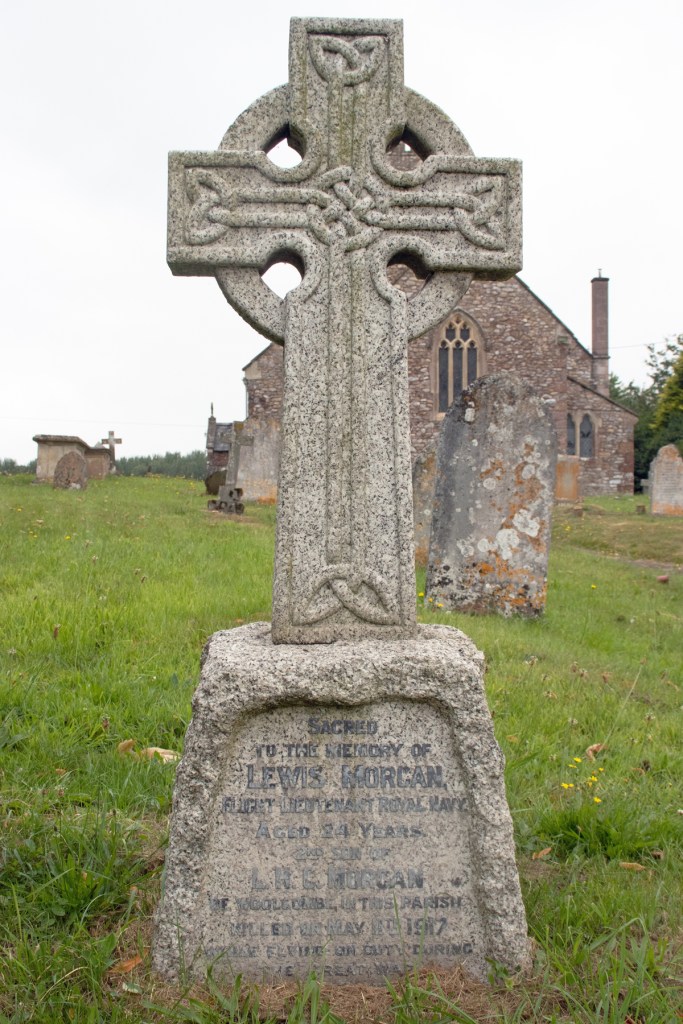
Flight Lieutenant Lewis Morgan

Flight Lieutenant Lewis Morgan

Lewis Morgan was born on 22nd May 1892 in Plymouth, Devon. He was one of six children to former army officer and rector Lewis Harold Gilbert Morgan and his wife, Mary.

Growing up in Plymouth, it seems inevitable that the sea life would take hold in Lewis Jr. He first took up a post in the Merchant Navy, rising to Second Mate in December 1911.

By this point, however, he had set his sights on something more formal and soon enlisted in the Royal Navy. He served on a number of vessels over the years, and was re-engaged when war broke out. By the summer of 1915, he transferred to the Royal Naval Air Service, earning his wings on 5th August that year.

The now Flight Lieutenant Morgan’s service grew as the war continued. The life of air crew at this point in the era of flight was notoriously dangerous, and Lewis was to meet his own fate. On 11th May 1917, he was flying with Probationer Flight Officer Randolph Seed around Edmonton, Middlesex, when an accident occurred. The local newspaper reported on the incident and the subsequent inquest:

Flight-Lieutenant Mitchell gave a graphic account of the accident. He said that about eight o’clock in the evening he was flying at a height of 1,000 feet, and the machine containing the deceased officers was just ahead, but 500 feet higher. The flying conditions were good, and at the time both machines were going steadily. Glancing upwards he notices that the other machine suddenly appeared to collapse, the front extension of the main plane crumpling up. The machine nose-dived, and a black object fell out of it. The machine continued its descent and fell into the Edmonton Sewage Farm… The machine was so entirely broken up that it was impossible to theorise upon the cause of the accident. Morgan was said to have fallen on a concrete path. The deaths were instantaneous.

Taunton Courier and Western Advertiser: Wednesday 23rd May 1917

Lewis Morgan was just 24 years old, and days away from his 25th birthday. His body was brought back to Somerset, and laid to rest in the graveyard of Holy Cross Church in Sampford Arundel. By this point, his parents were living in the nearby Woolcombe House, so their son was, in a way, brought home.


The newspaper article went on to report that Flight Lieutenant Morgan was the third and last son to Lewis and Mary.

Francis Morgan – five years Lewis’ senior – enlisted in the Royal Field Artillery when war broke out. He rose to the rank of Captain, and was mentioned in Despatches for his actions. He was killed in the Dardanelles – potentially at Gallipoli – on 2nd May 1915, at the age of 28 years old.

Walter Morgan was a year younger than Lewis. He also played his part in the First World War, joining the South Lancashire Regiment, and rising to the rank of Second Lieutenant. Walter was also sent to fight in Gallipoli, and this is where he also lost his life. He was killed just three months after Francis, on 9th August 1915. He was just 22 years of age.

The loss of three sons in two years was to take a further toll on the Morgan family. Mary had suffered from poor health for a while, and the deaths of Francis, Walter and Lewis was to prove too much. She passed away at home on 15th July 1917, aged just 56 years old.


Flight Lieutenant Lewis Morgan