Tag Archives: Middlesex

Stoker 1st Class Robert Collett

Stoker 1st Class Robert Collett

Robert William Collett was born on 20th April 1893 in Barnsbury, now part of Islington, Middlesex. Little information about his early life remains available – he does not feature on any census records – although later records confirm than his parents were called George and Sarah.

When he completed his schooling, Robert found work as a baker, but he had bigger and better things in mind. On 24th August 1911, he enlisted in the Royal Navy. His service papers show that he was 5ft 1.5ins (1.56m) tall, with dark brown hair and eyes, and a fresh complexion.

Stoker 2nd Class Collett was sent to HMS Pembroke, the Royal Naval Dockyard in Chatham, Kent, for his training. In February 1912, he was given his first assignment, on board the battleship HMS Berwick. She would be his home for the next year, during which time he was promoted to Stoker 1st Class.

After a further spell on shore, Robert transferred to another battleship, HMS Swiftsure. She would spend much of the war serving in the Mediterranean, with Stoker Collett on board. He seems to have had a rebellious nature, and this led to his time aboard Swiftsure not being smooth sailing.

During his time on the battleship Robert spent three separate period in the brig: three days in October 1914, and seven days in June 1915. In October that year, things came to a head, and he was convicted of threatening to strike an Engine Room Artificer. For this he was incarcerated again, for 42 days.

Stoker Collett left Swiftsure in May 1916, and transferred to another vessel, the battlecruiser HMS Repulse. After an eight-month stint on board, he returned to Chatham while waiting for a new posting. His time here was not without incident, however, and he was thrown in the brig for a further seven days for an unrecorded misdemeanour.

HMS Pembroke was overcrowded in the summer of 1917, and when he was released Stoker Collett was billeted in temporary accommodation in the dockyard’s Drill Hall.

By this point in the war, the German Air Force was looking to minimise daytime casualties, and was, instead, trialling night raids; on 3rd September, Chatham found itself in their flight path. The Drill Hall received a direct hit, and Stoker 1st Class Collett was killed, along with close to 100 others. He was just 24 years old.

The body of Robert William Collett was taken back to London for burial. He was laid to rest in Islington Cemetery, not far from where his parents were still living.


[Note: the photo above is of the memorial to the Chatham Air Raid victims, close to the mass grave for those whose bodies were not identified, in Woodlands Cemetery, Gillingham, Kent.]


Private William Cockerton

Private William Cockerton

William John Cockerton was born in the autumn of 1896 in Holloway, Middlesex. The older of two children, his parents were baker John Cockerton and his wife, Elizabeth.

The 1901 census found the family living at 28 Highbury Station Road. The house is long since gone, but the Cockerton’s neighbours included a horse keeper, porter and a police constable.

By the time of the 1911 census, William had left London, and was living with his paternal uncle and aunt, Fred and Amy, in Trowbridge, Wiltshire. Fred was an ironmonger, and his nephew had taken an apprenticeship with him. The census notes two visitors to the property – 22 Clarendon Villas – William’s mother and sister, Elizabeth and Dolly.

In his spare time, William started volunteering with the local militia. When war broke out, he was quick to enlist, formally joining the Wiltshire Regiment as a Private. Assigned to the 2nd Battalion, by December 1914, he found himself in India. A later newspaper report detailed how his military service unfolded:

..after a period of garrison duty in India, he volunteered for duty with the Mesopotamian Expeditionary Force, and took part in some of the biggest engagements against the Turks, being eventually wounded, captured and reported dead. For some two years he was held in captivity, during which he ensured great hardships that seriously undermined his health.

[Wiltshire Times and Trowbridge Advertiser: Saturday 26th April 1919]

William was reported missing in February 1917, with an understandably grief-stricken John and Elizabeth later being informed that he had been severely wounded in the chest, succumbing to his injuries half-an-hour later. His name was placed on the roll of honour at Trowbridge, but in July 1917, William’s parents received a card from Turkey in his handwriting, explaining that he was a prisoner of war.

Private Cockerton was released on 16th November 1918, and returned to Britain.

Early in March, he went to Harrow-on-the-Hill for a holiday, staying with his uncle. Here he was taken ill with malarial fever and pneumonia, which resulted in his death.

[Wiltshire Times and Trowbridge Advertiser: Saturday 26th April 1919]

William John Cockerton was just 22 years of age when he passed away on 20th April 1919. His body was taken back to Wiltshire for burial, and he was laid to rest in Trowbridge Cemetery. He lies at rest in the family plot, alongside his father, who had passed away in the autumn of 1916.


Private William Cockerton
(from britishnewspaperarchive.co.uk)

Petty Officer 1st Class Frederick Russell

Petty Officer 1st Class Frederick Russell

Frederick Russell was born in Woolwich, Kent, on 8th August 1868, and was the younger of two children to Elizabeth Russell. Of Frederick’s father there is no trace, and it is likely that he passed away soon after his son’s birth. Only Elizabeth’s name appear on her son’s baptism record, the ceremony carried out at St Nicholas’ Church, Plumstead, Kent, on 1st August 1869.

The 1871 census found Elizabeth and her children – Caroline and Frederick – living in rooms at 1 Armstrong Place, Plumstead. She was employed as a hat trimmer, and the document confirms that she had been born in Matlock, Derbyshire.

Money must have incredibly tight, and by the 1881 census, Frederick was one of 115 students at the South Metropolitan Schools Branch in Herne Bay, Kent. The former Pier Hotel on the seafront, this had been set up as a convalescent home for pauper children from the Woolwich area.

The next record for Frederick shows the start what would become a thirty year naval career. He enlisted as a Boy 2nd Class on 10th January 1884, and was assigned to the Royal Navy’s school ship, HMS Impregnable. She would remain his home for the next eighteen months, and he was promoted to Boy 1st Class during his time on board.

In August 1885, Boy Russell was given his first sea-going assignment, on the battleship HMS Ajax. The following spring, he transferred to the corvette HMS Comus, and she would become his home for the next six years. During this time, he came of age, and was formally inducted into the Royal Navy as an Ordinary Seaman. His papers show that he was 5ft 1in (1.55m) tall, with brown hair, grey eyes and a fresh complexion. They also note an abscess scar under his jaw and a dog bite on his right arm.

Frederick was a determined young man, and his commitment to the navy paid off. Over the ten years of his contract, he would serve on three ships after Comus, and was promoted three times – to Able Seaman in April 1888, Leading Seaman in 1894 and Petty Officer 2nd Class on 1st January 1895.

In August 1896, Frederick’s contract with the navy came to an end, but he immediately re-enlisted. Over the next decade he added a further six vessels to the list of those he had served on, and had been promoted again, to Petty Officer 1st Class, taking the rank in August 1897. As time wore on, more and more of his service was spent on shore, and he spent the last two years of his second contract based at HMS Pembroke, the Royal Naval Dockyard in Chatham, Kent.

Petty Officer Russell’s contract came to an end in August 1906 and his trail goes cold for a few years. An entry on the 1911 census suggests that he may have found work as a servant in the St Aloysius School on Hornsey Lane, Upper Holloway, Middlesex.

Frederick had also met someone by this point, and on 7th January 1911, he was due to marry Elizabeth Stone at Holy Trinity Church on Haverstock Hill. The nuptials did not take place, however, the vicar noting that the entry was cancelled, ‘the parties not having presented themselves at the time appointed.’ The couple were still very much together, however, and went on to have four children: Frederick, Gladys, Ernest and George.

When war broke out, Frederick was called back into service in his previous role of Petty Officer 1st Class. Over the course of two years, he spent six months on board the battleship HMS Duncan. The rest of the time he served at his former base HMS Pembroke, and is seems likely that this was so that he was closer to his family.

By the summer of 1916, Frederick’s health was starting to fail. He contracted pneumonia, and the condition would get the better of him. He passed away on 29th July 1916, a few days short of his 48th birthday.

The body of Frederick Russell was laid to rest in the military section of Woodlands Cemetery, Gillingham, Kent, not far from the base he had called home for a lot of his navy career.


Stoker 1st Class Frederick Benmore

Stoker 1st Class Frederick Benmore

Frederick George Benmore was born in Blackwall, Middlesex, on 5th November 1895. The middle of nine children, his parents were William and Emily Benmore. William was a barge builder, and the family grew up around the docklands, first taking rooms as 212 Leven Road, Bromley-by-Bow, then at 5 Oak Road, Canning Town.

By the time of the 1911 census, Frederick was working as a labourer, picking iron to earn his keep. His was one of three wages coming into the household: his older brother William was a dock labourer, boiling pitch, while William was employed as a sawyer, building barges.

When war broke out, London’s docks were a key focal point. Keen to play his part, keen to earn a regular pay packet, Frederick stepped up, and enlisted. He joined the Royal Navy on 29th July 1915, as a Stoker 2nd Class. His service papers show that he was 5ft 5.5ins (1.66m) tall, with brown hair, brown eyes and a fresh complexion. He had a number of tattoos on both forearms.

Stoker Benmore’s base would be HMS Pembroke, the Royal Naval Dockyard in Chatham, Kent. He was quickly put to work, and was assigned to the depot ship HMS Tyne. She would remain his home until the end of May 1917, by which point he had been promoted to Stoker 1st Class. His annual reviews note a very good character, and a satisfactory ability.

By the summer of 1917, Frederick was back at HMS Pembroke. It was a particularly busy place at that point in the war and temporary barracks had been set up. Stoker Benmore found himself billeted at The Drill Hall, waiting for his next posting.

On the night of 3rd September 1917, Chatham suddenly found itself in the firing line, as the German Air Force launched a bombing raid. One of the bombs landed squarely on the Drill Hall, and Stoker 1st Class Benmore was among the dozens to be killed. He was 21 years of age.

The body of Frederick George Benmore was taken back to London for burial. He was laid to rest in the East London Cemetery, Plaistow.


[Note: the photo above is of the memorial to the Chatham Air Raid victims, close to the mass grave for those whose bodies were not identified, in Woodlands Cemetery, Gillingham, Kent.]


Private Augustus Hines

Private Augustus Hines

The funeral of Pte. Augustus Hines, of the Australian Imperial Forces, took place on Monday in Combe Martin Parish Churchyard. Wounded in Northern France, he was sent to a hospital in Middlesex, and when convalescent was granted leave to pay a visit to Mr and Mrs John Dovell, of Glen Cottage, whose two sons, Corpl. Herbert Dovell and Pte. Lewis Dovell, were his comrades in Western Australia, and also in the field of battle. Unfortunately he developed pneumonia, and passed away on August 16th… The coffin was followed by the members of the Parish Council, convalescent soldiers, and a large number of friends, the late soldier’s genial and frank disposition having made him popular during his brief stay in the parish.

[North Devon Journal: Thursday 24th August 1916]

Augustus Hines was born in 1874 in the town of Concord, New South Wales. Details of his early life have been lost to time, but he was the son of Allen and Elizabeth Hines, and had at least one sibling, a sister called Lily.

By the time war was declared, Augustus had moved to the outskirts of Perth, and was employed as a timber worker. He enlisted in the army on 27th September 1915, his service records showing that he was 5ft 6.5ins (1.68m) tall, and weighed 10st 4lbs (65.3kg). He had fair hair, blue eyes and a fair complexion.

Private Hines was assigned to the 28th Battalion of the Australian Infantry and, by the start of 1916, he was on his way to Europe. After a two-month stop in Egypt, Augustus’ unit travelled on to France. They disembarked in Marseilles on 21st March, and headed from there to the Front Line.

Private Hines’ unit was sent to the village of Marle, but he would not remain there for long. Within a matter of weeks he received a gun shot wound to his foot. Initially treated by the 7th Field Ambulance, he was transferred to a hospital in Etaples, then taken to Britain on board the Hospital Ship Brighton.

Augustus was admitted to the 1st Australian General Hospital in Harefield, Middlesex, where he remained for the next six weeks. From there, he was discharged to convalesce, and made his way to his friends’ family in Devon.

It was while he was here that Private Augustus Hines fell ill. He passed away on 16th August 1916, at the age of 42 years old. He was laid to rest in the graveyard of St Peter’s Churchyard, Combe Martin.


Second Lieutenant Cecil Buckland

Second Lieutenant Cecil Buckland

Cecil John Buckland was born on 5th July 1895 in Holloway, Middlesex. The third of four children, his parents were bicycle salesman Arthur Buckland, and his wife, Mary. The 1901 census found the family in rooms at a terraced cottage at 8 Burrard Road, Hampstead.

By 1911, things had changed for the family. They had moved to 73 Finchley Road, which was a ten-roomed property. Arthur was now recorded as being a commercial traveller for a motor company, and they employed a domestic servant, Mary Jones, to help support the family. Cecil had followed in his father’s footsteps and was an apprentice salesman for the same motor company. His older brothers, Arthur Jr an Harold, were also working as salesmen in the same business.

When war broke out, Cecil was called upon to play his part. Full service details have been lost to time, but it seems that he initially joined the Royal Fusiliers, and was attached to the 5th Battalion. It isn’t clear where or when he served, but by the spring of 1918 – just weeks after its formation – he gained a commission in the Royal Air Force.

Second Lieutenant Buckland was stationed at 44 Training Depot Station at Holt Airfield in Wiltshire, and it was here that he learnt the ropes using a Bristol F.2b Fighter. On the 19th August 1918, Cecil took off on a practice flight. Shortly after take-off, he attempted to turn the aircraft and got into a spin as too low height to recover. The aeroplane crashed to the ground, and he was killed instantly: he was just 23 years of age.

The body of Cecil John Buckland was laid to rest in Holt Old Cemetery, not far from the airfield at which he had been based.


Sergeant Edwin Ward

Sergeant Edwin Ward

Edwin James Ward was born at the start on 3rd December 1879 in London. The oldest of four children, his parents were William and Emma Ward. William, who was a printer, had also been born in London, and the family lived initially in rooms on Trafalgar Street, Walworth, then Hardaker Street in Shoreditch.

There are tantalising gaps in Edwin’s life, and it is a challenge to piece together what happened to him after the 1891 census. He disappears from the records for nearly two decades, and is it likely that he had enlisted in the Royal Marine Light Infantry, and spent time overseas.

On 21st August 1908, Edwin married a woman called Kate. There is no further information available about her, although the couple went on to have a daughter, Kitty, who was born in Portsmouth on 13th November 1911.

Edwin’s trail goes cold again at this point. He appears to have risen through the ranks with the Royal Marines and, by the summer of 1914, was a Sergeant. He was assigned to the battleship HMS Bulwark, and was on board on the 26th November 1914, when she was moored close to Sheerness, Kent. That morning, an explosion ripped through the ship, sinking it and killing more than 740 people. Sergeant Ward was amongst them: he was 34 years of age.

The body of Edwin James Ward was laid to rest in a marked grave in the naval section of Woodlands Cemetery, Gillingham, Kent.


Regimental Serjeant Major Thomas Wilson

Regimental Serjeant Major Thomas Wilson

The life of Thomas Henry Wilson is challenge to piece together, and it is only through fragmented documents that the trail can be uncovered.

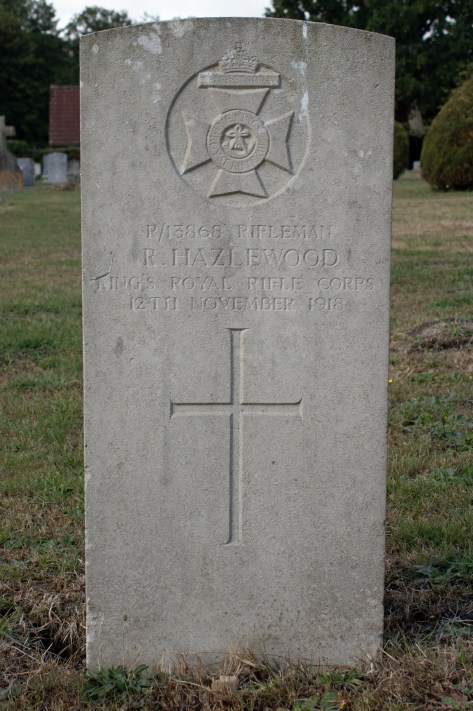
Thomas’ headstone confirms he was a Regimental Sergeant Major in the Royal Horse Artillery, and that he died on 4th July 1916, at the age of 52.

The Commonwealth War Graces Commission’s records confirm that he was married to Mary Ann Wilson (née Ralph), who lived in West Stour, Dorset. The couple’s wedding took place in Holy Trinity Church, Woolwich, Kent, on 14th February 1888. The marriage certificate gives their fathers’ names – farriers Charles Wilson and James Ralph. The document also confirms Thomas’ role as a a Sergeant in the RHA, and gives his age as 27, and Mary’s as 21.

The Wilsons’ appearance in the the census records is a little sporadic. They are not recorded on the 1891 census, but ten years later, they were living in Bilston, Staffordshire. They were listed as being caretakers of the town’s Conservative Club on Church Street. Their ages are given as 41 and 31, and Mary’s place of birth is given as Kington Magna, Dorset.

By 1911, Thomas and Mary had moved to London, and were boarding at the house of Joseph and Rosetta Johnson, at 5 Knivet Road in Fulham, Middlesex. Thomas was listed as being an army pensioner, while Mary was employed as a domestic cook.

At this point, Thomas’ trail goes cold. It is likely that he was called upon when war broke out, but there are no records to confirm where or how he served. He passed away in July 1916, and was laid to rest in All Saints’ Churchyard, Kington Magna, which would suggest that he and Mary had moved there to be close to her family.


Corporal Frederick James

Frederick John James was born in Willesden, Middlesex, in the spring of 1890. The oldest of six children, his parents were William and Louisa James. Louisa was William’s second wife, his first, Emily, having died in 1887. Frederick had ten half-siblings from this first marriage.

William was a fishmonger: the 1891 census recorded the family at 159 York Road, Battersea, Surrey. Ten years later, they had moved over the river, and were living to 46 Artizans Dwellings, Hammersmith, Middlesex.

Frederick’s father had passed away by the time of the 1911 census. The document recorded his mother residing at 18 Western Terrace, Notting Hill, Middlesex. She lived with three of her children – Ben, Alice and Grace – and was doing char work to bring in a little money.

Frederick, however, was already carving out a career in the army for himself. The same census recorded him as one of 250 troops billeted in Fyzabad, India, where he was a Private in the 2nf Battalion of the East Yorkshire Regiment.

Private James’ military career lacks some detail, and can only be picked up around the time of his passing. By this point, he had switched regiments, and was a Corporal in the 8th (Service) Battalion of the Somerset Light Infantry. He is also noted as being married to a woman called Frances Esther New: the couple had married in 1913, although there is no other information about her.

In the summer of 1917, Corporal James’ unit was caught up in the fighting at Passchendaele. Frederick was initially reported missing, but was later declared as being killed in action on 4th October 1917. He was 27 years of age.

The body of Frederick John James was laid to rest in the Zandvoorde British Cemetery, Ypres.


Frederick was my great great grand-uncle.

Midshipman Gervase de Bless

Midshipman Gervase de Bless

Gervase Anthony David Herewyt de Bless was born on 20th October 1897 in Westminster, Middlesex. One of two children, he was the surviving son of barrister Alfred de Bless and his wife Maud, born Maud Cary-Elwes. Both were renowned families – Maud’s brother going on to become the Bishop of Northampton. The family do not appear in the 1901 census, but by 1911 Gervase’s parents were living at 156 St James’ Court, with French lady’s maid Henriette Forestier.

Alfred died not long after the census was taken. Gervase, meanwhile, was installed as a boarder at Downside College, Somerset. One of 168 students, he was taught by twelve schoolmasters and a handful of Roman Catholic priests from the local abbey.

An exceptionally clever boy of very active minds and many interests, during his time in the School he distinguished himself in all branches of study, winning the Gregorian Medal in 1912. He passed the Higher Certificate three times, twice gaining distinction in French and twice in Roman History. For three years he played in the Junior Cricket Eleven, which he captained in 1912. From 1908 to 1912 he sang in the choir as a treble, and he took a leading part with much success in “The Gondoliers,” and in “HMS Pinafore.” In 1914 he was Editor of The Raven, and he was on the committee of the Petre Library. In this year also he was awarded the Higher Certificate Latin Prose Prize given by St Gregory’s Society. On leaving Downside he spent two terms at Cambridge under the tuition of Mgr Barnes. Sensitive and somewhat retiring, and with health far from robust, he faced the situation created by the war with splendid courage, and obtained a cadetship in the Royal Navy. A skilful angler, fishing had ever been his favourite recreation, and on this pleasant pastime he wrote some charming verses which were afterwards collected in a little booklet.

[Baliol College War Memorial Book]

Gervase was given the rank of Midshipman in February 1916, and was assigned to the battleship HMS Revenge the following month. Before his posting he had suffered a bout of influenza, and had a relapse within days of boarding. He died from a combination of influenza and diabetes on 23rd March 1916, just two days after joining Revenge. He was just 18 years of age.

…rites of the Church… were administered to him by Dom Jerome Tunnicliffe, of St Mary’s, Liverpool, a monk of Downside.

[Baliol College War Memorial Book]

The body of Gervase Anthony David Herewyt de Bless was taken to Northamptonshire for burial. He was laid to rest in the ground of St Andrew’s Church, Great Billing, the last resting place of the Cary-Elwes family and de Bless families.


Midshipman Gervase de Bless
(from findagrave.com)