Tag Archives: gastritis

Rifleman Alfred Glastonbury

Rifleman Alfred Glastonbury

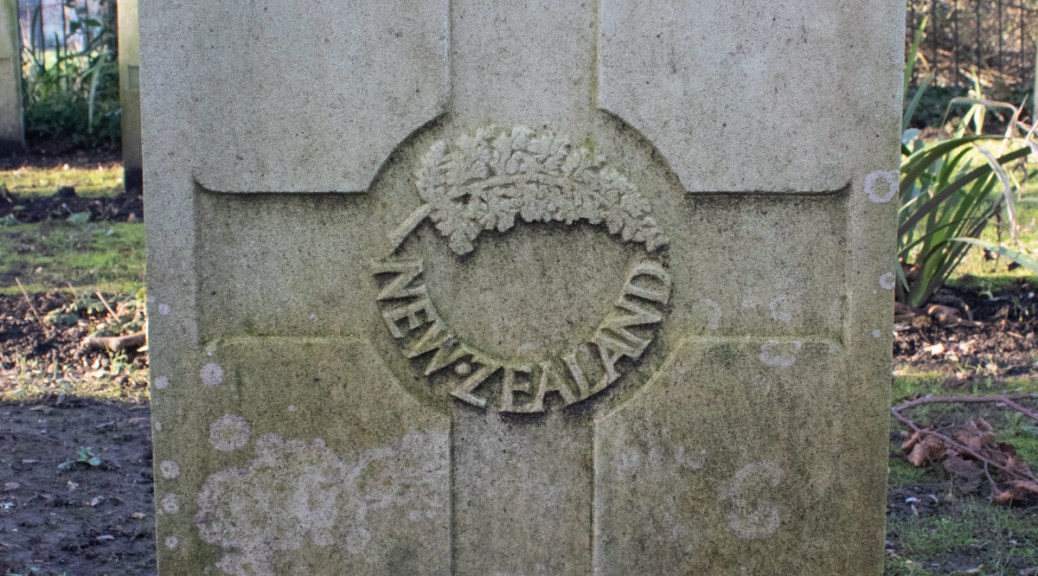
Alfred George Glastonbury – who was better known as Jack – was born on 26th June 1882 in Canvastown, New Zealand. The oldest of fourteen children, he was one of nine sons to Alfred and Matilda Glastonbury.

There is little concrete information about Jack’s early life. He found work with New Zealand Railways, and married Eliza Taylor on 30th January 1904. The couple had a son – also called Alfred – on 2nd December 1908, but Eliza passed away just a couple of weeks after he was born.

Jack married a second time in July 1914, to Ann Leeks. Setting up home in Ohingaiti, they went on to have three children: John, Norah and Harold.

When war came, men of the Empire were called upon to play their part. Jack enlisted on 30th May 1916, and was assigned tot he New Zealand Rifle Brigade. His service records show that he was 5ft 4ins (1.63m) tall, and weighed 182lbs (82.6kg). He had light brown hair, blie eyes and a fair complexion: he was also recorded as never being absent from his job as a surfaceman through sickness or accident, but did have signs of varicose veins in his left leg.

Rifleman Glastonbury’s unit departed from Wellington on 25th September 1916. The troop ship Devon arrived in Devonport, England, two months later, and the regiment marched to Sling, near Bulford, Wiltshire, where they would be based.

Jack’s time there would be brief, however. He was admitted to the No. 3 New Zealand General Hospital in Codford on 3rd December, suffering from gastritis. He would succumb to the condition quickly, passing away on 5th December 1916: he was 34 years of age.

Alfred George ‘Jack’ Glastonbury was laid to rest in the ANZAC extension to St Mary’s Churchyard, Codford, cloe to the hospital in which he had breathed his last.


Rifleman Alfred Glastonbury
(from findagrave.com)

Sapper Walter Woodward

Sapper Walter Woodward

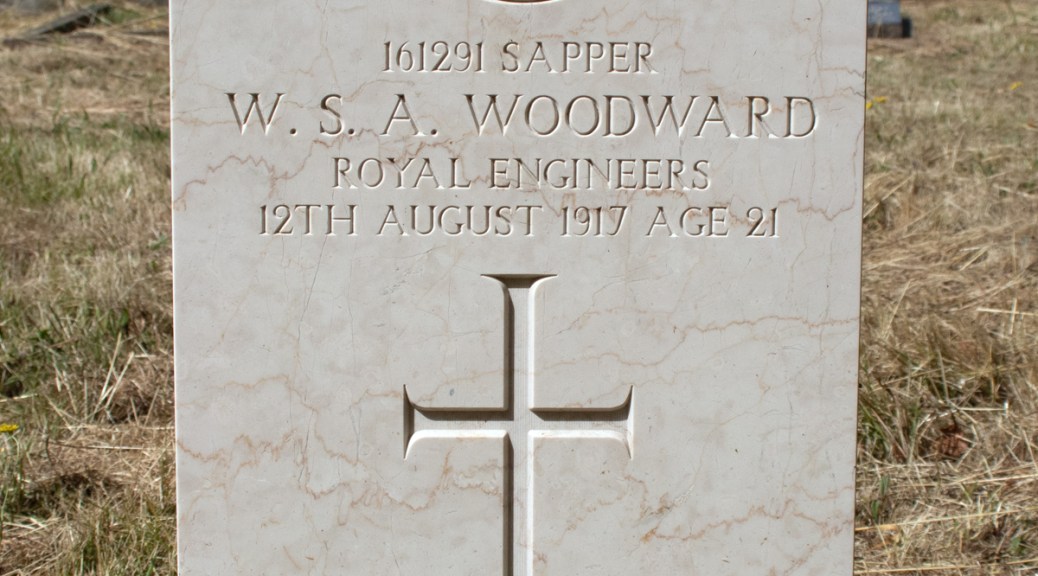
Walter Sargeant Abbott Woodward was born in Bath, Somerset, in the summer of 1896. The oldest of four children, his parents were Henry and Louisa. Henry Woodward was a painter and decorator, but when Walter completed his schooling, he found work as a telegraph messenger for the Genera Post Office.

The 1911 census recorded the family – Walter, his parents and his three siblings – living in a 3-roomed apartment at 5 Beauford Square, close to the city centre. Within a year, Walter had been promoted within the GPO, and was given the role of Assistant Postman.

War came to Europe and Walter was called upon to play his part. On 10th December 1915 he enlisted in the army, and was assigned to the Royal Engineers as a Sapper. His records show that he was still employed by the GPO at this point, and was working as a Lineman, so it seems that his skills were appropriate for the regiment to which he was assigned.

Sapper Woodward’s service documents confirm that he was 5ft 10ins (1.78m) in height, and that he was not formally mobilised until April 1916. After a couple of months’ training, he was sent to France and he remained on the Western Front for just over a year.

On 3rd July 1917, Sapper Woodward was posted back to England. It seems that he was en route for the Signal Depot in Fenny Stratford, Buckinghamshire, when he became ill. Admitted to the Queen’s Canadian Hospital in Shornecliffe, Kent, he was suffering from gastritis. This would ultimately take his young life: he passed away on 12th August, aged just 21 years old.

The body of Walter Sargeant Abbott Woodward was taken back to Somerset for burial. He was laid to rest in the city’s Locksbrook Cemetery.


Regimental Serjeant Major John Wimble

Regimental Serjeant Major John Wimble

John Henry Wimble was born in the autumn of 1870, in Bathampton, Somerset. One of seven children, his parents were William and Charlotte Wimble. Charlotte had been married before, but her husband, John Eastment, had died in 1862, leaving her with three children to raise. She remarried in 1864, and William helped support the growing household.

John sought an escape to adventure and, when he finished his schooling, he enlisted in the army. Full service records are not available, but by the time of the 1891 census, he was noted as being a Private in the Somerset Light Infantry, and was living in barracks in Farnborough, Hampshire.

In the autumn of 1891, John married Eliza Hammond. She had been born in Calne, Wiltshire, and, at the time of their wedding, which took place in Bath, she was working as a parlour maid. The couple would go on to have two children, Percy and Victor.

John completed his army service and, according to the 1911 census, the family had settled in Cheddon Fitzpaine, to the north of Taunton. He was noted as being an army pensioner and that he was working as a warehouseman in the government stores. By the time war broke out, the family had moved to Burnham-on-Sea, where John had taken up the role of caretaker at the local Institute.

The war has cost another gallant local soldier, in the person of Sergt.-Major Wimble, of the Somersets, his life. This brave man re-joined the Army when war broke out on condition he could go to the Front. He was wounded, and died in a hospital at Edinburgh. The War Office had the remains sent to Burnham on Tuesday, where they were placed in St Andrew’s Church, and a large attendance of the public and the [Volunteer Training Corps] attended the funeral on Wednesday.

Taunton Courier and Western Advertiser: Wednesday 17th November 1915

John had been assigned to the 6th (Service) Battalion on re-enlisting, and was quickly sent to the front. Caught up in the Action of Hooge and the Second Attack on Bellewaarde, he was medically evacuated to Britain in the autumn of 1915, and passed away on 4th November, at the age of 45.

Here, though, accounts differ slightly. While the newspaper report suggests that he died of his wounds, the Army Register of Soldiers’ Effects gives the cause of death as gastritis.

After the funeral at St Andrew’s Church, John Henry Wimble’s body was laid to rest in Burnham Cemetery.


Regimental Serjeant Major John Wimble
(from findgrave.com)