Tag Archives: New Zealand

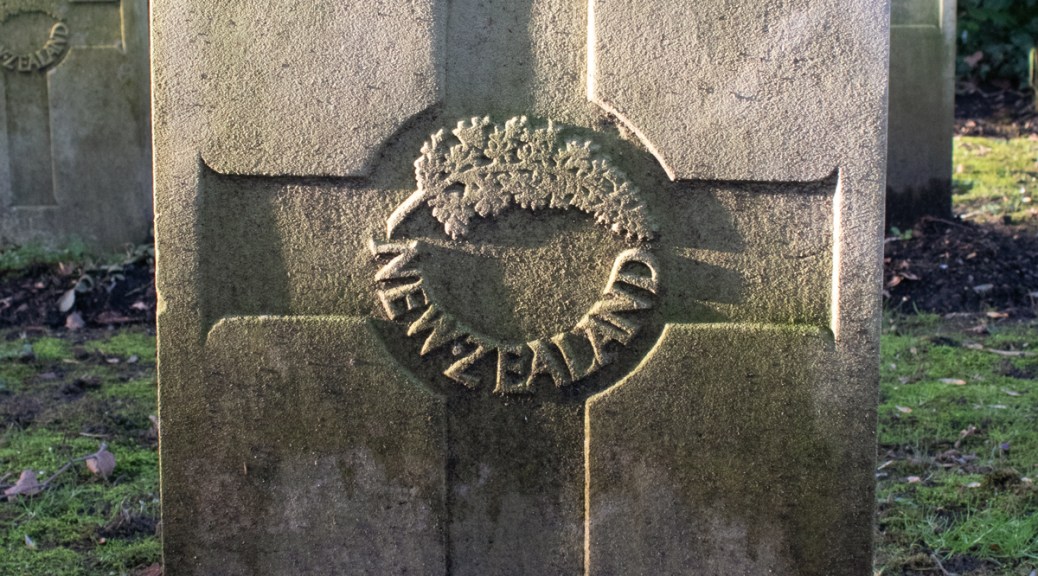
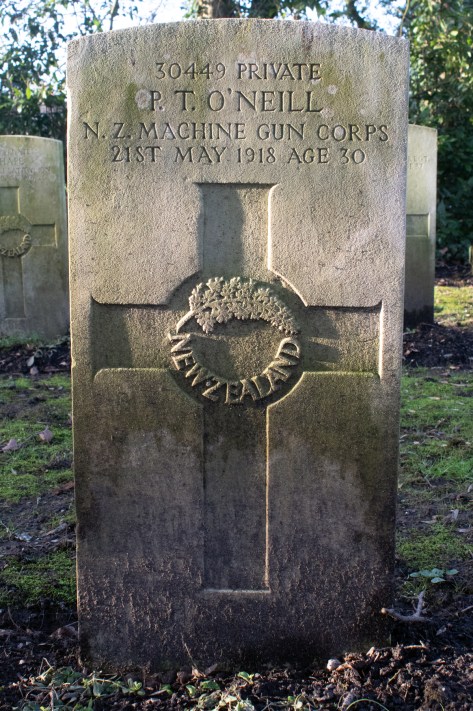
Private Patrick O’Neill

Private Patrick O’Neill

Patrick Thomas O’Neill was born in Wellington, New Zealand, on 2nd March 1888. Little information is available about his early life, but the Commonwealth War Graves Commission confirms he was the son of Jane O’Neill, and the family lived at 151 Taranaki Street.

When he completed his schooling, Patrick found work as a driver for Munt, Cotterell & Co. A large transport and cartage company, when the First World War broke out, they became involved in transporting supplies to the military camp at Trentham. Because of this connection, many of the company’s workers – Patrick included – enlisted.

Patrick’s service papers show that he joined up 22nd August 1916. His medical confirms that he was 5ft 4.5ins (1.64m) tall and had fair hair, blue eyes and a fair complexion.

After his training at Trentham, Private O’Neill’s unit – the New Zealand Machine Gun Corps – left Wellington for Europe. After a week’s break in Simon’s Town, South Africa, their ship – the Walmer Castle – arrived in Devonport, Devon, on 27th March 1917. During the second part of the voyage, Patrick was admitted to the ship’s hospital, for an infestation of pubic lice.

The voyage from New Zealand to Britain had taken nearly three months, so when the regiment finally arrived at their camp in Sling, Wiltshire, it must have been something of a relief. For Private O’Neill, however, it marked the beginning of a regular pattern of misdemeanours.

In April 1917, Patrick moved to a base in Tidworth. A matter of weeks later, he went AWOL, and forfeited three days’ pay as a result. Private O’Neill was then sent to Grantham, Lincolnshire, where the ANZAC united had their machine gun training base. Over the next two months, he went AWOL on four separate occasions, resulting in him losing a total of 10 days’ pay and, for the final absence, 96 hours’ detention.

Private O’Neill disappearances seem to have been those of a lad about town: a couple of days after his final return, he was admitted to the venereal section of the camp hospital in Grantham. His condition – and probably his behaviour – was such that he was transferred back to Wiltshire, and admitted to the No. 3 New Zealand General Hospital near Codford.

Private O’Neill was not done, however. On 6th December 1917, and having been discharged back to his unit just a day before, he went AWOL again, this time in spectacular fashion. He was arrested by military police in Edinburgh on 14th January 1918. Taken in handcuffs back to Codford, he forfeited 71 days’ pay – plus a 2s fine for his arrest – and punished with 90 days in the cells.

Patrick’s imprisonment began on the 1st March 1918, but it was a sentence he would not complete. On 16th May, he was taken from his cell and admitted to the camp hospital, once again to the venereal section. Less than a week later, he was dead, having suffered an embolism. Private O’Neill was 30 years of age when he passed, on 21st May 1918.

The body of Patrick Thomas O’Neill was laid to rest in the extension to St Mary’s Church, Codford, not far from the base in which he had been incarcerated and hospitalised.
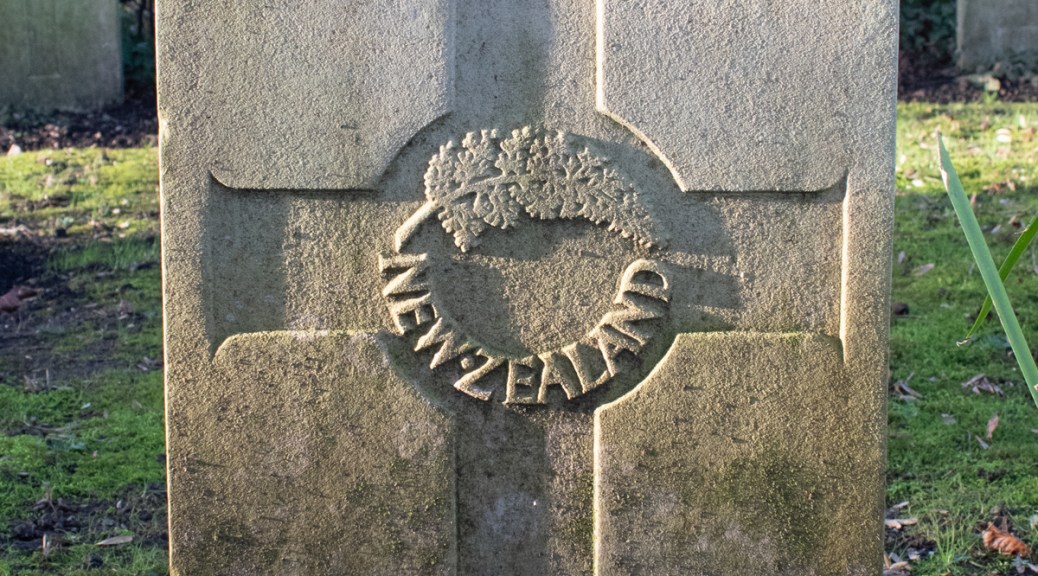
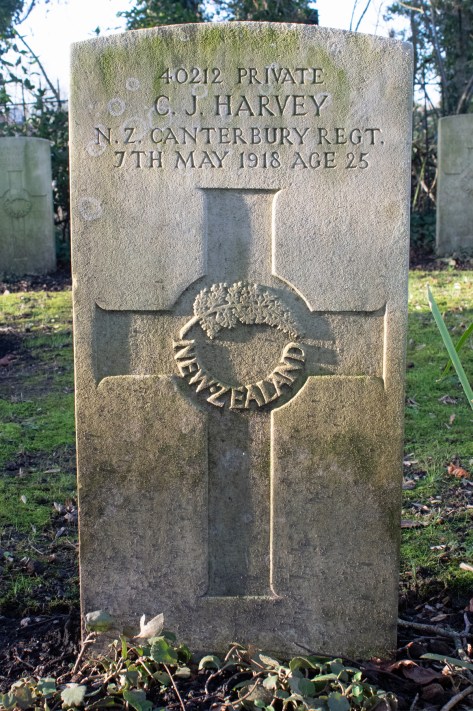
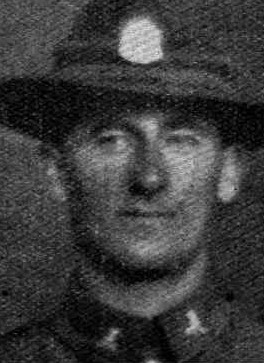
Private Charles Harvey

Private Charles Harvey

Charles John Harvey was born in Nelson, New Zealand, on 30th May 1892. Little information is available about his early life, but documents give his parents as George and Eleanora Harvey.

Charles was working as a general labourer when war broke out, and was called upon to play his part on 19th October 1916. Attached to his country’s Canterbury Regiment, his medical report showed that he was 5ft 6ins (1.68m) tall, and weighed 11st 2lbs (70.8kg). An Anglican, he was recorded as having dark brown hair, blue eyes and a dark complexion. He was noted as having no vaccination marks.

This fact that Private Harvey hadn’t been vaccinated would come back to haunt him. Sent to an army camp in Trentham, near Wellington, within a matter of weeks he was hospitalised with measles. He remained admitted until 13th December 1916, when he was discharged back to his unit.

It was not until 2nd April 1917, that Private Harvey would set sail for Britain. The journey from Wellington to Devonport would take ten weeks, and Charles was marched in to camp at Sling, Wiltshire, on 10th June that year.

Assigned to the 2nd Company of the 2nd Battalion, Private Harvey finally arrived in France on 27th August 1917. He served on the Western Front for a couple of months, before falling ill again. This time it was influenza that had incapacitated him, and he was admitted to a hospital in Le Tréport for a month while he received treatment.

Charles’ recovery was to be a slow one and, in the end, he was medically evacuated to Britain for ongoing medical support. By February 1918, he had spent time in four different hospitals and, intriguingly, had forfeited three days’ pay for going AWOL while a patient in a medical facility in Hornchurch, Essex. By the start of April 1918, Private Harvey was discharged to the ANZAC camp in Codford, Wiltshire.

His health issues were not over, however, and, on 21st April, Charles was taken in to the No. 3 New Zealand General Hospital in near the Codford camp. He was suffering from acute nephritis, and this would ultimately prove fatal. Private Harvey died on 7th May 1918: he was 25 years of age.

The body of Charles John Harvey was laid to rest in the graveyard extension of St Mary’s Church, Codford.


Private Charles Harvey
(from findagrave.com)

Private Thomas Perwick

Private Thomas Perwick

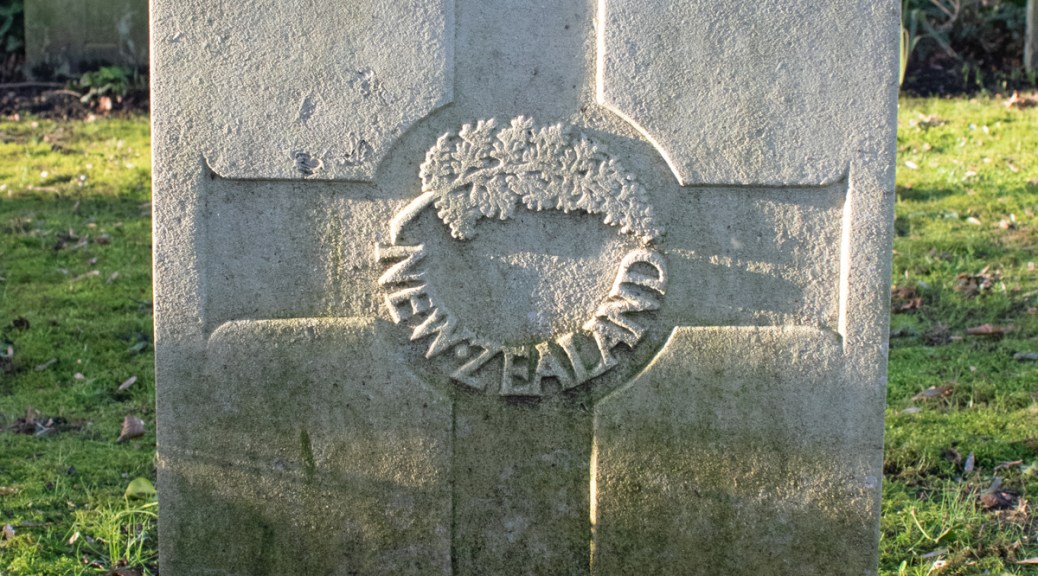
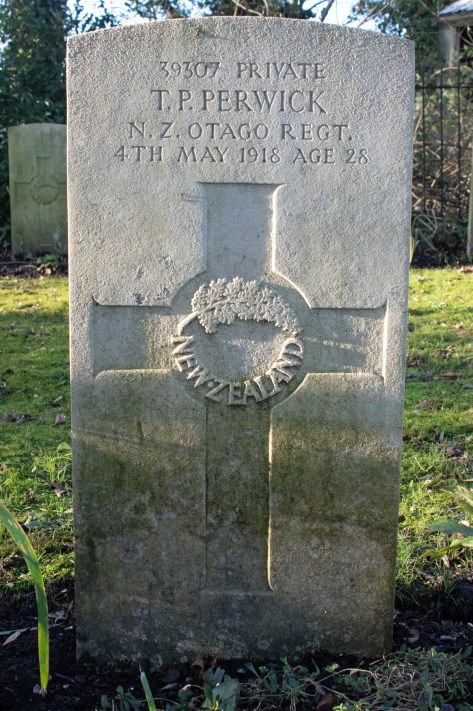
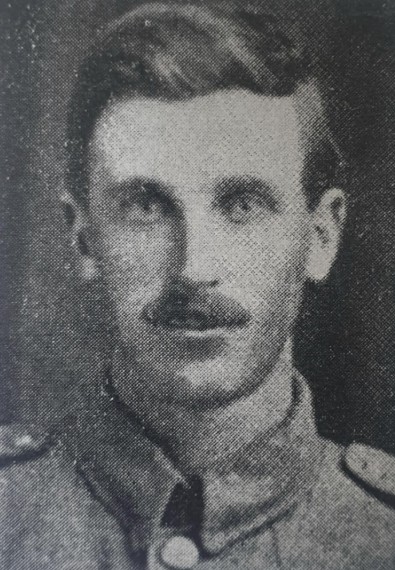
Thomas Patrick Perwick was born in Balfour, a town on New Zealand’s South Island, on 19th August 1889. There is little information available about his early life, but his parents were Australian Alfred Perwick and his Irish-born wife, Catherine.

When Thomas completed his schooling, he took up agricultural work, and was working as a farmer when he received the call up to join the New Zealand Expeditionary Force.

Private Perwick’s service records show that he enlisted on the 18th October 1916. Standing 5ft 10ins (1.78m) tall, he weighed 11st (69.9kg). His medical report shows that he had light brown hair, blue eyes and a fair complexion. The papers also note Thomas’ religion as Roman Catholic.

Sent to Trentham for training, Private Perwick would be assigned to the New Zealand Otago Regiment. His unit left Wellington on 15th February 1917, making the ten-week voyage to Britain. Thomas disembarked in Devonport, Devon, on 2nd May, and was marched in to camp in Sling, Wiltshire, the same day.

Private Perwick was attached to the 2nd Battalion, and was sent to France on 9th June. Straight into the fray, his unit fought at Messines, but was wounded in the head and arm during fighting at Passchendaele. Medically evacuated to Britain for treatment, he was admitted to hospital in Brockenhurst, Hampshire, before being moved back to the Wiltshire ANZAC camps at Sling and Tidworth.

Thomas was discharged to duty on 7th January 1918, but was not out of the woods. He fell ill with mumps, and was sent to the No. 3 New Zealand General Hospital in Codford, Wiltshire, for treatment. While admitted, he contracted tuberculosis, and, over the next four months, his health deteriorated. Private Perwick’s body finally succumbed on 4th May 1918: he was 28 years of age.

Thousands of miles from his home, Thomas Patrick Perwick was laid to rest in the graveyard extension of St Mary’s Church, Codford, not far from the hospital in which he had breathed his last.


Private Thomas Perwick
(from findagrave.com)

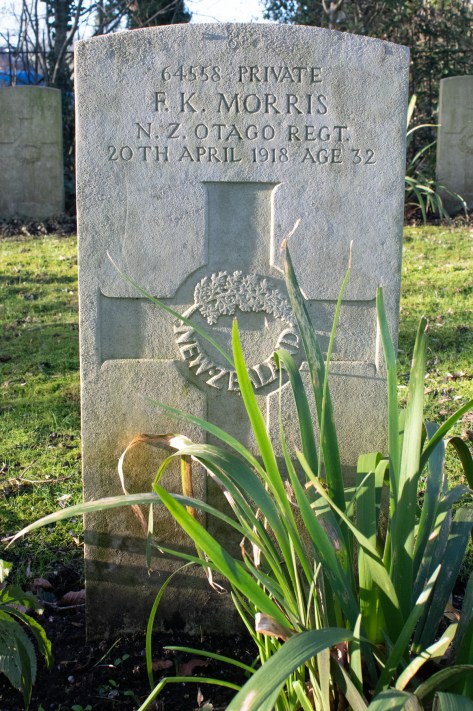
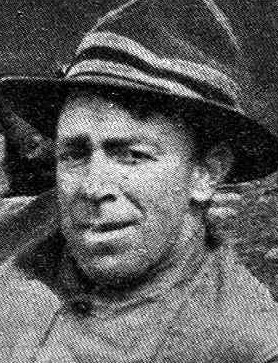
Private Frank Morris

Private Frank Morris

Francis Kemp Morris was born in Auckland, New Zealand, on 29th September 1884. The older of two children, his parents were William and Fanny Morris. London-born Fanny, had been married twice before, and Francis – who was better known as Frank – had two half-siblings from each of those marriages.

There is little information about Frank’s early life. On 22nd March 1910, he married Lavinia Edwards. The couple went on to have three children – Albert, Ivy and Mavis – and Lavinia had had a son, William, two years before their wedding.

Fanny died in February 1915, at the age of 63. Tragically, Lavinia would also pass away in December 1916: she was just 26 years of age. Frank now had found children to raise. He was employed as an engineer, but was called upon to serve his King the following summer.

Assigned to the New Zealand Otago Regiment, Private Morris’ service papers note that he was 5ft 8ins (1.73m) tall, and weighed 148kbs (67.1kg). He was recorded as having dark hair, brown eyes and a dark complexion. He had a scar in the middle of his back, and tattoos on both of his forearms and his left knee. Deemed fit for service, Frank was sent to Trentham, near Wellington for training.

On 21st November 1917, Frank’s unit left New Zealand for the ten week voyage to Britain. Arriving in Liverpool, Lancashire, on 8th January 1918, he was marched in to Sling Camp, Wiltshire, the same day, in preparation for his unit’s move to France.

Private Morris, however, would not spend any time fighting the enemy. On 12th April 1918, he was admitted to a military hospital in Tidworth, Wiltshire, suffering with hypertrophy of the tonsils. The following day he was moved to the No. 3 New Zealand General Hospital near Codford with gonorrhoea. Over the coming days he contracted bronchitis, and this would be the condition that ultimately claimed his life. Frank died on 20th April 1918, at the age of 33 years old.

Thousands of miles from home, Francis – Frank – Kemp Morris was laid to rest in the graveyard extension to St Mary’s Church, Codford, not far from the hospital in which he had spent the last few weeks of his life.


Frank’s next of kin was noted as a friend, E Biddle, while his war pension was given to Henry Holbrook of St Mary’s Industrial School, Auckland, the guardian of the now orphaned children.


Private Frank Morris
(from findagrave.com)

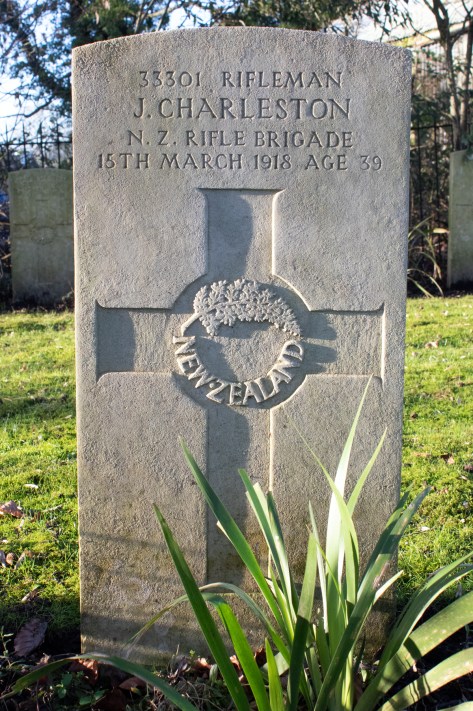
Rifleman John Charleston

Rifleman John Charleston

The early life of John Charleston is a challenge to unpick. Later documents confirm his parents as being John and Clare Charleston from Cardiff, Glamorganshire, although there are no baptism or census records to provide additional detail.

Much of the information about John’s life comes from his New Zealand Expeditionary Force service papers. These confirm that he was born in Liverpool, Lancashire, on 1st April 1887. The document suggests that he had spent nine years in the Royal Navy, and that, at the point he enlisted, on 19th September 1916, he was working for the shipping company Shaw, Savill & Albion.

By this point, John was living in Wellington, New Zealand, and had been there for at least a decade. He had married Mary Agnes Sykes in the city on 6th February 1906, and they had four children: Clarence, Phyllis, Arthur and Kenneth.

John joined the New Zealand Rifle Brigade, and was passed as medically fit: his medical noted he was 5ft 2.5ins (1.59m) tall, with brown hair, grey eyes, and a fresh complexion.

Rifleman Charleston spent the next three months training at barracks in Trentham. This time was not without incident, however, and he spent two separate period in hospital – for a growth on his tongue in October 1916, and appendicitis a month later. By the middle of January, however, his unit boarded HMNZT 75 bound for Britain.

The journey back to the UK took ten weeks, and it would not be until 28th March 1917 that Rifleman Charleston marched into Sling Camp in Wiltshire. He would remain there for two months as preparations were made to go to France. During this time, John went AWOL for three days. On his return he was confined to barracks for a week, and docked that three days’ pay.

Rifleman Charleston’s unit arrived in France on 26th May 1917. John, however, would not see much, if any, fighting. Within a couple of days he was admitted to hospital with syphilis, a condition which would keep recurring over the coming months. John was sent back to Britain, spending four separate periods of time receiving treatment over the next eight months.

John’s last admission was in the No. 3 New Zealand General Hospital in Codford, Wiltshire, on 23rd January 1918. This time, his condition would prove to be too severe. Rifleman Charleston passed away from syphilitic meningitis on 15th March 1918: he was a fortnight short of his 41st birthday.

The body of John Charleston was laid to rest in the graveyard extension of St Mary’s Church, Codford, not far from where he had breathed his last.


Private James Cooper

Private James Cooper

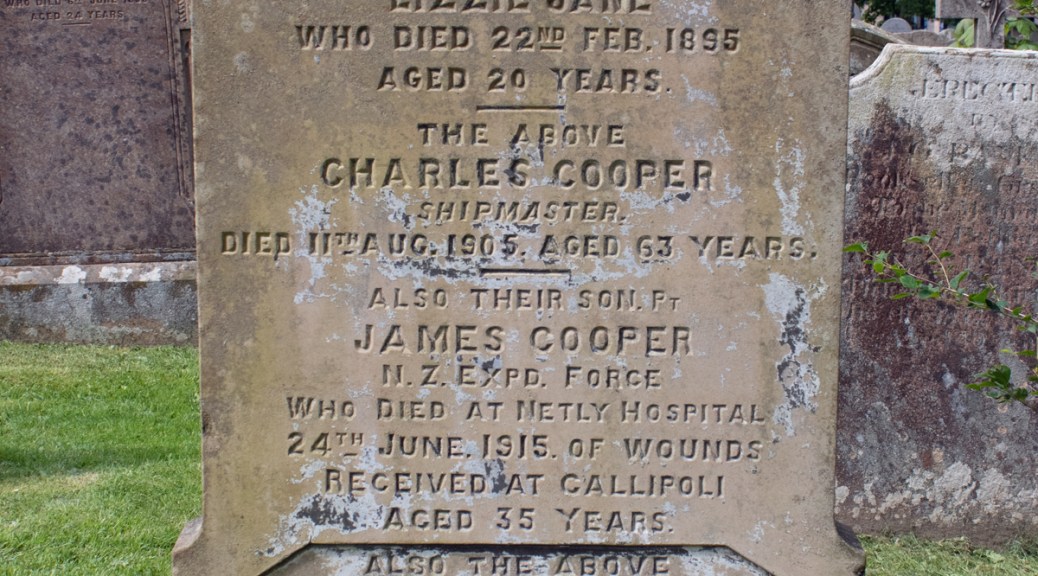
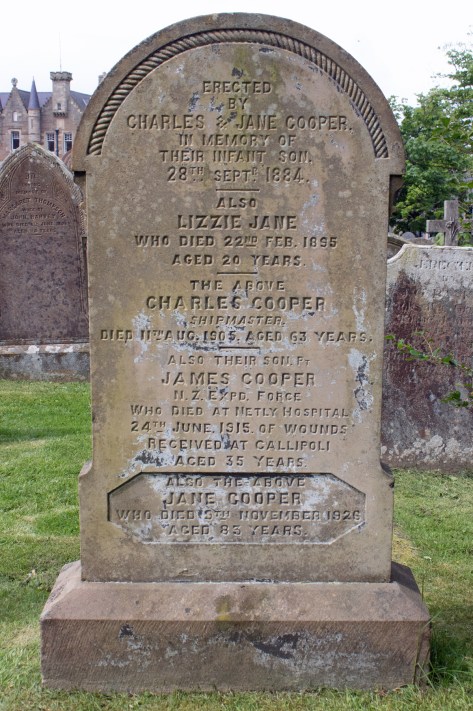
Private James Cooper, a native of Kirkwall, died in the Red Cross Hospital at Netley last Thursday from a wound received at the Dardanelles. Private Cooper, who was 35 years of age, was a son of Mrs Cooper, School Place, Kirkwall (with whom much sympathy is felt), and of the late Capt. Charles Cooper. After being employed for some time in a shop in Kirkwall, he decided to follow his father’s vacation [sic] and went to see for some years, during which time he served in the Naval Reserve. He was in New Zealand when the war began, and at once enlisted in the 6th Hamaki Coy. With the New Zealand contingent he went to Egypt and took part in the fighting with the Turks near the Suez Canal. In April the contingent was sent from Egypt to the Dardanelles, and towards the end of that month Private Cooper received a gunshot wound in the left arm. With other wounded he was sent to the base hospital at Alexandria, and thence, after a few weeks, was sent home to the hospital at Netley. In all his letters home he wrote cheerfully and made light of his wound, but the nurse wrote that the wound was a serious one. At Netley the arm was amputated. Private Cooper gradually sank and died last Thursday.

[Orkney Herald: Wednesday 30th June 1915]

James Cooper was born on 9th October 1879 in Kirkwall, Orkney. He was one of seven children – and the youngest of three sons – to Charles and Jane Cooper. With her husband being away at sea a lot of the time, Jane was used to raising her family on her own.

In August 1905, tragedy struck the family:

At an early hour on Friday morning last, the town of Stromness was thrown into a stat of alarm by the report that a sad burning fatality had taken place on board the barquentine Brazilian on Ness patent slip. To accurately describe how the accident took place is impossible, but from careful enquiries we learn that on Thursday evening Captain Charles Cooper, belonging to Kirkwall, accompanied by an acquaintance, left the town and went on board the vessel, where they lit a fire and make a cup of coffee, after which friend left him. At that time the fire was very low, and no danger apprehended. At an early hour of the morning, the vessel was observed to be on fire, and an alarm given. In a short time the fire hose from the town was on the scene, and two streams playing on the burning vessel. The fire was fortunately confined to the cabin and companion way, where the rescue party discovered the body of Capt. Cooper terribly burned and disfigured, to such an extent that it was quite unrecognisable… There can be no doubt but that death was caused by suffocation, but what led to the fire is not known. It is supposed, however, that after the friend left the vessel, Capt. Cooper had taken the paraffin oil flask to put some oil on the nearly burnt-out fire, when possibly an explosion took place, and the cabin got suddenly full of smoke.

[Orkney Herald: Wednesday 16th August 1905]

Charles was 64 when he died. Jane brought his body across the island, and he was buried in the family plot in the churchyard of St Magnus’ Cathedral.

By this point, James was serving in the Royal Navy. The exact details are unclear, but he seems to have bought his way out, after completing six years. He travelled to Australia, and worked as a cook for a while, before moving on to New Zealand, setting up home in the town of Thames, on the country’s North Island.

When war was declared, he was quick to step up, and, joined the Auckland Regiment of the New Zealand Expeditionary Force. His service papers show that he was 5ft 7ins (1.7m) tall and weighed 159lbs (72.1kg). He had brown hair, grey eyes and a medium complexion. He had a tattoo of a naval coat of arms on his right forearm, and one of a full length woman on the back of his left forearm.

Private Cooper’s unit left New Zealand on 16th October 1914, heading for Egypt. As the newspaper report stated, he moved from there to Gallipoli, before being medically evacuated to Egypt, and then to Netley Hospital, Hampshire.

After his passing, the body of James Cooper was taken back to Orkney for burial. He was laid to rest in the family plot at St Magnus’ Cathedral, reunited with his father after ten years.


Private Francis Moody

Private Francis Moody

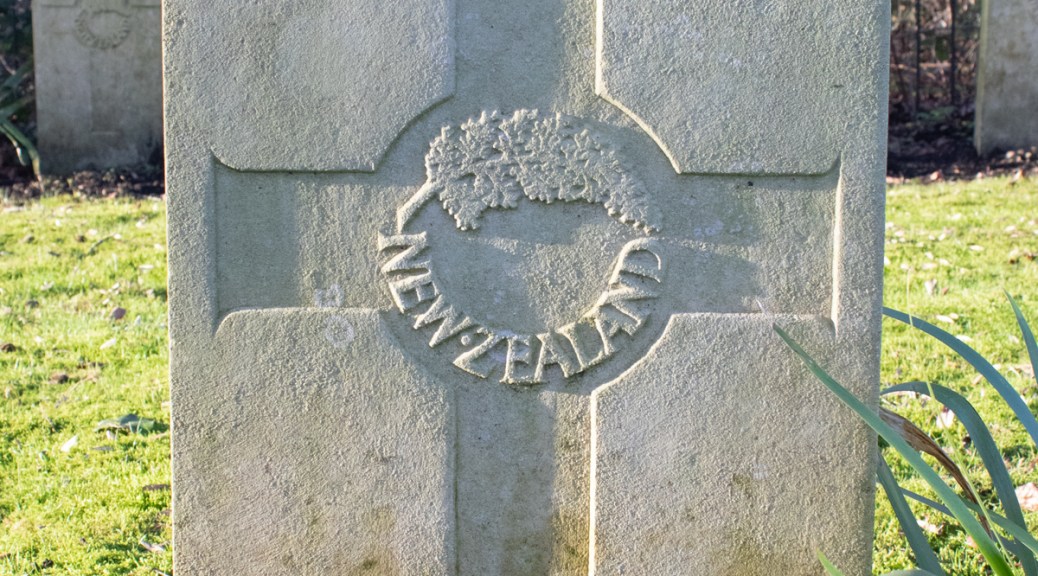
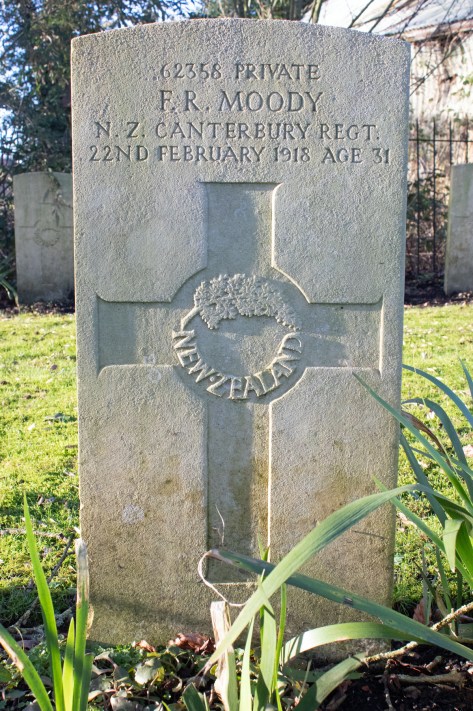
Francis Robert Moody was born on 8th September 1876, in the town of Kihikihi, on New Zealand’s North Island. There is little information about his early life, but his parents were Hampshire-born Francis Moody and his Irish wife, Mary.

When he completed his schooling, Francis Jr found work as a carter. When war broke out, however, he was called upon to play his part, enlisting in the New Zealand Canterbury Regiment on 18th June 1917. His service papers show that he was 5ft 10ins (1.77m) tall, and weighed 140lbs (63.5kg). A Roman Catholic by birth, he had brown hair, blue eyes and a medium complexion.

Private Moody’s unit left New Zealand on 13th October 1917, making the two-month voyage to Britain on board the HT Corinthic. Francis disembarked in Liverpool, Lancashire, before being marched into camp in Sling, Wiltshire.

Over the next month, Private Moody received further training, but by this point, and following the lengthy journey, his health was beginning to suffer. He was admitted to the No. 3 New Zealand General Hospital in Codford, Wiltshire, on 30th January 1918, suffering from bronchitis.

Francis’ health continued to deteriorate, and he developed tuberculosis. The condition would prove fatal, and he passed away on 22nd February 1918, at the age of 41.

Thousands of miles from home, Francis Robert Moody was laid to rest alongside his colleagues in the graveyard extension of St Mary’s Church, Codford.


Private Francis Moody
(from findagrave.com)

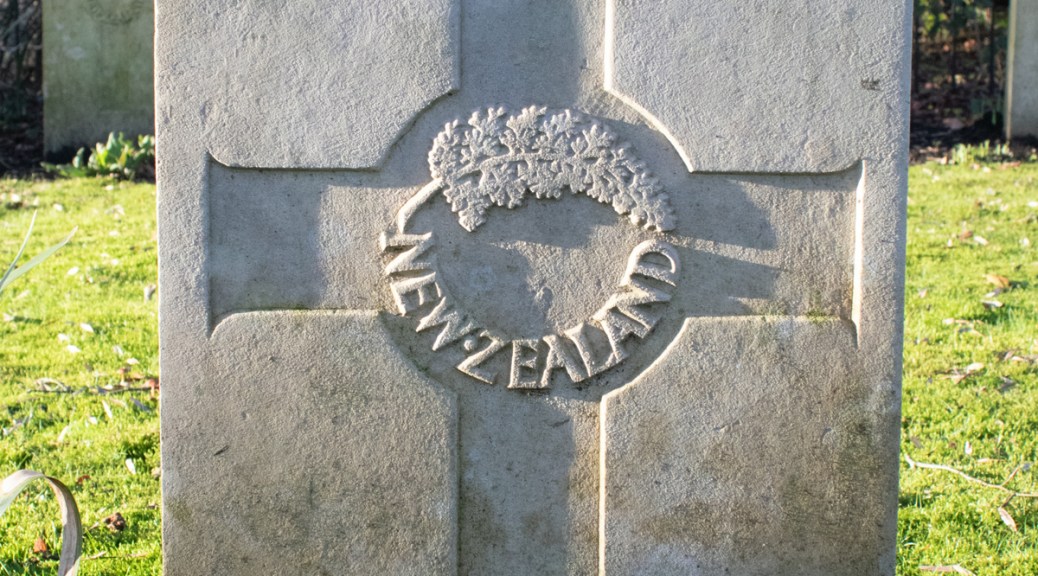
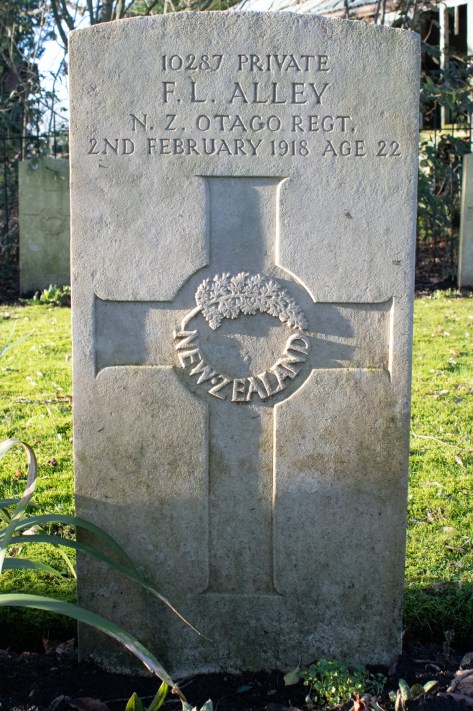
Private Francis Alley

Private Francis Alley

Francis Lignori Alley was born in Hikutaia, on New Zealand’s North Island, on 18th February 1896. There is little information about his early life, but it is clear that he was one of six children to John and Elizabeth Alley.

By the time he had completed his schooling, the Alley family had moved to the port town of Gisborne. Francis found work as a warehouseman in for Macky Logan Caldwell Ltd. When war broke out, however, he was called upon to play his part.

On 11th January 1916, Francis enlisted in the New Zealand Otago Regiment. His service records show that he was 5ft 8.5ins (1.74m) tall, and weighed just 90lbs (40.8kg). A practicing Roman Catholic, he had brown hair, grey eyes and a fair complexion. His papers also noted an operation scar in his groin.

Private Alley’s unit left New Zealand in the spring of 1916. After a month’s stop in Suez, they arrived in Southampton, Hampshire, on 7th August, and were marched to their camp in Sling, Wiltshire. Within a matter of days, however, Francis found himself on the Western Front, and would remain there for the next month.

On 9th June 1917, during the Battle of Messines, Francis was wounded. Initially treated on site, he was medically evacuated to Rouen, then Britain for treatment to gun shot wounds to his face and eye. He spent the next few months being treated and recuperating, hit service papers stating that he re-joined his unit in Étaples on 8th August. That autumn, he was given leave, but while back in Britain, he fell ill, and was admitted to the venereal section of the No. 3 New Zealand General Hospital in Codford, Wiltshire.

Private Alley was discharged on 7th November 1917, and remained at the camp in Codford. On Boxing Day, he was admitted back to hospital again, suffering from septicaemia: the condition was to prove fatal, and he passed away on 2nd February 1918. He was just 21 years old.

The body of Francis Lignori Alley was laid to rest in the graveyard extension of St Mary’s Church, Codford, not far from the camp he had been based at.


Private Francis Alley
(from findagrave.com)

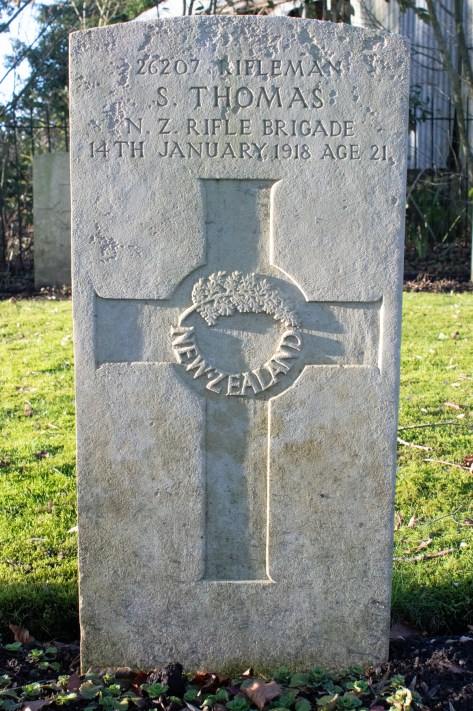
Rifleman Samuel Thomas

Rifleman Samuel Thomas

Samuel Thomas was born in Pukehinau, New Zealand, on 17th February 1896. There is little concrete information about his early life, but his parents were Isaac and Annie Thomas, and he was one of at least two children to them.

When he finished his schooling, Samuel found work as a teamster, or wagon driver. When was broke out, however, he was called upon to play his part, and he enlisted on 30th May 1916, joining the New Zealand Rifle Brigade. His service record shows that he was 5ft 10ins (1.77m) tall and weighed 147lbs (66.7kg). He had light brown hair, grey eyes and a fair complexion; a round scar on the front of his left shin was also recorded.

Deemed fit for service, Rifleman Thomas spent the next four months training. On 25th September 1916, his unit departed from Wellington for the two month voyage to Britain. During the journey, he had fallen ill, and, on disembarking in Devonport, Devon, he was admitted to a hospital with influenza.

When he was well enough, Samuel was moved to hospital in Codford, Wiltshire, eventually joining his unit in a camp at Sling on 15th January 1917. His time there was brief, however, and he was admitted back to the Codford hospital just three weeks later. It would not be until July that he was well enough to be sent to France.

From Étaples, Rifleman Thomas was sent to the front line. Within a matter of weeks, he had been wounded by shrapnel, which had caught his right side and his neck. He was medically evacuated to Britain for treatment, and was admitted to the No. 2 New Zealand General Hospital in Walton-on-Thames, Surrey.

Samuel would spend the next three months recuperating, initially in Hornchurch, Essex, then in Codford. During this time, love blossomed and, on 18th November 1917, he married Gertrude Berry, a horse dealer’s daughter from Plaistow, Essex. It is unclear how or when the couple had met: she may have been working at the hospital where he was being treated.

At the end of December 1917, he was back in hospital again, however, suffering from a bout of bronchitis. His condition would worsen, and he passed away on 16th January 1918, from the rupture of an abscess in his throat. He was 21 years of age.

The body of Samuel Thomas was laid to rest in the graveyard extension of St Mary’s Church, Codford, not far from the hospital in which he had passed.


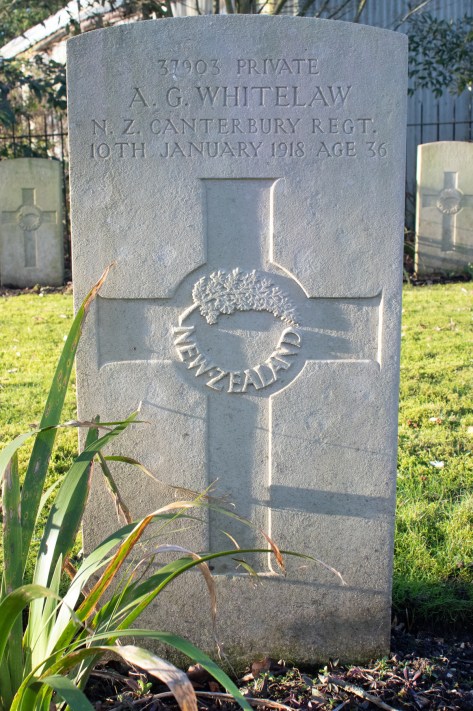
Private Alexander Whitelaw

Private Alexander Whitelaw

Alexander George Whitelaw was born in 1879 in the town of Ashburton on New Zealand’s South Island. One of ten children, his parents were Scottish immigrants Peter and Agnes Whitelaw.

There is little information about Alexander’s early life: his father died in 1912, with his mother passing just two years later. By the autumn of 1916, he was working as a general labourer, but the world was at war, and he stepped up to play his part.

Alexander enlisted on the 4th October 1916, knocking five years off his date of birth to ensure he was accepted. His papers also show other discrepancies, as he noted both of his parents being having been born in New Zealand. As a Private, he was assigned to the New Zealand Canterbury Regiment, his service papers showing the man he had become. A Presbyterian, he stood 5ft 11ins (1.8m) tall, and weighed 154lbs (69.9kg). He had cark hair and a dark complexion. His eyes were blue, but he suffered some colour blindness, confusing reds and blues.

Private Whitelaw’s unit – the New Zealand Canterbury Regiment – left home on the 19th January 1917, and embarked for Europe. His movements from this point on aren’t entirely clear, although by the start of 1918, he had been medically evacuated to the No. 3 New Zealand General Hospital in Codford, Wiltshire, suffering from pleurisy. The condition was to get the better of Alexander: he passed away on 10th January 1918, at the age of 38 years old.

Thousands of miles from his family home, the body of Alexander George Whitelaw was instead laid to rest in the extension to St Mary’s Churchyard, Codford.