Tag Archives: Nottinghamshire & Derbyshire Regiment

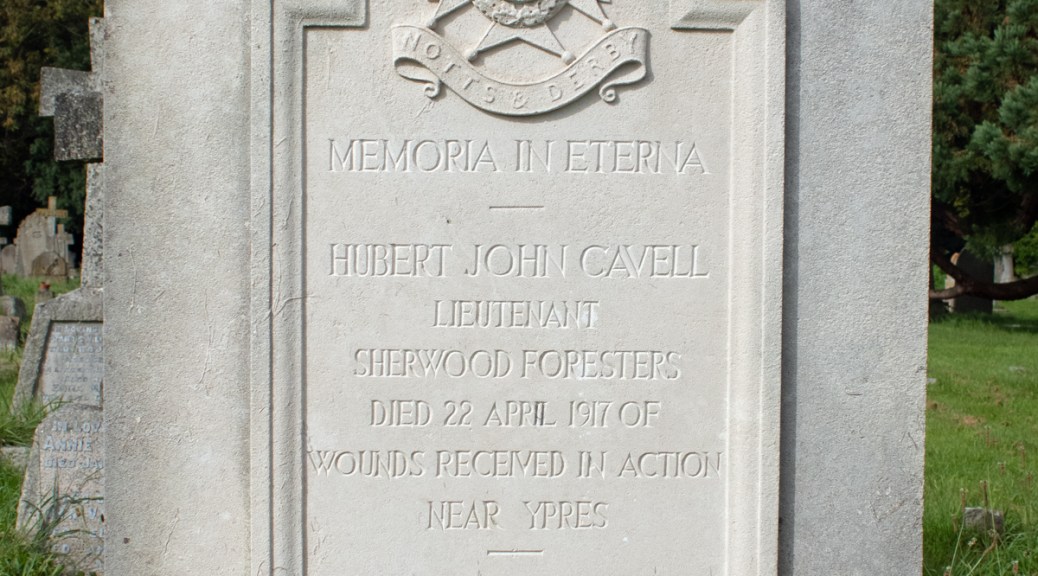
Lieutenant Hubert Cavell

Lieutenant Hubert Cavell

Hubert John Cavell was born on 12th August 1882 in Bristol, Gloucestershire. The middle of three children, his parents were John and Annie Cavell. The 1901 census recorded John as a cycle manufacturer, and both he and Annie were keen to educate their children.

Hubert studied to be an architect, and was employed as such when, on 17th February 1910, he married Florence Shellard. Also born in Bristol, she was the daughter of an insurance agent. Hubert’s father, however, had changed career by the time of his son’s nuptials, and was working as a manufacturer of steel rope.

After their wedding, Hubert and Florence moved out to Easton-in-Gordano, Somerset, and went on to have two daughters: Phyllis, who was born in November 1910; and Dorothy, born in April 1912.

War was brewing across Europe by this point, and, when hostilities were announced, Hubert stepped up to play his part. Full service records for him are lost to time, although is it clear that he joined the Sherwood Foresters (the Nottinghamshire & Derbyshire Regiment). He was assigned to the 11th (Service) Battalion, and, by the spring of 1917, was firmly entrenched on the Western Front.

News has just been received of the death from wounds, received in action, of Lieut. Hubert John Cavell, of Easton-in-Gordano. The deceased officer was educated at the Cathedral School, and had been associated with the firm of Messrs. Paul and James, architects, for the past 16 years. He was for some years a member of the Church Ringers’ Society, being engaged in that capacity at St James’s Church, Bristol. He joined the Sherwood Foresters in January, 1916, received his commission, and had for the past three months held the position of acting-adjutant. He was 34 years of age, and leaves a widow and two little daughters.

Western Daily Press: Tuesday 24th April 1917

Lieutenant Cavell had been caught up in the fighting near Ypres, and was medically evacuated to a military hospital in Dorking, Surrey. It was here that he succumbed to his injuries on 22nd April 1917.

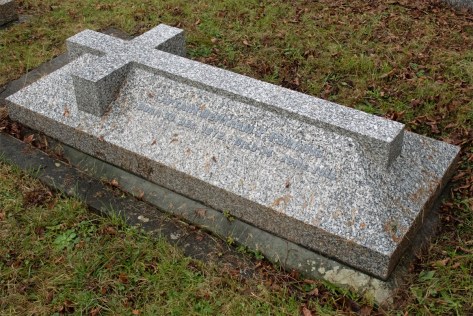
Hubert John Cavell’s body was brought back to Easton-in-Gordano for burial. He was laid to rest in the family plot in St George’s Churchyard. He was reunited with Florence, when he died in 1971, and Dorothy, when she passed away in 1997.

Sergeant Archibald Mills

Sergeant Archibald Mills

Archibald Henry Mills was born in the summer of 1895, the oldest of six children to John and Edith. John was a commercial traveller, selling veterinary wares around the country; he was born in Derby, Edith was from Leicester and, for the for the first seven years of their married life they lived in Edith’s home town – this is where Archibald was born. By the turn of the century, however, they had relocated to Somerset, and set up home in Weston-super-Mare.

When he left school, Archibald found work as an errand boy for a local tailor, but change was on the horizon. By the summer of 1914, he had based himself in Nottingham – the reason is lost to time – and this is where he was when he volunteered for military service.

Archibald enlisted as a Private in the Notts and Derby Regiment – the Sherwood Foresters – and was assigned to the 7th Battalion. He was sent to France as part of the 46th Division and, over the next couple of years, he evidently served his regiment well.

In August 1915, Private Mills was promoted to Lance Corporal; three months later he was again promoted, to Corporal. By May the following year, he received another rise, this time to Serjeant. These promotions were against the backdrop of some fierce fighting – the Sherwood Foresters were involved at Hooge, Hohenzollern and Gommecourt, and were briefly sent to Egypt.

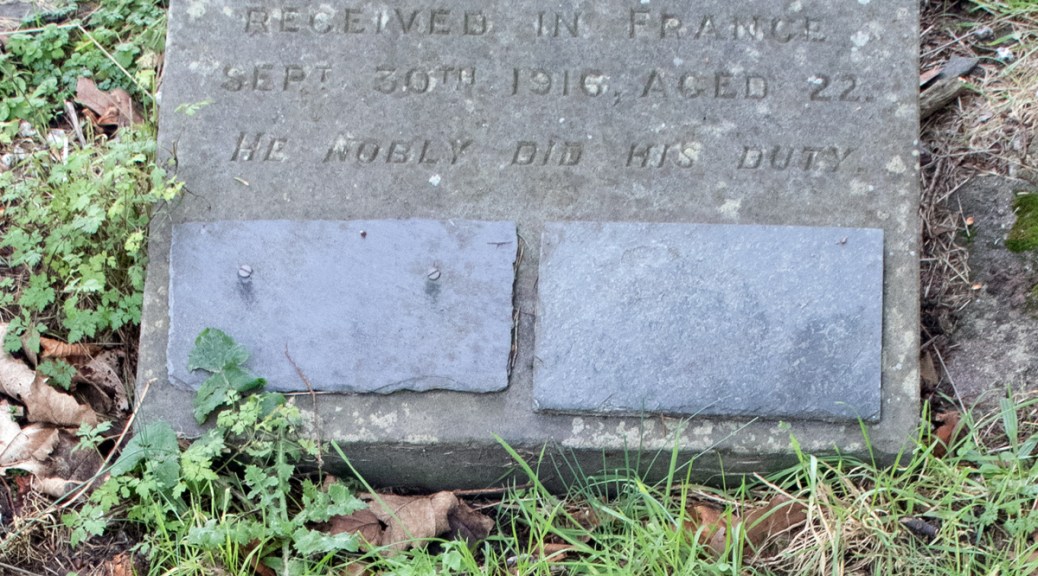
At some point during the summer of 1916 – possible at Gommecourt – Archibald was injured, and medically evacuated to the No.2 Western General Hospital in Manchester. Sadly, however, his wounds were to prove too much: Serjeant Mills passed away on the night of 30th September 1916. He was just 21 years old.

The body of Archibald Henry Mills was brought back to Somerset; he was laid to rest in the Milton Road Cemetery of his adopted home town of Weston-super-Mare.


Captain Bertram Perkins

Captain Bertram Perkins

Bertram Falls Perkins was born in December 1872, the third of four children to Alfred and Mary Perkins. Alfred was a Colonel in the army and has met his wife while serving in Madras, India. He had retired by the time Alfred was born, and had brought his family back to England, where he set up as a Country Magistrate, living in the village of Wookey in Somerset.

Bertram was set for good things – by the time of the 1881 census, the family were living in Eastcott House, with a footman, cook, two ladies’ maids, two house maid and a governess to look after them.

Bertram’s military records are a little scant, but can be pieced together from his funeral notice.

The late Captain Bertram Perkins… joined the 1st Vol. Batt. of the Somerset Light Infantry as 2nd Lieutenant in February 1892, and, in November 1894, was transferred to his father’s regiment, the 3rd Batt. Welsh Regt. as Lieutenant… In October 1896 he went to South Africa and joined the Natal Mounted Police, in which he saw much active service… at the relief of Ladysmith and Dundee. Being stricken down with a very severe attack of enteric fever, he had to resign… and return home. As soon as he recovered his health he again retuned to South Africa as a Captain in the 3rd Battalion Welsh Regiment, where he saw much service…

Whilst at Vryburg, he was appointed Provost Marshal, and in recognition of his tact and energy in filling a very difficult position, was presented by the inhabitants of the district with a gold watch and an illuminated address. He was in possession of the Queen’s Medal with four clasps and the King’s Medal with two clasps. On his return home he took to farming… He retired from the Service in 1905, but on the outbreak of the present war was appointed as Captain to the 12th Battalion of the Sherwood Foresters. Unfortunately, his health, which had never been quite restored, broke down, and he was invalided out of the Regiment.

Wells Journal: Friday 16th June 1916

During the Great War, Captain Perkins’ regiment has been the 12th (Service) Battalion for the Nottinghamshire and Derbyshire Regiment. His unit been shipped out to France in August 1915, but it is likely that he saw little, if any, time on the Western Front. After being invalided out, he succumbed to his ongoing illness on 14th June 1916, aged 43.

Bertram Falls Perkins lies at rest in the graveyard of St Matthew’s Church, in his home village of Wookey, near Wells in Somerset.