Tag Archives: Second Lieutenant

Second Lieutenant Arthur Phripp

Second Lieutenant Arthur Phripp

Arthur Frederic Thornton Phripp was born in Gillingham, Dorset, in the summer of 1894. The middle of three children, and the only son, his parents were Frederick and Kate Phripp. Frederick was a farmer, and the family lived in Slaughter Gate, to the west of the town centre.

The 1911 census recorded Frederick and Kate managing the farm, and raising their youngest child, daughter Lucy. Arthur, however, is missing, and it seems that he had taken started working for the Post Office as a boy clerk. Where he was living is unclear, but later documents suggest that he may have moved to London.

When war broke out, Arthur stepped up to play his part, joining the 1/21st (County of London) Battalion of the London Regiment, which was also known as the First Surrey Rifles. Private Phripp arrived in France on the 16th March 1915 and, over the next couple of years, fought at Loos, the Somme and Messines. He rose through the ranks, reaching Sergeant and, in the autumn of 1917, he was awarded a commission to Second Lieutenant.

Arthur returned to Britain to formally take the commission, and was transferred to the Duke of Wellington’s (West Riding) Regiment. Back on home soil, it was a chance to see family again, but tragedy was to strike.

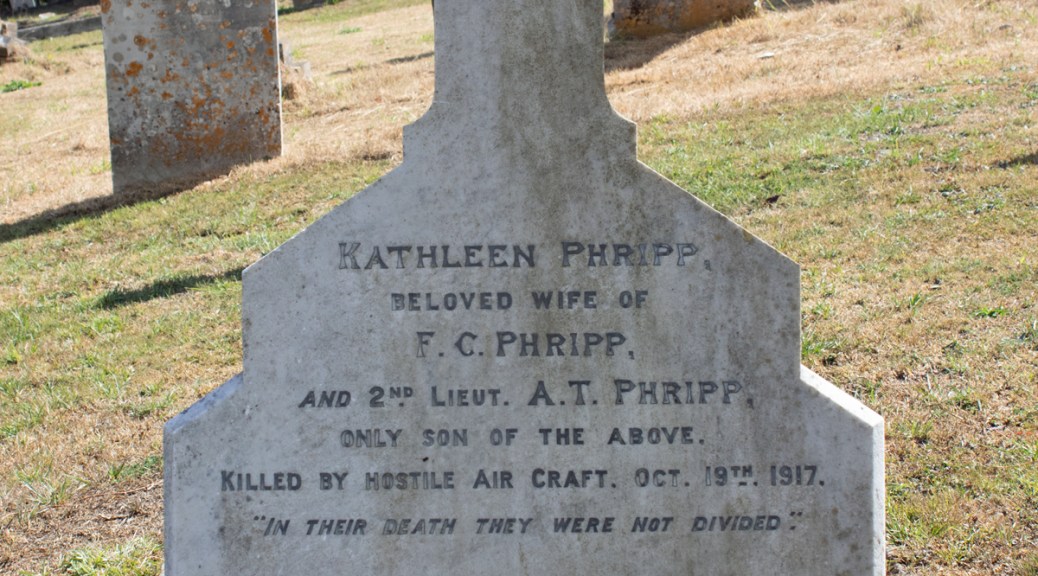
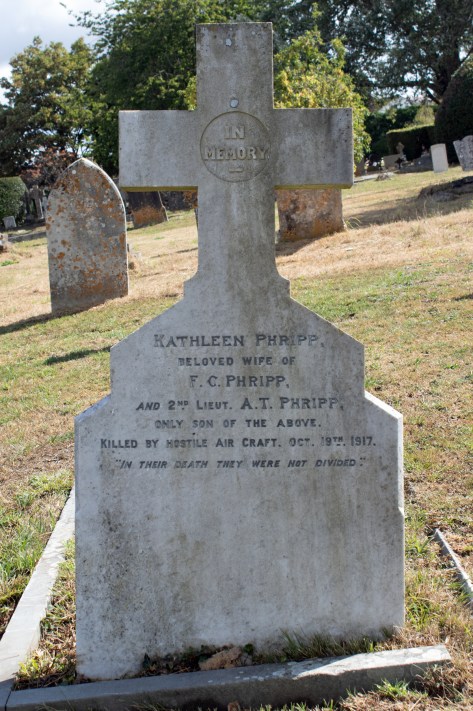
A painful sensation was created in the town when it became known that Mrs Kate Phripp, 65, of Slaughtergate Farm, and her son, Arthur TF Phripp, 23, had been killed in the Zeppelin raid on Friday.

At the inquest on seven of the victims on Monday evidence was given that Mr Phripp was stopping with some friends, and his mother went up from Gillingham on Friday to see him. Evidence given by the police showed that warning had been given in every principal thoroughfare in the district where the fatalities occurred, and the theatres had been warned. The bomb came quite unexpectedly. Besides the killed nine people were seriously injured and nine slightly injured. A great amount of glass was smashed. It was mentioned that Mrs Phripp and her son had been attending the theatre, where is was announced that the warning had been given, and that the play would continue until the guns were heard. The play was continued to the end, and the deceased left at their own risk. The Coroner observed that it was clear that some people took the optimistic view that the raid was over. If people went out into the street after a warning they did to at their own risk. A formal verdict was returned, and they commended the work of the police, special constables and ambulance workers, who, they said, had acted promptly and pluckily…

[Bridport News: Friday 26th October 1917]

The Zeppelin that raided London that night had originally been one of eleven aircraft tasked with attacking Britain’s northern industrial towns. But strong winds disrupted the operation, and one airship – L45, commanded by Kapitänleutnant Waldemar Kölle – was blown south instead.

Meanwhile, Second Lieutenant Phripp and his mother had just left His Majesty’s Theatre in the Haymarket, where they had been watching the comedy Chu Chin Chow, and were making their way across Piccadilly Circus, returning to their friend’s house.

By ill twist of fate, at that moment Kölle released a 100kg (220lb) bomb, which exploded in the road outside the Swan & Edgar department store. The resulting explosion destroyed the building’s frontage and left a crater in the road some 10ft (3m) across and 4ft (1.2m) deep. Seven people were killed: this included Kate and her son.

The bodies of Kate and Arthur Phripp were taken back to Dorset for burial. They were laid to rest together in Gillingham Cemetery, not far from where Frederick and Lucy were grieving.


[Note: My thanks go to Tony Otton for his insight into the event that led to the passing of Arthur and his mother.]

Second Lieutenant Cecil Buckland

Second Lieutenant Cecil Buckland

Cecil John Buckland was born on 5th July 1895 in Holloway, Middlesex. The third of four children, his parents were bicycle salesman Arthur Buckland, and his wife, Mary. The 1901 census found the family in rooms at a terraced cottage at 8 Burrard Road, Hampstead.

By 1911, things had changed for the family. They had moved to 73 Finchley Road, which was a ten-roomed property. Arthur was now recorded as being a commercial traveller for a motor company, and they employed a domestic servant, Mary Jones, to help support the family. Cecil had followed in his father’s footsteps and was an apprentice salesman for the same motor company. His older brothers, Arthur Jr an Harold, were also working as salesmen in the same business.

When war broke out, Cecil was called upon to play his part. Full service details have been lost to time, but it seems that he initially joined the Royal Fusiliers, and was attached to the 5th Battalion. It isn’t clear where or when he served, but by the spring of 1918 – just weeks after its formation – he gained a commission in the Royal Air Force.

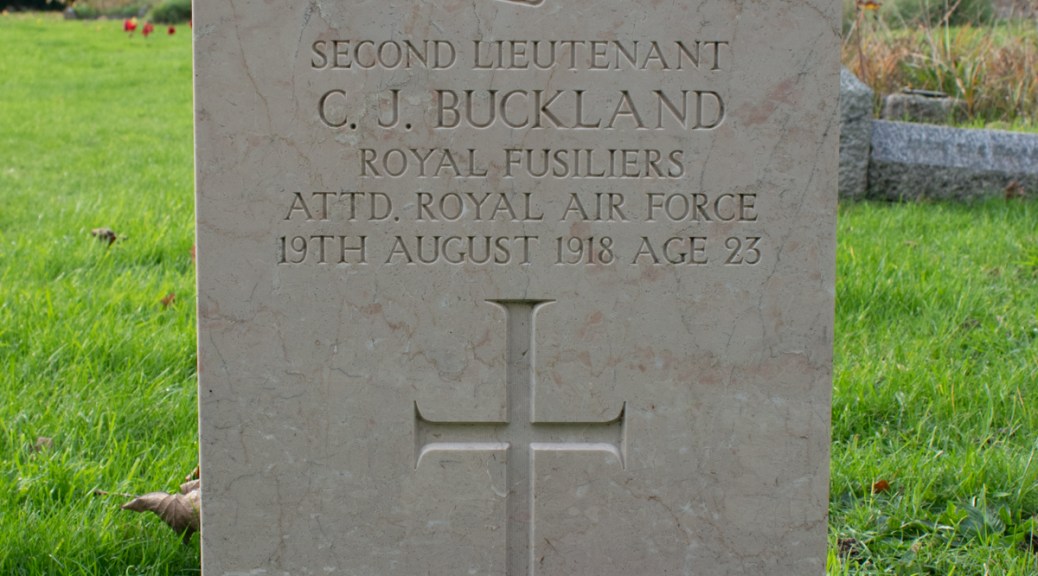
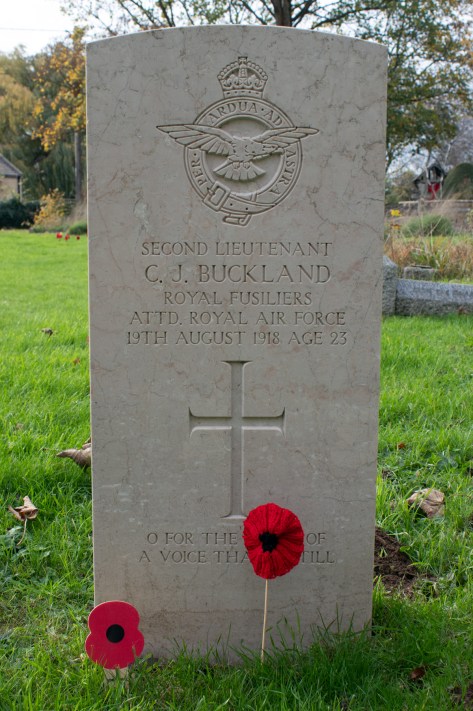
Second Lieutenant Buckland was stationed at 44 Training Depot Station at Holt Airfield in Wiltshire, and it was here that he learnt the ropes using a Bristol F.2b Fighter. On the 19th August 1918, Cecil took off on a practice flight. Shortly after take-off, he attempted to turn the aircraft and got into a spin as too low height to recover. The aeroplane crashed to the ground, and he was killed instantly: he was just 23 years of age.

The body of Cecil John Buckland was laid to rest in Holt Old Cemetery, not far from the airfield at which he had been based.


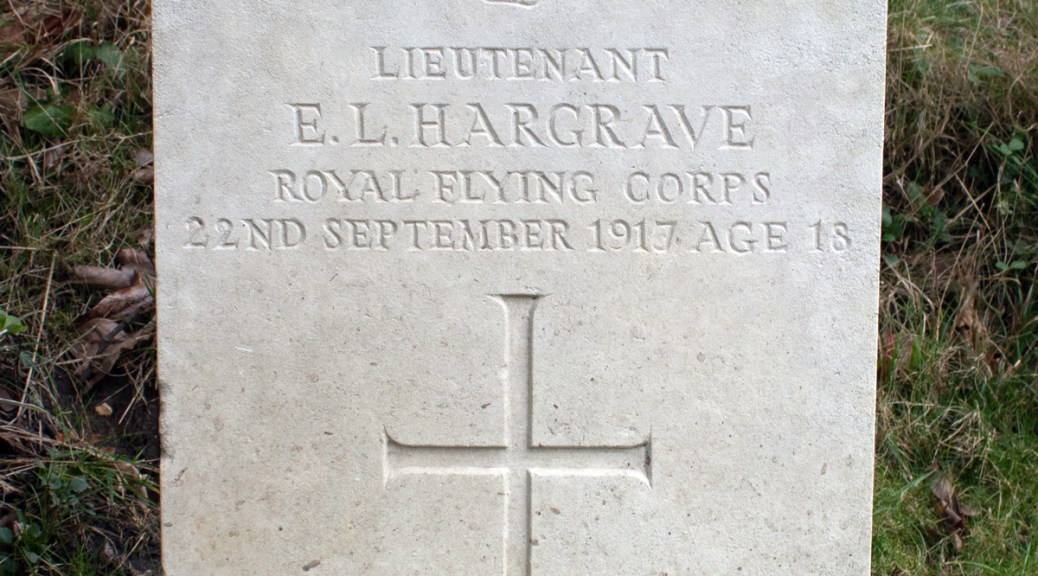
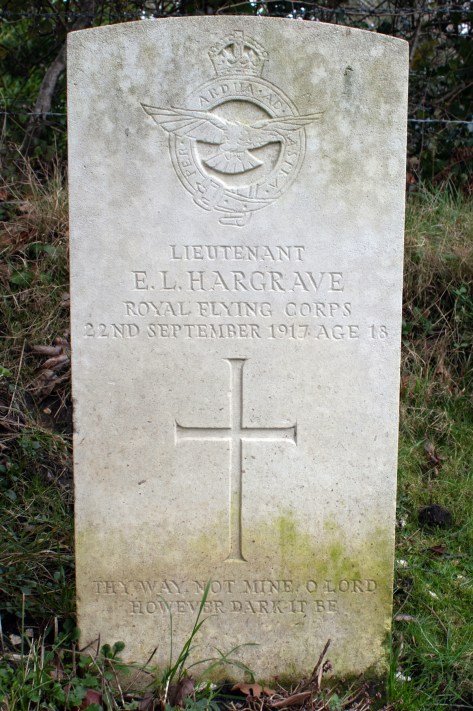
Second Lieutenant Ernest Hargrave

Lieutenant Ernest Hargrave

Ernest Lawton Hargrave was born in the spring of 1899 in Clapham, Surrey. One of three children, his parents were Ernest and Ada Hargrave. Ernest Sr was a letterpress machine mender from Leeds, Yorkshire, but when he died in 1910, Ada was left to raise her children alone.

The 1911 census found Ada working as a boarding house keeper. The property she ran – a seven-roomed property at 65 Elspeth Road, Battersea, Surrey – was home to her and her two surviving children. Alongside them lived five boarders – Walter Bland (of no employment), William Gray (a clerk at the Scottish Office), Norman Pierce (an engineer’s draughtsman), William Henderson (a temporarily unemployed government clerk) and Maria Baugh (living on her own means). Edgar Gray – possibly William Gray’s father – was also visiting at the time the census was taken.

When war broke out, Ernest was 15 years of age. Too young to enlist straight away, his Medal Roll Index Card notes that he took a commission as a Second Lieutenant. Initially added to the General List, he was soon assigned to the Royal Flying Corps and sent to 79 Squadron in Hampshire.

Training to be a pilot, Second Lieutenant Hargrave practiced in an Avro 504J biplane. By 22nd September 1917, he had completed six solo flights, totalling 16 hours. That day he was under instruction, when the accident that was to take his life occurred. A later report reached the verdict that an error of judgement on Ernest’s part caused the aircraft to crash:

[He was] climbing too steeply with an insufficient bank, thus stalling the wash. As the wash was only 175ft from the ground he failed to recover and struck the ground practically nose-on. Passenger met his death through being jammed between the engine and petrol tank.

Ernest Lawton Hargrave was just 18 years of age when he was killed. His body was laid to rest in the peaceful graveyard of St Paul’s Church, East Boldre, not far from the airfield he had so briefly called home.


While the Commonwealth War Graves Commission records give Ernest’s rank as Lieutenant, other documents suggest he held the rank of Second Lieutenant when he died.


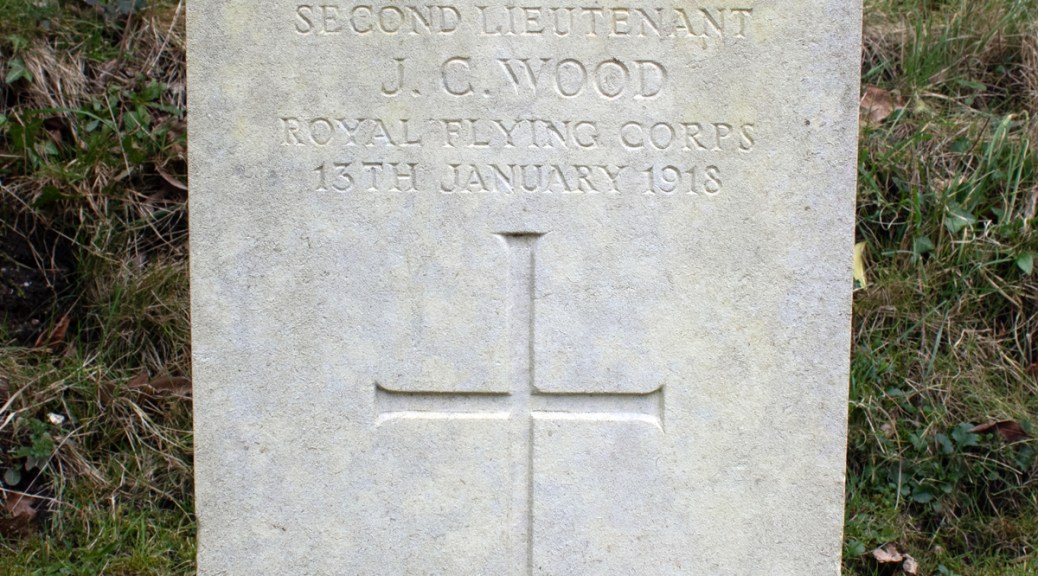
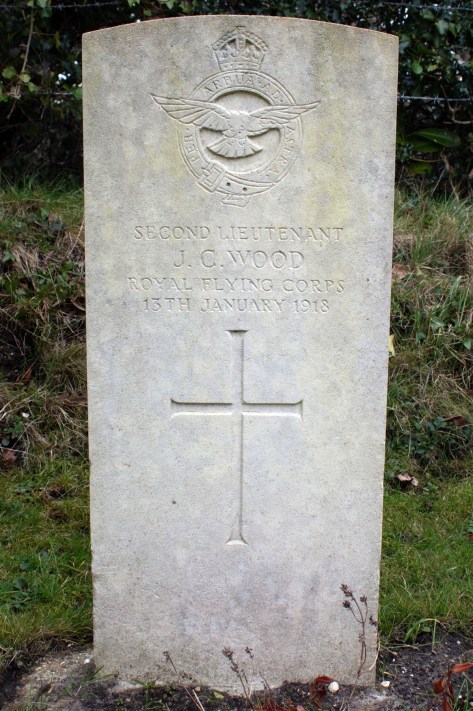
Second Lieutenant Joseph Wood

Second Lieutenant Joseph Wood

Joseph Clark Wood was born in Horning Mills, Ontario, Canada, on 26th October 1897. The second of six children, his parents were farmers Richard and Bella Wood.

Details of Joseph’s early life are sketchy, and the information that is available contradictory.

By the end of 1917, however, Joseph had stepped up to serve his King and Empire, and had joined the Royal Flying Corps. His service papers no longer exist, so it is not clear how and when he joined, or came over to Britain. As the new year took over the old, Second Lieutenant Wood was attached to the No. 1 Training Squadron, and based in East Boldre, Hampshire.

A newspaper report outlined what became of him:

The Hampshire County Coroner… held an inquest on Monday into the circumstances attending the death of Second-Lieutenant Joseph Clark Wood… which occurred as the result of a flying accident on the previous day.

Lieut. Alexander Gibson Gilroy, RFC, who gave evidence of identification, said that the deceased was a pilot under advanced instruction, quite capable of flying alone.

AM Cecil Bryant spoke to testing the machine just before deceased flew and finding everything in order, Rigger Mechanic Henry Williams, giving similar evidence.

Second-Lieutenant Oswald George Brittorous RFC, told how he was just getting out of another machine when he heard a crash in the air, and looking up saw a machine without wings, the latter having evidently folded back. It hung for a few seconds and then went into a spinning nose-dive. The machine seemed between 1,500 and 2,000 feet up , and it crashed to hearth half a mile away from where witness was. Witness went to the scene after deceased had been removed, and found the machine practically matchwood. The crash he heard in the air was caused by the wings folding back and breaking. There was no collision.

Capt. William Ramsay Nasmyth, RAMC, spoke to the removal of the body. Death was instantaneous and was caused by severe injuries to the head.

The jury returned a verdict of accidental death.

[Hampshire Advertiser: Saturday 19th January 1918]

Second Lieutenant Joseph Clark Wood was just 20 years of age when he died on 13th January 1918. He was laid to rest in the graveyard of St Paul’s Church in East Boldre, Hampshire, not far from the airfield at which he had been based.


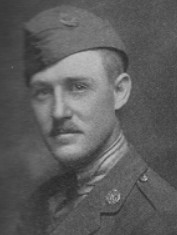
Second Lieutenant Richard Wood

Second Lieutenant Richard Wood

Richard Shaw Wood was born in London, Ontario, Canada, in 1891. The middle of three children his parents were Bermudan Benjamin Wood and his Canadian wife, Mary. Benjamin was a farmer, but his son would seek out bigger and better things for himself.

On 12th November 1913, he married Alice Duggan. There is little specific information about her early life, but she had been born and raised in Toronto. They wend to to have a son, Richard Jr, the following year.

With war raging across Europe, Richard felt compelled to play his part. He gave up his job as a car salesman and, on 30th July 1917, he enlisted in the Canadian Royal Flying Corps. As an Air Mechanic 3rd Class, he was soon sent to Britain, but took a commission in the Royal Flying Corps in December of that year.

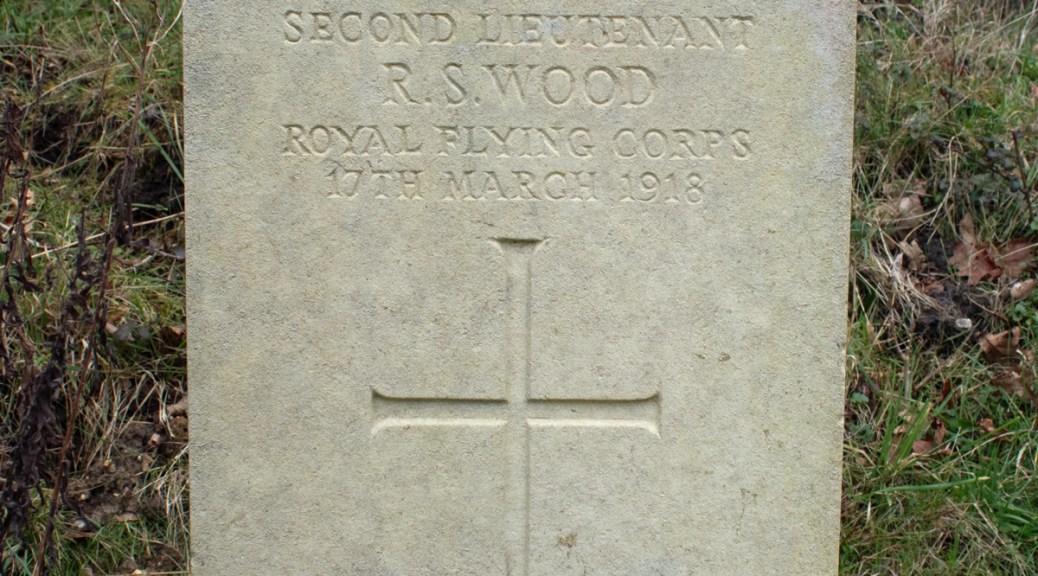
The now Second Lieutenant Wood was attached to No. 1 Training Squadron and was based in East Boldre, Hampshire. On 17th March 1918, after just a few months in the unit, he was flying a Sopwith Camel from the Hampshire airfield, when disaster struck. His aircraft nosedived and crashed to the ground. A subsequent inquest concluded that: ‘the smash was caused by the Pilot losing control of the machine… 2nd Lt R Shaw Wood was a steady [skilful] and reliable pilot. He had performed the manoeuvre… on previous occasions. The Court are of opinion that the Pilot [must have] fainted thus losing control.’

Richard Shaw Wood was 27 years of age when he died on 17th March 1918. He was laid to rest in the tranquil graveyard of St Paul’s Church, East Boldre, not far from the airfield that hat become his home.


Second Lieutenant Richard Wood
(from findagrave.com)

Second Lieutenant Arthur Taylor

Second Lieutenant Arthur Taylor

Arthur Rowland Taylor was born on 21st March 1896 in Ilford, Essex. He was the third of five children – all of them boys – to land agent Robert Taylor and his wife, Edith. Robert’s work took the family around the country: the 1901 census found them living in Connah Quay, Flintshire, and this is where Arthur’s two younger brothers were born.

By 1911, the family had moved again, to the 15-roomed Bagle Gate House in Bridlington, Yorkshire. Robert and Edith were living with their three youngest children – including Arthur – and two servants: cook Sarah Leatham and housemaid Lucy Patchett.

At some point after leaving school, Arthur was also drawn to a new adventure. By the time war broke out, he had moved to America and settled in Denver, Colorado.

In June 1917, with war raging across Europe, Arthur had stepped up to play his part. He crossed the border to Toronto, Canada, and enlisted in as an Air Mechanic 3rd Class in the Canadian Royal Flying Corps. Sent to Britain, just three months later, he accepted a commission, taking the rank of Second Lieutenant in the British Royal Flying Corps.

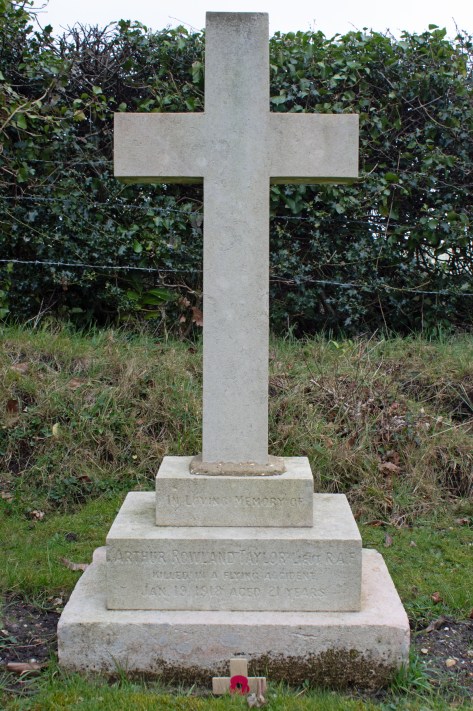
Arthur was based in East Boldre, Hampshire, and was attached to the 79th Training Squadron. On 19th January 1918, he had taken off in his Sopwith 5F1 Dolphin, when the engine stalled. He did not have enough height to try and restart the engine, and the aircraft crashed to the ground, bursting into flames on impact. Second Lieutenant Taylor was killed: he was 21 years of age.

The body of Arthur Rowland Taylor was laid to rest in the peaceful graveyard of St Paul’s Church in East Boldre, not far from the base at which he had served.


Second Lieutenant Jocelyn Cowell

Second Lieutenant Jocelyn Cowell

Jocelyn Gore Cowell was born on 18th March 1899 in Exmouth, Devon. The older of two children, he was the only son to Edward and Eliza Cowell. Edward was a Captain in the Royal Fusiliers, and had served in India, where Eliza – who went by her middle name, Nita – had been born.

By the time of the 1911 census, Edward and Nita had moved to Milton on Stour, Dorset, where they were living in a ten-roomed house with a butler, a housemaid and a cook. Jocelyn, meanwhile, was one of fifty students boarding at a private school in Westgate-on-Sea, Kent.

When war broke out, Jocelyn was still a student. However, on 12th September 1917, he took a commission in his father’s former regiment. While he was studying, a new technology had caught his eye, and learnt to fly, gaining his wings on 18th October 1916. When he enlisted, he immediately followed his heart, and transferred to the Royal Flying Corps.

Attached to No. 3 Training Depot Station, Second Lieutenant Cowell was based at Lopcombe Corner Airfield, to the west of Salisbury, Wiltshire. On 28th January 1918, he was flying a de Havilland DH5 biplane form the airfield, when it crashed. The cause of the accident was unknown, an inquest unable to draw any specific opinions from the wreckage or crash site. Jocelyn was killed instantly: he was just eighteen years of age.

The body of Jocelyn Gore Cowell was taken back to Dorset for burial. He was laid to rest in what would become the family plot in the peaceful graveyard of Ss. Simon and Jude Church in Milton on Stour.


Second Lieutenant Jocelyn Cowell

Second Lieutenant Jocelyn Cowell
(from findagrave.com)

Second Lieutenant John Thomas

Second Lieutenant John Thomas

John Dobson Thomas was born in Leechburg, Pennsylvania, on 26th August 1889. He was the youngest of nine children to John and Isabella Thomas. John Sr was a steel inspector from Glamorganshire, while Isabella had been born in Newcastle-upon-Tyne: they emigrated to the United States in 1881, and John Jr was the second of their children to be born there.

When John Jr left school, he found work as a clerk, eventually getting into bonds and stocks. His father died in 1910, by which time the family had moved to Chicago, Illinois.

When war broke out, John stepped up to play his part. He enlisted on 6th January 1917, his service records showing that he was of medium height and build, with brown hair and brown eyes.

The American Army may not have met John’s needs as, just six months later, he enlisted again, this time joining the Canadian Expeditionary Force in Toronto. Along with his banking role, he was recorded as being an aviator cadet, his papers shoring that, at 23 years and 10 months old, he was 5ft 6ins (1.77m) tall.

Air Mechanic 3rd Class Thomas was shipped to Britain, and stationed near East Boldre, Hampshire. In October 1917, he took a commission in the Royal Flying Corps, with the rank of Second Lieutenant.

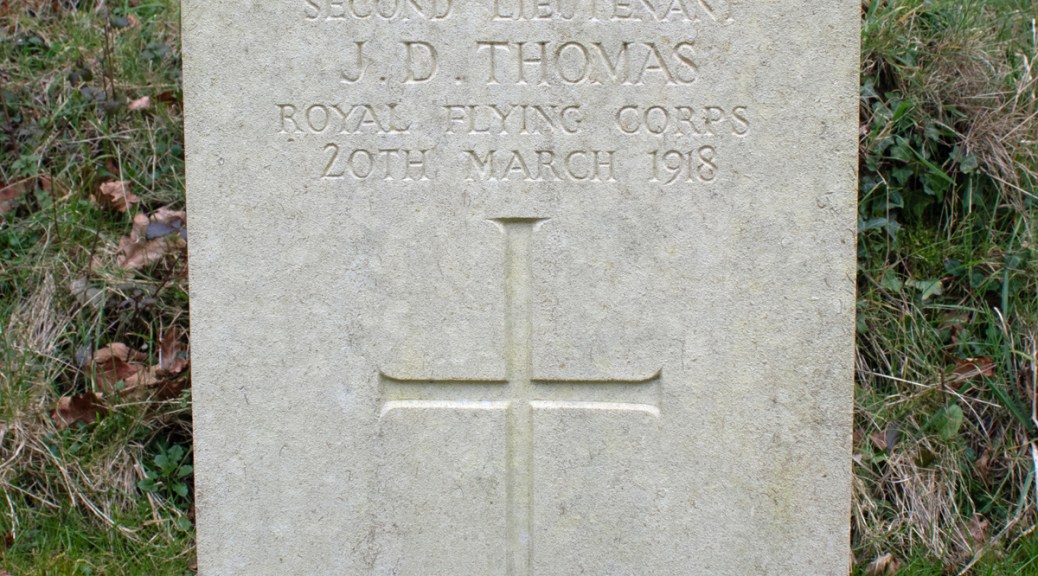
On 20th March 1918, John was flying his Sopwith Dolphin biplane, when he hit trouble. Practicing a dive, he appeared to have been unable to pull the aircraft up again and crashed into the ground. He was killed instantly.

The RAF Casualty Card cited a potential error of judgement on the part of Second Lieutenant Thomas: “[he] had proved himself a skilful pilot and well capable of handling his machine. He had previously practised many dives, but had, in his stunting, reduced his margin of safety to a minimum.”

John Dobson Thomas was 28 years of age when he died. Being thousands of miles from his family, he was laid to rest in the quiet setting of St Mary’s Churchyard, East Boldre, not far from the airfield at which he had been based.


Major John Kinnear

Major John Kinnear

John Lawson Kinnear was born on 9th February 1890 in the Yorkshire village of Copgrove. The youngest of six children, his parents were Henry and Frances Kinnear. Henry was the vicar of St Bartholomew’s Church, and, at the time of the 1891 census, the family lived in the rectory with four servants: a governess, a cook, a housemaid and a nurse.

When he completed his schooling, John was drawn to a career in the military. His full service papers have been lost, but it is clear that he joined the King’s (Liverpool Regiment) with a commission. He held the rank of Second Lieutenant when he joined the battalion in October 1910, rose to Lieutenant in March 1913, and transferred to the Royal Flying Corps not long after the First World War broke out. By June 1915, he had been made a Captain.

By the time of the Royal Air Force’s foundation in April 1918, John had risen to the rank of Major. He had also been awarded both the Military Cross and the Distinguished Service Order. Attached to the 1st Training Squadron, he was based at East Boldre, Hampshire.

On 28th April 1918, Major Kinnear was piloting his Sopwith Camel, when it stalled at a height of 200ft and fell to the ground. John was killed instantly. The RAF Casualty Card noted: “The court having carefully considered the evidence, viewed the scene of the accident and examined the wreckage are of the opinion that the smash was caused by an error of judgement on the part of the pilot.”

John Lawson Kinnear was 28 years of age when he died. His body was laid to rest in the graveyard of St Paul’s Church, East Boldre, not far from the airfield which he had called home.


Major John Kinnear
(from findagrave.com)

Second Lieutenant Walter Pawson

Second Lieutenant Walter Pawson

Walter William Stead Pawson was born in South Shields, County Durham, on 7th October 1895. The second of six children, his parents were Albert and Louise Pawson. Albert was a joiner by trade, and his work took the family north for a while. The 1901 census found them living in Glasgow, but by the time Walter’s youngest sibling was born in 1905, they were back in County Durham once more.

Little further information is available about Walter’s early life, but in around 1912, he sought a new life for himself, and emigrated to California. When war broke out, however, he felt the need to serve his home country and enlisted on 5th June 1917. His US draft card show that he was working as a clerk at the Hotel de Luxe in Long Beach, California. He was noted as being tall and slender with blue eyes and light brown hair. The document also confirms two years’ voluntary service in the militia while in Scotland, during which time he reached the rank of Lance Corporal.

The next record for Walter is a second enlistment document, this time on 6th September 1917. Signing up in Toronto, Canada, he was now joining the country’s Royal Flying Corps. Whether he had been turned down for US service, of whether he felt joining the Canadian Expeditionary Force offered him better options is unclear.

Returning to Britain, he took a commission in the Royal Flying Corps, and was attached to the 70th Training Squadron based in Hampshire. His service papers do not give much detail of the man he had become, but do note his height as 6ft (1.83m).

Second Lieutenant Pawson spent the next few months training. On the 6th Mary 1918, he was piloting an Avro 504J biplane, when things went wrong. He was looping the aircraft, when it fell into a spin and he was unable to recover it. The aeroplane crashed to the ground and Walter was killed.

The RAF Casualty Card noted that: “The court having carefully considered the evidence and having viewed the wreckage are of the opinion that the accident… resulting the fatal injuries to the pilot… was due to an error of judgement on the part of the pilot who was under instruction at the time.”

Walter was 22 years of age when he died. An obituary stated that he was a “bright promising youth, and a splendid type of British manhood he us but one of the many precious lives lost through this terrible war.” [Jarrow Express: Friday 24th May 1918]

Walter William Stead Pawson was laid to rest in the graveyard of St Mary’s Church, East Boldre, Hampshire, not far from the airfield he had so recently called home.