
Category Archives: East Yorkshire Regiment

Private George Sinclair

Private George Sinclair

In a quiet corner of the village cemetery in Cuckfield, West Sussex, is a headstone dedicated to Private WG Sinclair. Attached to the East Yorkshire Regiment, he passed away on 12th February 1919.

A search of military records gives a little more detail: this was a George William Sinclair, who had died from pneumonia at the West Hylands Institution, which was Cuckfield’s workhouse. George was 29 years old, but there is little concrete information about his early life.

A newspaper report from the day before Private Sinclair’s death, however, begins to shed a little more light onto his life:

George William Sinclair was charged with being a deserter from the Cuckfield Union Workhouse, on November 6th, and carrying away clothing to the value of £1, the property of the Guardians of the Cuckfield Union. PC Upton said that he arrested the prisoner at the Somerstown Police Station. Prisoner was remanded, but as he was taken ill he was removed to the Workhouse Infirmary.

Mid Sussex Times: Tuesday 11th February 1919

George’s entry in the Army Register of Soldier’s Effects does not give a next of kin, so it is not possible to determine categorically where he was born and raised, or who his parents were.

A little more digging found a George William Sinclair recorded in the UK Calendar of Prisoners in 1916. He had been arrested for “feloniously breaking and entering the dwelling house of Sarah Waddingham, and stealing one bicycle, one pair of shoes, one purse, one tobacco box, one tobacco pipe and one microscope, the property of said Sarah Waddingham, at West Halton [near Hull], on the 7th July 1916.

It is not possible to say definitively that this George William Sinclair is the same one buried in Cuckfield Cemetery, but, given the regiment he was attached to, and the newspaper report prior to his passing, it is likely to be more than just a coincidence.

George pleaded guilty, and was sentenced to six months’ hard labour. This was not his first offence, and had had spent a total of more than eighteen months behind bars over a period of ten years up to this point. On each occasion, he was convicted of theft.

It is possible, given that the country was at war by this point, that George was given the option to enlist, rather than serve his sentence. Again, this is an assumption, however, but Private Sinclair’s Pension Ledger confirms that he was discharged from the army on 6th November 1918.

George William Sinclair appears on another workhouse register, this time in Westminster, London, where he spent a couple of nights just before Christmas that year.

If these records all relate to the same man, his life seems to have been a troubled one. I can only hope that he found peace in that quiet corner of West Sussex.
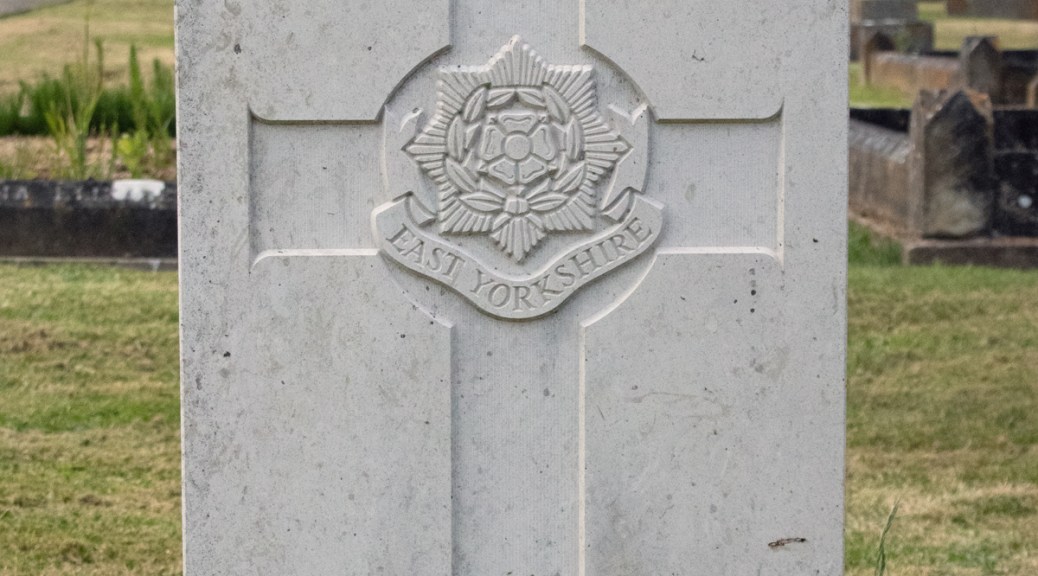
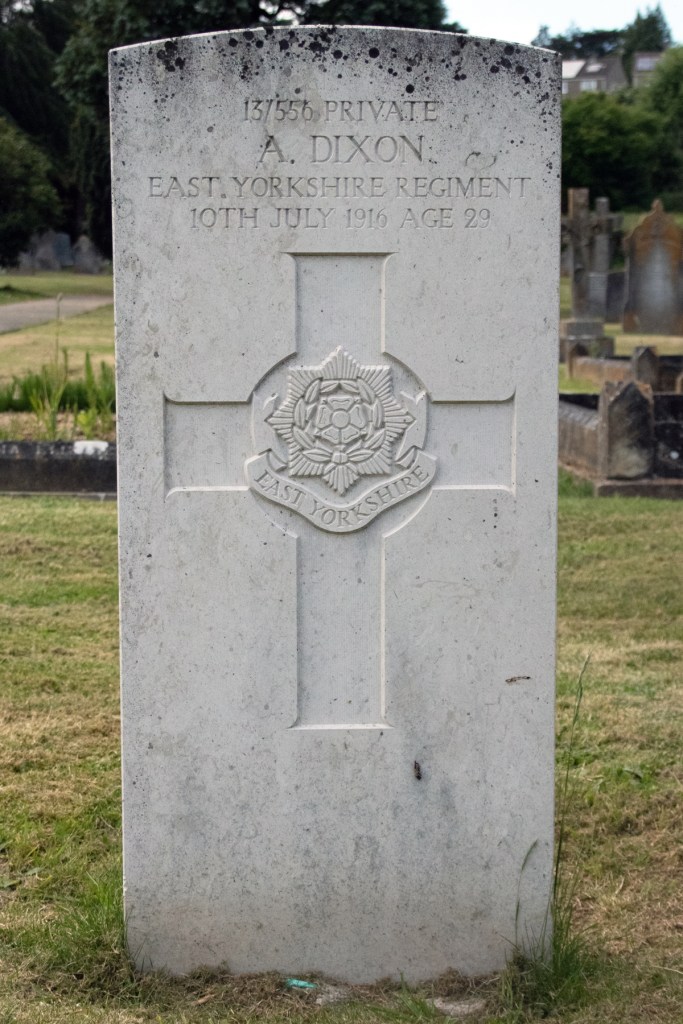
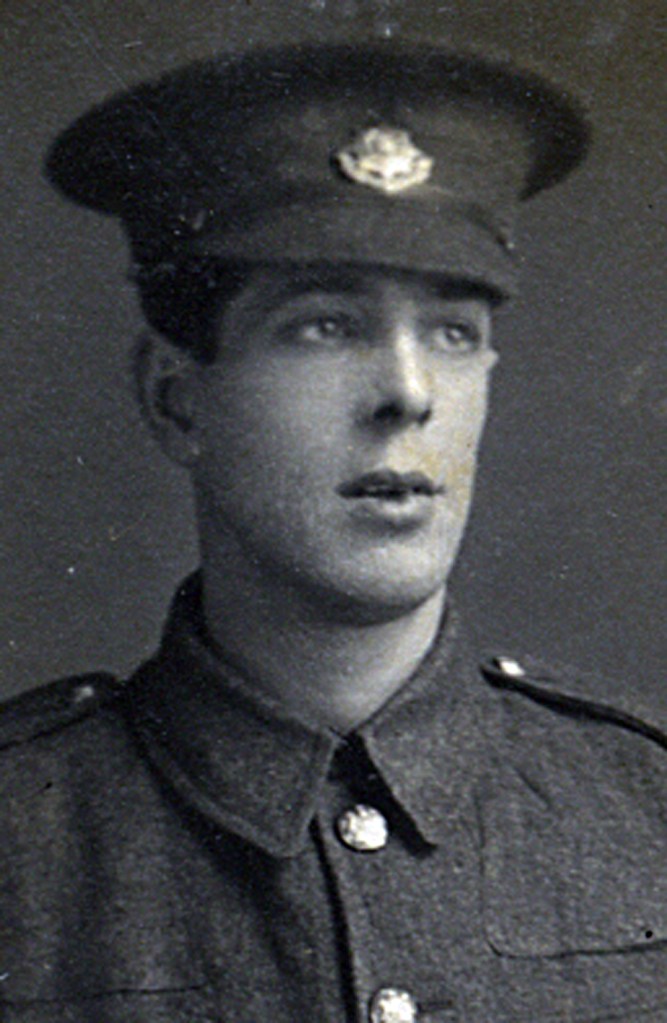
Private Alonsa Dixon

Private Alonsa Dixon

Alonsa Dixon was born in Kingston-upon-Hull, Yorkshire, in 1887, the oldest of seven children to Alonsa and Caroline Dixon. Alonsa Sr was a billiard marker, who raised his family in a small house near the city centre.

Alonsa Jr found work as an errand boy for a grocer when he left school, but went on to find work as a jobbing gardener. By the time of the 1911 census, he had moved out of home, and was boarding with cab driver George Gill and his family.

In April 1912, he married Edith Alice Gill. Trixie, as she was also known, was George’s daughter, and it seems likely that romance blossomed after Alonsa moved in. The couple went on to have a son, also called Alonsa, who was born the following year.

War was coming to Europe, and Alonsa was in one of the first waves of men to volunteer for King and Country. He enlisted in the East Yorkshire Regiment, and was assigned to the 13th Battalion. His service records show that he was 5ft 7.5ins (1.71m) tall, and weighed 144lbs (65.3kg). He was noted as being of good physical development.

Initially serving on home soil, Private Dixon was eventually dispatched overseas, arriving in Egypt in December 1915. Having spent just under three months in North Africa, he was moved to France in March the following year.

Alonsa had some health issues by this point, and was suffering from Bright’s Disease, or nephritis (inflammation of the kidneys). He was treated in a field hospital in Abbeville, but subsequently medically evacuated back to England for further care.

Private Dixon was admitted to the Monastery Hospital in Wincanton, Somerset in April 1916, but his condition proved too severe, and he passed away on 10th July 1916. He was just 29 years of age.

Alonsa Dixon was laid to rest in the cemetery of the town in which he passed away, Wincanton.


Private Alonsa Dixon
(from findagrave.com)

Private Joseph Dodge

Private Joseph Dodge

Joseph Dodge was born in the summer of 1883, and was one of twelve children, including eleven boys. His parents were David and Eliza Dodge, who raised their growing family in Stoke-sub-Hamdon, a few miles to the east of Yeovil, Somerset.

David was a mason and stone sawyer, but his children went into other roles when they left school; Joseph found work as an agricultural labourer.

In October 1903, Joseph married Elizabeth Ann Case – better known as Annie – who came from just over the Dorset border in the village of Corscombe. Setting up home in Yeovil itself, the couple went on to have two children – both boys – Walter and Norman.

War was coming to Europe, and Joseph was intent on doing his bit. Full service details are not available, but the documents that exist confirm that he enlisted as a Private in the Wiltshire Regiment. Initially assigned to the 1/4th Battalion (which served in Egypt), he transferred to the 2/4th Battalion (which served in India).

Sadly, there is no documentation to give service dates, it is impossible to establish when or if Joseph actually served in these locations. India seems likely, however, as he later transferred to the 1st Garrison Battalion of the East Yorkshire Regiment, which was based in Lucknow.

Private Dodge survived the war and came back to England, but seems to have contracted pneumonia on the journey home. Admitted to hospital in Liverpool, the condition sadly got the better of him. He passed away on 16th February 1919, at the age of 35 years old.

Joseph’s body was brought back to the county of his birth; he was laid to rest in Yeovil Cemetery.


Joseph came from a very patriotic family, and local newspapers early in the war highlighted that many of the Stoke-sub-Hamdon brothers had enlisted to serve King and Country.

At the time of the article, six had enlisted – Thomas, Arthur and Percy (all in the Somerset Light Infantry), Albert (West Somerset Yeomanry), Evan (Royal Navy) and David (Canadian Infantry).

Corporal David Dodge seems definitely to have distinguished himself. Having emigrated to Canada before the war, he returned to Europe when conflict broke out. An article in the Western Chronicle reported that he had “been awarded the Military Medal for conspicuous bravery on the field under heavy fire.[Western Chronicle: Friday 15th November 1918]

Amazingly, of the seven brothers who fought in the conflict, only Joseph perished.


An earlier series of articles tells the tragic story of another of Joseph’s siblings. Henry Dodge (known as William) had moved to Senghenydd, to the north of Cardiff, in 1910; mining work was plentiful there and he and a number of his fellow villagers had sought money from the black gold.

On the 14th October 1913, and explosion happened in the mine and together with the resulting fire and subsequent poisonous gas outpouring killed more than 430 miners. Initially reported missing, William was later confirmed dead; he was just twenty years old and left a widow and child.


Corporal Charles Cornell

Corporal Charles Cornell

Charles Cornell was born in July 1885, the youngest of six children to Philip and Martha Cornell, from Ashdon in Essex. Philip was an agricultural labourer, and Charles and his older brother Daniel followed their father into the trade.

Charles was keen to further himself, however, and enlisted in the army. The 1911 census records him as a Private soldier at the Salamanca Barracks in Aldershot.

Private Cornell married Elizabeth Fanny Hoare in Strood, Kent, in October 1913. Beyond this there is little information on either Charles or Elizabeth.

Charles was assigned to the 3rd Battalion of the East Yorkshire Regiment and was promoted to Corporal. This reserve battalion was initially based in the town of Beverley, before moving to Hull and then nearby Withernsea. It seems unlikely, therefore, that Corporal Cornell saw active service on the Western Front.

His passing seems to have been sudden; his pension record shows that he had been admitted to the Military Hospital at Wharncliffe with nephritis (inflamed kidneys). He passed away on 27th January 1918, aged 32 years old.

Corporal Charles Cornell is buried in the graveyard of St Helen’s Church in Cliffe, Kent, the village his widow’s family were from. He is also commemorated in his own family’s village of Ashdon in Essex (where the memorial states he had attained the rank of Sergeant).


The majority of the the Commonwealth War Graves Commission headstones in the UK are made from Portland stone, although, in face, over 50 different natural stones have been used.

Corporal Cornell’s headstone is one of two in St Helen’s Churchyard that have been fashioned from dark grey slate.