Category Archives: Essex

Private Leonard Drewett

Private Leonard Drewett

Leonard Stephen Lovelock was born early in 1887 in the Wiltshire village of Edington. The son of Ellen Lovelock, there is no confirmation of who his father was. Ellen married Stephen Drewett in 1889, and from this point on Leonard took that surname. Stephen was a sawyer, and he and Ellen set up home in Kington Langley, near Chippenham.

Leonard, however, was destined for a different upbringing. The 1891 census return found him living with Jesse and Ann Coldrake, who were recorded as his grandparents: also in the household were Betsy Drewett (Jesse’s mother-in-law) and Emily Drewett (his daughter-in-law). The relationships are a little confusing, but Leonard remained with Jesse and Ann for the1901 and 1911 census records.

When he completed his schooling, Leonard followed Jesse into farm labouring. The later census return recorded the family living in a three-roomed cottage on Tinhead, the road leading north from Edington village centre.

Farm work was only the first step for Leonard and, by the time war broke out, he was employed as an attendant at the Wiltshire County Asylum in Devizes. He enlisted on 12th January 1916, his medical records showing that he was a little under 5ft 6ins (1.67m) tall, and weighed 170lbs (77.1kg).

Private Drewett was initially assigned to the 12th Battalion of the Devonshire Regiment and, on 14th June 1916, his unit crossed the channel for France. While there, he was transferred to the Labour Corps, and was attached to the 152nd Labour Company. In the summer of 1917, Leonard joined the 5th Army School of Cookery, but after just six weeks he was admitted to a camp hospital suffering from epileptic seizures.

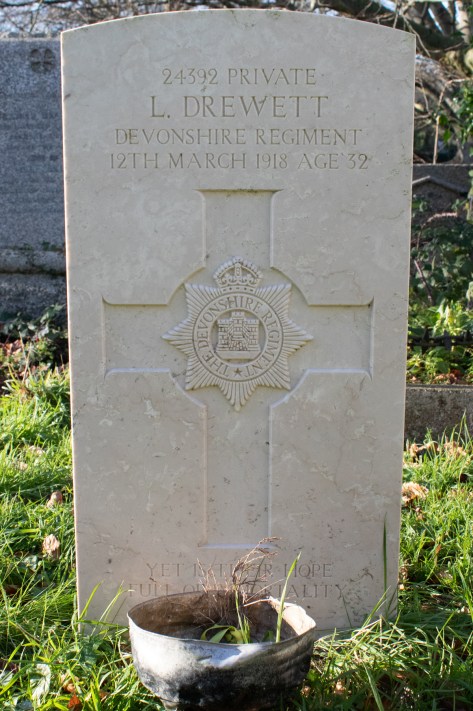
Moved from the camp hospital to the 2nd Australian General Hospital in Wimereux, by the end of the year, Private Drewett had been medically evacuated to Britain for treatment. He was sent to the General Military Hospital in Colchester, Essex, but his condition would ultimately prove fatal. Leonard died on 12th March 1918: he was 32 years of age.

The body of Leonard Stephen Lovelock Drewett was taken back to Wiltshire for burial. He was laid to rest in the graveyard of Ss Mary and Katherine and All Saints in his home village of Edington.
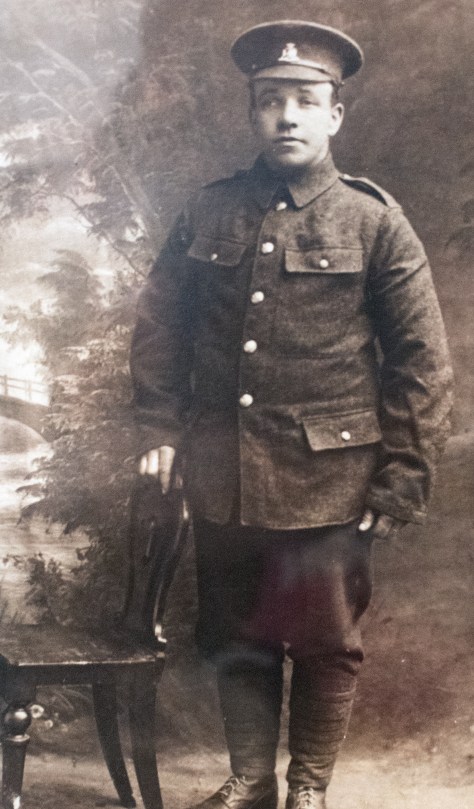

Private Leonard Drewett
(from Edington Church memorial)
Private Charles Harvey

Private Charles Harvey

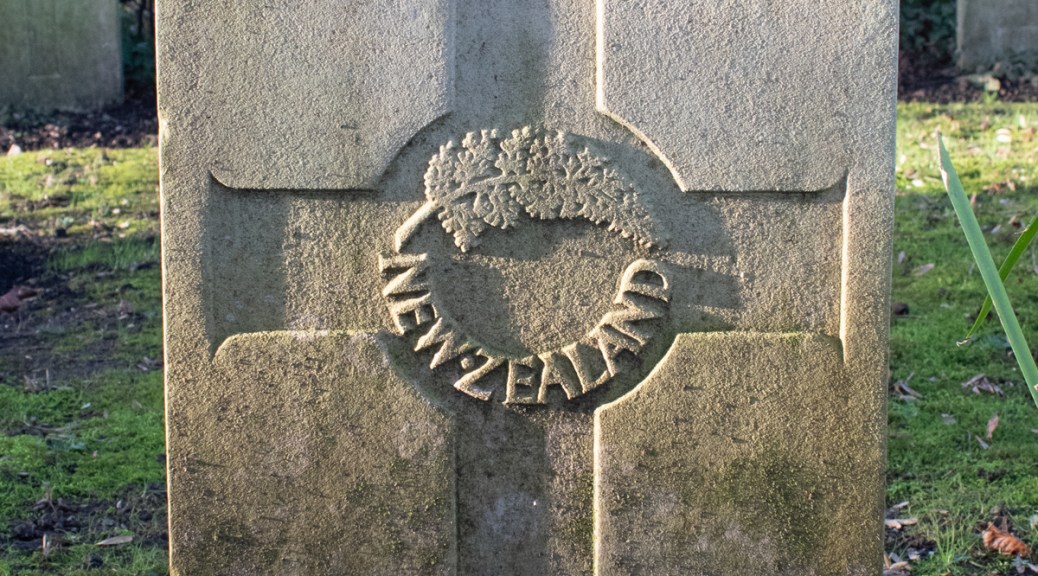
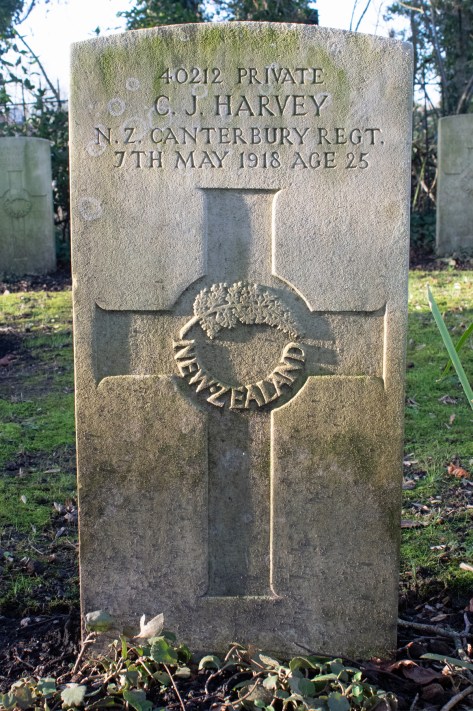
Charles John Harvey was born in Nelson, New Zealand, on 30th May 1892. Little information is available about his early life, but documents give his parents as George and Eleanora Harvey.

Charles was working as a general labourer when war broke out, and was called upon to play his part on 19th October 1916. Attached to his country’s Canterbury Regiment, his medical report showed that he was 5ft 6ins (1.68m) tall, and weighed 11st 2lbs (70.8kg). An Anglican, he was recorded as having dark brown hair, blue eyes and a dark complexion. He was noted as having no vaccination marks.

This fact that Private Harvey hadn’t been vaccinated would come back to haunt him. Sent to an army camp in Trentham, near Wellington, within a matter of weeks he was hospitalised with measles. He remained admitted until 13th December 1916, when he was discharged back to his unit.

It was not until 2nd April 1917, that Private Harvey would set sail for Britain. The journey from Wellington to Devonport would take ten weeks, and Charles was marched in to camp at Sling, Wiltshire, on 10th June that year.

Assigned to the 2nd Company of the 2nd Battalion, Private Harvey finally arrived in France on 27th August 1917. He served on the Western Front for a couple of months, before falling ill again. This time it was influenza that had incapacitated him, and he was admitted to a hospital in Le Tréport for a month while he received treatment.

Charles’ recovery was to be a slow one and, in the end, he was medically evacuated to Britain for ongoing medical support. By February 1918, he had spent time in four different hospitals and, intriguingly, had forfeited three days’ pay for going AWOL while a patient in a medical facility in Hornchurch, Essex. By the start of April 1918, Private Harvey was discharged to the ANZAC camp in Codford, Wiltshire.

His health issues were not over, however, and, on 21st April, Charles was taken in to the No. 3 New Zealand General Hospital in near the Codford camp. He was suffering from acute nephritis, and this would ultimately prove fatal. Private Harvey died on 7th May 1918: he was 25 years of age.

The body of Charles John Harvey was laid to rest in the graveyard extension of St Mary’s Church, Codford.


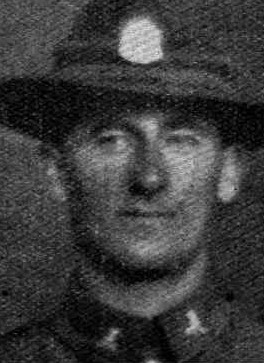
Private Charles Harvey
(from findagrave.com)

Able Seaman Percy Nicholls

Able Seaman Percy Nicholls

Percy Walter Nicholls was born in West Ham, Essex, on 10th July 1898. One of seven children, he was the fourth son to Ernest and Selina Nicholls. Ernest was a carman for the local iron works, and the family lived close to the factory, in rooms at 28 Rocher Road.

The 1911 census recorded that the growing family had moved to 185 North Woolwich Road. Three of the family were employed by the iron works: Ernest and his oldest son Ernest Jr as carmen, while second son George was an iron worker. Percy, just twelve years of age, was still at school, and the document noted that his older brother, Charles, was unable to work as he had been epileptic since birth.

Percy chose a different route for himself when he left school, taking up work as a farm hand. He was after bigger and better things, however, and, on 17th June 1914 he joined the Royal Navy. Too young to formally enlist at that point, he was given the rank of Boy 2nd Class, and sent to HMS Ganges, the training base near Ipswich, Suffolk, for his induction.

It appears that Percy impressed his superiors: he was promoted to Boy 1st Class in January 1915, and was given a posting on board HMS Centurion, a dreadnought battleship, on the 20th March. She would remain his home for the next two years, during which time he came of age.

Now able to formally enlist, Percy was given the rank of Ordinary Seaman, his papers showing the young man he had become. He was noted as being just under 5ft 3ins (1.59m) tall, and had dark brown hair, dark brown eyes and a fresh complexion. He was also recorded as having a scar on his right eyebrow.

Centurion patrolled the waters around Scotland, and took part in the Battle of Jutland at the end of May 1916. Percy was proving to be a steady worker and, on 22nd February 1917, he was promoted to Able Seaman. His time on board the battleship was coming to a close, however, and, on 1st September 1917, he disembarked at HMS Pembroke, the Royal Naval Dockyard in Chatham, Kent.

The base was a busy and overcrowded place at that point in the war. The sinking of the Vanguard left its replacement crew shore-bound while they awaited their next assignments, and an outbreak of meningitis meant that temporary accommodation was needed to space out the men, and, with luck, slow the spread of infection. Able Seaman Nicholls found himself billeted in the dockyard’s Drill Hall.

On the night of the 3rd September 1917, the German air force carried out a daring raid on the North Kent Coast. Dozens of bombs were dropped on Chatham, two of which landed unplanned direct hits on the Drill Hall. The glass roof shattered showering the sleeping men below with deadly shards. Able Seaman Nicholls was badly injured, and taken to the Royal Naval Hospital in the town.

Percy’s wounds would ultimately prove fatal. He died from his injuries on 8th September 1917: he was just 19 years of age.

The body of Percy Walter Nicholls was taken back to Essex for burial. He was laid to rest in the East London Cemetery, Plaistow, a couple of miles from where his family were now living, on Ellesmere Road, West Silvertown.


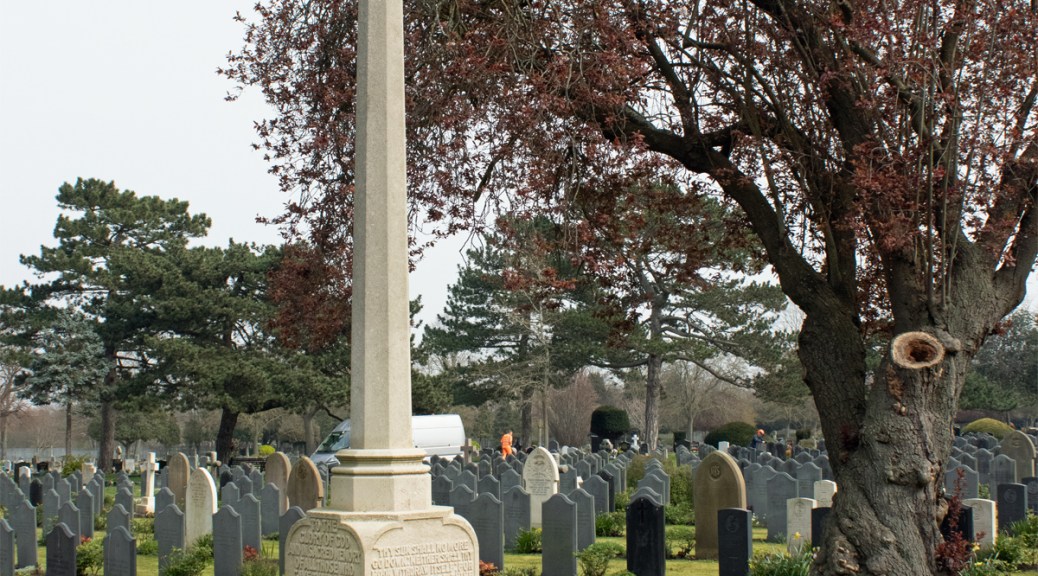
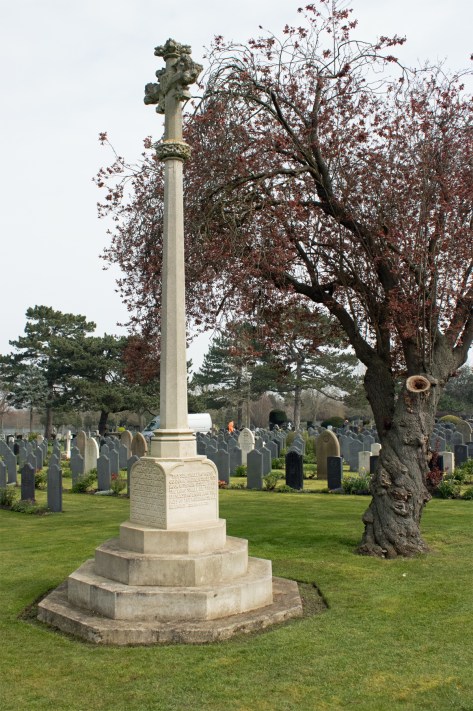
[Note: the photo above is of the memorial to the Chatham Air Raid victims, close to the mass grave for those whose bodies were not identified, in Woodlands Cemetery, Gillingham, Kent.]


Stoker 1st Class Alfred Moss

Stoker 1st Class Alfred Moss

Alfred George Moss was born in West Ham, Essex, on 14th February 1885. One of eight children, his parents were John and Sarah Moss. John was a leather worker, but Alfred initially found work as a butcher’s assistant when he completed his schooling.

Butchery wasn’t the career that Alfred sought, however, and, on 12th November 1903, he enlisted in the Royal Navy as a Stoker 2nd Class. His service papers note that he was 5ft 9ins (1.75m) tall, with brown hair, hazel eyes and a fresh complexion. He was also recorded as having a scar on both knees.

Stoker Moss was sent to HMS Acheron, a training ship based on the Thames Estuary, for his initial service. He stayed there until July 1904, when he was given his first sea-going assignment, on board the cruiser HMS Terpsichore. She would remain his home for the next eighteen months, during which he was promoted to Stoker 1st Class.

Alfred seems to have been a steady worker, his annual reviews noting a very good character. In November 1908, having come to the end of his five-year contract, he was stood down to reserve status. He had served on four vessels and, when not at sea, HMS Pembroke, the Royal Naval Dockyard in Chatham, Kent, became his home from home.

Alfred is missing from the 1911 census, but turns up on 21st December 1913. On that day he married Ellen Lipscombe in All Saints’ Church, West Ham. Nellie, as she was known, was the oldest of seven children to plasterer Tomas Lipscombe. The couple set up home on Grafton Road, Plaistow, and went on to have a son, Thomas, the year after exchanging vows.

When war was declared, Alfred was called back into service. He returned to Pembroke, and spent the next year split between there and HMS Victory, the Royal Naval Dockyard in Portsmouth, Hampshire. In the summer of 1915, Stoker 1st Class Moss was assigned to the cruiser HMS Europa. For the next two years, he would be based in the Eastern Mediterranean, supporting the troops in and around the Gallipoli peninsula.

By the summer of 1917, Alfred was back at Pembroke, which, by this point in the war, was a busy and overcrowded place. The sinking of HMS Vanguard meant that her replacement crew were stuck in port waiting to be reassigned, and an outbreak of meningitis demanded more space to slow or stop its spread. Stoker 1st Class Moss found himself barracked in overflow accommodation set up in the dockyard’s Drill Hall.

On the night of the 3rd September 1917, German bombers launched an audacious raid on the North Kent Coast. Two bombs landed on the Drill Hall, shattering its glass roof, and killing dozens of sleeping servicemen beneath. Stoker 1st Class Moss was one of those who lost his life: he was 32 years of age.

The body of Alfred George Moss was taken back to Essex for burial. He was laid to rest in West Ham Cemetery, not far from where his grieving widow and young son were living.


[Note: the photo above is of the memorial to the Chatham Air Raid victims, close to the mass grave for those whose bodies were not identified, in Woodlands Cemetery, Gillingham, Kent.]


Leading Seaman Alfred Gladwell

Leading Seaman Alfred Gladwell

Alfred Eldred Gladwell was born in Clacton-on-Sea, Essex, on 15th November 1885. The oldest of three children, his parents were Eldred and Emma. Eldred was a bricklayer, and his son followed him into that trade.

Away from labouring, Alfred also took time to join the Royal Naval Reserve. He enlisted on the 8th January 1910, his service papers showing the young man he had become. He was noted as being 5ft 11.5ins (1.82m) tall, with blue eyes and a fair complexion. He was also noted as having a scar on his left leg.

Alfred’s time at sea was focused on the Essex coast, with trips to Colchester, Brightlingsea, and across the Thames to Chatham, Kent. By the time that war was declared in 1914, he had risen to the rank of Leading Seaman and, being on reserve status, he was called into action when hostilities commenced.

Leading Seaman Gladwell was sent to HMS Pembroke – the Royal Naval Dockyard in Chatham – and this would remain his base during the conflict. In February 1915, he was assigned to the SS Palma, which served off the Spanish coast. By the summer of 1917, however, Alfred was back at Pembroke to await his next posting.

The dockyard was overly busy that summer, with a replacement crew for HMS Vanguard waiting to be reassigned following its sinking and an outbreak of meningitis to contend with. Leading Seaman Gladwell was billeted in temporary accommodation that had been set up in the dockyard’s Drill Hall.

On the night of 3rd September 1917, Chatham suddenly found itself in the firing line as a wave of German aircraft bombed the town. The Drill Hall received direct hits from two bombs, and Leading Seaman Gladwell was one of dozens of men to be killed. He was 31 years of age.

The body of Alfred Eldred Gladwell was taken back to Essex for burial. He was laid to rest in Clacton Cemetery, not far from where his family was still living.


[Note: the photo above is of the memorial to the Chatham Air Raid victims, close to the mass grave for those whose bodies were not identified, in Woodlands Cemetery, Gillingham, Kent.]


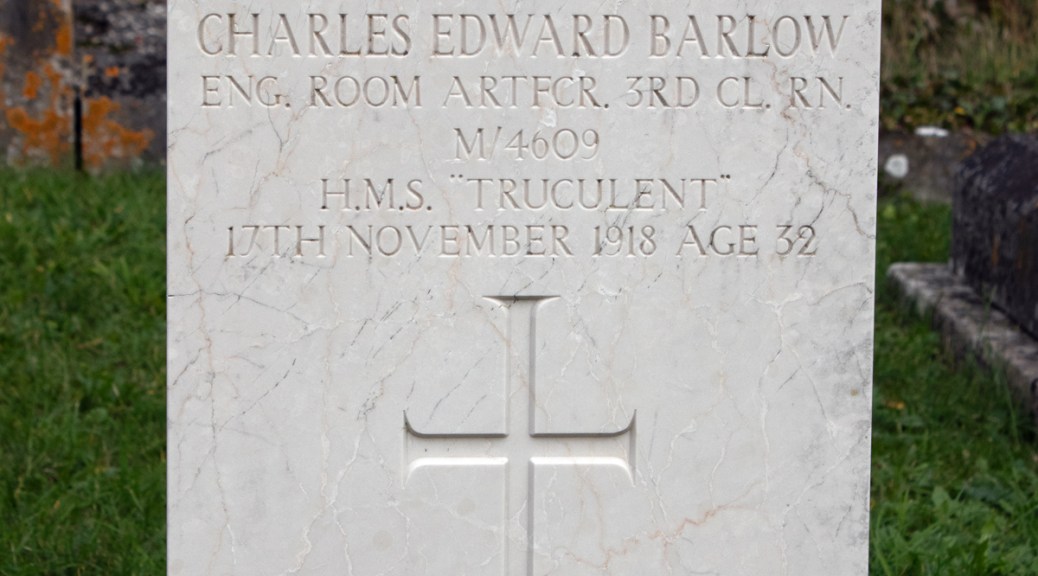
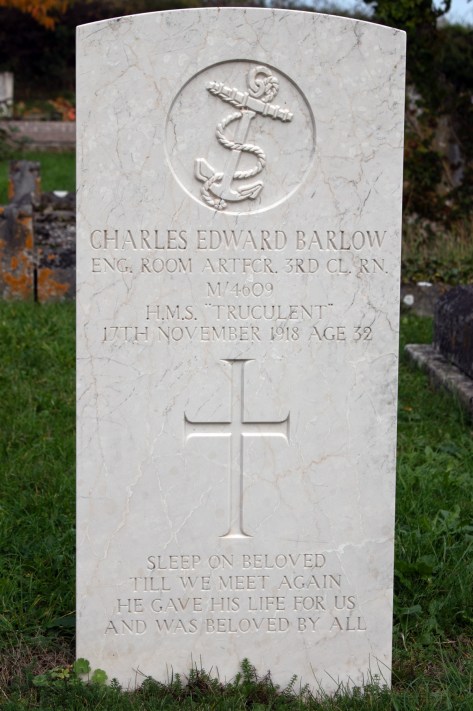
Engine Room Artificer 3rd Class Charles Barlow

Engine Room Artificer 3rd Class Charles Barlow

Charles Edward Barlow was born on 3rd January 1886, and was the second of eight children to John and Agnes. John was a Serjeant Major in the Royal Fusiliers, and his work meant the family moved a lot. Charles and his older brother were born in Dublin, Ireland, while Agnes gave birth to his younger siblings in Essex, Ireland, Hampshire and London.

John died in the late 1890s, and the 1901 census found Agnes and four of the children – including Charles – living at 18 Ethel Road, a small terraced cottage in the centre of Portsmouth, Hampshire. Agnes was listed as a shirt maker, while Charles was apprenticed to a boiler maker.

The apprenticeship obviously stood Charles in good stead, and he later found employment as the local dockyard, HMS Victory. The 1911 census recorded mother and son living at 124 Ernest Road, in the Buckland area of Portsmouth. Slightly further from where Charles was working, this was, however, a larger property.

A new opportunity presented itself in the spring of 1912, when Charles formally enrolled in the Royal Navy. His engineering background served him well, and he took the rank of Engine Room Artificer 4th Class. Initial training was provided at Portsmouth Dockyard, and he then moved to the neighbouring bases HMS Fisgard that autumn, and HMS Dryad in February 1913.

After a two month posting on board the torpedo gunboat HMS Harrier, Charles would return to shore in the summer of 1914. On 1st January 1915, however, he was assigned to the depot ship HMS Dido, and she would remain his home for nearly four years. During this time, he was promoted to Engine Room Artificer 3rd Class.

In the autumn of 1918, with the war in its final weeks, Charles fell ill. He was disembarked and admitted to the War Hospital in Bath, suffering from pneumonia. The condition would prove his undoing, and he passed away on 17th November: he was 32 years of age.

The body of Charles Edward Barlow was taken to Bradford on Avon for burial, possibly due to a familial connection in the area, and he was laid to rest in the town’s cemetery.


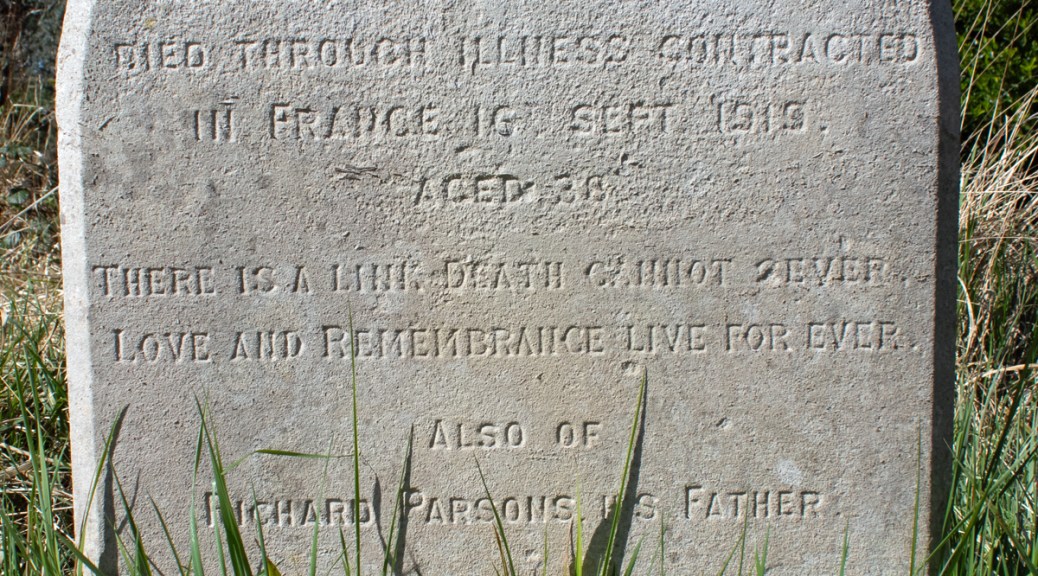
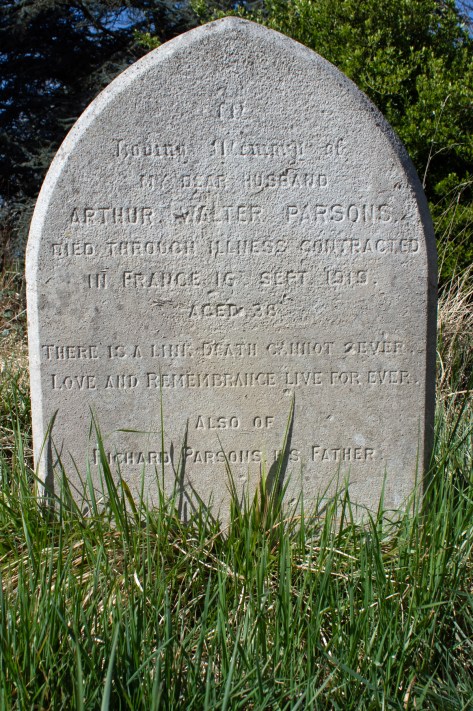
Driver Arthur Parsons

Driver Arthur Parsons

Arthur Walter Parsons was born in Broadwater, West Sussex, in the autumn of 1881. The fourth of nine children, his parents were Richard and Clara Parsons. Richard was a carter, and by the time of the 1891 census, the family had moved into Worthing, and were living at 64 Montague Street, a stone’s throw from the sea.

Richard died in 1899, and the following spring, Arthur married Emily Eagleton. She was the daughter of a domestic servant, and seems to have been born in Poplar Workhouse, Middlesex. The 1891 census found her as a boarding student at St Agatha’s Home Institute in Great Barlow, Cambridgeshire, but by the time here and Arthur exchanged vows, she too was living in Worthing. Their marriage certificate shows that Emily was three years older than her husband, and that he was working as a carter, and living at 23 Clifton Road when they married.

The next census record, taken in 1901, recorded the Parsons living at 25 St Dunstan’s Road in Tarring. Arthur was a carter, and the couple shared their home with Alice, Emily’s daughter and Arthur’s stepdaughter.

By the time of the next census, Arthur and Emily had moved closer to the town centre, and were living at 96 Station Road. Arthur was still employed as a carter – possibly connected to the railway at the end of his road – and was supporting his wife and their three children – Alice (now called Edith), Arthur and Hilda.

When war broke out, Arthur stepped up to play his part. His service papers have been lost to time, but it is clear that he enlisted in the Royal Field Artillery as a Driver, presumably because of his experience with horses. By 27th June 1915, he found himself in France. It is unclear exactly how or where Driver Parsons served, but his unit had moved to Mesopotamia by the start of 1916.

Arthur survived the war, and returned home to his family, which now included another son, Cecil, who had been born in 1915. It would seem that Driver Parsons’ health had become impacted, however, and he would be discharged from the army in 1919. That autumn, on 16th September, he would breath his last, passing away at the age of 38.

The body of Arthur Walter Parsons was laid to rest in Broadwater Cemetery, a short walk from where his grieving family still lived, in Station Road.


Emily was pregnant when her husband died: son Ronald Walter Parsons was born in December 1919. She would find love again, and married railway porter Arthur Browning in December 1929. The 1930 Register found them living at 81 Tarring Road, Worthing with her daughter Rose and son, Cecil.

The Second World War would bring Emily further tragedy. Ronald, who had never known his father, was serving in the Royal Navy, and attached to the destroyer HMS Grenville. She struck a mine off the Essex coast on 19th January, and he was killed. He was just 20 years of age.

The following year, Emily’s husband Alfred also died, passing away at home at the age of 66. Emily lived another eight years, and died in the spring of 1949, aged 69 years old.


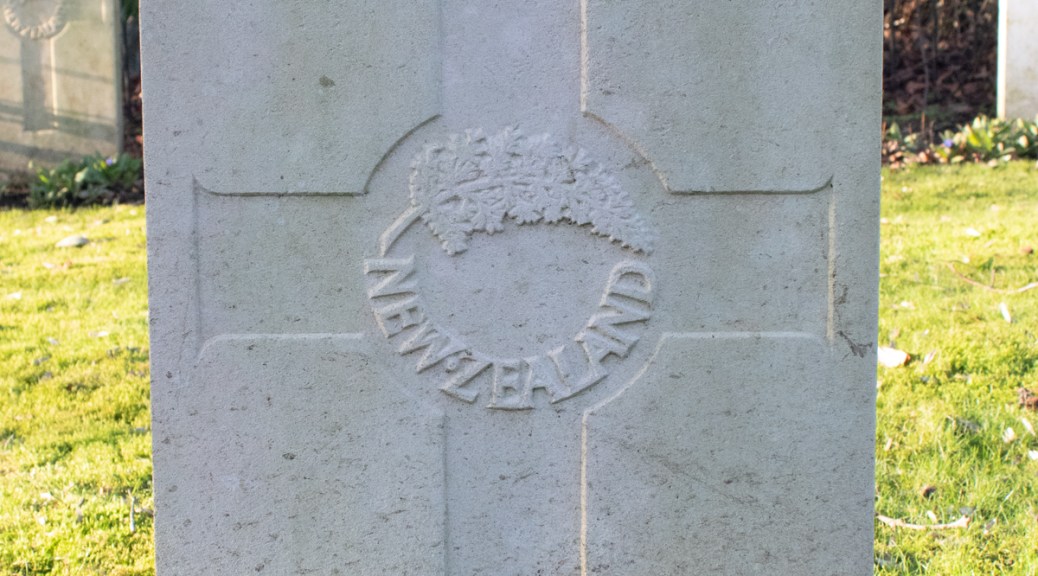
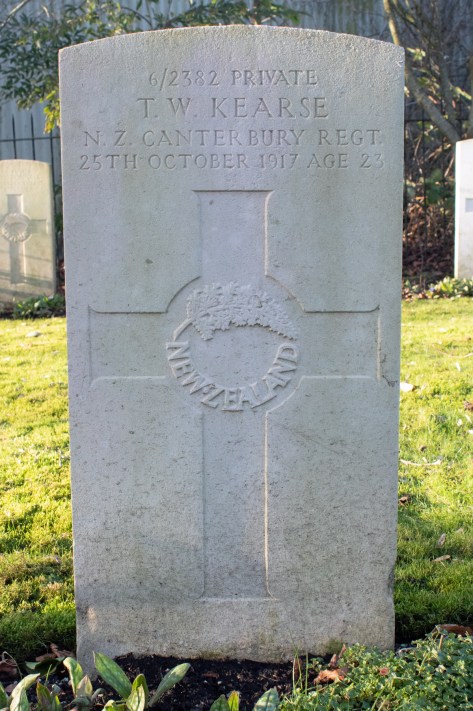
Private Thomas Kearse

Private Thomas Kearse

Thomas Walker Kearse was born in Westport, New Zealand, on 15th December 1891. One of seven children, his parents were British emigrant Thomas Kearse and his local-born wife, Rosanna.

There is little information available about Thomas’ early life. He found work as a general labourer when he finished his schooling, by which time his mother had passed away. By his mid-20s, he had relocated to Kaikohe, on North Island.

When war broke out, Thomas stepped up to play his part. He enlisted in Trentham on 16th February 1915, and was assigned to the New Zealand Canterbury Regiment. Private Kearse’s medical examination noted that he was just over 5ft 6ins (1.68m) tall, and weighed 139lbs (63kg). He had light hair, blue-grey eyes and a fair complexion. He was also noted as having a scar on his right shin.

Private Kearse would be in the army for two-and-a-half years, but would experience enough warfare for a lifetime. On leaving New Zealand his unit made for the Dardanelles, arriving there on 16th August 1915. He was wounded early on, and medically evacuated to Malta. His injuries would need further treatment, however, and he was shipped to Britain, and sent to hospital in Birmingham.

Thomas spent time recuperating at a base in Hornchurch, Essex, and it would seem that, while here, he met Catherine Goodwin. A romance started, but Thomas was sent to re-join his unit, who were barracked in Egypt. Within a month, however, he was on the move again, arriving in France in April 1916. While there, he went absent without leave for two days, and forfeited a month’s pay as a result.

In October, Private Kearse was wounded in the head and arm by gunfire, and, after initial treatment in Rouen, he was medically evacuated to Britain. Admitted to the 3rd Southern General Hospital in Oxford, he would remain here for the next month. He was then sent to the ANZAC base in Codford, Wiltshire, again to recuperate, but, while there, he was admitted to the camp’s venereal unit for a fortnight.

Discharged again, his condition had not cleared up: Thomas was back in hospital on 5th December 1916, and he spent a further two weeks admitted.

On his latest discharge, Private Kearse was marched to Sling Camp, near Bulford, where he took up a role as cook. He would remain there for the next four months and, during this time, he and Catherine exchanged vows. She had given birth to a daughter, Ivy, the previous October, and this helped formalise their family unit.

Over the next few months, Thomas’ life repeated itself. He was admitted to hospital in Codford again in June 1917, and went AWOL for 26 hours on 27th/28th July (for which he was docked four days’ pay). Discharged from hospital on 4th September, he was marched back to the Sling Camp.

Within six weeks, however, he was sent back to hospital in Codford, this time suffering from pneumonia. This time, Thomas would not be as fortunate. The lung condition got the better of his, and he passed away on 25th October 1917, at the age of 25 years old.

The body of Thomas Walker Kearse was laid to rest in the ANZAC extension to St Mary’s Churchyard in Codford, not far from the hospital he had visited so many times.


Leading Telegraphist Leonard Wort

Leading Telegraphist Leonard Wort

Leonard James Wort was born in the Wiltshire village of Woodfalls, on 28th September 1888. He was the second of eleven children – and the oldest son – to James and Annie Wort.

James was a sawyer, but Leonard sought a better life for himself. Initially finding work as a blacksmith’s mate when he completed his schooling, but took up a career in the Royal Navy at the start of 1907. Employed as a Stoker 2nd Class, documents show that he was 5ft 6.5ins (1.69m) tall, and that he had brown hair, hazel eyes and a fresh complexion. He was also noted as having scars on the thumb and finger of his left hand.

Leonard was sent to the training ship HMS Nelson for his initial induction. He remained there for four months, before being given his first sea-faring appointment, on board the cruiser HMS Spartiate. Over the next seven years, he would serve on nine ships in total, but his service took an unexpected route.

In February 1908, Leonard was promoted to Stoker 1st Class, and the next expected progression would have been to Leading Stoker. However, year later, while serving on HMS Hindustan, he took a different route, and became a Telegraphist. He appears to have enjoyed this role, and been more than capable of carrying it out: his annual reviews noted his superior ability on more than one occasion.

Over the next few years, Leonard spent time at HMS Victory – the Royal Naval Dockyard in Portsmouth, Hampshire – presumably to receive the training needed to undertake his role. At the start of 1911, he was promoted again, taking the rank of Leading Telegraphist.

Away from the sea, love was blossoming. Leonard had met Florence Bysouth, a casemaker’s daughter from Bankway, Hertfordshire. The couple exchanged their vows in Bromley, Kent, but had set up home in Poplar, East London.

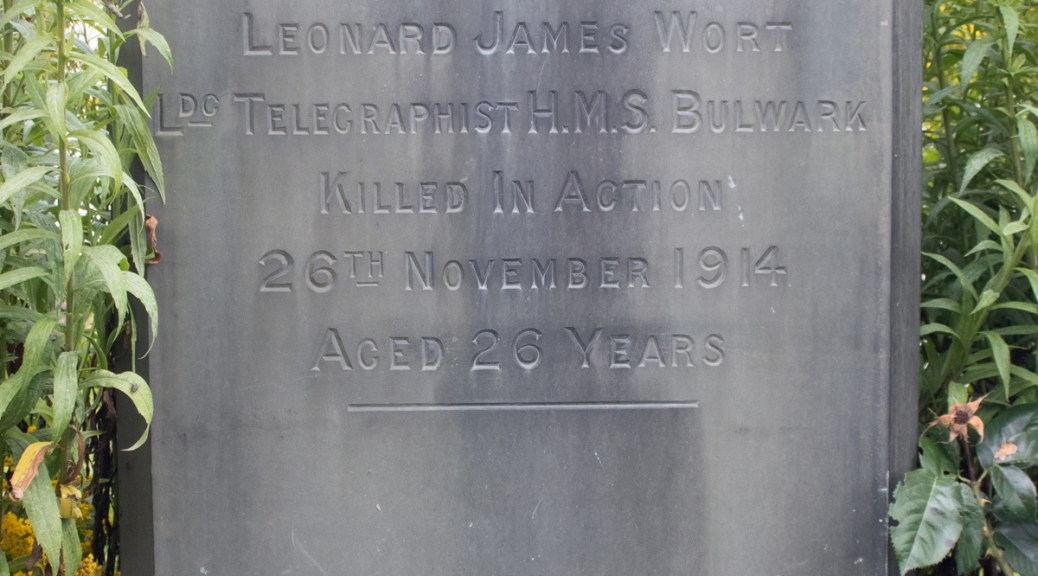
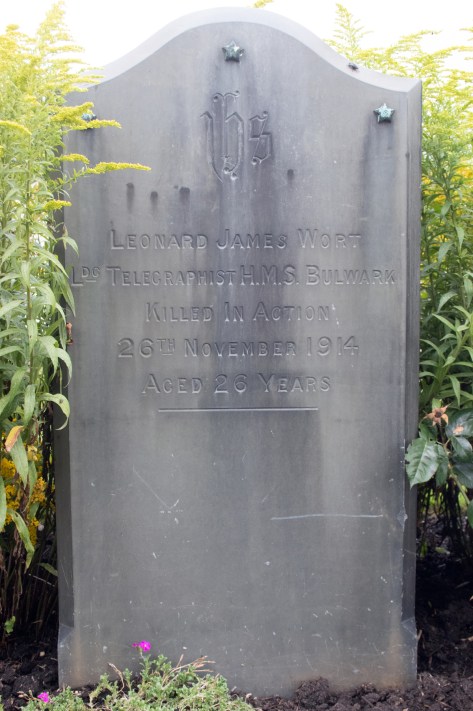
In November 1912, Leading Telegraphist Wort was assigned to the pre-dreadnaught battleship HMS Bulwark. Part of the Channel Fleet, she was tasked with patrolling the southern coasts of Britain. On 26th November 1914, Bulwark was moored in the River Medway, close to Sheerness, and was being stocked with shells and ammunition. That morning, some of the cordite charges overheated, detonating the shells stored nearby. The resulting explosion ripped through the battleship, and more than 740 crew were killed. The body of Leading Telegraphist Wort was recovered: he was 26 years of age.

Those who were killed in the explosion were laid to rest during a mass funeral in Woodlands Cemetery, Gillingham, Kent. As his body had been identified, Leonard James Wort was laid to rest in a marked grave.


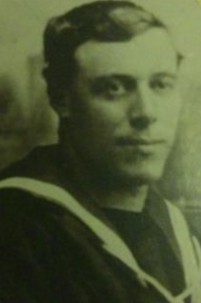
Leading Telegraphist Leonard Wort (from findagrave.com)

Leonard was not the only one of the Wort sons to sacrifice his life during the First World War. His younger brother, Alfred, also enlisted in the Royal Navy, giving up his role as footman and valet to serve as an Officer’s Steward.

Alfred’s service records show that he was attached to HMS Vivid – the Royal Naval Dockyard in Devonport – when, on 4th April 1918, he drowned. He was 26 years of age, and left a widow and son.


Second Lieutenant Arthur Taylor

Second Lieutenant Arthur Taylor

Arthur Rowland Taylor was born on 21st March 1896 in Ilford, Essex. He was the third of five children – all of them boys – to land agent Robert Taylor and his wife, Edith. Robert’s work took the family around the country: the 1901 census found them living in Connah Quay, Flintshire, and this is where Arthur’s two younger brothers were born.

By 1911, the family had moved again, to the 15-roomed Bagle Gate House in Bridlington, Yorkshire. Robert and Edith were living with their three youngest children – including Arthur – and two servants: cook Sarah Leatham and housemaid Lucy Patchett.

At some point after leaving school, Arthur was also drawn to a new adventure. By the time war broke out, he had moved to America and settled in Denver, Colorado.

In June 1917, with war raging across Europe, Arthur had stepped up to play his part. He crossed the border to Toronto, Canada, and enlisted in as an Air Mechanic 3rd Class in the Canadian Royal Flying Corps. Sent to Britain, just three months later, he accepted a commission, taking the rank of Second Lieutenant in the British Royal Flying Corps.

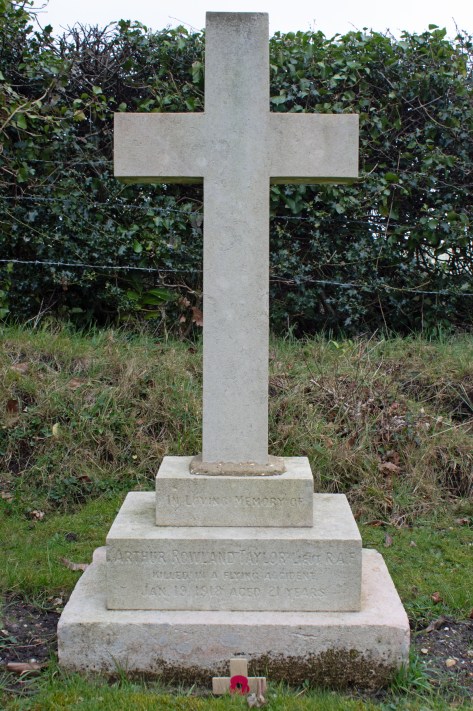
Arthur was based in East Boldre, Hampshire, and was attached to the 79th Training Squadron. On 19th January 1918, he had taken off in his Sopwith 5F1 Dolphin, when the engine stalled. He did not have enough height to try and restart the engine, and the aircraft crashed to the ground, bursting into flames on impact. Second Lieutenant Taylor was killed: he was 21 years of age.

The body of Arthur Rowland Taylor was laid to rest in the peaceful graveyard of St Paul’s Church in East Boldre, not far from the base at which he had served.