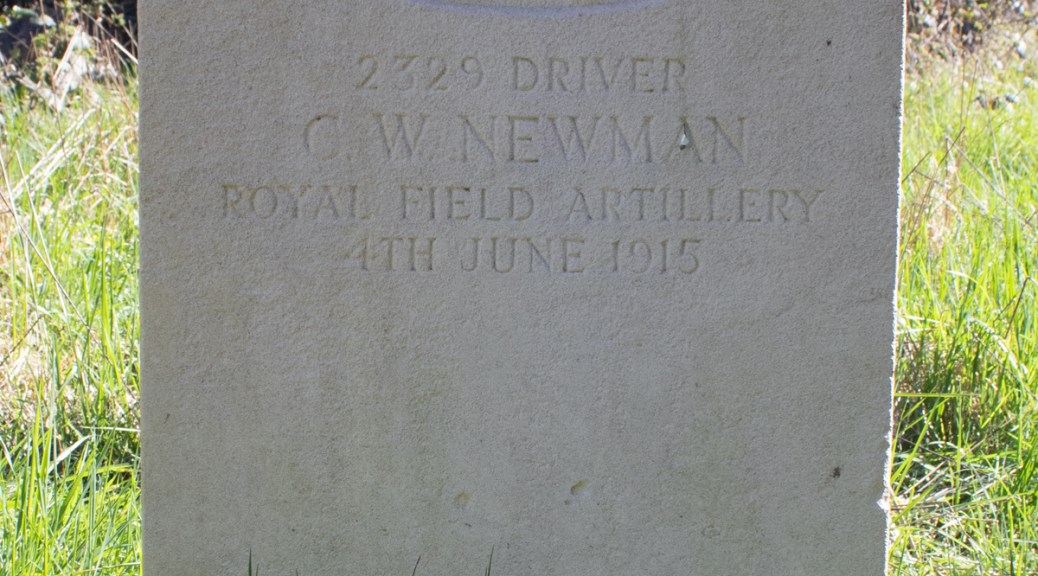
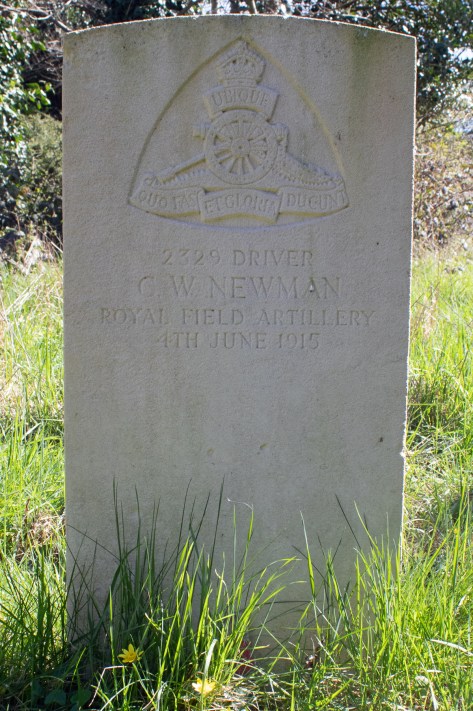
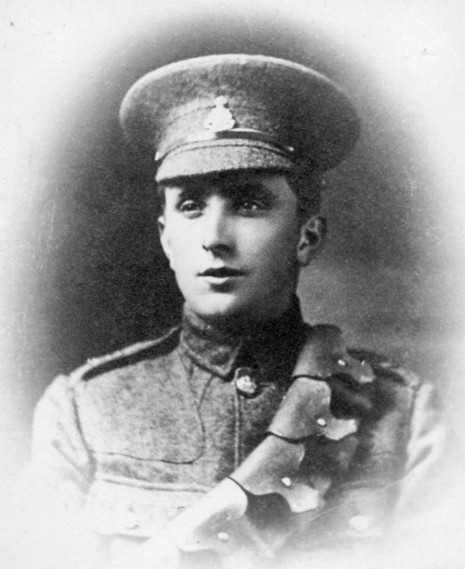
Charles William Newman was born in Worthing, West Sussex, on 16th April 1880. The younger of two children, he was the only son of John and Eliza Newman. John worked as a plasterer, and the family boarded with Mary Ann Brooker, initially on Stanhope Road, then at Campion Terrace, off Worthing High Street.
By the time of the 1901 census, John and Eliza were living in a place of their own, a terrace house at 14 Lennox Road. Charles had completed his schooling by this point, and was employed as a house painter. Eliza was working as a dressmaker, and the Newmans had a lodger, hawker Harry Fielder.
On 11th October 1903, Charles married Ellen Stilwell. Eight years her new husband’s senior, she was a shepherd’s daughter. The couple married in St Botolph’s Church, to the west of Worthing town centre. The couple would not go on to have any children, and the 1911 census found them living at 24 Lanfranc Road, a small terraced cottage, near West Worthing station.
Charles was still employed as a house painter, but had also taken up work as a member of the ground staff at Worthing Sports Ground. When war broke out, however, he stepped up to serve his country, enlisting in the Royal Field Artillery in the early months of the conflict.
When information last reached us concerning certain local members of the Home Counties Brigade of the Royal Field Artillery, they were at Slough, but recently they were transferred to Westerham, in Kent, where a fatal accident occurred to one of their number, Driver Charles William Newman… who was killed by a runaway horse.
His widow was one of the witnesses examined at the Inquest, and the evidence revealed the fact that the horse was attached to a water van which Newman himself was driving.
Newman… was expected to go home on short leave on Friday, the day of the accident, to see his wife.
[Worthing Gazette: Wednesday 9th June 1915]
Driver Charles William Newman was 35 years old when he died, on 4th June 1915. His body was taken back to Sussex for burial, and he was laid to rest in Broadwater Cemetery, a short walk from where Ellen was still living.
Simeon Tulley was born in Caterham, Surrey, in the summer of 1891. The middle of five children, he was the oldest son to Simeon and Mary Tulley. Simeon Sr was a farmer, and the family moved to where his work took him. The 1901 census found the Tulleys living in Keymer, Sussex, while the next return, taken in 1911, recorded them at Blackbrook Farm, near Hassocks, Sussex.
When Simeon Jr finished his schooling, he also found work on the farm. At the outbreak of war, however, he stepped up to serve his country. His service records have been lost to time, but he had joined the 15th (The King’s) Hussars during the open weeks of the conflict.
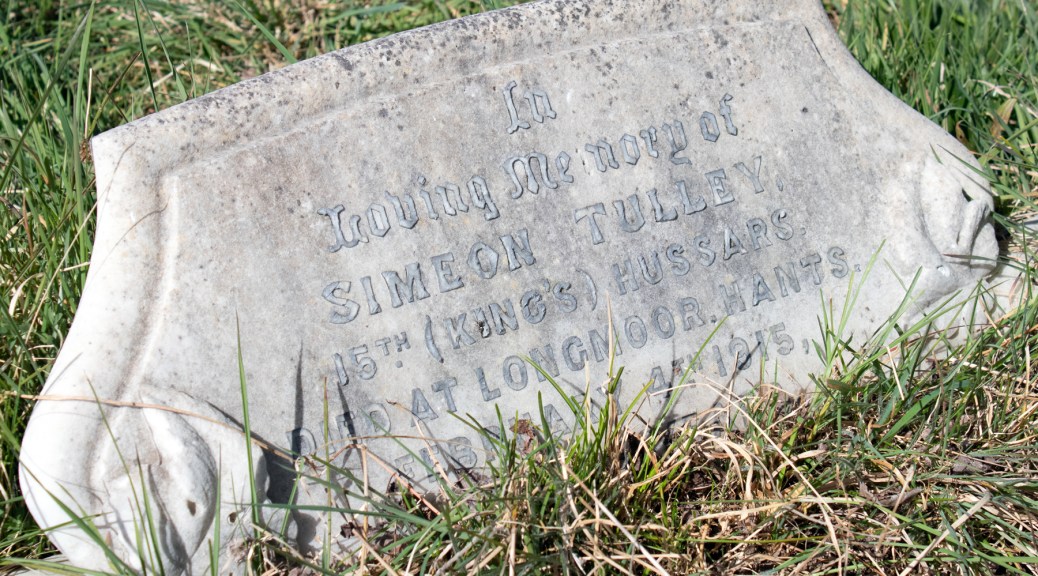
Private Tulley was sent to Longmoor Camp, near Petersfield, Hampshire, for his training and it is at this point that his trail goes cold. He passed away on 4th February 1915, at the age of 23 years old.
The body of Simeon Tulley was taken back to Sussex for burial. The family had moved to Coates Farm, Durrington, by this point, and he was laid to rest in Broadwater Cemetery, Worthing.
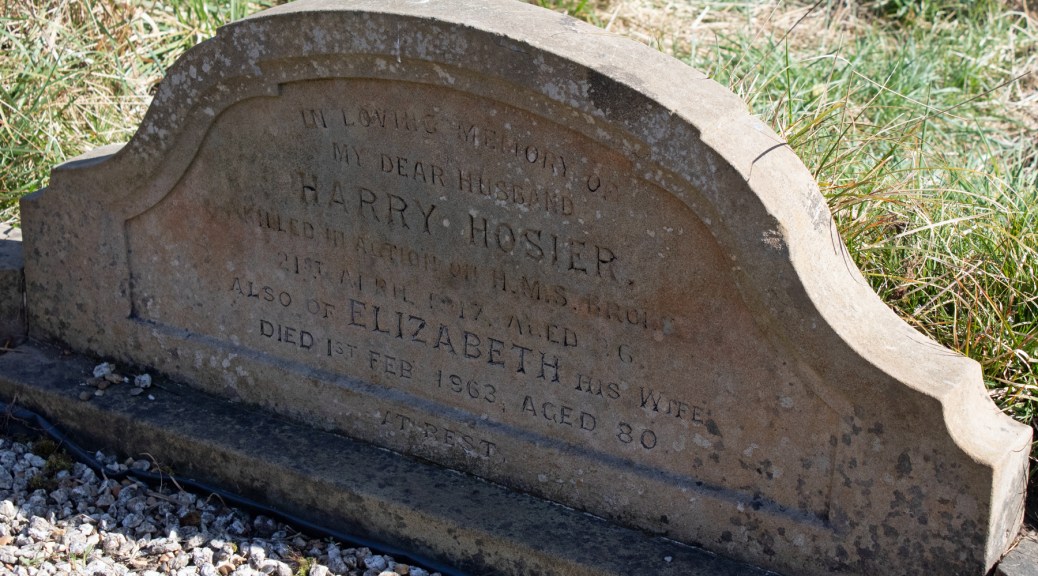
Henry – or Harry – Hosier was born on 22nd September 1880 at 2 Wenban Terrace, Worthing, West Sussex. The fourth of ten children, his parents were Charles and Elizabeth. Charles was a jack of all trades, working as a carman for the railway in 1881, and a gardener by 1891. That census recorded that the family had moved to 1 Ham Road, in East Worthing, and that Charles was the only person bringing money into the household.
When Harry completed his schooling, he found work as a coachman. On 3rd November 1900 he married Elizabeth Jenkins at Christ Church in Worthing town centre. Elizabeth was living in nearby Broadwater when the couple exchanged vows. Her father is unknown and the surname she went by was her mother Charlotte’s first husband’s name, although he died eighteen months before she was born. Charlotte married a second time, to a Stephen Lillywhite, and, for a while her daughter was listed with his surname. By the time she married Harry, however, Elizabeth had reverted to Jenkins.
Harry and Elizabeth initially moved in with Charlotte and Stephen. By the time of the 1911 census, however, they had set up their own home on Broadwater Street, to the north of Worthing town centre. The couple would go on to have seven children, although two would pass away in infancy.
Harry was working as a cab driver by this point but, when war broke out, he would be called upon to play his part. He enlisted on 26th June 1916, joining the Royal Navy as an Ordinary Seaman. His service papers show that he was 5ft 3.5ins (1.61m) tall, with dark brown hair, brown eyes and a dark complexion. His is also noted as having a number of tattoos on his arms.
Ordinary Seaman Hosier was initially sent to HMS Victory, the Royal Naval Dockyard in Portsmouth, Hampshire, for his training. In August 1916, however, he was assigned to the destroyer HMS Broke. Fresh from the Battle of Jutland, she was part of the 4th Destroyer Flotilla, charged with protecting the English Channel.
On the 20th and 21st April 1917, Broke took part in the Battle of Dover Strait against six German torpedo boats. In the confusion of the skirmish, Broke rammed the enemy ship SMS G42, and the two vessels became locked together. For a while the crews fought in hand-to-hand combat, before the British ship managed to break free. Soon afterwards the German boat sank. Badly damaged, HMS Broke had to be towed back to Dover: 21 of the crew – including Ordinary Seaman Hosier – were killed, and a further 36 were wounded. Harry was 36 years of age.
The body of Harry Hosier was taken back to Sussex for burial, his funeral at Broadwater Cemetery, making the local newspapers:
A fallen hero of the naval fight off Dover last week was buried in Worthing yesterday with full service honours. Worthing people welcomed the opportunity to show honour to a townsman who had laid down his life in one of the most brilliant naval exploits of the war, and the occasion was unique in that the funeral was the first to take place locally during the war of a naval man killed in action. Seaman Harry Hosier was serving on the destroyer leader “Broke,” so valiantly commanded by Commander Edward Evans, CB, when he met his end. He died the death of a Briton after nobly doing his duty. The coffin was conveyed from Dover to Worthing for the funeral at the request of the deceased’s relatives. Scenes of the most impressive character were witnessed, the route of the procession being thronged from one end to the other, and several thousand people assembled at the cemetery…
The Red. EJ Elliott (Rector) officiated, and from the pulpit gave a stirring address. He said “In the course of the 700 years’ history of this church, I don’t suppose there has ever been a service quite like the present one – the funeral of a Broadwater man killed in action. Forty or more Broadwater men have already made the supreme sacrifice, and we are glad this afternoon to be able in a special way to honour these noble men. In all probability Henry Hosier will be the last in this war who will be called upon to die whose funeral will take place at home. In doing honour to whim whose mortal remains are with us this afternoon – the remains of a gallant bluejacket belonging to HMS Broke – we do honour to our two score other parishioners who at the call of duty, joined up, and are now sleeping their last sleep.
“They heard their Motherland calling to them for the help of their sons and at once, with enthusiasm and alacrity, they responded. They loved their loves as we do, but they loved something more – they had a deeper love for their country and for the safety of their homes and hearth. They died, let us remember, for us, in order that we at home might be spared the agony and the martyrdom of the Belgians and the Serbians. They died in order that we might remain safe and comfortable in the home land and not be called upon the endure the nameless agony and also the atrocities perpetrated by the Huns. We leave the soul of Henry Hosier and of our 40 other Broadwater heroes in God’s hands…”
[Sussex Daily News: Friday 27th April 1917]
Two of Harry’s siblings – Christopher and Ernest – had added to the tally of Broadwater’s forty.
Ernest Hosier was born in 1895, and was the ninth of Charles and Elizabeth’s children. He found work as an errand boy when he left school, but managed to associate himself with the wrong group of friends.
Ernest Hosier, 14, errand boy, on bail, and Frederick Clark, 21, rag and bone collector, were indicted for offences against Fanny Newman and Alice Smith, girls between 13 and 16 years of age, at Worthing, between December 1st, 1909, and March 11th, 1910.
Clark pleaded guilty and Hosier not guilty. The latter gave an absolute denial to the charge, and suggested that the girls had associated him with the charge in revenge because he would have nothing to do with them…
After hearing the evidence, the jury found Hosier not guilty, and his Lordship said he was discharged without any imputation whatever upon his character. Clark was sentenced to six months’ hard labour, his Lordship remarking that girls of the character of those in this case were a terror and a real temptation to men.
[Hastings and Bexhill Independent: Thursday 30th June 1910]
Soon after the court hearing, Ernest joined the Royal Navy, the 1911 census recording him as a boarder at the Training Establishment in Shotly, near Ipswich, Suffolk. After serving on a number of vessels, he came of age, and formally enlisted as an Ordinary Seaman on 16th October 1912. Within a year he had been promoted to Able Seaman and in the summer of 1914, he was assigned to the battlecruiser HMS Invincible.
Able Seaman Hosier was on board during the Battle of Heligoland Bight in August 1914, and the Battle of the Falklands that November. In May 1916 Invincible was involved in the Battle of Jutland, and Ernest was one of the 1,000 crew who were killed when she was was hit by a number of German salvoes and sank. Able Seaman Hosier was 21 years of age, and is commemorated on Portsmouth Naval Memorial.
Christopher Hosier was born in 1887, and was working as a cellarman when war broke out. He enlisted in the Royal Sussex Regiment, and was assigned to the 7th Battalion.
In the autumn of 1917, Private Hosier’s unit was caught up on the Western Front, as Arras and Cambrai. It was here, on 20th November 1917, that he was killed, although his body was not recovered. He was 29 years of age, and is commemorated on the Cambrai Memorial.
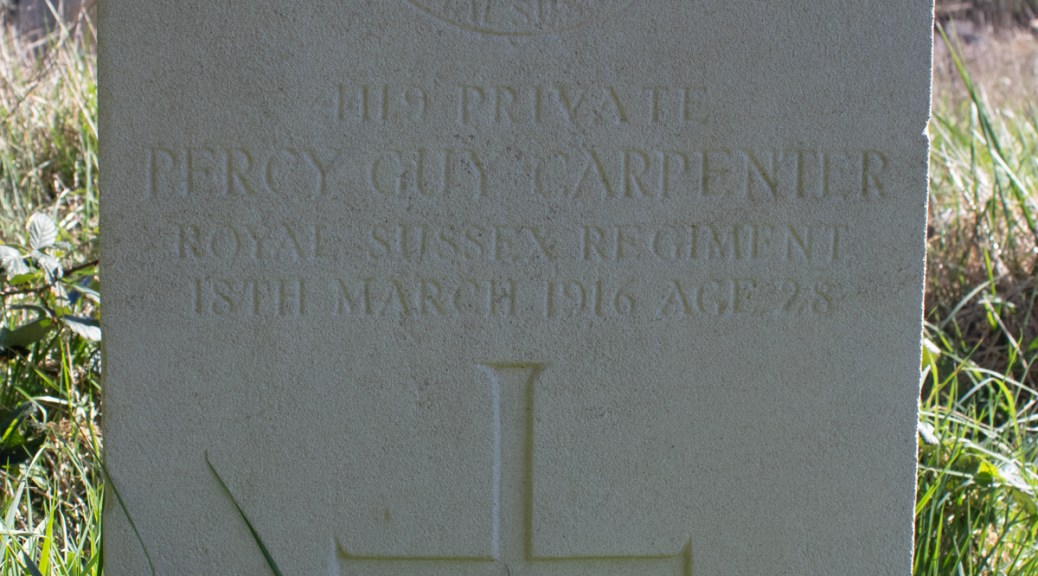
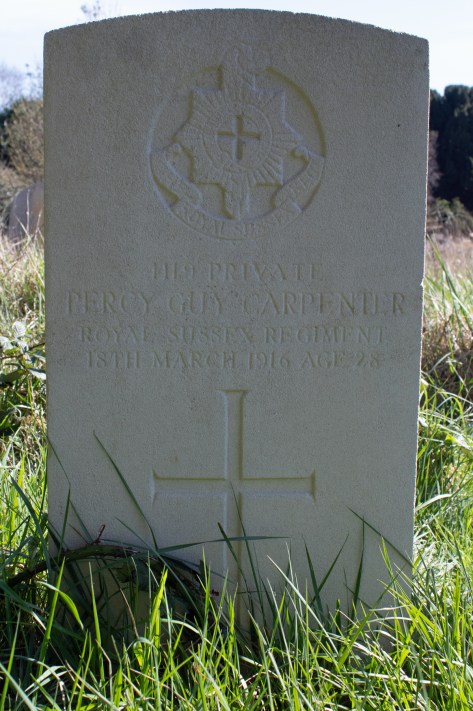
Percy Guy Carpenter was born in Worthing, West Sussex, in the autumn of 1887. One of eight children, he was the middle of three sons to Alfred and Alice Carpenter. Alfred was a chief clerk at the town’s post office, and the 1891 census found the family living on Oxford Road, to the south of the central railway station.
By the time of the next census, taken in 1901, the family had moved to a small cottage at 93 Newland Road. Alfred had changed jobs, and was noted as being the chief clerk at the local gas works. This seemed not to have been a long-term position, however. The 1911 census recorded his occupation as post office clerk (out of employment).
The Carpenter family were still living at 93 Newland Road by this point, and, of the six children who remained at home, all of them were working. Percy was employed as a tailor’s porter, while his sibling’s jobs included chemist’s stock keeper, ironmonger’s clerk and bookbinder’s apprentice.
War came to Europe in the summer of 1914, and Percy would be called upon to serve his country. Little information about his time in the army remains, but it is clear that he enlisted in the Royal Sussex Regiment at some point early in 1915.
Attached to the 2nd/4th (Cinque Ports) Battalion, Private Carpenter found himself in France by the end of March. He remained overseas for a year, but, while there, he contracted pneumonia. Medically repatriated to Britain for treatment, Percy was admitted to the 1st Eastern General Hospital in Cambridge, but died from a combination of pneumonia and nephritis on 18th March 1916. He was 28 years of age.
The body of Percy Guy Carpenter was taken back to Sussex for burial. He was laid to rest in Broadwater Cemetery, not far from where his family still lived in Worthing.
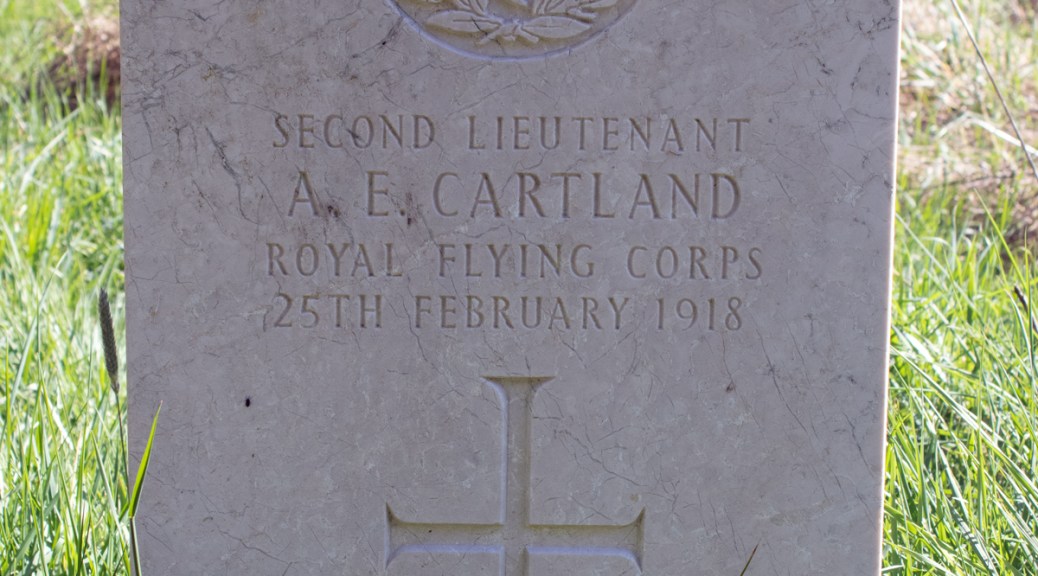
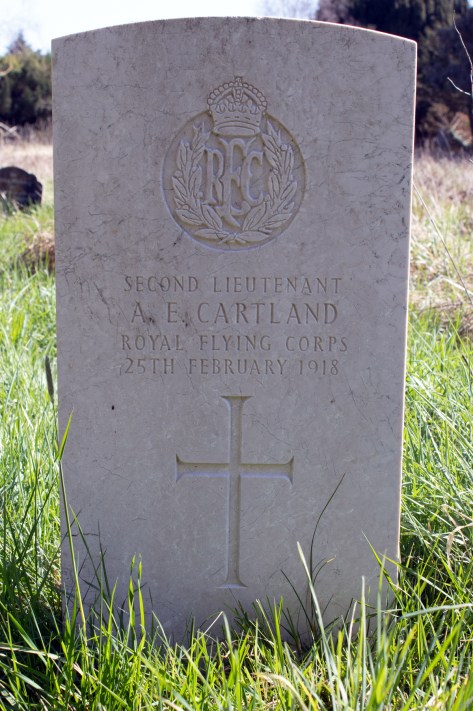
Military honours were accorded at the funeral, on Saturday, of Lieutenant Arthur Edwin Cartland, of the Royal Flying Corps, who was killed in a flying accident near Newcastle.
The deceased officer was a son of Mrs FA Cartland, of Wentworth House, Western-place, and although only twenty-one years of age, he had seen considerable active service in France, having joined the Flying Corps in July, 1913, or some thirteen months before the outbreak of the War.
He took up his Commission in September last, and was home on leave only three days before his death, in order to see his brother, who is in the Motor Transport Section of the Army Service Corps.
[Worthing Gazette: Wednesday 6th March 1918]
Arthur Edward Cartland was born in Winkfield, Berkshire, on the 12th January 1897. One of seven children, his parents were general labourer William Cartland and his wife, Ann.
When Arthur left school, he found work on a local farm, although from here on in, his trail becomes more of a challenge to decipher. While some of the information in the newspaper article is incorrect, he definitely joined the Royal Flying Corps on 17th July 1913. By this point, the family had moved to West Sussex.
When war broke out, the now Air Mechanic 1st Class Cartland was sent to France, although he did have two months out in 1915, due to an operation on a hernia. In May 1916, Arthur had been promoted to Sergeant, with his commission following eighteen months later.
In February 1918, Second Lieutenant Cartland was attached to the 75th Training Squadron at Cramlington Airfield, Northumberland. He was flying a de Havilland DH4 on the 25th February, when the accident that ended his life occurred. The Casualty Card noted that:
…the accident was due to 2L Cartland attempting to turn back to [the] aerodrome when only 50ft up. He stalled on [the] turn and nose dived into the ground. The adjustable tail plane control was right back in the landing position, this would tend to make the machine stall on a turn. As far as was possible to ascertain from the examination of the crash the controls were okay.
Arthur Edward Cartland was laid to rest in Broadwater Cemetery, to the north of Worthing town centre.
The brother Arthur had come home to visit – Stephen Cartland – had found work as a page when he completed his schooling. In December 1908 he enlisted in the Royal Navy, spending five years as an Officer’s Steward and Cook. When war broke our he joined the Army Service Corps.
Another brother, William, had also served in the First World War, rising to the rank of Corporal in the 1st Battalion of the Royal Berkshire Regiment. He was badly wounded at Ypres in the autumn of 1914, succumbing to his injuries on the 9th November. Also 21 years of age, Corporal Cartland was laid to rest in Poperinghe Old Military Cemetery.
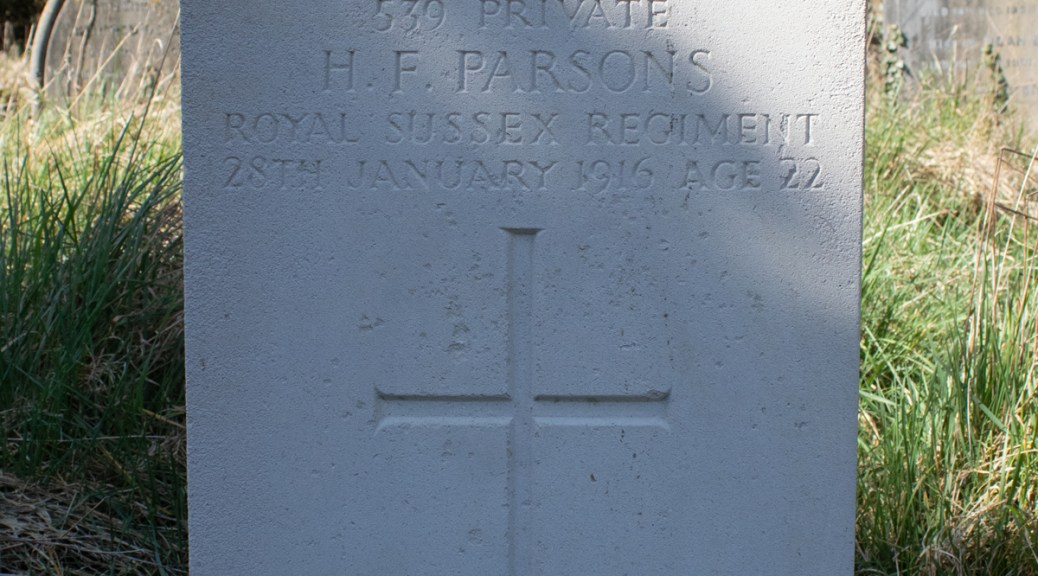
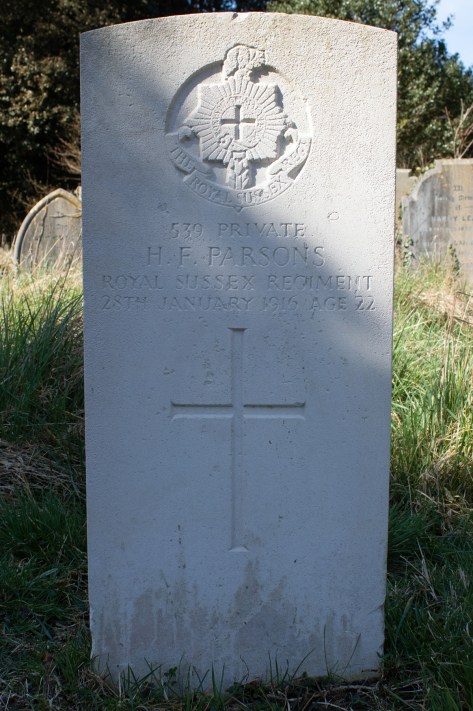
Harry Frank Parsons was born on the 23rd January 1894 in Angmering, West Sussex. The third of four children, he was the only son to Henry and Annie Parsons. Henry was a garden labourer, who died when his son was just four years old: by the time of the 1901 census, Annie had lost her husband and two of her daughters. She was living with her surviving children in a cottage close to Worthing town centre.
When he completed his schooling, Harry found work with a local fruit nursery. The 1911 census found him and his mum living at 19 Eldon Road, Worthing: his was the only wage coming in.
War broke out in the summer of 1914, and Harry was quick to step up and play his part. He enlisted in the Royal Sussex Regiment on 11th September and, as a Private, was assigned to the 11th Battalion. His service record shows that he was 5ft 6ins (1.67m) tall, and weighed 129lbs (58.5kg). He was noted as being a Wesleyan, with dark brown hair, blue eyes and a fresh complexion.
Private Parsons spent the next twelve months on home soil, but in the summer of 1915, he developed tuberculosis. The contagious condition led to his discharge from the army, and he was formally stood down on 14th September 1915, having serves for a year and four days.
At this point, Harry’s trail goes cold. It is likely that he returned home, but his lung condition lingered. He passed away on 28th January 1916, five days after his 22nd birthday.
The body of Harry Frank Parsons was laid to rest in Broadwater Cemetery, to the north of Worthing town centre.
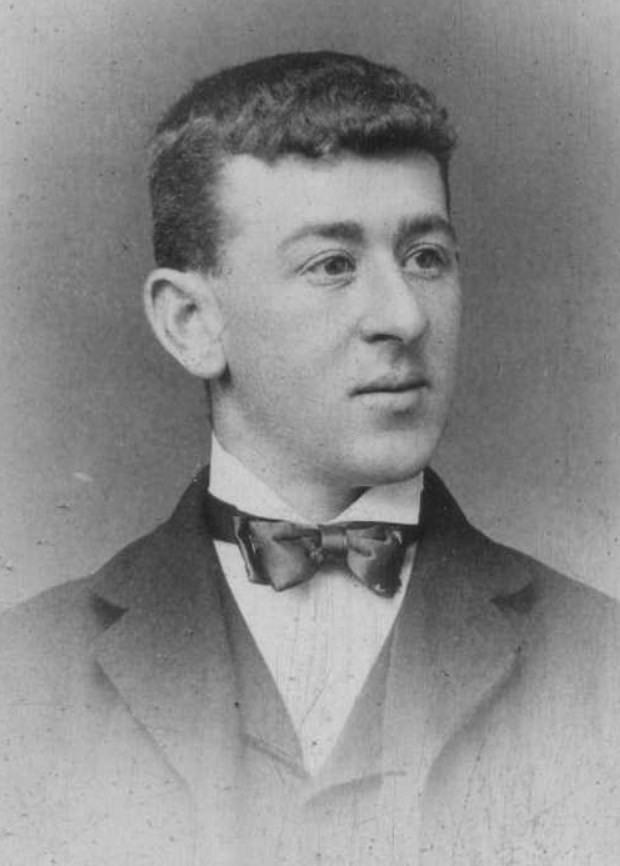
Private Harry Parsons (from ancestry.co.uk)
Annie had now lost three of her children. Her remaining child, daughter Edith, had married a month after her brother’s passing. She would go on to have two children with husband William Hoad, although their oldest, son William Jr, would die when just five years old.
Edith also passed away before her time, dying of tuberculosis and pleurisy in 1941. Annie, who had now outlived her husband and all of her children, lived until the spring of 1949.
William Carrow D. Pomeroy was born at the start of 1892 in Worthing, West Sussex. One of six children, his mother was Sarah Pomeroy. She had been born in the Clifton area of Bristol, Gloucestershire, but by the time William was born, she had moved to Worthing.
According to the 1901 census, Sarah was a widow, and was running a lodging house at 3 Warwick Road. The next census return found the family living at the same address, where Sarah’s lodging house was now noted as being apartments.
William had completed his schooling by this point, and had found work as a cycle mechanic. His dedication and skill eventually took him to London, where, by the outbreak of war, he was employed as a mechanic with the London Fire Brigade in Southwark, Surrey.
The First World War brought new opportunities, and, on 14th January 1916, William enlisted in the Royal Flying Corps. Details of his military service are sketchy, but it is clear that he was an Air Mechanic 1st Class, and was based at in Reading, Berkshire.
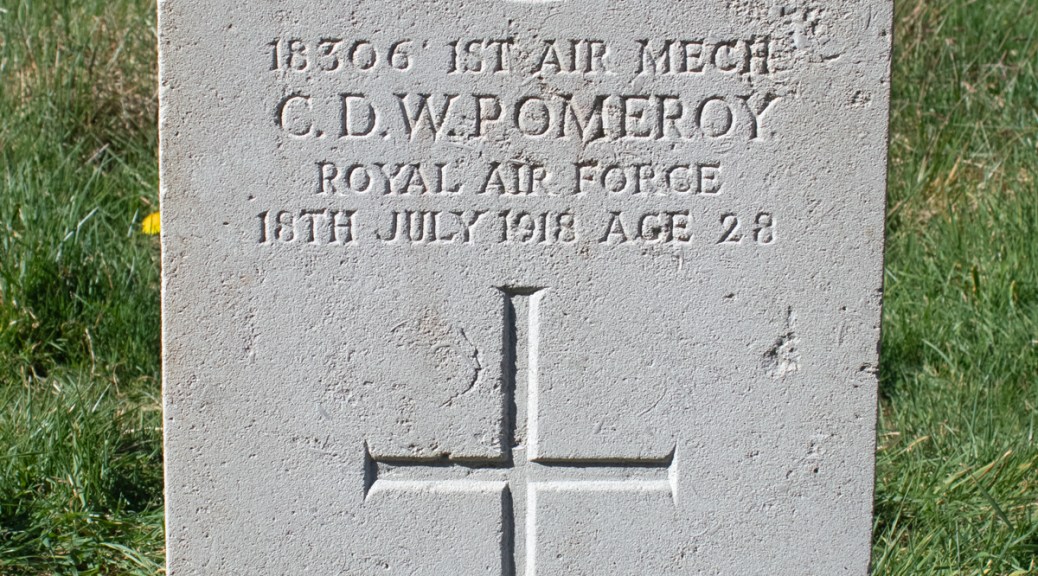
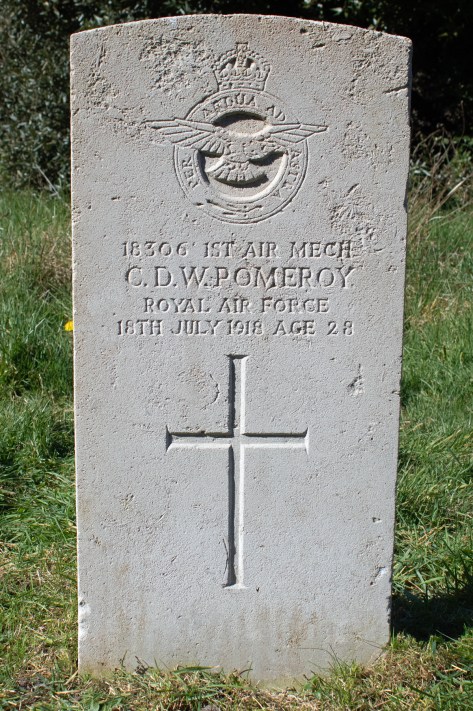
Air Mechanic Pomeroy was transferred over to the Royal Air Force on its creation on 1st April 1918. Within weeks, however, he had been admitted to Reading War Hospital, suffering from pneumonia. The condition was to get the better of him, and he passed away on 18th July, at the age of 26 years old.
The funeral of First-Class Air Mechanic E [sic] Pomeroy, who died at Reading last week, from complications following an attack of influenza, took place at Broadwater Cemetery on Monday afternoon, with full Military honours.
The deceased, who was twenty-five years of age, was the son of the late Mr Pomeroy, well-known locally as a former Inspector of Weights and Measures.
[Worthing Gazette: Wednesday 24th July 1918]
William’s headstone gives his name as CDW Pomeroy. All other records, including the registration of his birth, give his name as William Carrow D Pomeroy. There is no record of what the D stood for.
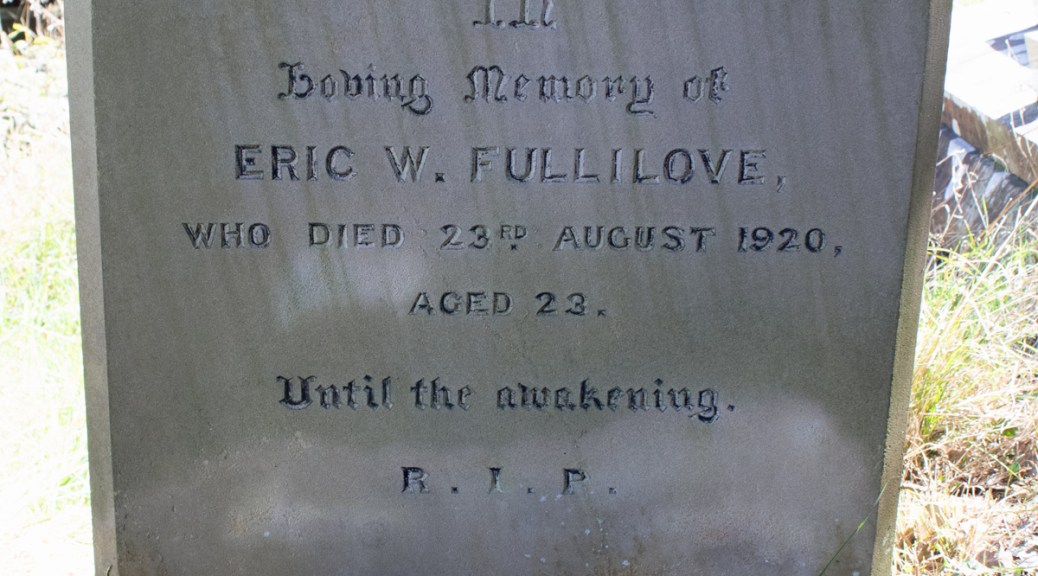
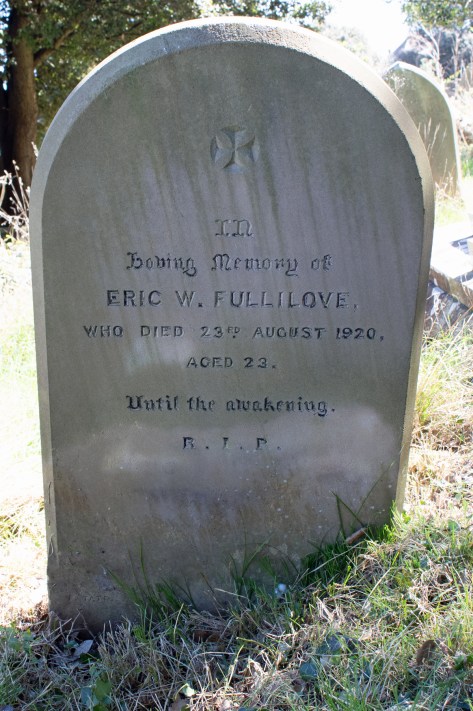
Eric William Fullilove was born in the Kent town of Deal on 25th April 1897. The middle of three children, his parents were Harry and Sarah Fullilove. Harry was a Sergeant in the Royal Marine Light Infantry, and by the turn of the century, the family had rooms at 16 Victoria Street, not far from the seafront.
Harry retired from military service, and the family moved to West Sussex. The 1911 census found the family living in a house on West Street in Worthing. Harry was now working as a bath attendant for the borough council, while Eric was being paid for being an errand boy when he wasn’t at school. The family had four visitors, Henry and Stanley Parsloe from Devon, and Florence and Margaret Gill from London.
Eric sought adventure in his life, and, on the day after his fourteenth birthday, he enlisted in the Royal Marine Light Infantry as a Bugler. His service papers show that he was just 5ft (1.52m) tall, with brown hair, brown eyes and a fair complexion.
Bugler Fullilove was assigned to the newly commissioned HMS Princess Royal, and would remain attached to her for the next four years. n the spring of 1915, he moved ashore, and was based in barracks in Portsmouth, Hampshire. While there, he came of age, and formally inducted into the Royal Marines. Now a Private, his papers show that he had grown 8.5ins (22cm).
Over the next five years, Eric served on two different vessels, returning to his Hampshire base in between assignments. His annual reviews noted a very good character, and a satisfactory/superior ability. Private Fullilove survived the conflict, but his health seems to have been impacted, and he was invalided out of the service on 1st April 1920.
Eric William Fullilove returned home, and his trail goes cold. He passed away on 23rd August 1920, through causes unconfirmed: he was 23 years of age. He was laid to rest in Broadwater Cemetery, to the north of Worthing, West Sussex.
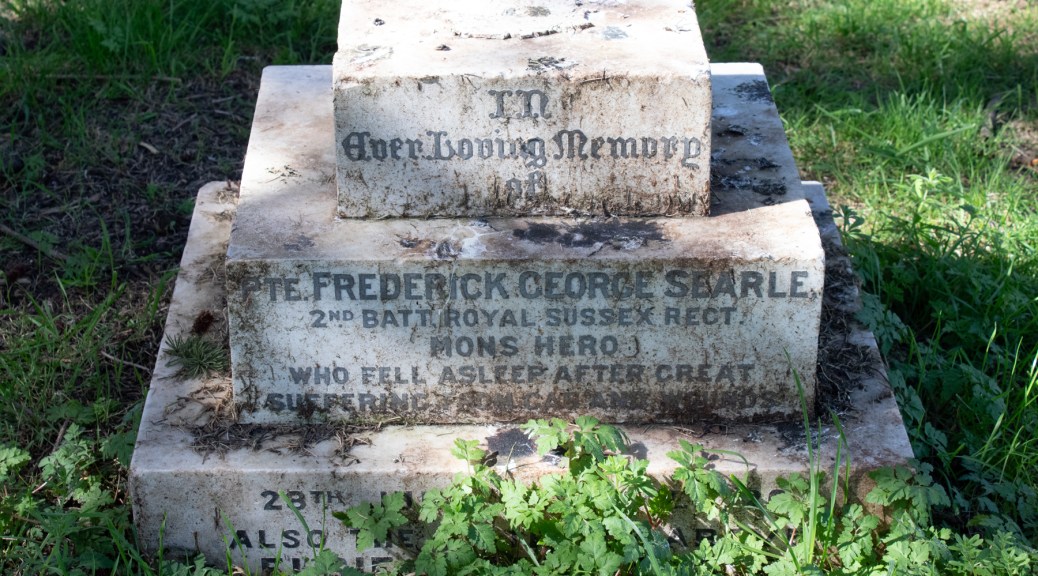
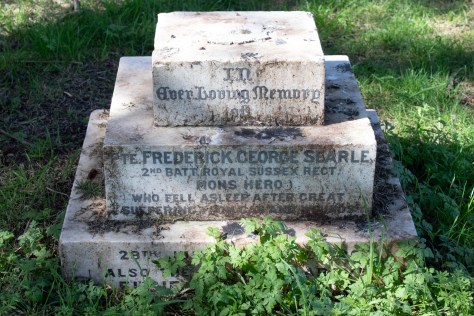
Frederick George Searle was born in the Sussex village of Warminghurst in the spring of 1894. One of thirteen children, his parents were William and Annie Searle.
William was a carter, and moved the family to where the work was. The 1901 census found the Searles living in Wiggonholt, between Pulborough and Storrington. By 1911, however, they had moved south, and were living in a cottage on the golf links in Broadwater, to the north of Worthing.
By this point, William was employed as a carter at the golf course, while three of the Searle children were also working at the club. Frederick – now 16 years of age, was a caddie, while his older brothers did mainly grounds work.
As one of thirteen siblings, Frederick was keen to make his own mark on the world and, on 24th September 1912, he enlisted in the Royal Sussex Regiment. His papers show that he was 5ft 5ins (1.65m) tall, and weighed 121lbs (54.9kg). He had light brown hair, grey eyes, and a number of scars – two on his back, one on the left side of his head and one at the base of his right forefinger.
When war broke out, Private Searle’s unit – the 2nd Battalion – was sent to France. He survived the Battle of Mons and subsequent retreat, but was badly wounded in the left arm on 13th November 1914, and medically evacuated to Britain for treatment. Frederick was moved to a depot while he recuperated, but because of his injury, he was formally discharged from the army on 30th April 1915.
Frederick returned to Sussex, and family life. In time, he took up his role on the golf club once more, but this seemed not to be enough for him. On 31st May 1917, he re-enlisted, joining the Mechanical Transport unit of the Army Service Corps as a Private. He was posted to Isleworth, Surrey, but his injury seemed to still be nagging at him. Despite his best efforts, and with the support of his superiors, at the end of August he took the decision to stand down, and was discharged from duty once more.
At this point, Frederick’s trail goes cold. What can be confirmed is that he passed away on 28th June 1919: he was 25 years of age.
The body of Frederick George Searle, former Private in two regiments, was laid to rest in the family plot in Broadwater Cemetery, not far from where his family still lived.
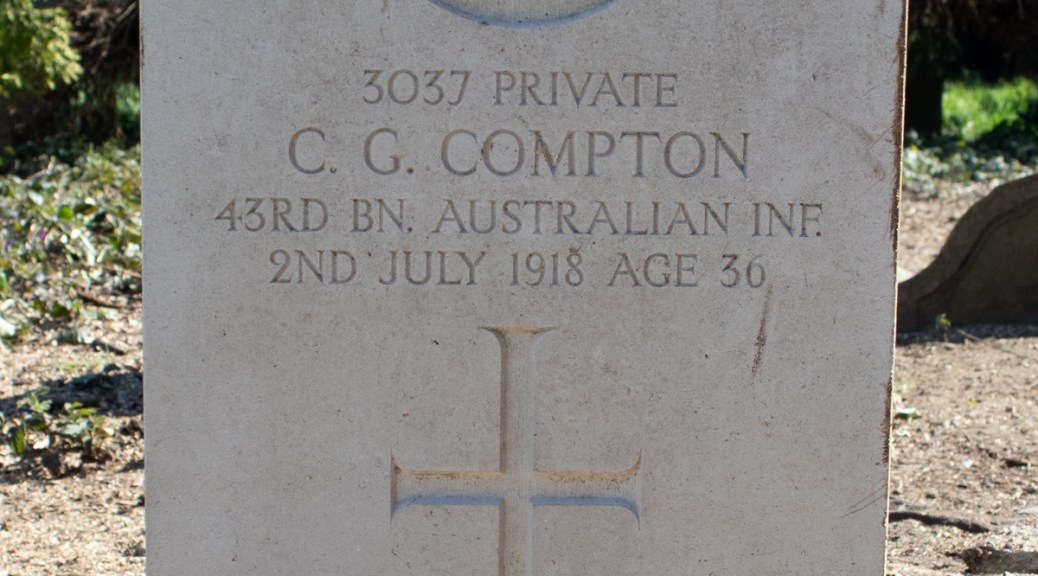
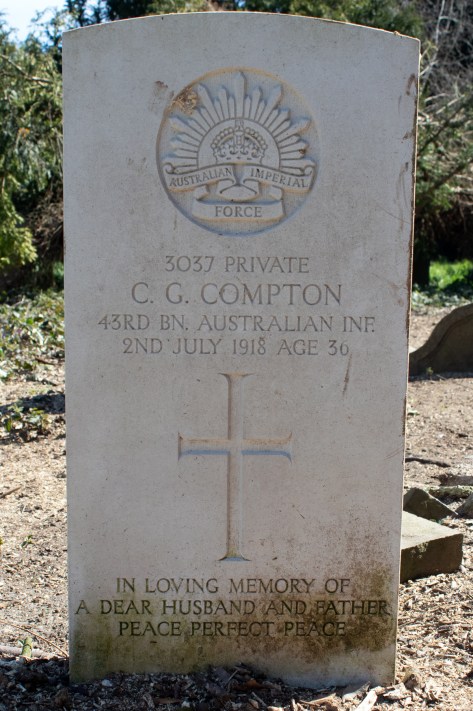
Charles George Compton was born in the Broadwater area of Worthing, West Sussex in 1882. One of five children, his parents were Charles and Eliza Compton. Charles Sr was a shoe maker, but when he finished his schooling, his son found work as a bricklayer.
There is little detailed information about Charles’ early life, but in 1901 he married a woman called Lilian. They went on to have three children, and, by the time of the 1911 census, they had set up home at 47 Newland Road, Worthing.
Charles sought to make a better life for his family, and, on 31st January 1913, he boarded the SS Osterley, bound for Australia. He set up home at 1 Orange Lane, in Norwood, a suburb of Adelaide, and, at some point soon afterwards, Lilian and the children joined him.
War was declared in the summer of 1914, and the Empire was called on to play its part. On 28th March 1917, Charles enlisted, becoming a Private in the Australian Infantry. His service papers show that he was 5ft 6ins (1.68m) tall, and weighed 154lbs (69.9kg). He was noted as having brown hair, hazel eyes and a medium complexion. He had two tattoos: one on his left forearm and another on his left hand.
After a few months’ training, Private Compton’s unit boarded the HMAT A30 from Adelaide, to make the journey back to Britain. His unit – the 10th Training Battalion – disembarked in Plymouth on 25th August 1917, and made its way to Larkhill Camp on the edge of Salisbury Plain, Wiltshire.
Over the next few months, Private Compton undertook further training, and would be transferred to the 43rd Battalion of the Australian Infantry. On 30th May 1918 he was admitted to Hurdcott Hospital, near Fovant, Wiltshire, suffering from influenza. The condition would eventually prove fatal: Charles passed away on 2nd July, at the age of 36 years old.
There was another Military funeral locally on Saturday.
The deceased soldier in this case was Private Charles George Compton, and the place of interment was the Cemetery at Broadwater. Private Compton, a member of an old Worthing family… was a member of the Australian Force…
The deceased worked for the Corporation before leaving Worthing for Australia, where his wife and two children are now living.
[Worthing Gazette: Wednesday 10th July 1918]
Charles George Compton was laid to rest in Broadwater Cemetery, not far from where his family were still living.
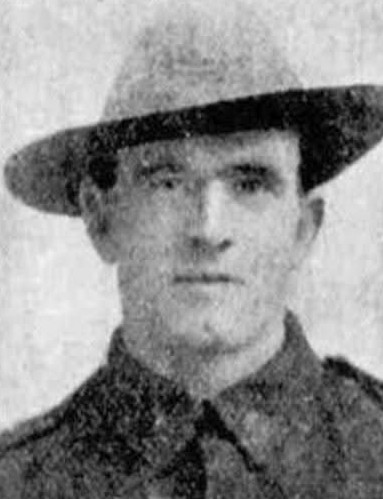
Private Charles Compton (from findagrave.com)
Lilian was now thousands of miles from home and family. Grieving the loss of her husband, the communication from the Army on his passing would provide her with some comfort:
Thanking you for all your kindness in sending my husband things on to me. You don’t know how greatefull I feel when I received letters saying how kind the nurses all were to him through his illness. All I wishes I could have been their, but it was not to be. I now close thanking you all.
[Letter to battalion: 14th January 1919]
Lilian would move to Lincoln Street, Adelaide: her new home she would name Worthing after her home town.