
Category Archives: Essex Regiment

Lieutenant Arthur Devas

Lieutenant Arthur Devas

Arthur Edward Devas was born in Devizes, Wiltshire, on 29th July 1877. One of ten children, his parents were Reverend Arthur Devas and Louisa. Arthur Sr was chaplain at the County House of Correction, the prison a short walk away from the family home, over the Kennet and Avon Canal. The 1881 census showed the Devas’ were living to the south of the town centre, and were supported by three servants.

Arthur standing as a vicar’s son earned him an education. He was sent to the prestigious Haileybury College in Hertfordshire. When his father died in 1901, he felt a pull to see more of the world, and joined the army. Enlisting in the Essex Regiment in September 1902, he was taken on as a Second Lieutenant.

Promoted to the rank of full Lieutenant in January 1906, the next census, in 1911, recorded Arthur at the Warley Barracks in Billericay. When war broke out in August 1914, he was based in Mauritius: he remained there for the next five months, before his battalion – the 1st – were brought back to England.

Setting up camp in Banbury, Oxfordshire, the aim was to train the battalion in readiness for an assault in Gallipoli. For Lieutenant Devas, however, this was not to be. He had fallen ill on the journey back to Blighty and, having contracted typhoid, he was admitted to the 3rd Southern General Hospital in Oxford. He died at the hospital on 15th February 1915, at the age of 37 years old.

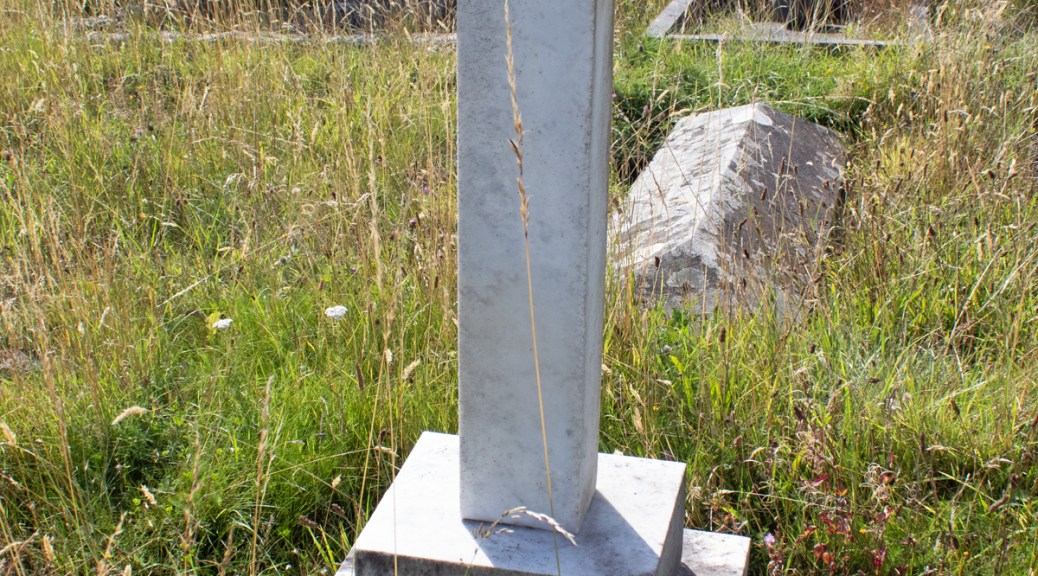
Louisa and some of her children had moved to Minehead, Somerset, after her husband’s death, and this is where Arthur Edward Devas’ body was brought for burial. He was laid to rest in the extensive Minehead Cemetery, to be reunited with his mother when she passed away some eighteen years later.


Corporal Charles Fernley

Corporal Charles Fernley

Charles Edward Fernley was born on 28th November 1874 in Stepney, East London. One of thirteen children, his parents were Richard and Eliza Fernley. Richard was a sluice keeper, who worked his way up to be an inspector of sewers and drains for London County Council. By 1888, he had been able to move his family out of the East End, to suburban Bromley, south of the river in Kent.

By the time of the 1891 census, Charles had finished his schooling, and had found work as a printer’s labourer. Ten years later, however, he was employed as a packer for a millinery warehouse. There seems to have been more need for this back in the East End, however, as he was living in Bow in the summer of 1901.

On 21st August 1901, Charles married Hannah Weston in St Faith’s Church, Stepney. She was three years younger than her husband, and was the daughter of a boatbuilder. The couple settled in a small terraced house in East Ham and had a son, Leonard, who was born in 1908.

When war came to Europe, Charles was keen to play his part. He enlisted in the Essex Regiment, and was assigned to the 1st/4th Battalion. Sent to the Balkans in August 1915, it is likely that he was caught up at Gallipoli and, in December 1915, evacuated with his battalion to Mudros on the Greek island of Lemnos.

By this point, the now Corporal Fernley had contracted dysentery, and was repatriated to Britain for treatment. He was admitted to the Newton Park VAD Hospital on the outskirts of Bath, but was to succumb to the condition on 31st December 1915. He was 41 years of age.

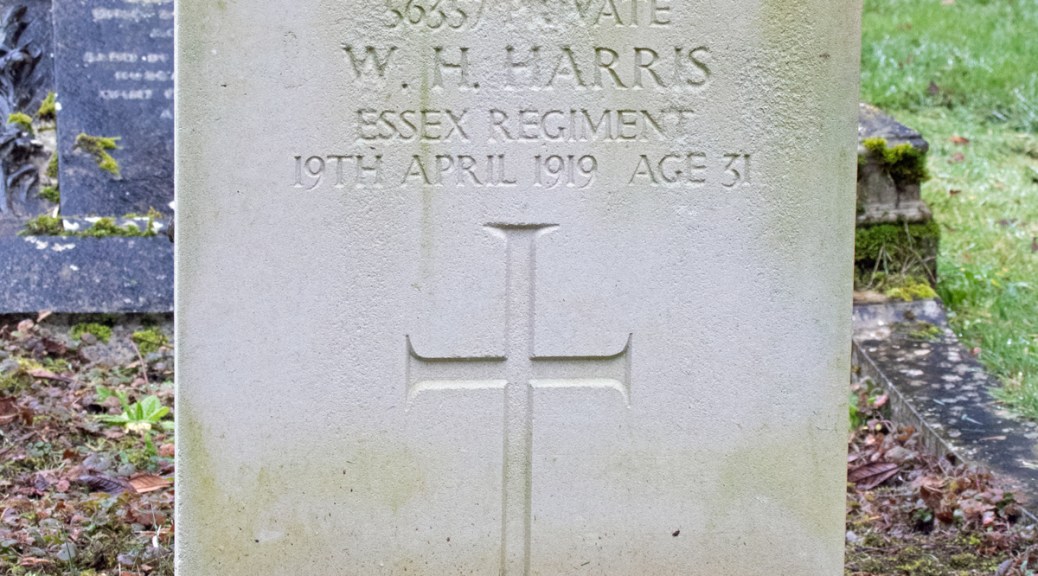
Charles Edward Fernley was laid to rest in the quiet Holy Trinity Churchyard in Newton St Loe, Somerset.


While Charles’ headstone is dedicated to Sergeant Fernley, all other documentation suggests that he held the rank of Corporal when he died.


Private William Harris

Private William Harris

The life of William Henry Harris is destined to remain shrouded in the mists of time. His headstone, in the Townsend Cemetery in Crewkerne, confirms he was a Private in the Essex Regiment, and that he died on 19th April 1911, at the age of 31 years old.

The Army Register of Soldiers’ Effects confirms that he was attached to to the 1st/5th Battalion and that he died of sickness in Rugeley Camp, Staffordshire. His widow, who is noted as Ada Harris, received a war gratuity, which suggests that he had enlisted prior to October 1918.

Private Harris’ Pension Ledger shows that Ada was living in Hermitage Street, Crewkerne, and that the couple did not have any children.

While William’s name is too common to try and identify family links through census records, his marriage index provides Ada’s maiden name, Furzer, which is easier to track.

Ada Furzer was born in Crewkerne on 22nd November 1887, the second of eight children to James and Ellen Furzer. James was a haulier, while Ada and her older sister Mabel, found work as machinists in a local shirt factory when they left school.

Ada did not remarry when William passed away: she died in Yeovil in the autumn of 1971, at the age of 83.


Private Walter Taylor

Private Walter Taylor

Walter Henry Taylor is one of those people whose details are difficult to track down. From his pension card, he is recorded as having been married to a woman called Lilla Rhoda, and that they had a daughter, Joan Valeria, who was born in April 1916.

Walter’s war grave confirms that he was a Private in the Essex Regiment; his pension records also support this, showing that he was assigned to the 6th Battalion, then the 10th Battalion. The two troops were positioned in different locations during the conflict – the 6th fought the Turkish, including involvement at Gallipoli, while the 10th was based on the Western Front.

An article in the local newspaper – the Taunton Courier and Western Advertiser – reported his death, confirming that he passed at the War Hospital in Preston, Northampton. He had been in service for more than a year, having previously been employed by Redwood & Sons in Taunton. The newspaper went on to report that Private Taylor had been suffering from ill health and had been hospitalised in both France and England.

The name is a fairly common one, and my usual resource, Ancestry, wasn’t bringing up anything concrete around him. There are no definitive birth or marriage records and the censuses I have been able to locate do not convince me that they relate to the name on the gravestone.


There is a Walter Harry Taylor, who was born in Bridgwater in 1883, one of ten children to Henry John Taylor and his wife Emma; Henry was a sailmaker, while Walter went into boot making.

The 1911 census picks up this Walter in St Pancras, London, where he was working as a boot trade shop assistant, while boarding with a dressmaker called Minnie Adelaide Lloyd.

While these seem likely candidates for Walter, there is nothing to definitively connect the documents to the man being researched. What potentially sways it, is that Redwood & Sons (Walter’s pre-service employer) were a boot and shoe dealer.

Sadly, the only other definitive documentation of Walter’s life is that he passed away on 14th July 1918, from a kidney sarcoma. He was 35 years old.

Walter Henry (Harry) Taylor lies at rest in the St John’s Cemetery in his presumed home town of Bridgwater, Somerset.