Category Archives: Coastguard

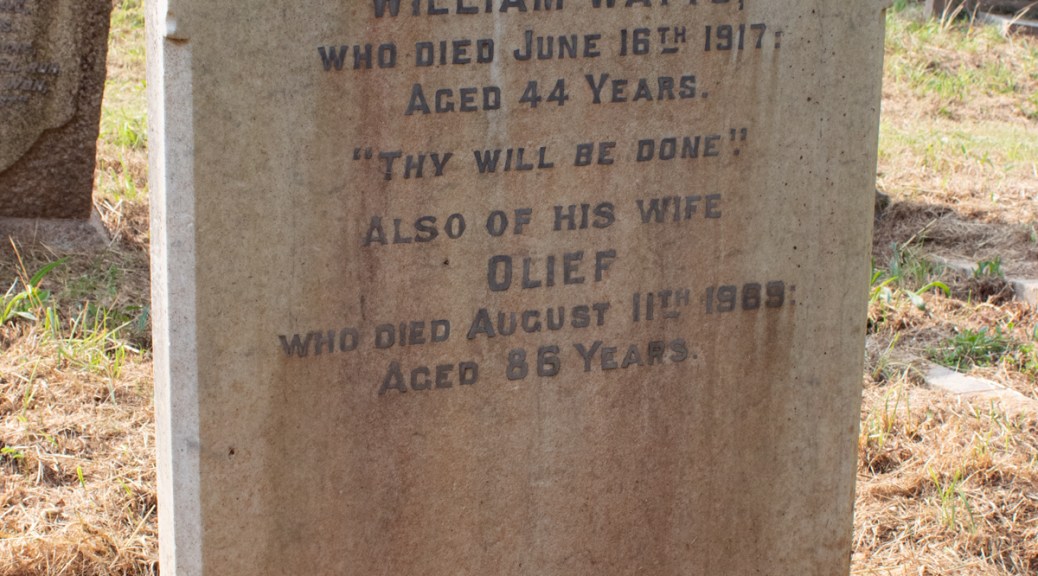
Able Seaman William Watts

Able Seaman William Watts

William Watts was born on 24th October 1872 in the Devon village of Stockfleming. Details of his early life are unclear, but his later marriage record gives his father’s name as Richard.

The first confirmation of William’s life was his military service records. He left his job as a farmer’s lad and joined the Royal Navy on 3rd January 1888 and, being just 15 years old at the time, he was given the rank of Boy 2nd Class.

William was sent to HMS Impregnable, the navy’s training base in Devonport, Devon, for his initial induction. He remained there for the next eighteen months, and was promoted Boy 1st Class during that time. In October 1889, he was given his first posting, on board the sloop HMS Pylades. She would be his home for more than three years, during which time he came of age.

Now formally inducted into the Royal Navy, William was given the rank of Ordinary Seaman. His service papers show that he was 5ft 1ins (1.55m) tall, with dark hair, hazel eyes and a fair complexion.

Over the twelve years of his initial contract Ordinary Seaman Watts made a career for himself. By the end of that time, he had served on five further ships, returning to HMS Vivid, the Royal Naval Dockyard in Devonport, in between voyages. He was proving his mettle as well, and was promoted to Able Seaman on 1st November 1893.

When, in March 1901, his contract came up for renewal, William immediately re-enlisted. His service record shows that he had grown to 5ft 4ins (1.65m) tall, and now sported a tattoo of a star on his left wrist. He spent another thirteen years in the Royal Navy, but transferred to the Coastguard, serving in Weymouth in Dorset, and Brixham and Dartmouth in Devon.

On 15th September 1903, William married Olief Lawrence. The daughter of a labourer from Fontwell Magna, Dorset, the couple married in her local parish church. They would settle in Brixham, and have one son, William, who was born in October 1907.

When war broke out, William was called up on to play his part. Pensioned off just two months previously, he now returned to sea, joining the battleship HMS Goliath as an Able Seaman. His health was failing him by this point, however, and on 18th December 1914, he was invalided out of naval service.

At this point, William’s trail goes cold. It is clear that he and Olief moved to Marldon, to the west of Paignton, and he took up the role of landlord of the Ship Inn (now Ye Olde Smokey House). His health still seemed to be impacted, however, and it would eventually get the better of him. He died on 16th June 1917, at the age of 44 years of age.

The body of William Watts was laid to rest in the graveyard of St John the Baptist Church in Marldon, the village which he had come to call home.

Leading Boatman Peter Moran

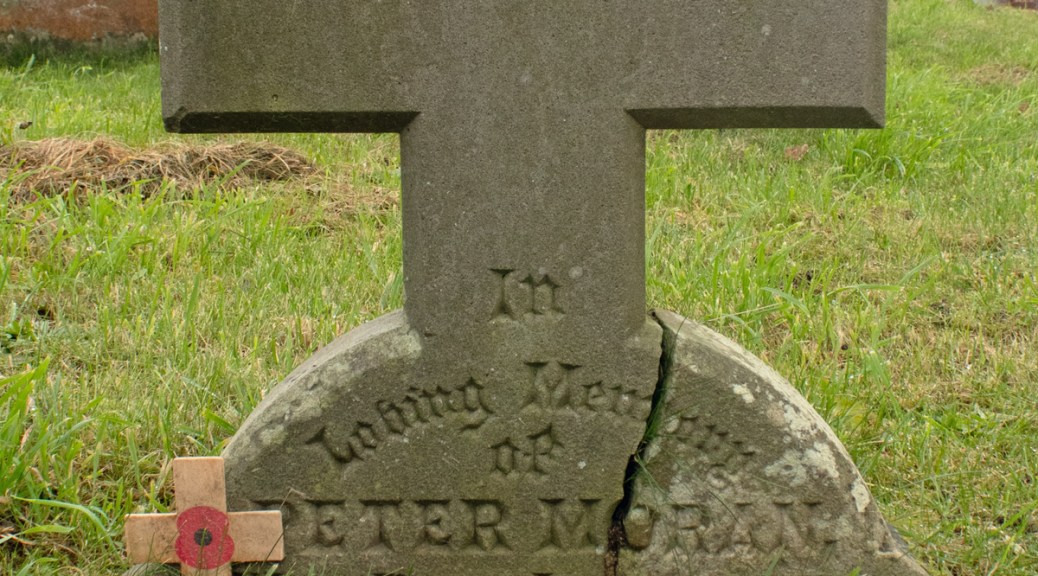
Leading Boatman Peter Moran

Peter Moran was born in Kilmeena, County Mayo, Ireland, on 29th January 1876. Details of his early life are hard to track down, but when he finished his schooling, he wound work as a fisherman.

By 19th August 1891, Peter sought to make a more permanent career of the sea. He signed up to the Royal Navy, and was sent to HMS Impregnable, the shore base in Devonport, Devon, for his training. Being just 15 years of age, he was too young to formally enlist, and was given the rank of Boy 2nd Class.

Over the next few years, Peter learnt the tools of his trade. On 2nd July 1892 he was promoted to Boy 1st Class, and the following February he was given his first sea-faring assignment, on board the battleship HMS Neptune. By March 1893 Boy Moran found himself serving on board HMS Daphne, a screw sloop which would become his home for the next three years.

During his time aboard Daphne, Peter came of age, and was given the rank of Ordinary Seaman. His service records show that he was 5ft 4ins (1.63m) tall, with light hair, grey-blue eyes and a fresh complexion. Within eighteen months he had proved his mettle, and was promoted to Able Seaman.

Over the next decade, Peter would serve on eight vessels. By the time the term of his contract came to an end in September 1903, he had been promoted twice – to Leading Seaman, then to Petty Officer 2nd Class.

Peter renewed his contract, but seems to have chosen a new career path. On 2nd October 1903 he moved to HM Coastguard and, as a Boatman, was assigned to Pendeen Cove, Cornwall.

Love blossomed for Peter, and he married a woman called Caroline in the next few years. There is little further information about her, but the couple would go on to have three children – Mary in 1908, Florence in 1911 and Thomas in 1913.

Boatman Moran would spend twelve years with the coastguard, moving to St Ives, Cornwall, in September 1908, and Fishguard, Pembrokeshire, in March 1914. By this point he had been promoted to Leading Boatman, and was set on a new life in Wales. Sadly, the new life was not to be: on 2nd June 1915 he passed away from pneumonia. He was 39 years of age.

The body of Peter Moran was laid to rest in Fishguard Cemetery: a life at sea, and forging homes in three countries at an end.


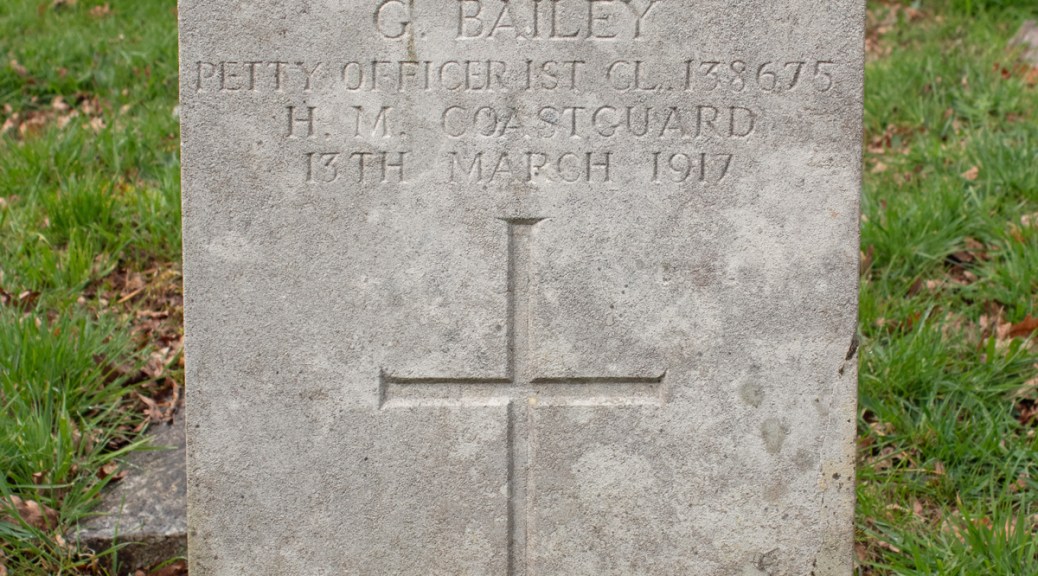
Petty Officer 1st Class George Bailey

Petty Officer 1st Class George Bailey

George Bailey was born in Bedminster, Somerset, on 20th August 1871. One of six children, his parents were George and Anna (or Hannah) Bailey. George Sr was a labourer and, when he died in 1876, Anna moved the family to Clifton, near Bristol.

The 1881 census found the family living in a small cottage at 5 Crosby Row in the then village. Hannah was listed as a late general labourer’s wife, while her three older children were all working for a dairy.

When George finished his schooling, he sought out a career. Joining the Royal Navy, this would prove a long-term role, bringing in a relatively decent wage for him and his family, but also gave him some adventure, not surprising given the number of ships he would have seen going to and fro from Bristol.

George was only 15 years old when he joined up on 25th September 1886, and so was below the age to formally enlist in the navy. Taken on with the rank of Boy 2nd Class, he was sent to HMS Impregnable, the training ship based in Devonport, Devon. Over the next three year he learnt his craft, and served on a few ships, including the battleship HMS Iron Duke.

In October 1887, George was promoted to Boy 1st Class and, on 20th August 1889, while assigned to the Iron Duke, he came of age, and was formally inducted into the Royal Navy. Ordinary Seaman Bailey’s service records show that he was 5ft 5.5ins (1.66m) tall, with auburn hair, blue eyes and a fresh complexion. He was also noted as having a spot tattooed between the finger and thumb of his left hand, a scar on his left leg and another in the centre of his back.

Over the next seven years, George served on a total of ten ships, and saw the world. In between voyages he returned to HMS Vivid, the Royal Naval Dockyard in Devonport. In 1895 he married Elizabeth Bull, from Burrington, Somerset, and the couple went on to have six children.

George’s naval career continued, and he rose through the ranks, to Able Seaman in September 1890, Leading Seaman in June 1895, and to Petty Officer 2nd Class and 1st Class the following year.

In January 1899, George’s life took a different direction. After some time training at HMS Collingwood in Hampshire, he joined the Coastguard service, and would spend the next twelve years serving on the coast of Southern Ireland. This opportunity allowed him to have his family with him, and his and Elizabeth’s four youngest children were born in County Clare and County Cork.

By 1911, the family returned to Britain, setting up home in Brixham, Devon. That year’s census found the Baileys living at 6 Coastguard Station on the waterfront. The family remained there through to October 1913, when George was transferred to the Royal Naval Reserve, having served for 26 years.

George found work as the caretaker of the Electric Theatre in Tiverton, Devon, and this is where he and Elizabeth settled down.

Petty Officer Bailey’s time out of active service was to be limited, however, as, just nine months later, war was declared. Called back into action, he was sent to Western Stack Fort in Milford Haven, Pembrokeshire.

An interesting personality has passed away in First-Class Petty Officer George Bailey, who died suddenly on Tuesday… He came home about a fortnight ago on sick leave, and seemed to be improving in health, and on Tuesday went out for a walk. After retiring to bed his death came suddenly as a result of heart failure.

[Crediton Gazette: Saturday 24th March 1917]

George Bailey died on 13th March 1917: he was 45 years of age. He was laid to rest in Tiverton Cemetery.


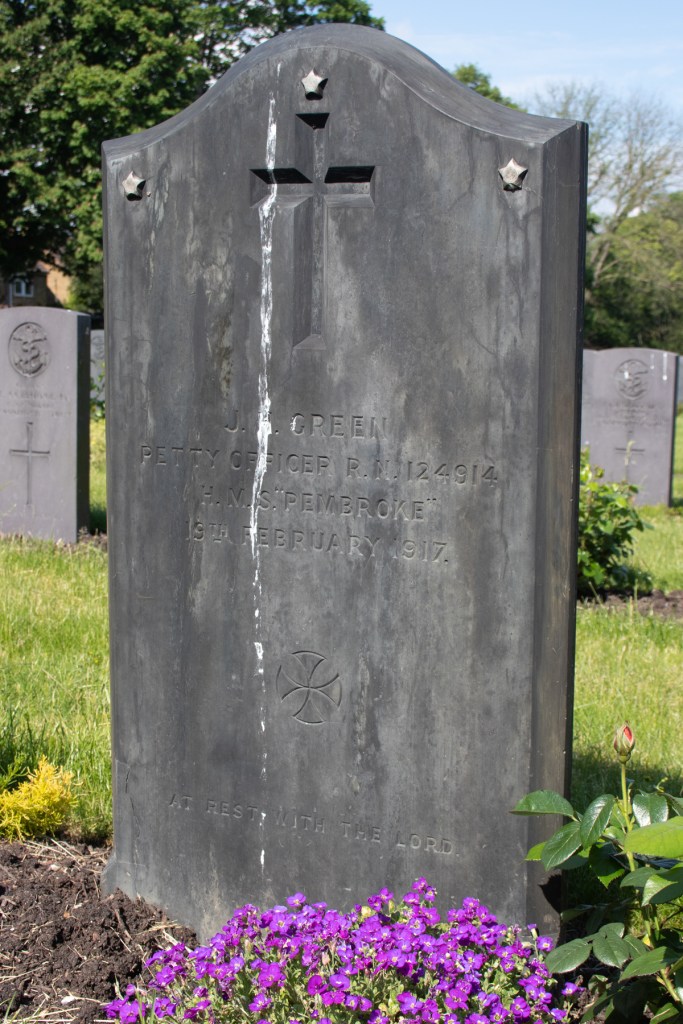
Petty Officer James Green

Petty Officer James Green

James Henry Green was born in Brixham, Devon, on 13th April 1868, the only child to Isaac and Sarah Green. Isaac was the son of a miller from Essex, who found work as a miner in the south west; he sadly died in 1871, when James was just a toddler.

Sarah had been married before she met Isaac; she had had two children, both daughters, with her first husband, William Tozer, so James had two half-sisters. William had died in 1865, and Sarah had gone on to marry James’ father later that year.

The 1881 census found Sarah and the children living in a cottage in the middle of Brixham; she was listed (somewhat uncharitably by current standards) as a mangle woman. She had taken in a couple of lodgers and James – then aged 13 – was listed as a scholar.

James was evidently keen to make a place for himself in the world. In 1885 he enlisted in the Royal Navy, working as a Boy on a number of ships until, on his 18th birthday, he was given the rank of Ordinary Seaman. His naval records show that he had a dark complexion, brown eyes and brown hair and stood as just 5ft 1in (1.55m) tall.

During his initial ten years’ service, James served on nine ships as well as shore-based establishments, working his way up to the rank of Able Seaman. One the initial period of enlistment was up, he extended his time in the navy voluntarily, eventually serving on a further five vessels and reaching the rank of Able Seaman before transferring to the Coastguard in South Shields. James was stood down form active naval duties in January 1908 and transferred to the Royal Naval Reserve, based in Chatham, Kent.

It was while he was in County Durham that he met Edith Hansford (or Handforth), a horse keeper’s daughter from Whitburn. The couple married in the spring of 1901, and settled down in Sculcoates, to the north of Hull.

When war was declared, those in the Royal Naval Reserve were called into immediate action, and James was no exception. Given the rank of Petty Officer, he was initially assigned to HMS Pembroke, the shore establishment in Chatham, before a brief tour on HMS Columbine, and a longer term on the gunboat HMS Britomart.

In July 1916, Petty Officer Green returned to HMS Pembroke; he remained based there for six months, before being admitted to hospital, suffering from phlebitis (an inflammation of the veins in the legs). Sadly, the condition got the better of him; he passed away in the Royal Naval Hospital in Chatham on 19th February 1917, at the age of 48.

James Henry Green was laid to rest in the Woodlands Cemetery in his adopted home town of Gillingham, Kent.