Category Archives: County Durham

Engineman George Rae

Engineman George Rae

George William Rae was born on 7th February 1883 in South Shields, Country Durham. The youngest of five children, he was one of four sons to Henry and Elizabeth Rae. Henry was a boatman, and it seemed inevitable that George would follow in his father’s footsteps.

There are big gaps in George’s timeline: the 1891 census found him living with his aunt and uncle. The next record for him confirms his marriage to Mary Elizabeth Smith in January 1904. There is scant information for her, but the couple had five children, three of whom died before they reached their first birthday.

Tragedy followed tragedy: George’s father died in 1908, and his mother passed the following year. Mary died shortly after the birth of her and George’s last child, also named George, in 1911. The census taken that year recorded George Sr as a fireman aboard the coal hulk Haytian, which was moored in Portland Harbour, Dorset. He was one of the vessel’s sixteen crew members.

Now a widow, George had two children to support. In the summer of 1913, he married a second time, to Elizabeth Flood. Again, there is little information available about her, but the couple went on to have a child, daughter Emily, who was born in the summer of 1914.

Conflict was closing in on Europe by this point, and on 24th March 1916, George formally joined the Royal Naval Reserve. His service record shows that he was 5ft 4ins (1.63m) tall, with blue eyes and a fair complexion. He was also noted as having a tattoo of a woman and two flags across his chest.

Engineman Rae was assigned to the gunboat-turned-minesweeper HMS Halcyon. She remained his home for the next eighteen months, patrolling off the coast of East Anglia. By the summer of 1917, George became shore-based, initially at HMS Actaeon in Portsmouth, Hampshire, then at HMS Pembroke, the Royal Naval Dockyard in Chatham, Kent.

Pembroke was a busy and overcrowded place at this point in the war. The battleship HMS Vanguard had sunk, and its replacement crew – who were stationed in Chatham – were left in limbo while new postings were found for them. The base also suffered an outbreak of meningitis, and temporary accommodation was set up to space out the servicemen and, hopefully, slow the spread of the disease. Engineman Rae found himself in one of these speedily-created barracks in the dockyard’s Drill Hall.

On the night of the 3rd September 1917, four German aircraft carried out a daring raid on the North Kent coast. Chatham came under fire, and two explosives landed a direct hit on the Drill Hall. Dozens of men were killed while they were sleeping, and many more – including Engineman Rae – were injured.

George was taken to the Royal Naval Hospital in Chatham for treatment, but his wounds would ultimately prove fatal. He succumbed to them on 11th September 1917, at the age of 34 years old.

The body of George William Rae was taken back to County Durham for burial. He was laid to rest in South Shields’ Harton Cemtery.


Tragedy would continue to haunt the Rae family. Elizabeth died a year after her husband, leaving three children – two from George’s first marriage, and one from his second – orphans. Sadly, there is little additional informational about what happened to them – none appear in the 1921 census.


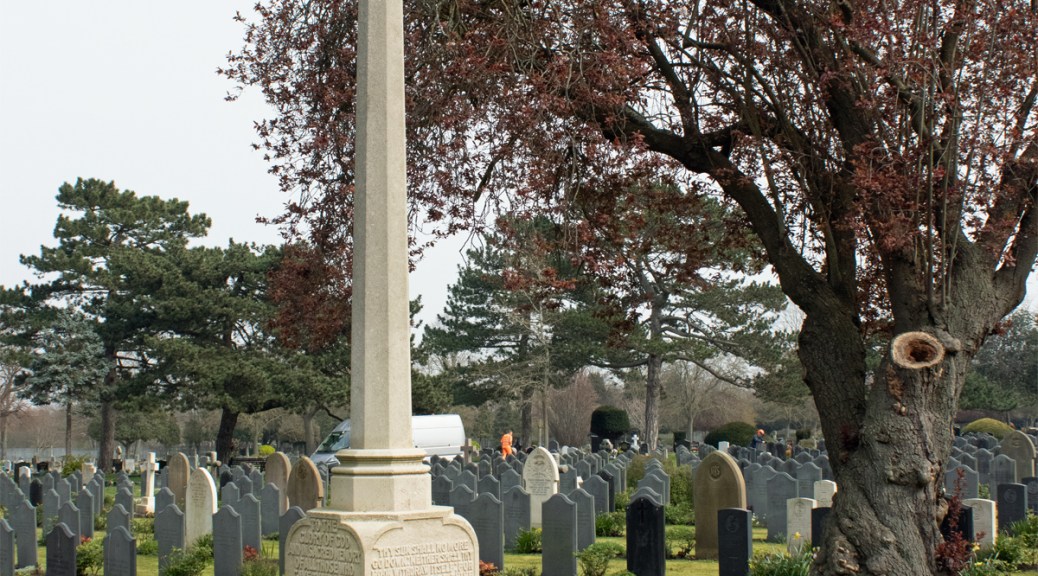
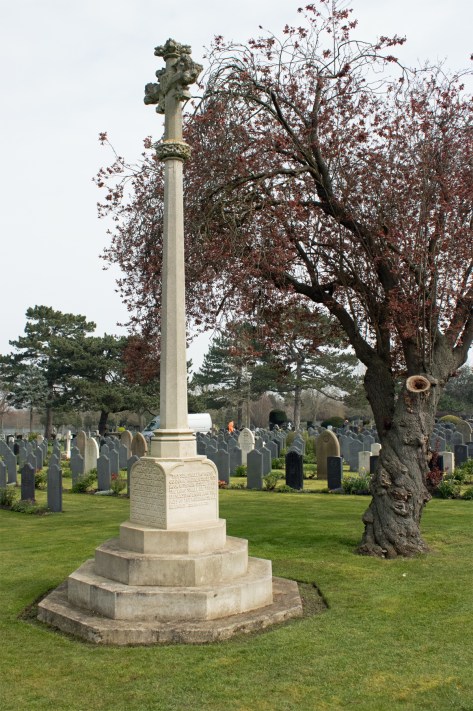
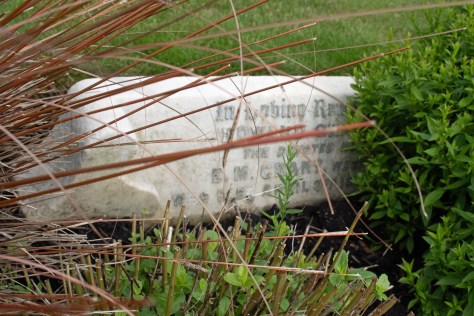
[Note: the photo above is of the memorial to the Chatham Air Raid victims, close to the mass grave for those whose bodies were not identified, in Woodlands Cemetery, Gillingham, Kent.]
Able Seaman William Magog

Able Seaman William Magog

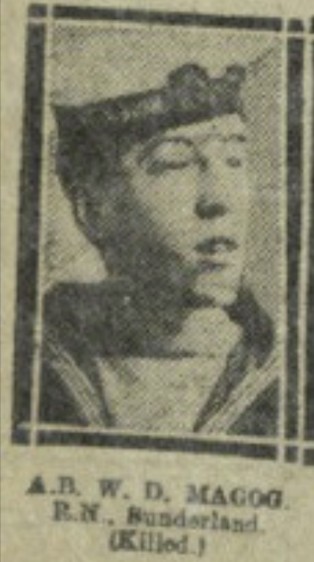
William Dowsey Magog was born on 23rd March 1898 in Sunderland, County Durham. He was the only child to William and Mary Magog. William Sr was a railway fireman who died when Mary was three months pregnant. He would never know his son, but William was named in his father’s honour.

With a baby to raise, Mary needed support and married for a second time in 1900. Her new husband was Thomas Gardner, who was employed as a chain testing labourer. The extended family set up home on Thomas Street, initially at No. 7, then moving to No. 19 by the time of the 1911 census. By this point, William had three half-siblings, Mary Jr, Elizabeth and Robert.

William followed his stepfather into factory work, taking a job as a moulder. However, he had his sights set on bigger and better things, and on 31st August 1913, he joined the Royal Navy. Too young for formally enlist at this stage, he was given the rank of Boy 2nd Class, and sent to HMS Ganges, the training base near Ipswich, Suffolk.

Boy Magog seemed to impress his seniors, and within nine months had been promoted to Boy 1st Class. He was given his first assignment, on board the cruiser HMS Grafton, in June 1914. That summer, as war broke out, he was sent to HMS Pembroke, the Royal Naval Dockyard in Chatham, Kent.

At the end of October 1914, William was transferred to the battleship HMS Dominion, and she would remain his home for the next three years. During this time, he came of age, and formally joined the Royal Navy. His service papers show that the he stood just 5ft 1/2in (1.54m) tall, and had brown hair, brown eyes and a fresh complexion.

The now Ordinary Seaman Magog was dedicated to his role, although his annual reviews noted a very good (or average) character and a satisfactory (again average) ability. He rose through the ranks, however, becoming an Able Seaman in April 1917.

During this time, Dominion patrolled the North Sea as part of the Third Battle Squadron. She was not involved in many of the major skirmishes of the First World War, although she did take part in the protection of Scarborough during the German raids of 1914, and the Battle of Dogger Bank just a few months later.

By the summer of 1917, Able Seaman Magog had returned to Chatham to await his next assignment. The dockyard was a particularly busy and overcrowded place by this point in the conflict: the sinking of HMS Vanguard had left its replacement crew with nowhere to go, and an outbreak of meningitis had meant that additional accommodation was needed to provide space in the cramped barracks. It was because of this that William found himself billeted in temporary barracks in the dockyard’s Drill Hall.

On the night of the 3rd September 1917, the German air force carried out an audacious night raid on the north Kent coast. The Drill Hall was hit by two bombs, shattering its glass roof, and killing dozens of men who were sleeping below. Able Seaman Magog was badly wounded, and was taken to the Royal Naval Hospital in Chatham. Tragically, his injuries would prove too severe, and he passed away two days after the bombing. He was just 19 years of age.

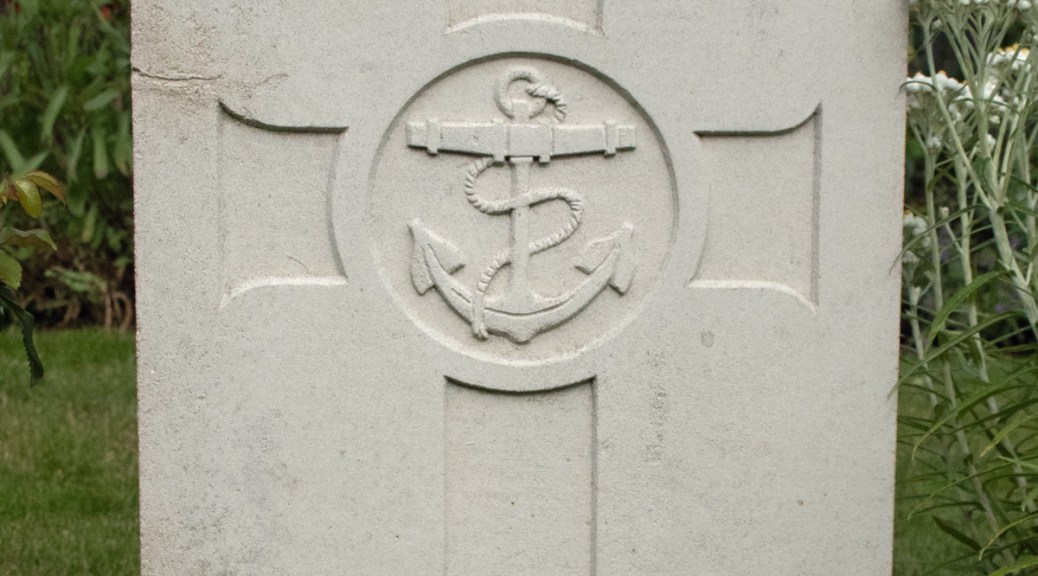
The body of William Dowsey Magog was taken back to County Durham for burial. He was laid to rest in Sunderland’s Ryhope Road Cemetery, just a few minutes’ walk from where Mary and the family were living.


Able Seaman William Magog
(from findagrave.com)

[Note: the photo above is of the memorial to the Chatham Air Raid victims, close to the mass grave for those whose bodies were not identified, in Woodlands Cemetery, Gillingham, Kent.]

Stoker Samuel Hadley

Stoker Samuel Hadley

Samuel Hadley was born in Bilston, Staffordshire, on 1st July 1892. The fifth of six children, his parents were Edward and Mary Hadley. Edward worked in the local iron works and, the family lived on Cross Street, to the south of the town centre.

Opportunities awaited elsewhere, however, and by the time of the 1911 census, the Hadley family had moved to Stockton-on-Tees, County Durham. Iron foundries were a key industry in the area, and census found four members of the household – Samuel, his two older brothers, Edward Jr and Matthew, and father Edward Sr – all employed at the Bowesfield Steel Works. The house at 28 Grove Street was crowded, with Thomas Green, another foundry worker, also boarding there.

When war broke out, all three brother enlisted. Samuel joined the Royal Naval Reserve on 15th January 1915, and was sent to HMS Pembroke, the Royal Naval Dockyard in Chatham, Kent, for his training. His papers show that he was a little under 5ft 9ins (1.75m) tall, with brown eyes and a fair complexion. He had a scar on his left leg following an operation for varicose veins.

Over the next two years, Stoke Hadley served on three vessels – the depot ships HMS Tyne, HMS Crescent and HMS Royal Arthur. All three served in Scottish waters, and Samuel spent time in the Firth of Forth and Scapa Flow. By the summer of 1917, however, he was back in Kent, billeted at HMS Pembroke while he awaited his next posting.

Chatham Dockyard was a bustling and packed place at that point in the war. The battleship HMS Vanguard had been sunk, and its replacement crew were stuck at Pembroke while the authorities organised alternative attachments. There was also an outbreak of spotted fever, and the precautions were taken to space out the crowded barracks. Stoker Hadley found himself billeted in temporary accommodation in the base’s Drill Hall.

On the 3rd September 1917, the first night air raid carried out by the German Air Force bombarded Chatham. Two bombs landed squarely on the Drill Hall, and Stoker Hadley was among the dozens of sleeping men to be killed. He was just 25 years of age.

The body of Samuel Hadley was taken back to Stockton-on-Tees for burial. He was laid to rest in the town’s Oxbridge Lane Cemetery.


Samuel’s older brother Matthew chose the army when he enlisted. A Private in the Argyll & Sutherland Highlanders, he was attached to the 11th Battalion. By the spring of 1917, he was caught up in the Arras Offensive. He was killed on the opening day of the First Battle of the Scarpe. Private was 27 years of age, and is commemorated Arras Memorial.


[Note: the photo above is of the memorial to the Chatham Air Raid victims, close to the mass grave for those whose bodies were not identified, in Woodlands Cemetery, Gillingham, Kent.]

Trimmer Thomas Davis

Trimmer Thomas Davis

The details of Thomas Davis’ early life are a challenge to piece together.

His navy service papers confirm that he was born in Stockton, County Durham, on 25th January 1867, and was the son of John and Ann Davis. The 1881 census found the family living at 66 Argyle Street, Linthorpe, Yorkshire. John was a puddler, working iron in a local foundry, while Thomas, now 15 years of age, was a labourer in the same ironworks.

Thomas falls off the radar for a few years, and it is only his service papers that brings things together again. He enlisted in the Royal Naval Reserve in June 1915, joining up as a Trimmer. The document confirms that he was 5ft 6ins (1.77m) tall with blue eyes and a fair complexion.

Over the next eighteen months, Thomas served on four ships, returning to HMS Pembroke – the Royal Naval Dockyard in Chatham, Kent – in between voyages. His conduct seems to have been average and, in November 1916, he was jailed for 7 days and docked a day’s pay for an unrecorded misdemeanour.

By that winter, Trimmer Davis’ health was faltering, and he was admitted to the Sailor’s Home in Chatham, Kent, suffering from pneumonia. The condition was to get the better of him, and he passed away on 1st February 1917, just a week after his 50th birthday.

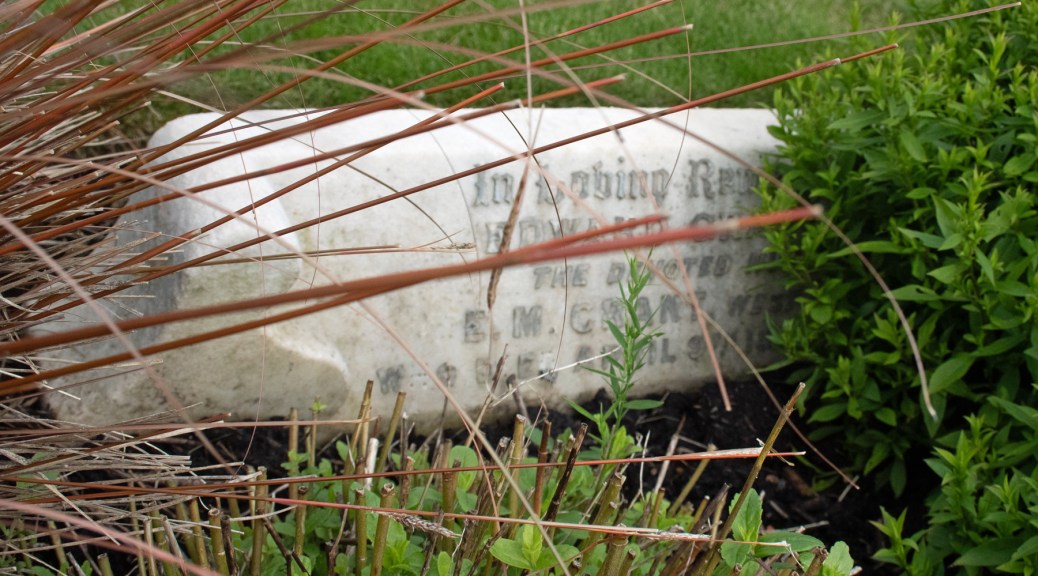
The body of Thomas Davis was laid to rest in the naval section of Woodlands Cemetery, Gillingham, Kent, not far from the naval base he had come to call home.


There is scant information about Thomas’ family. While the 1881 census notes he had a younger brother, Phillip, his service papers give his next-of-kin as cousin William Jones of Wellington Street, Toronto, Canada. (It also notes that communications sent to him were returned unopened.)


Petty Officer 1st Class Edward Grant

Petty Officer 1st Class Edward Grant

The early life of Edward Grant is a challenge to piece together. Born on 14th May 1863 in Newington, Surrey, he was the son of Thomas and Eliza Grant. The family do not appear on any census records, and it is only when Edward joined the Royal Navy in 1878 that he appears on any documents.

Edward’s service papers tell the story of a young man focused on his career. Underage when he joined up, he was given the rank of Boy 2nd Class, and sent to HMS Impregnable, the school ship based in Devonport, for his initial training. He remained on board for over a year, and rose to Boy 1st Class during that time.

Edward’s first full sea-going assignment was on board the screw corvette HMS Ruby. He would be assigned to her for eighteen months, during which time he came of age. Formally inducted into the Royal Navy, he took the rank of Ordinary Seaman. His service records show that he was a little over 5ft (1.53cm) tall, with brown hair, great eyes and a fair complexion.

Ordinary Seaman Grant’s contract was for ten years. During this time, his commitment to the job was clear: serving on a total of right vessels, he was promoted to Able Seaman in December 1882, Leading Seaman in October 1888 and Petty Officer 2nd Class in December 1889.

When his contract came to an end, Edward did not hesitate to re-enlist. He completed another decade of service, spending much of that time as a Boatman for the Coastguard on the Northumbrian coast.

It was while he was serving in Crastor that he met Elizabeth Smailes. She was a grocer’s daughter from nearby Dunstan, and the couple married in Alnwick on 14th February 1893. Edward and Eliabeth would go on to have five children, all girls, between 1896 and 1907.

By the time of the 1901 census, the Grants family were living in the Royal Naval Reserve Barracks in Hartlepool, County Durham. That November Edward was formally stood down to reserve status, having completed 20 years with the Royal Navy.

The 1911 census found Edward and the family living at the Guardians Offices at Hart Road in Hartlepool. A naval pensioner, he was employed as a caretaker for the town’s Board of Guardians, and the accommodation came with the job. Also living with them was Elizabeth’s mother, 83-year-old widow, Jane Smailes.

When war broke out, Edward stepped up to play his part once more. Now 51 years of age, he took on the role of Petty Officer 2nd Class once more: his papers show that he was now 5ft 5.5ins (1.66m) tall and had tattoos of a sailor woman and the words True Love on his left arm.

Petty Officer Grant remained firmly shore based, and was billeted at HMS Pembroke, the Royal Naval Dockyard in Chatham, Kent. He served for three years, and was promoted to Petty Officer 1st Class in May 1916.

On 9th April 1917, Edward Grant collapsed at his barracks. His passing was quick: he died of an aortic aneurysm and haemorrhage. He was 53 years of age. His body was laid to rest in the naval section of Woodlands Cemetery in Gillingham, not far from the naval base he had known for so many years.


Second Lieutenant Walter Pawson

Second Lieutenant Walter Pawson

Walter William Stead Pawson was born in South Shields, County Durham, on 7th October 1895. The second of six children, his parents were Albert and Louise Pawson. Albert was a joiner by trade, and his work took the family north for a while. The 1901 census found them living in Glasgow, but by the time Walter’s youngest sibling was born in 1905, they were back in County Durham once more.

Little further information is available about Walter’s early life, but in around 1912, he sought a new life for himself, and emigrated to California. When war broke out, however, he felt the need to serve his home country and enlisted on 5th June 1917. His US draft card show that he was working as a clerk at the Hotel de Luxe in Long Beach, California. He was noted as being tall and slender with blue eyes and light brown hair. The document also confirms two years’ voluntary service in the militia while in Scotland, during which time he reached the rank of Lance Corporal.

The next record for Walter is a second enlistment document, this time on 6th September 1917. Signing up in Toronto, Canada, he was now joining the country’s Royal Flying Corps. Whether he had been turned down for US service, of whether he felt joining the Canadian Expeditionary Force offered him better options is unclear.

Returning to Britain, he took a commission in the Royal Flying Corps, and was attached to the 70th Training Squadron based in Hampshire. His service papers do not give much detail of the man he had become, but do note his height as 6ft (1.83m).

Second Lieutenant Pawson spent the next few months training. On the 6th Mary 1918, he was piloting an Avro 504J biplane, when things went wrong. He was looping the aircraft, when it fell into a spin and he was unable to recover it. The aeroplane crashed to the ground and Walter was killed.

The RAF Casualty Card noted that: “The court having carefully considered the evidence and having viewed the wreckage are of the opinion that the accident… resulting the fatal injuries to the pilot… was due to an error of judgement on the part of the pilot who was under instruction at the time.”

Walter was 22 years of age when he died. An obituary stated that he was a “bright promising youth, and a splendid type of British manhood he us but one of the many precious lives lost through this terrible war.” [Jarrow Express: Friday 24th May 1918]

Walter William Stead Pawson was laid to rest in the graveyard of St Mary’s Church, East Boldre, Hampshire, not far from the airfield he had so recently called home.


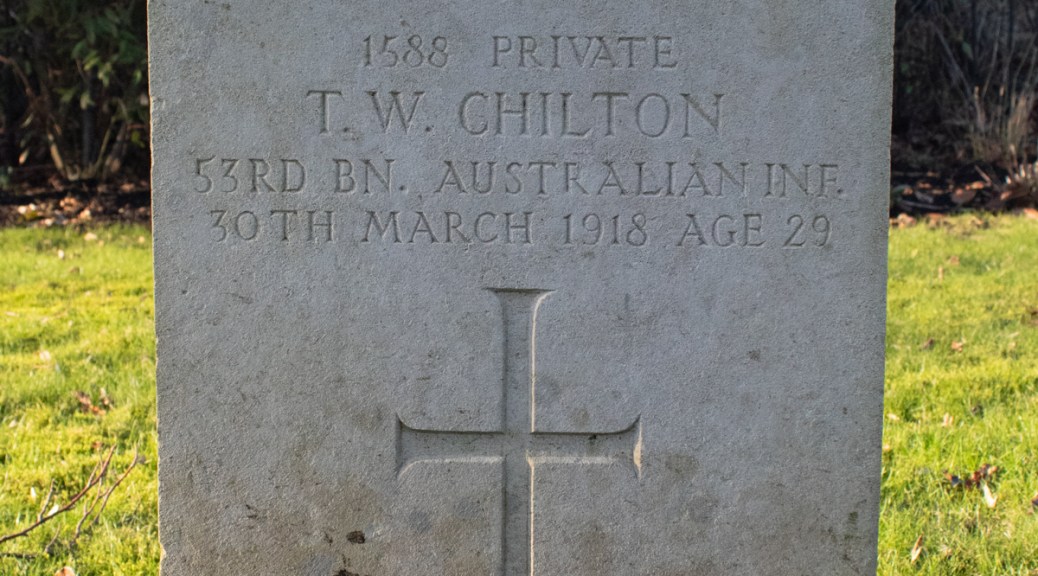
Private Thomas Chilton

Private Thomas Chilton

The early life of Thomas William Chilton is a challenge to unpick. Born in January 1888, his mother is recorded as Sarah Chilton. Documents refer to his place of birth as Darlington, County Durham, or Ripon, Yorkshire, although there are no records to corroborate either location.

When he finished his schooling Thomas found work as a farm labourer, but he had a sense of adventure. By 1911, he had emigrated to Australia to make a new life for himself as a farmer in New South Wales.

War broke out in the summer of 1914, and Thomas would step up to play his part. He enlisted in the Australian Imperial Force on 9th October 1916, his service records showing that he had previously volunteered for the 1st Battalion of the Australian Imperial Forces, but had been discharged on account of wounds. Private Chilton’s papers note that he was 5ft 9ins (1.75m) tall and weighed 159lbs (72.1kg). He had brown hair, blue eyes and a fresh complexion.

Thomas spent the next couple of months training, before his unit was dispatched overseas. He boarded the troop ship A24 Benalla on 9th November 1916, making the journey from Sydney to Devonport in two months. On 10th January, he was marched in to camp in Perham Down, Wiltshire, in preparation for the move to France.

Attached to the 53rd Battalion of the Australian Infantry, Private Chilton arrived in France on 26th April 1917. He was sent to the front, but just three weeks later was wounded by shrapnel in his feet, right side and face. He was sent to a casualty clearing station before being medically evacuated to Britain for treatment. Initially admitted to hospital in Wandsworth, Surrey, over the next few weeks he was moved to wards in Chelsea and Holborn in Middlesex.

Thomas recovered from his injuries and, by August 1917, he had been discharged from hospital. He had two weeks’ leave, before reporting back to his unit in Perham Down. Within days of arriving, he was charged with going AWOL, being absent from 3:30pm on 24th August to 4:30pm on 25th August. The result of his misdemeanour is unclear, but his records suggest he did not cross the line again.

In November 1917, Private Chilton was in hospital again, this time suffering from a bour of gastritis. He was admitted to the military hospital in Sutton Veny, Wiltshire, and, after being discharged on 3rd December, his time would be split between the ANZAC camps here and in nearby Codford.

Thomas undertook more training in January 1918, completing a course in signalling. That spring, however, his health took another downturn, and he contracted pneumonia. He was admitted to the No. 3 New Zealand General Hospital in Codford, but the condition would prove his undoing. Private Chilton passed away on 30th March 1918, at the age of 30 years old.

Although his mother was living in Yorkshire, the body of Thomas William Chilton was not returned home for burial. Instead he was laid to rest in the ANZAC graveyard extension of St Mary’s Church in Codford.


Thomas’ papers confirm that his brother was in attendance, and, although his name is not mentioned, it is likely to have been Ewden Auton, Sarah’s son, with whom Thomas’ will was kept for safe keeping.


Leading Stoker Andrew Blakey

Leading Stoker Andrew Blakey

Andrew Dryden Blakey was born on 14th October 1873 in Jarrow, County Durham. One of twelve children, his parents were John and Jane Blakey. John was a joiner by trade, and the family were brought up at 71 Hedley Street, South Shields.

When he completed his schooling, Andrew was set on broadening his horizons. On 21st January 1899 he enlisted in the Royal Navy as a Stoker. Full details of his time in the navy have been lost to time, but by the time he reached the end of his contract, he had spent thirteen years at sea, and had risen to the rank of Leading Stoker.

On 4th February 1902, Andrew married Eleanor Slater, a labourer’s daughter from South Shields. The have five children, and, while her husband was at sea, she would take rooms with her uncle.

Leading Stoker Blakey was stood down to reserve status on 30th July 1913. His service records at that point show that he was 5ft 3.5ins (1.61m) tall, with blue eyes and a fair complexion. He was also noted as having a number of tattoos: clasped hands and a star on his right forearm, and his initials on the left.

When war broke out, Leading Stoker Blakey was called into action once more. After an initial assignment on board the battleship HMS Duncan, his time was split between HMS Pembroke and HMS Wildfire, the Kent shore bases at Chatham and Sheerness respectively.

Andrew’s health was becoming impacted by this point, however, and, in the spring of 1917, he was admitted to the Royal Naval Hospital in Chatham with carcinoma of the colon. The condition would ultimately take his life: he died on 4th May 1917, at the age of 43 years old.

The body of Andrew Dryden Blakey was laid to rest in the naval section of Woodlands Cemetery, Gillingham, Kent, not far from the Chatham Dockyard, he had for so long called home.


Stoker 1st Class William Fawkes

Stoker 1st Class William Fawkes

William Fawkes was born on 31st July 1883 in South Shields, Country Durham. One of seven children, his parents were called William and Ann. William Sr was a steam crane operator in the local docks, and the 1891 census found the family living with Ann’s widowed husband Ralph in an apartment on Bedford Street.

Ralph died not long after the census was taken, and it seems that William and Ann took over the tenancy. The 1901 return found the family living at 8 Bedford Street, this noted as being a private home. William Jr had finished school and was employed as a labourer to a blacksmith; three of his sibling were also gainfully employed, the family managing to scratch together enough of a living to pay the rent.

By the start of 1903, William Jr was starting to get itchy feet, and sought out a career on the ocean wave. On 5th January he enlisted in the Royal Navy as a Stoker 2nd Class, and was sent to HMS Pembroke, the Royal Naval Dockyard in Chatham, Kent, for his training. His service records confirm that he was 5ft 3.5ins (1.61m) tall, with bark hair, brown eyes and a fair complexion. He was also noted as having his initials – WH – tattooed on the back of his right hand.

Stoker Fawkes completed his training in October 1903, and was sent to the battleship HMS Sans Pareil as his first posting. He only remained on board for a couple of months, before a move to another battleship, HMS Resolution. In June 1904, he was transferred again, to HMS Swiftsure, a third battleship that he would call home for the next three years.

During his time on board Swiftsure, William was promoted, gaining the rank of Stoker 1st Class for his work. Over the next decade, he served on a further seven ships, returning to his base in Kent between voyages.

In the spring of 1904, William married Mary Hornby. The daughter of a publican, she had continued to support her mother and siblings after his death in 1897. With William at sea, the 1911 census found her living in a one-roomed apartment on Commercial Road in South Shields, together with her mother, Euphemia, and her son, James. He was born a couple of years before she married William and bore her maiden name: it is unclear whether James was her husband’s son.

By the summer of 1914, war had been declared, and Stoker 1st Class Fawkes had been assigned to another battleship, HMS Formidable. She was part of the Channel Fleet, her role to patrol the seas of the southern coast of Britain.

Early on the morning of 1st January 1915, while off the Dorset coast, she was torpedoed by the German submarine U-24. Other ships in her convoy came to her aid, but it would prove fruitless. After a couple of hours she sank. 120 members of the crew were saved, but more than 540 officer and crew – including Stoker 1st Class Fawkes – were lost. He was 31 years of age.

William Fawkes’ body was one of those recovered and identified. It seems that Mary was unable to cover the cost of a funeral. Her husband was, instead, laid to rest in a communal grave in Lyme Regis Cemetery, in the hills above the Dorset town where he had been brought ashore.


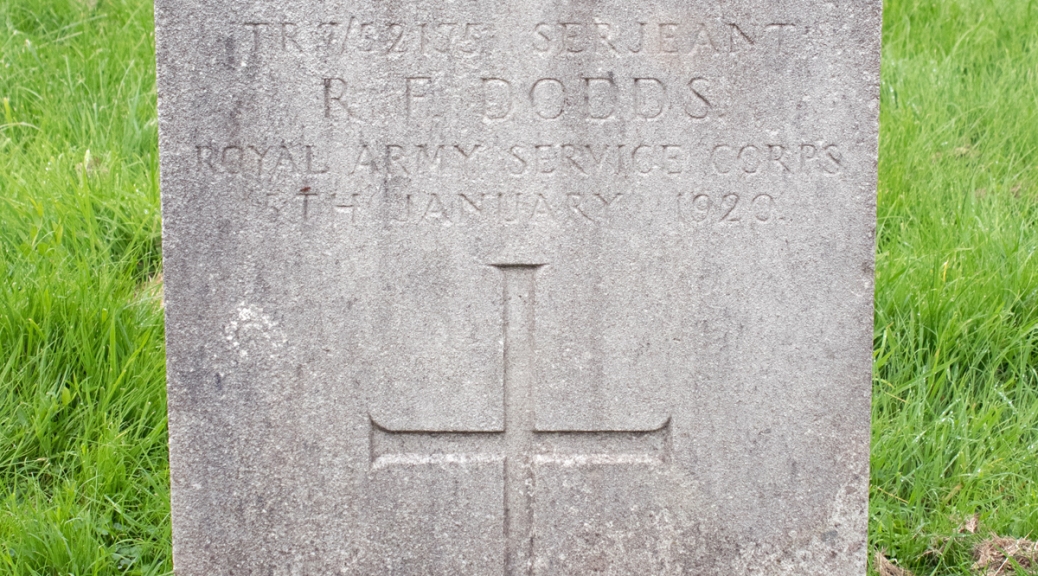
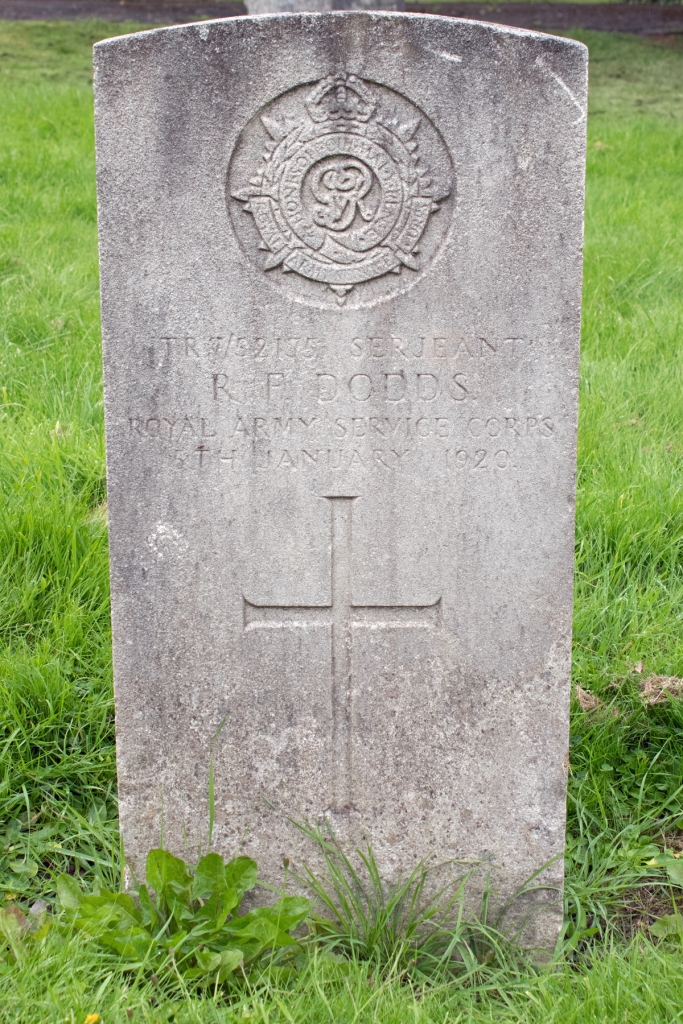
Serjeant Robert Dodds

Serjeant Robert Dodds

Robert Frederic Dodds was born in 1874 in Darlington, Country Durham. The third of nine children, his parents were Robert and Elizabeth Dodds. Robert Sr was a carter and furniture remover and, when he finished his schooling, Robert Jr joined his father in his work.

Robert Sr died in 1898, at the age of 61. Whether this was a catalyst for his son to move on is unclear, but by the following year, Robert Jr was working as a labourer in Weston-super-Mare, Somerset. On 16th September 1899, he married Elizabeth Counsell, a fisherman’s daughter from the town.

It seems that Robert was keen to build a life for his new wife: the next census, taken in 1901, found the couple living in Cardiff, Glamorgan, where he was employed as a stone mason. The Dodds remained in Wales for the next decade, having three children – Lily, William and Rosie – there. By the spring of 1911, however, they were back in Somerset, living in a three-roomed cottage in Castle Street. Elizabeth had had a fourth child just a month before the census, with a second son, Bertie, adding to the family.

When war came to Britain, Robert stepped up to play his part. He initially joined the Royal Army Veterinary Corps as a Private, and found himself in France on 6th March 1915. Elizabeth, meanwhile, remained at home in Somerset, seeking support from her family. With four children to look after, her workload was to increase again when, just a week after Robert arrived on the Western Front, she gave birth to their fifth child, the patriotically named Frederick Gordon Kitchener Dodds.

Robert remained in the Royal Army Veterinary Corps for the next four years, rising to the rank of Serjeant. Details of his time in the service are unclear, but he survived the war and, on 11th July 1919, he transferred to the Royal Army Service Corps.

Little further information is available about Robert’s life. By the winter of 1919/1920, he was based in Midlothian, Scotland. He was admitted to the 2nd Scottish General Hospital, Edinburgh, although his condition is unclear. Whatever it was, it was to be fatal: he passed away on 6th January 1920, at the age of 45 years old.

Robert Frederic Dodds’ body was taken back to Somerset for burial. He was laid to rest in Highbridge Cemetery.