Tag Archives: Egypt

Serjeant Edwin Lloyd

Serjeant Edwin Lloyd

Edwin Lloyd was born at the start of 1885 and was the youngest of ten children. His father, Henry, was from Bristol; while his mother, Mary, had been born in Ireland.

Henry had been a Serjeant in the armed forces, and his postings are reflected in the places where Edwin and his siblings were born. Henry and Mary’s oldest two children were born in Aden, Arabia (now Yemen), but by 1875, the family were back in England and their next oldest child was born in Dover, Kent. Sarah, the youngest of Edwin’s sisters, was born in Colchester, Essex the following year, but by 1879, Henry had left the army, and had moved the family to Frome, Somerset.

In his retirement, Henry took a job as a grocer, the family living above the shop on the main thoroughfare into the town. Edwin did not follow his father’s trade when he left school; instead the 1901 census lists him as a metal engineer, one of only two of the siblings still living above Henry’s shop.

Henry died in 1907 – a lot of the documentation about his life suggests he was a bit free about his age. The notice in the Somerset Standard announcing his passing gives his age as 69, although it is likely that he was closer to 80.

The following year, Edwin married Florence Emily Letchford in St Matthew’s Church, Bristol. Florence was the daughter of a travelling salesman, but their marriage record sheds more light onto Edwin’s life by this stage and he was recorded as a police constable.

Edwin’s time in the police seems to have been short-lived, however, as, by the census three years later, his role had reverted to memorial brass engraver.

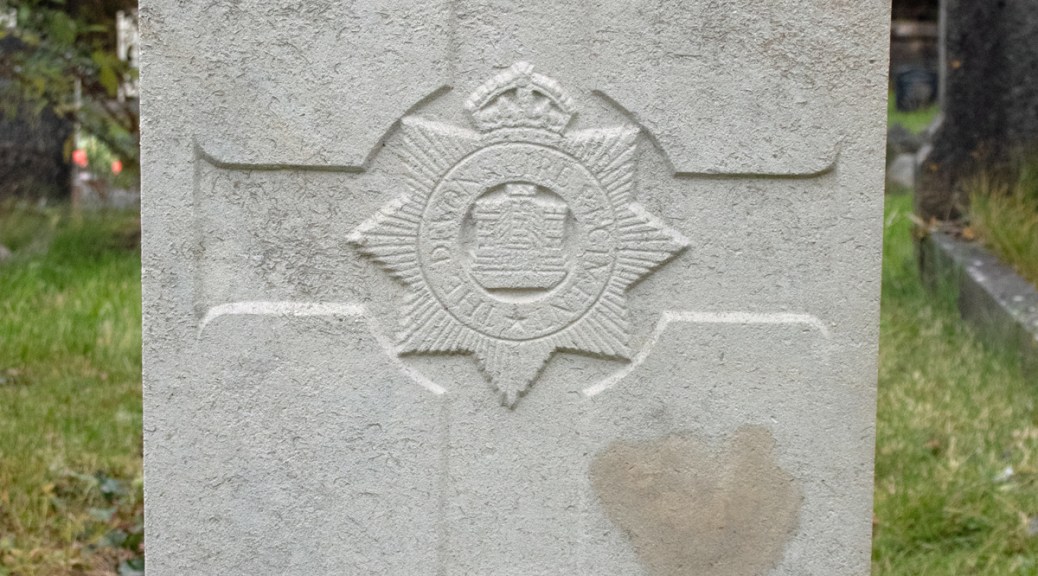
War was coming to Europe, and, while Edwin’s full service records are not available, it’s possible to piece together some of his life in the army. He enlisted in 1915, joining the Dorsetshire Regiment, and was assigned to the 5th (Service) Battalion.

Edwin’s battalion fought at Gallipoli and served in Egypt, moving finally to France in the summer of 1916. He was obviously a diligent soldier, as, by the end of the conflict, he had made the rank of Serjeant.

A local newspaper reported on the end of his army life:

He had served with the forces for about four years, and on his way home from France he was taken ill, and was, when he arrived at home, in a somewhat critical condition. The fatigue of the journey told still further upon him, and he passed away three days after his arrival.

Somerset Standard: Friday 7th March 1919

Serjeant Lloyd’s pension record gives the cause his passing as influenza, pneumonia and syncope, sadly none of which were uncommon for soldiers returning from the front. He was just 34 years old when he died on 25th February 1919.

Edwin Lloyd was laid to rest in the Vallis Road Cemetery (also known as the Dissenters’ Cemetery) in Frome.


Private Joseph Dodge

Private Joseph Dodge

Joseph Dodge was born in the summer of 1883, and was one of twelve children, including eleven boys. His parents were David and Eliza Dodge, who raised their growing family in Stoke-sub-Hamdon, a few miles to the east of Yeovil, Somerset.

David was a mason and stone sawyer, but his children went into other roles when they left school; Joseph found work as an agricultural labourer.

In October 1903, Joseph married Elizabeth Ann Case – better known as Annie – who came from just over the Dorset border in the village of Corscombe. Setting up home in Yeovil itself, the couple went on to have two children – both boys – Walter and Norman.

War was coming to Europe, and Joseph was intent on doing his bit. Full service details are not available, but the documents that exist confirm that he enlisted as a Private in the Wiltshire Regiment. Initially assigned to the 1/4th Battalion (which served in Egypt), he transferred to the 2/4th Battalion (which served in India).

Sadly, there is no documentation to give service dates, it is impossible to establish when or if Joseph actually served in these locations. India seems likely, however, as he later transferred to the 1st Garrison Battalion of the East Yorkshire Regiment, which was based in Lucknow.

Private Dodge survived the war and came back to England, but seems to have contracted pneumonia on the journey home. Admitted to hospital in Liverpool, the condition sadly got the better of him. He passed away on 16th February 1919, at the age of 35 years old.

Joseph’s body was brought back to the county of his birth; he was laid to rest in Yeovil Cemetery.


Joseph came from a very patriotic family, and local newspapers early in the war highlighted that many of the Stoke-sub-Hamdon brothers had enlisted to serve King and Country.

At the time of the article, six had enlisted – Thomas, Arthur and Percy (all in the Somerset Light Infantry), Albert (West Somerset Yeomanry), Evan (Royal Navy) and David (Canadian Infantry).

Corporal David Dodge seems definitely to have distinguished himself. Having emigrated to Canada before the war, he returned to Europe when conflict broke out. An article in the Western Chronicle reported that he had “been awarded the Military Medal for conspicuous bravery on the field under heavy fire.[Western Chronicle: Friday 15th November 1918]

Amazingly, of the seven brothers who fought in the conflict, only Joseph perished.


An earlier series of articles tells the tragic story of another of Joseph’s siblings. Henry Dodge (known as William) had moved to Senghenydd, to the north of Cardiff, in 1910; mining work was plentiful there and he and a number of his fellow villagers had sought money from the black gold.

On the 14th October 1913, and explosion happened in the mine and together with the resulting fire and subsequent poisonous gas outpouring killed more than 430 miners. Initially reported missing, William was later confirmed dead; he was just twenty years old and left a widow and child.


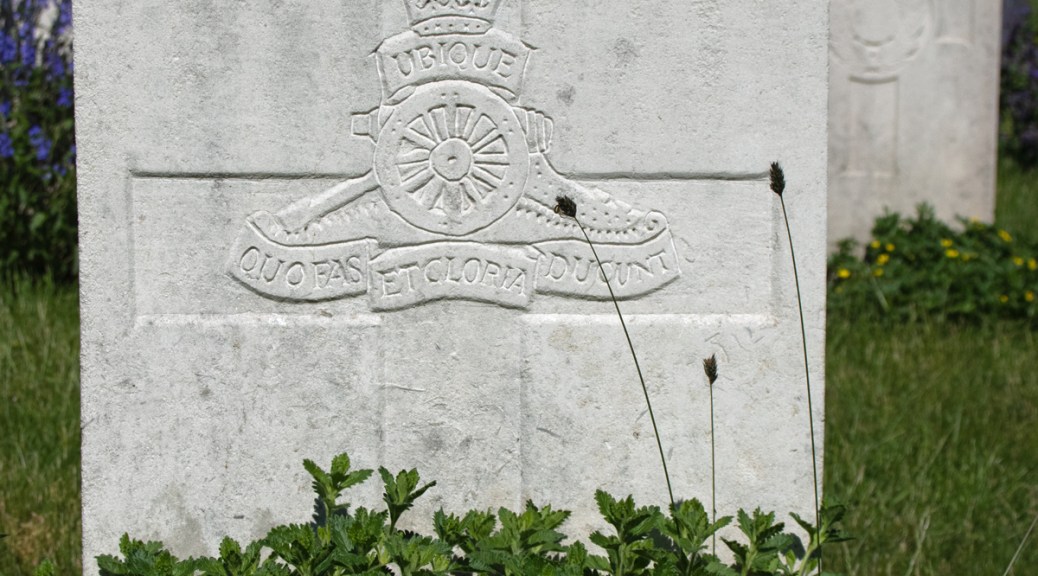
Gunner William Morgan

Gunner William Morgan

William Francis Morgan was born on 22nd January 1884 in Bengal, India. The youngest of three children, he was the son of James Morgan and his wife Mary. Both came from Ireland, marrying in 1876. They moved to London, before James was posted to India as part of his role in the Royal Horse Artillery.

Sadly James died when William was just a toddler; this prompted Mary to move the family back to England. She married again in 1887, to Edward Curling, who was a carpenter in the Royal Artillery, and the family settled on the Isle of Grain in Kent, living in the fort where Edward worked.

Surrounded by those in military service and with an army heritage himself, is it no surprise that William felt drawn to the life. In September 1898 he enlisted in the Royal Garrison Artillery. Though not yet fifteen years old, he stood 5ft 11ins (1.69m) tall and weighed in at 101lbs (46kg). He had a fresh complexion, grey eyes and light brown hair and four distinctive marks were noted – three scars on his head and one on his right knee.

Trumpeter Morgan certainly got to see a lot of the world during his time in the army. After a period on home soil, he was sent to Egypt on Christmas Eve 1901, staying there for just over a year. He moved on to India, returning to England five years later, by which time he had achieved the rank of Gunner.

War was imminent, and in September 1914 he was sent to France as part of the British Expeditionary Force. Barring a short period at home, Gunner Morgan remained on the Western Front for the remainder of the war, finally returning to the UK in January 1919.

William’s time in the army was one of two halves. He had several bouts of illness during his service, coming down with phimosis in 1901, scarlet fever and gonorrhoea in 1902, a fractured clavicle in 1903, pneumonia in 1904, rheumatism in 1906, ague in 1908, pleurisy in 1909, and had to return from France to England for an operation to remove a carbuncle between his shoulder blades in the summer of 1915.

Gunner Morgan was also pulled up for his conduct a few times too. He was punished for neglect of duty in August 1908, disobeyed orders in May 1909, was pulled up for being improperly dressed while in Portsmouth’s Highbury Arms Pub in November 1909 and went AWOL for ten hours on 31st July 1913.

There were positives to William’s service too, however. He was awarded the British and Victory Medals as well as the 1914 Star during the First World War. He was mentioned in dispatches and received the Military Medal in 1917 an the Long Service and Good Conduct Medal two years later.

Sadly, though, after Gunner Morgan’s positive and lengthy military service, his time out of the army was to be brief. Returning to England on 13th January 1919, he contracted influenza and pneumonia and succumbed to the lung conditions within weeks. He passed away on 27th February 1919, at the age of just 35 years of age.

William Francis Morgan was laid to rest in the Woodlands Cemetery, Gillingham, Kent, just minutes’ walk from where his mother now lived.


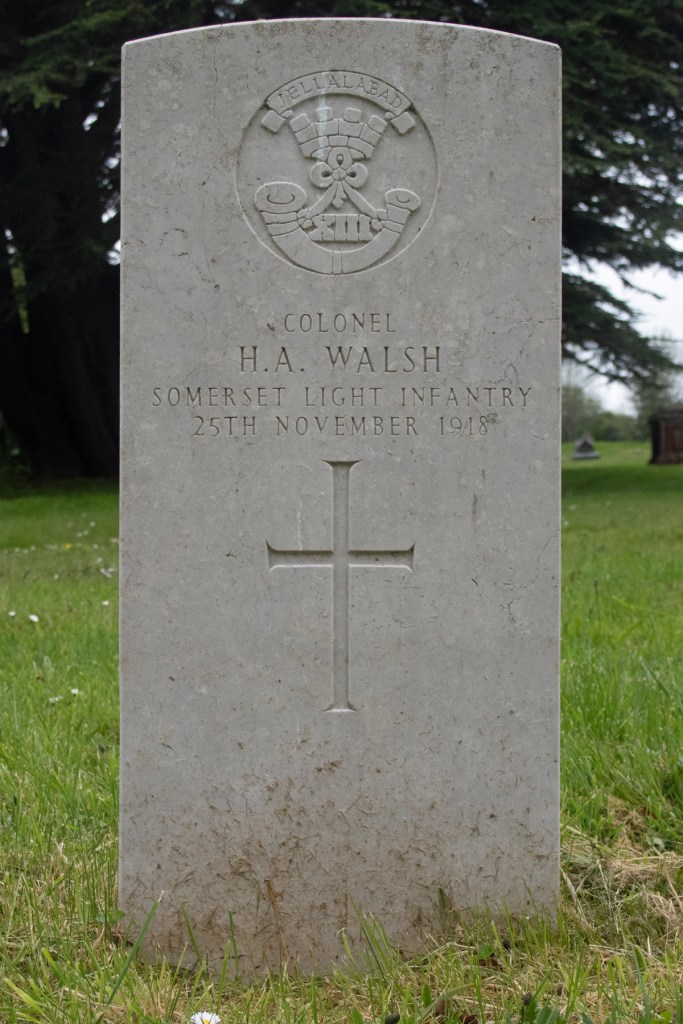
Colonel Henry Walsh

Colonel Henry Walsh

Henry Alfred Walsh was born near Taunton, Somerset, in September 1853, the eldest of five children to Theobald and Isabel Walsh. Theobald was a magistrate with some military connections, and it was military service that Henry went into.

While full details aren’t readily available, the 1881 census finds him living in Devon, with his employment simply as “military”. Presumably, he had enrolled in the Somerset Light Infantry, the regiment he had a lifelong commitment to.

By the early 1880s, Henry had married Ann Sparrow. The couple went on to have three children – Theobald, Gwladys and Archibald.

The 1891 finds Henry and his family in the Somerset Light Infantry Barracks at Farnborough. Henry was a Sergeant Major by this time, and was assigned to the 1st Battalion. Also living in the same accommodation – and presumably helping Ann with the running of the household – were a governess and cook.

The census also highlights the transient nature of army life. Henry, as mentioned before, was born in Taunton, while Ann came from Plymouth in Devon. Theobald was born in Taunton, while Gwladys and her younger brother were both born in Devon. Military service brought a sense of stability, but not necessarily geographically.

Henry eventually took a step back from the army; by the time of the 1911 census, he was living back in Bishop’s Hull, the village of his birth in Somerset, and listed as a retired colonel. When war broke out, however, he volunteered his services again, and was appointed the officer commanding the No. 8 District in Exeter.


While Henry came out of retirement to serve his country again, his two sons had also forged their own military careers. Theobald also joined the Somerset Light Infantry, also achieving the rank of Colonel. Archibald joined the Royal Horse Artillery; his story can be found by clicking here.


When Henry passed away in 1918, local newspapers were unanimous in their praise of the long-serving officer, outlining both his military service and his charitable work.

Colonel Walsh had had a distinguished military career, dating from 1870, when he joined the old Somerset Militia at Taunton. [He] was created a CB in 1905, and held the medal and clasp for Zululand, and the medal and two clasps and the Khedive’s Bronze Star for his services in Egypt.

He was a JP for Somerset and a member of the Army and Navy Club. [He] threw himself wholeheartedly into the work of the Boy Scout organisation.

The greatest work in which Colonel Walsh had been identified during the war, however, was undoubtedly that of feeding the Somerset prisoners of war in Germany, and his name will ever be linked in grateful memory with that of his honoured wife for having raised and maintained a fund capable of bearing the strain of over £3,000 expenditure per month to save the Somerset men in Germany from starvation.

Well Journal: Friday 29th November 1918

Ironically, for all this exultation, there is no immediate record of the cause of Henry’s death; given his age – he was 65 when he passed – it seems likely that he died following an illness.

Colonel Henry Alfred Walsh lies at rest in St Mary’s Cemetery in Taunton, Somerset. He is buried next to his son, Archibald.


Colonel Henry Walsh