Tag Archives: Fireman

Fireman Arthur O’Keefe

Fireman Arthur O’Keefe

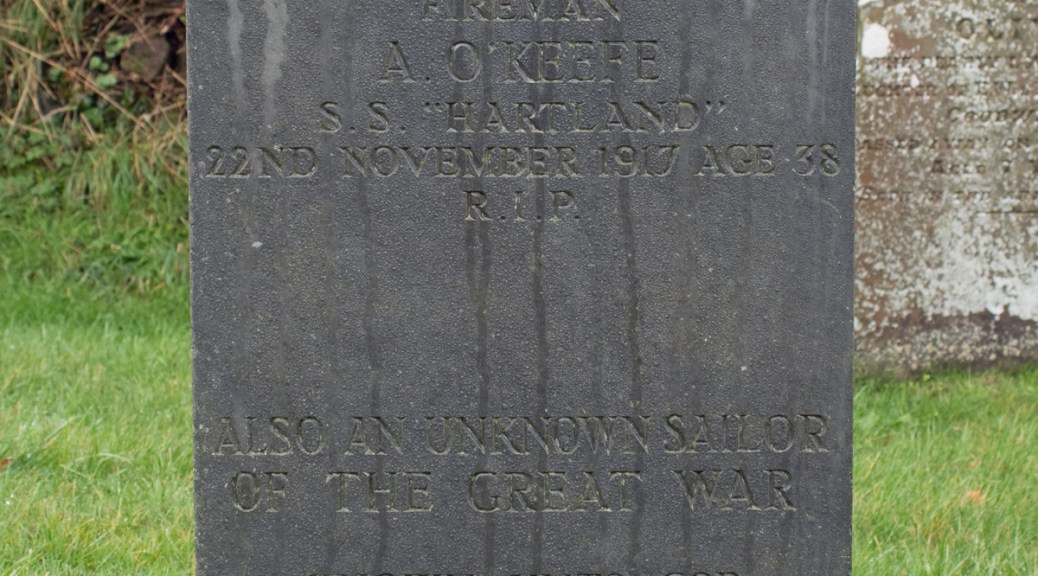
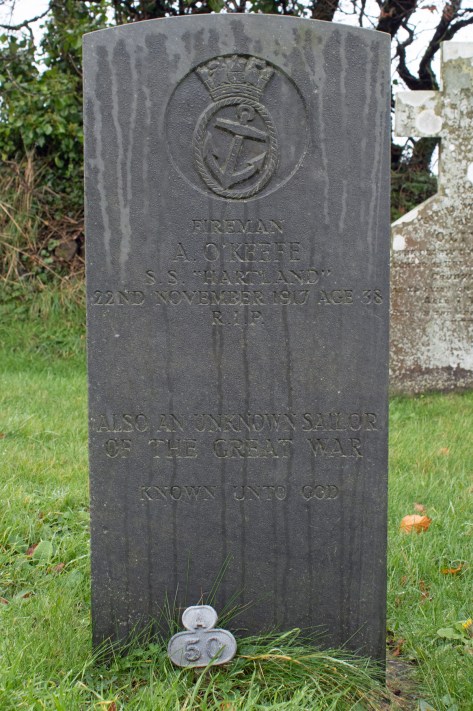
O’KEEFE Fireman Arthur. SS “Hartland.” 22nd Nov., 1917. Age 38. Son of John and Mary O’Keefe of Cork.

The search for information about Arthur O’Keefe has proved a challenging one. He does not appear with his parents on any census records, and there is precious little documentation about his life.

Arthur found work as a Fireman in the Mercantile Marine, and served on board at least four ships. In the autumn of 1917, he was based out of Glasgow, Scotland, and was attached to the SS Hartland. She had been requisitioned by the Admiralty, and was put to use transporting wheat from India.

On 22nd November the Hartland was travelling from Glasgow to Barry, South Wales, when she was hit by a torpedo from the submarine U-97, 21 miles south west of Bardsey Island. The ship was damaged, and two of the crew – Fireman O’Keefe and Fireman Thomas McGaw – were killed.

An American destroyer, the USS Conyngham, was at the head of the Hartland’s convoy, and managed to rescue the remaining 28 members of the crew, taking them to Holyhead. The Hartland was towed to Fishguard Harbour and refloated.

Arthur O’Keefe was 38 years of age when he was killed. He was laid to rest in Llanwnda Cemetery, not far from Fishguard, Pembrokeshire.


Arthur’s headstone notes that he was buried with an unknown sailor of the Great War. There is no indication who this might have been, but there are no records of his colleague Thomas McGaw being laid to rest. Given both men died in the same incident, and their bodies were transported to Fishguard with their ship, it seems possible that they may have been buried together.


Fireman Robert McQueen

Fireman Robert McQueen

In amongst the rows of naval headstones in the Woodlands Cemetery, Gillingham, Kent, is one dedicated to Robert McQueen. The inscription notes that he was a Fireman on board HMS Princess Irene, a liner that was conscripted by the Royal Navy as a minelayer during the First World War.

The headstone records that he died during the catastrophic explosion on 27th May 1915 that destroyed the ship, killing more than 300 people in the process. It also confirms that Robert was 23 years old when he died.

Birth records identify at least six Robert McQueens born in 1891/92, and without a place of birth, or parental names, it is not possible to definitively confirm which of these was serving on the Princess Irene on that fateful day. He was in what would become the Merchant Navy: their records are sparser than the Royal Navy equivalents, and none match the man who lies buried in Gillingham.

The life of Robert McQueen, therefore, is destined to remain lost to time, although his sacrifice will never be forgotten.


Stoker Thomas McCall

Stoker Thomas McCall

Thomas McCall was born in Bootle, Lancashire, in 1892 and was one of two children to Francis and Elizabeth. Frank was a stoker on the steamers leaving Liverpool docks and, after working at the docks himself, Thomas soon followed his father onto the ships. By the summer of 1911, he had worked as a trimmer on at least two liners, the RMS Carmania and the RMS Empress of Britain.

When war came to Europe, Thomas stepped up, joining the Mercantile Marine Reserve – now better known as the Merchant Navy. By the summer of 1915, he was assigned to the seaplane carrier HMS Vindex, which spent most of the war in the North Sea.

Stoker McCall’s time there was to be brief. Details are sparse, but he passed away on 14th October 1915, with records suggesting this was due to disease. He was just 23 years of age.

Finances may have limited Frank and Elizabeth from bringing their son back to Lancashire: Thomas McCall was instead laid to rest in the Roman Catholic section of Woodlands Cemetery in Gillingham, Kent, not far from the dockyard in which he had been based.


Thomas’ headstone gives MaCall as his surname. This is an error: his name was spelt McCall.


Fireman John Donoghue

Fireman John Donoghue

In the naval section of the Woodlands Cemetery in Gillingham, Kent, stands a headstone to a John Donoghue. The stone states that he was a Fireman on board HMS Princess Irene and that he was killed in action on 27th May 1915. He was 25 years of age.

Further research confirms that he was part of the Mercantile Marine Reserve, but there are no records to confirm his service at sea. While John was born in around 1890, with no confirmation of his place of birth, or the names of his parents, it is impossible to narrow down any further details for him.

Records of the Princess Irene’s crew do not include a John Donoghue, although this does not necessarily mean that he was not serving on board, only that records no longer exist. The fact that he was granted an individual headstone, rather than being commemorated in the mass grave that is also situated in the Woodlands Cemetery suggests that his body was able to be identified.

Sadly, however, Fireman John Donoghue’s life is destined to be lost to time, his legacy to be one of the 352 souls lost during the explosion and sinking of the ship on board which he served.


Fireman Nier Kaloo

Fireman Nier Kaloo

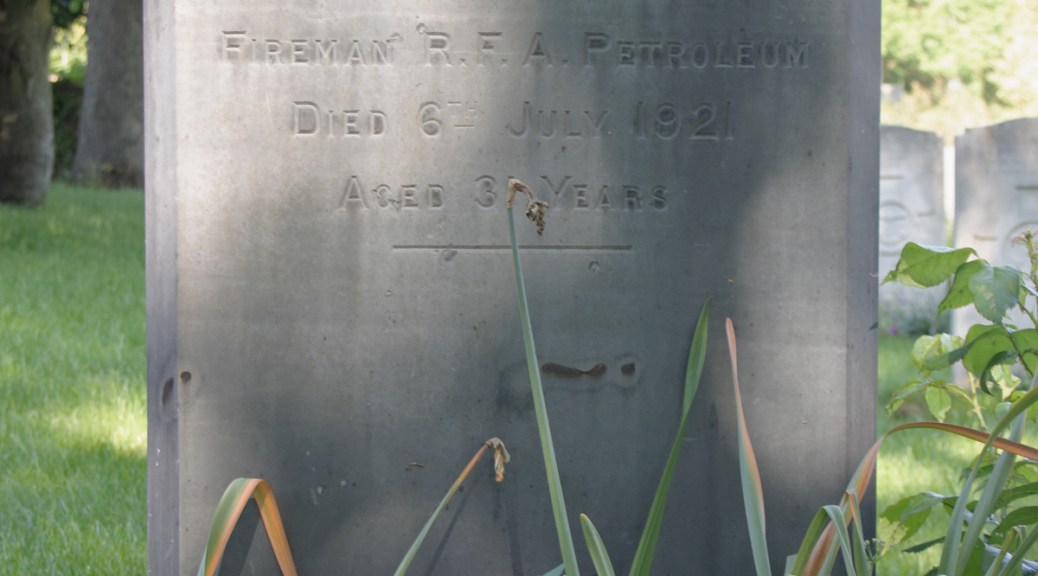
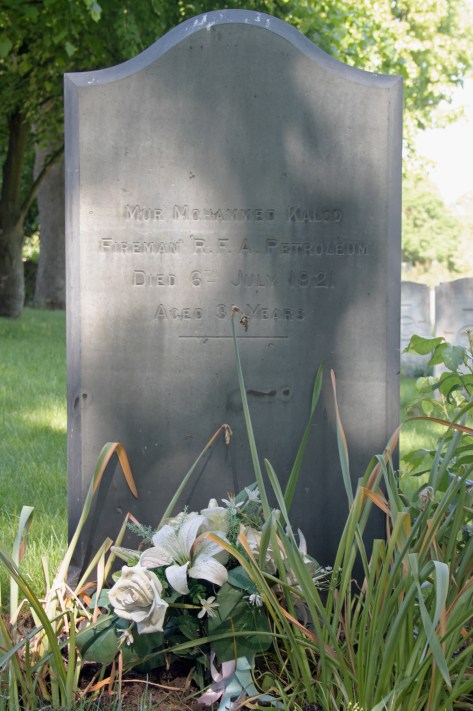
Sadly, there is extremely limited information on the man commemorated no this gravestone.

Nier Mohammed Kaloo (or, alternatively, Mur Muhammed Kaloo), was born in around 1890. He joined the Royal Navy and, by the end of the war at the latest, he had been transferred to the Royal Auxiliary Fleet as a Fireman.

His ship, the SS Petroleum, acted as a tanker for other naval vessels. In the immediate aftermath of the war, she travelled between Portsmouth and Copenhagen, but soon took on longer trips, to Hong Kong and the Far East.

It was after returning from Singapore in the first half of 1921 that Fireman Kaloo died, although the cause of his passing is lost to time. He was 31 years old. The ship having moored at the Naval Dockyard in Chatham, Kent, he was laid to rest in the Woodlands Cemetery in nearby Gillingham.