Tag Archives: Stoker

Stoker 2nd Class Sydney Rigden

Stoker 2nd Class Sydney Rigden

Sydney Gordon Rigden was born in Whitstable, Kent, on 29th June 1897. One of six children, his parents were William and Annie Rigden. William was a fishmonger, and the family lived above the shop, at No. 43 High Street.

When Sydney finished his schooling, he took work as a general labourer. He was called upon to serve his King and Country, however, and, on 27th June 1916, he was conscripted into the Royal Navy. Stoker 2nd Class Rigden’s service papers note that he was 5ft 6ins (1.68m) tall, with brown hair, grey eyes and a fresh complexion.

Sydney was sent along the coast to HMS Pembroke, also known as Chatham Dockyard, for his training. He remained there for a couple of months, before being given his first and only posting, on board the light cruiser HMS Dartmouth. A seasoned ship, she had already seen action in Africa and the South Atlantic and, in the year before Stoker Rigden joined her, she formed part of the support for the Gallipoli campaign.

Stoker Rigden spent seven months with Dartmouth, mush of that serving in the Adriatic. On 1st May 1917 he was promoted to Stoker 1st Class, and he returned to Britain towards the end of that month.

In the summer of 1917, Sydney married his childhood sweetheart, Annie Mount. The daughter of a carter, by the time of the 1911 census, she had taken up work as a domestic servant for retired commercial traveller Alexander Paterson and his family. Just 14 years old at this point, she lived with the family, at 186 Lower Clapton Road, London.

After the wedding, Stoker 1st Class Rigden returned to duty, and to HMS Pembroke. The base was a particularly overcrowded place by this point in the war, and temporary additional accommodation was set up. Sydney was one of those to be billeted in the dockyard’s Drill Hall.

On the night of the 3rd September 1917, Chatham came under fire during a daring German air raid. Two of the bombs that were dropped landed squarely on the Drill Hall, shattering its glass roof, and killing dozens of men who were sleeping below. This included Stoker 1st Class Rigden: he was just 20 years of age.

The body of Sydney Gordon Rigden was taken back to Whitstable for burial. He was laid to rest in the town’s cemetery.


Annie was now widow after just a couple of months’ marriage. Sadly, she disappears from the records, so it is unclear what became of her.


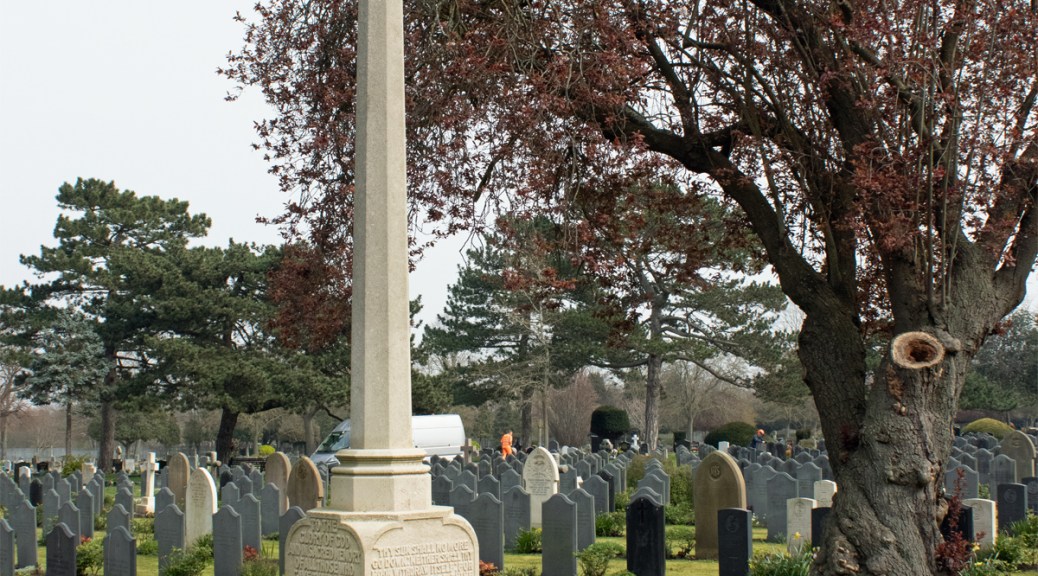
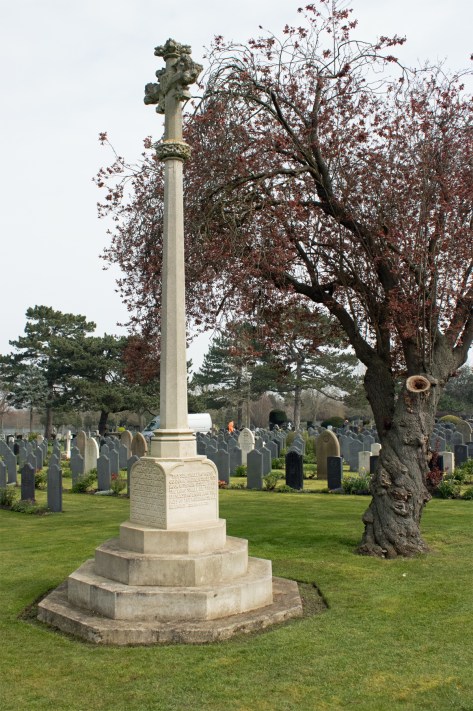
[Note: the photo above is of the memorial to the Chatham Air Raid victims, close to the mass grave for those whose bodies were not identified, in Woodlands Cemetery, Gillingham, Kent.]


Stoker 1st Class James Richards

Stoker 1st Class James Richards

James Richards was born in Liverpool, Lancashire, on 4th September 1891. The second of nine children, his parents were John and Christina Richards. John was a carter for the local railway and, according to the 1901 census, the family had rooms at 41 Paget Street, to the north of the city centre.

James sought a more permanent career for himself, and enlisted in the Royal Navy. Sadly, his service record has been lost, but the 1911 census return found him listed as one of the 786 crew of the battleship HMS Inflexible. Captained by Charles Napier, at the time of the census, she was moored off Howth Head, near Dublin, Ireland.

By the summer of 1917, Stoker 1st Class Richards found himself at HMS Pembroke, the Royal Naval Dockyard in Chatham, Kent. The base was busy and overcrowded at that point in the war: the battleship HMS Vanguard had been sunk, and its replacement crew were barracked in Chatham, waiting for new assignments. Add to this an outbreak of spotted fever, and temporary accommodation was set up to help space out the billets and slow its transmission. It was in this accommodation – set up in Pembroke’s Drill Hall, that James found himself sleeping.

On the night of the 3rd September 1917, the German air force carried out a daring raid on the North Kent coast. Chatham came under fire, and two bomb scored direct hits on the Drill Hall. Dozens of sleeping men were killed, while countless others, including Stoker 1st Class Richards, were injured.

James was taken to the Royal Naval Hospital in the town, but his wounds would prove too severe. He passed away on 4th September 1917, his 26th birthday.

The body of James Richards was taken back to Lancashire for burial. Strict Roman Catholics, John and Christina laid their son’s body to rest in the city’s Ford Cemetery.


[Note: the photo above is of the memorial to the Chatham Air Raid victims, close to the mass grave for those whose bodies were not identified, in Woodlands Cemetery, Gillingham, Kent.]


Leading Stoker Bertie Pegram

Leading Stoker Bertie Pegram

Bertie Pegram was born in the Hertfordshire village of Westmill, on 24th July 1893. The third of four children – all of them boys – his parents were John and Eliza Pegram. John was a farm labourer, and his oldest two sons followed him into that line of work.

Bertie chose a different path. however and the 1911 census showed that he had taken employment at a local cement works. This was not a career, however, and so, on 11th August 1911, Bertie enlisted in the Royal Navy as a Stoker 2nd Class. His papers show that he was 5ft 5ins (1.65m) tall, with dark brown hair, grey eyes and a dark complexion. He was also noted as having a scar on his left leg.

Stoker Pegram was sent to HMS Pembroke, the Royal Naval Dockyard in Chatham, Kent, for his training. At the start of 1912, he was given his first posting, on board the battle cruiser HMS Indomitable. This would be an long term move and she remained his home for more than five years.

In September 1912, Bertie was promoted to Stoker 1st Class; this was followed with another promotion – to Acting Leading Stoker – in July 1915. The rise in rank seemed not to suit him, however, and he reverted to Stoker 1st Class just six months later.

Indomitable was in the Eastern Mediterranean when war broke out, and was one of the ships that bombarded the Ottoman defences in the Dardanelles. During Bertie’s time on board, she also fought at the Battles of Dogger Bank and Jutland.

In September 1916, Bertie rose to Acting Leading Stoker once more. The promotion was made permanent on 29th March 1917, and he remained with Indomitable for the next couple of months.

On 1st July 1917, Leading Stoker Pegram returned to shore, and HMS Pembroke. At this point in the war, she was a bustling and overcrowded place. The sinking of HMS Vanguard left her replacement crew in limbo, stuck in the Kent dockyard while new assignments were found. There had also been an outbreak of meningitis, and the decision was taken to set up temporary accommodation to slow the spread of the disease. Bertie found himself billeted in the dockyard’s Drill Hall.

British defences were rendering day time German air raids less and less effective, and the decision was taken to trial a bombing raid after dark. On the night of the 3rd September the first of these attacks took place, and Chatham found itself in the firing line. The Drill Hall received two direct hits, and dozens of men inside were killed. Leading Stoker Pegram was badly wounded, and rushed to the Naval Hospital in the town. Sadly, Bertie’s injuries would prove too severe and he died the day after the raid: he was 24 years of age.

The body of Bertie Pegram was taken back to Hertfordshire for burial. He was laid to rest in the graveyard of St Mary’s Church, Westmill, just a short walk from the family home.


[Note: the photo above is of the memorial to the Chatham Air Raid victims, close to the mass grave for those whose bodies were not identified, in Woodlands Cemetery, Gillingham, Kent.]


Stoker 1st Class William Payne

Stoker 1st Class William Payne

William John Payne was born on the 29th November 1896. The second youngest of ten children, his parents were Alfred and Alice. Alfred was a cab driver from St John’s Wood, Middlesex, but the family were born and raised in Paddington. The 1901 census recorded them lodging in a shared house at 100 Woodchester Street, but by 1911, they had taken two rooms around the corner at 89 Cirencester Street. Both were within easy reach of both Paddington Station and the Grand Union Canal.

When he completed his schooling, William found work as a van guard, possibly for the railway. On 19th July 1915, with war raging across Europe, he stepped up to serve his country, and enlisted in the Royal Navy. His papers show that he was 5ft 5ins (1.65m) tall, with light brown hair, grey eyes and a fresh complexion. He was recorded as having a scar on the back of his right hand, and tattoos on both forearms.

Stoker 2nd Class Payne was sent to HMS Pembroke, the Royal Naval Dockyard in Chatham, Kent, for his training. On 13th October 1915, he was given his first posting, on board the depot ship HMS Tyne. Based in the Firth of Forth, she provided support to the naval fleet patrolling the area.

Tyne remained William’s home for the next year, and, during this time, he was promoted to Stoker 1st Class. After a short spell back in Chatham in September 1916, William was reassigned to HMS Wallington. She was a shore base on the River Humber, and from here he would have had short postings on local patrols in the area.

By the spring of 1917, however, Stoker Payne was back at Pembroke. The dockyard was a busy and overcrowded place at this point in the war: the sinking of HMS Vanguard in July led to it’s replacement crew being stuck at the base while awaiting new assignments. In addition to this, an outbreak of spotted fever meant that sailors’ bunks had to be spaced out in an attempt to slow the spread of the disease. As a result, William found himself billeted in temporary accommodation in the dockyard’s Drill Hall.

On the night of the 3rd September 1917, the German air force carried out a daring raid on North Kent. Chatham was in the line of fire, and two bombs landed squarely on the Drill Hall. The glass roof shattered, raining shards down on the sleeping men beneath. Stoker 1st Class Payne was one of the dozens killed in the explosions: he was 20 years of age.

The body of William John Payne was taken back to London for burial. He was laid to rest in Paddington Cemetery, just a short walk from where his family were still living.


William was not the only one of his siblings to be killed during the war. His older brother Walter enlisted in the opening weeks of the conflict and, as a Private, he was attached to the 2nd Battalion of the King’s Royal Rifle Corps.

Private Payne quickly found himself on the Western Front, his unit fighting at Ypres in 1914, and Loos the following year. In April 1916 he was badly wounded, and admitted to a hospital near Béthune. His wounds would prove too severe, however, and he succumbed to them on 4th April: he was 25 years of age.

The body of Private Walter Payne was laid to rest in Béthune Town Cemetery.


[Note: the photo above is of the memorial to the Chatham Air Raid victims, close to the mass grave for those whose bodies were not identified, in Woodlands Cemetery, Gillingham, Kent.]


Stoker 1st Class Alfred Moss

Stoker 1st Class Alfred Moss

Alfred George Moss was born in West Ham, Essex, on 14th February 1885. One of eight children, his parents were John and Sarah Moss. John was a leather worker, but Alfred initially found work as a butcher’s assistant when he completed his schooling.

Butchery wasn’t the career that Alfred sought, however, and, on 12th November 1903, he enlisted in the Royal Navy as a Stoker 2nd Class. His service papers note that he was 5ft 9ins (1.75m) tall, with brown hair, hazel eyes and a fresh complexion. He was also recorded as having a scar on both knees.

Stoker Moss was sent to HMS Acheron, a training ship based on the Thames Estuary, for his initial service. He stayed there until July 1904, when he was given his first sea-going assignment, on board the cruiser HMS Terpsichore. She would remain his home for the next eighteen months, during which he was promoted to Stoker 1st Class.

Alfred seems to have been a steady worker, his annual reviews noting a very good character. In November 1908, having come to the end of his five year contract, he was stood down to reserve status. He had served on four vessels and, when not at sea, HMS Pembroke, the Royal Naval Dockyard in Chatham, Kent, became his home from home.

Alfred is missing from the 1911 census, but turns up on 21st December 1913. On that day he married Ellen Lipscombe in All Saints’ Church, West Ham. Nellie, as she was known, was the oldest of seven children to plasterer Tomas Lipscombe. The couple set up home on Grafton Road, Plaistow, and went on to have a son, Thomas, the year after exchanging vows.

When war was declared, Alfred was called back into service. He returned to Pembroke, and spent the next year split between there and HMS Victory, the Royal Naval Dockyard in Portsmouth, Hampshire. In the summer of 1915, Stoker 1st Class Moss was assigned to the cruiser HMS Europa. For the next two years, he would be based in the Eastern Mediterranean, supporting the troops in and around the Gallipoli peninsula.

By the summer of 1917, Alfred was back at Pembroke, which, by this point in the war, was a busy and overcrowded place. The sinking of HMS Vanguard meant that her replacement crew were stuck in port waiting to be reassigned, and an outbreak of meningitis demanded more space to slow or stop its spread. Stoker 1st Class Moss found himself barracked in overflow accommodation set up in the dockyard’s Drill Hall.

On the night of the 3rd September 1917, German bombers launched an audacious raid on the North Kent Coast. Two bombs landed on the Drill Hall, shattering its glass roof, and killing dozens of sleeping servicemen beneath. Stoker 1st Class Moss was one of those who lost his life: He was 32 years of age.

The body of Alfred George Moss was taken back to Essex for burial. He was laid to rest in West Ham Cemetery, not far from where his grieving widow and young son were living.


[Note: the photo above is of the memorial to the Chatham Air Raid victims, close to the mass grave for those whose bodies were not identified, in Woodlands Cemetery, Gillingham, Kent.]


Stoker Neil Moore

Leading Stoker Neil Moore

Neil Moore was born on 17th April 1882 in Glasgow, Lanarkshire. One of twelve children, he was the second son to John and Jane Moore. John was a cabinetmaker and, according to the 1891 census, the family lived in rooms at 13 Melville Street in the city’s Govan district.

Although little is known about Neil’s early life, his enlistment in the Royal Naval Reserve on 26 July 1904 offers the first clear insight into the young man he had become. His service papers describe him as twenty-two years old, 5 ft 4 in (1.63 m) tall, with grey eyes and fair hair.

Over the next decade, Stoker Moore travelled the world, taking in Canada and South America. There were times when he was out of work – he was recorded as seeking employment over the winter of 1912 – but his work appears to have been steadfast.

Intriguingly, after a stint on the SS Sardinian, Neil left the Royal Naval Reserve on 17th November 1913. He was re-engaged on 17th December, but is then reported as having deserted just three days later. He was then recorded as being assigned to HMS Wildfire – a shore base in Northwood, Middlesex – on 3rd February 1914.

It is possible that it was around this time that Neil got married. His wife was called Elizabeth, but there is little further information about her.

When war broke out, Stoker Moore appears to have been formally mobilised once more. Over the next three years, he served on half-a-dozen vessels, before finally being attached to HMS Pembroke, the Royal Naval Dockyard in Chatham, Kent, in the spring of 1917.

Over the course of that summer, Pembroke was hit by two significant challenges. The battleship HMS Vanguard was sunk in Scapa Flow, leaving its planned replacement crew stuck in the Kent dockyard with nowhere to go. At the same time, a bout of spotted fever broke out and more space was needed to slow the transmission of the contagious disease.

Pembroke’s Drill Hall was brought into use as temporary accommodation, and this is where, in September 1917, Stoker Moore found himself billeted.

On the night of the 3rd September, the German air force carried out an audacious raid on North Kent. Four aircraft bombed Chatham, and two devices landed direct hits on the Drill Hall. The glass roof shattered, raining shards onto the sleeping men below. Stoker Moore was badly injured, and he was transported to the town’s Royal Naval Hospital for treatment. Sadly, this would prove ineffective, and Neil died from his injuries on 8th September 1917. He was 35 years of age.

The body of Neil Moore was taken back to Scotland for burial. He was laid to rest in St Kentigern’s Roman Catholic Cemetery, to the north of the city centre.


[Note: the photo above is of the memorial to the Chatham Air Raid victims, close to the mass grave for those whose bodies were not identified, in Woodlands Cemetery, Gillingham, Kent.]


Stoker Samuel Hadley

Stoker Samuel Hadley

Samuel Hadley was born in Bilston, Staffordshire, on 1st July 1892. The fifth of six children, his parents were Edward and Mary Hadley. Edward worked in the local iron works and, the family lived on Cross Street, to the south of the town centre.

Opportunities awaited elsewhere, however, and by the time of the 1911 census, the Hadley family had moved to Stockton-on-Tees, County Durham. Iron foundries were a key industry in the area, and census found four members of the household – Samuel, his two older brothers, Edward Jr and Matthew, and father Edward Sr – all employed at the Bowesfield Steel Works. The house at 28 Grove Street was crowded, with Thomas Green, another foundry worker, also boarding there.

When war broke out, all three brother enlisted. Samuel joined the Royal Naval Reserve on 15th January 1915, and was sent to HMS Pembroke, the Royal Naval Dockyard in Chatham, Kent, for his training. His papers show that he was a little under 5ft 9ins (1.75m) tall, with brown eyes and a fair complexion. He had a scar on his left leg following an operation for varicose veins.

Over the next two years, Stoke Hadley served on three vessels – the depot ships HMS Tyne, HMS Crescent and HMS Royal Arthur. All three served in Scottish waters, and Samuel spent time in the Firth of Forth and Scapa Flow. By the summer of 1917, however, he was back in Kent, billeted at HMS Pembroke while he awaited his next posting.

Chatham Dockyard was a bustling and packed place at that point in the war. The battleship HMS Vanguard had been sunk, and its replacement crew were stuck at Pembroke while the authorities organised alternative attachments. There was also an outbreak of spotted fever, and the precautions were taken to space out the crowded barracks. Stoker Hadley found himself billeted in temporary accommodation in the base’s Drill Hall.

On the 3rd September 1917, the first night air raid carried out by the German Air Force bombarded Chatham. Two bombs landed squarely on the Drill Hall, and Stoker Hadley was among the dozens of sleeping men to be killed. He was just 25 years of age.

The body of Samuel Hadley was taken back to Stockton-on-Tees for burial. He was laid to rest in the town’s Oxbridge Lane Cemetery.


Samuel’s older brother Matthew chose the army when he enlisted. A Private in the Argyll & Sutherland Highlanders, he was attached to the 11th Battalion. By the spring of 1917, he was caught up in the Arras Offensive. He was killed on the opening day of the First Battle of the Scarpe. Private was 27 years of age, and is commemorated Arras Memorial.


[Note: the photo above is of the memorial to the Chatham Air Raid victims, close to the mass grave for those whose bodies were not identified, in Woodlands Cemetery, Gillingham, Kent.]


Stoker 1st Class Alfred Gibbs

Stoker 1st Class Alfred Gibbs

Alfred Gibbs was born on 14th November 1893 in Tower Hamlets, Middlesex. He was one of four children to Alfred and Sarah Gibbs.

There is tantalisingly little information available about Alfred Jr’s early life. Sarah appears to have died not long after her youngest child’s birth in 1897, and the 1901 census found the family living in Tenbury Place, Limehouse. Alfred Sr was recorded as being a rope maker, and they had a boarder, Mary Cambridge, to bring in a little extra money.

Alfred Sr seems to have passed away by the end of the decade, and his son found work as a general labourer. A more reliable career was needed, however, and on 11th March 1912, Alfred Jr enlisted in the Royal Navy.

Stoker 2nd Class Gibbs was sent to HMS Pembroke, the Royal Naval Dockyard in Chatham, Kent, for his training. His papers show that he was 5ft 2.5ins (1.59m) tall, with brown hair, brown eyes and a fresh complexion.

The start of Alfred’s naval career was not an auspicious one. He enlisted for a period of five years, but just a couple of months after joining up, he ran off, and was not caught and brought to justice until the end of September.

Once back in the fold. Stoker Gibbs seemed to have settled into something of a routine. While is appears he would not be one to rise through the ranks – his annual reviews noted a good or very good character and an ability that varied between moderate and satisfactory – for the next couple of years he focused on the job.

Alfred’s first assignment was on board the gunboat HMS Speedy, and during his short time on board, he was promoted to Stoker 1st Class. In March 1913 he returned to Chatham, HMS Pembroke becoming his home in between attachments.

Over the next four years, Stoker Gibbs would serve on three further vessels, but his time in the navy would not be without incident. In December 1914, he was thrown in the brig for seven day for an unrecorded misdemeanour. He found himself back in the cells for a similar time in March 1916.

By the summer of 1917, Alfred was back at HMS Pembroke. The dockyard was a particularly busy place at that point in the war and temporary accommodation had been set up. Stoker Gobbs found himself billeted at The Drill Hall, away from the main barracks.

On the night of 3rd September 1917, Chatham suddenly found itself in the firing line, as the German Air Force launched a bombing raid. Two bombs landed squarely on the Drill Hall, and dozens of men were killed. Alfred was badly wounded, and taken to the local Naval Hospital. His injuries would prove insurmountable, however, and he died the next day. He was just 23 years old.

The body of Alfred Gibbs was taken back to Middlesex for burial. He was laid to rest in the City of London and Tower Hamlets Cemetery.


[Note: the photo above is of the memorial to the Chatham Air Raid victims, close to the mass grave for those whose bodies were not identified, in Woodlands Cemetery, Gillingham, Kent.]

Stoker 1st Class Frederick Diver

Stoker 1st Class Frederick Diver

Frederick Isaac Diver was born in Hopton, Suffolk, on 4th July 1888, the third of nine children to Matthew and Louisa Diver. Matthew was a tinsmith from Thetford, Norfolk, and was twenty years older than his wife. He had been married before, but was widowed in 1880, leaving him with six children to raise (tragically he and his first wife, Emily, had lost two children in the year before she died).

Matthew married Louisa in the autumn of 1881 and the couple raised their family at 17 Old Market Street, close to Thetford town centre. Matthew himself died late in 1909, and the census return that was taken two years later found his widow and four of her children still living in the family home. Frederick was the only one bringing in a wage, and was employed as a general labourer.

In the autumn of 1911, Frederick married Ethel Talbot. The daughter of a postman from Brandon, Suffolk, she was a couple of years younger than her new husband. The couple set up home on Castle Street, Thetford, and had three children – Sybil, Arthur and Frederick Jr.

Frederick worked at the docks on the town’s river and, when war came to Europe, he would be called upon to play his part. He was conscripted into the Royal Navy and, as a Stoker 2nd Class, was sent to HMS Pembroke, the dockyard in Chatham, Kent, for his training. His service records show that he was just under 5ft 9ins (1.75m) tall, with brown hair, blue eyes and a fresh complexion.

After a couple of months, Stoker Diver was given his first posting, on board the battleship HMS Vanguard. She would remain his home for just under a year, during which time he was promoted to Stoker 1st Class. At the start of July 1917, he was home on leave, Frederick Jr having been born a few months before.

HMS Vanguard was stationed in Scapa Flow, in the Orkneys, when, on 9th July 1917, a series of magazine explosions tore the ship apart. She sank almost at once, and 843 of the 845 crew were killed. Stoker Diver had had a lucky escape.

At the end of his leave, Frederick returned to HMS Pembroke, to await a new assignment. The loss of Vanguard resulted in the dockyard being a busy place – its replacement crew were based there, and were now stuck there as they waited to be re-assigned. Stoker 1st Class Diver was billeted in temporary accommodation in Chatham Drill Hall.

On the 3rd September 1917, the first night air raid carried out by the German Air Force bombarded the town, and scored a direct hit on the Drill Hall; Stoker Diver was not so lucky this time, and was among those killed. He was just 29 years of age.

The body of Frederick Isaac Diver was taken back to Norfolk for burial. He was laid to rest in Thetford Cemetery, not far from where his widow was still living.


[Note: the photo above is of the memorial to the Chatham Air Raid victims, close to the mass grave for those whose bodies were not identified, in Woodlands Cemetery, Gillingham, Kent.]


Stoker Herbert Cooney

Stoker Herbert Cooney

Herbert Lawrence Cooney was born in Newcastle-upon-Tyne on 26th April 1890. The fourth of five children, his parents were Thomas and Margaret Cooney.

Thomas is notable by his absence: the 1891 census found Margaret and the children living with her mother at 2 Newton Street. Herbert’s mother died in 1897, and the next census record found him living with her brother’s family at 109 Malcolm Street in Byker.

When Herbert finished his schooling, he took work as a miner. By the time of the 1911 census, he had moved north to the Northumbrian town of Blyth, and was boarding with the Oldfield family in a two-up-two-down terraced house, 17 Goschan Street. Head of the household, Robert Oldfield, was a miner, as were three other members of the household: son William, and stepsons Thomas and George Anderson. Robert’s wife Jean, and her daughter Margaret Anderson, made up the extended family.

When war broke out, Herbert was keen to play his part. Calling on some previous seafaring experience, he enlisted in the Royal Naval Reserve on 30th December 1914, and took the rank of Stoker. His service papers show that he was 5ft 11ins (1.8m) tall, with grey eyes and a dark complexion. He was also noted as having two tattoos on his left forearm: his name H Cooney, and hands across the sea.

Stoker Cooney was initially sent to HMS Pembroke, the Royal Naval Dockyard in Chatham, Kent. On 2nd February 1915, however, he was assigned to the seaplane tender HMS Engadine. Love had blossomed for Herbert during his stay with the Oldfield family and, in the spring of 1916, he married Margaret Anderson, the stepdaughter of his former landlord.

Herbert would spend two years on board Engadine, and was part of her crew during the Battle of Jutland. In the course of the skirmish, the cruiser HMS Warrior was attacked and foundered, and Stoker Cooney’s ship drew alongside and rescued the faltering ship’s crew.

In July 1917, Stoker Cooney returned to Chatham to await his next assignment. The dockyard was overly busy that summer, and he was billeted in temporary accommodation in the town’s Drill Hall.

On the night of 3rd September 1917, Chatham suddenly found itself in the firing line as a wave of German aircraft bombed the town. The Drill Hall received a direct hit, and Stoker Cooney was badly injured. He was admitted to the Royal Naval Hospital in the town, but his wounds would prove too severe, and he died the following day. He was 27 years of age.

The body of Herbert Lawrence Cooney was taken back to Northumberland for burial. He was laid to rest in Blyth’s Cowpen Cemetery, not far from where his widow was still living with her family.


[Note: the photo above is of the memorial to the Chatham Air Raid victims, close to the mass grave for those whose bodies were not identified, in Woodlands Cemetery, Gillingham, Kent.]