Category Archives: unknown

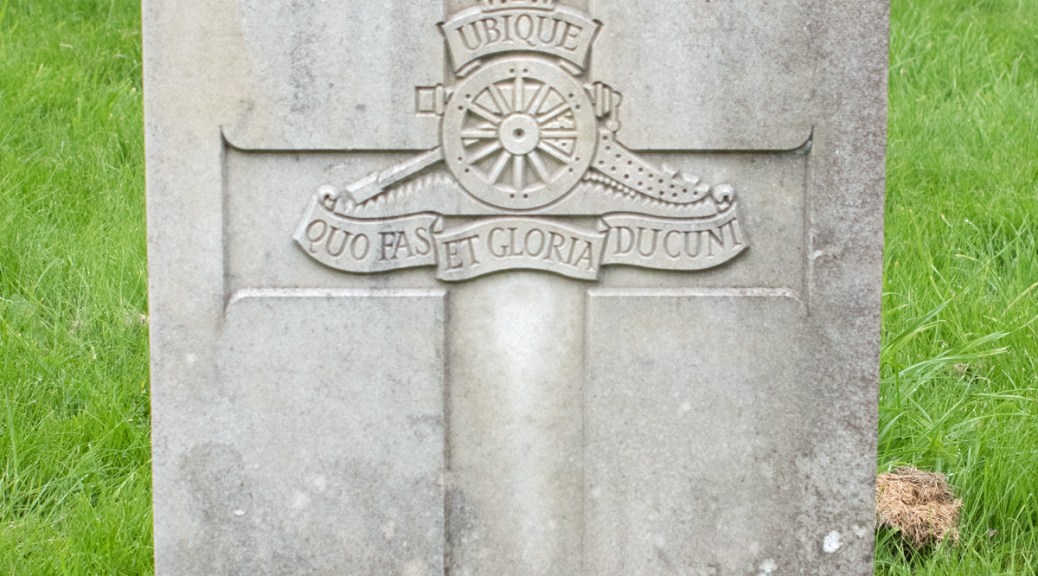
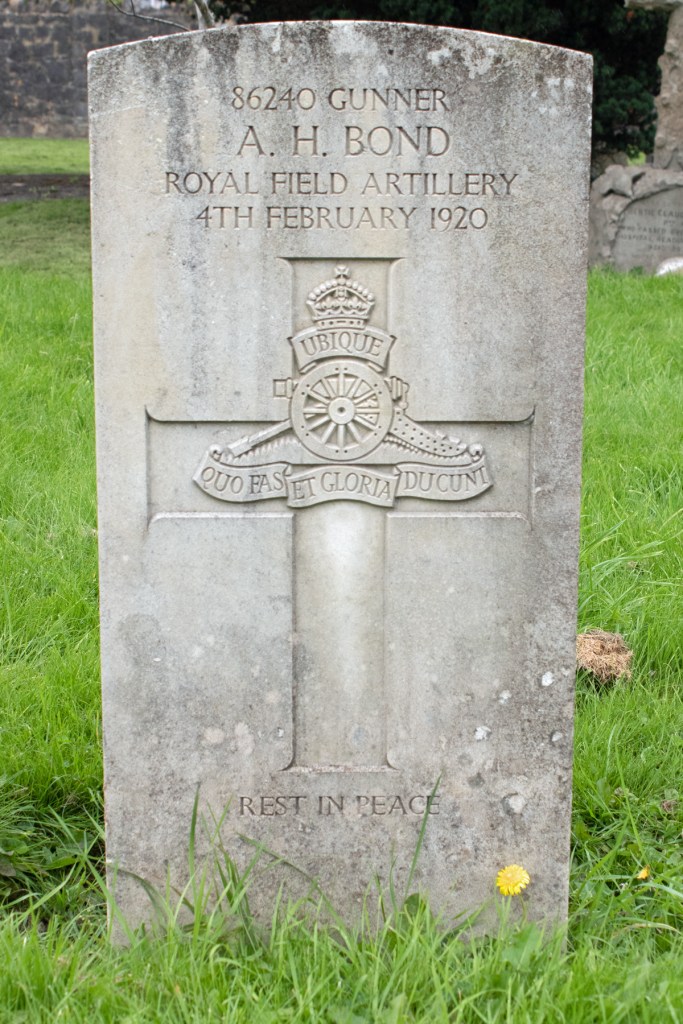
Gunner Arthur Bond

Gunner Arthur Bond

Arthur Henry Gordon Bond was born on 28th July 1894 in Huntspill, Somerset. He was the younger of two children to Henry and Sarah. Henry was a sawyer, something Arthur’s older brother, Frederick, also became. According to the 1911 census, however, Arthur took work as a land refiner. The family were living in a four-roomed cottage on Clyce Place, to the south of the town, overlooking the river.

Details of Arthur’s military career are sparse. He enlisted in the Royal Field Artillery and was attached to the 5th Reserve Brigade. It is unclear whether we served overseas or not, but Gunner Bond survived the war as was eventually stood down on 7th May 1919.

At this point, Arthur’s trail goes cold although he seems to have returned to Somerset. He passed away on 4th February 1920, his death being registered in Shepton Mallet. He was 25 years of age.

Arthur Henry Gordon Bond was laid to rest in Highbridge Cemetery, walking distance from where his family still lived.


Second Lieutenant William Tyler

Second Lieutenant William Tyler

William Eric Tyler was born in the spring of 1888 in Carhampton, Somerset, the older of two children to farmers William and Nina Tyler. The details of William Jr’s early life are a bit sketchy: he was sent to a private school in Minehead, where he boarded for a while.

William Sr died in 1908, and Nina re-married, to farmer George Risden a couple of years later. Of William Jr there is no trace in the 1911 census, and the next record for him relates to his military service. He enlisted in the Somerset Light Infantry when war broke out, but transferred to the Machine Gun Corps in May 1918, receiving a commission to Second Lieutenant when he did so.

Again, details of Second Lieutenant Tyler’s time in the army are scarce. The only other document relating to him is that of his passing. He died, on 28th October 1918 at Belton Park Military Hospital near Grantham, Lincolnshire. He was 30 years of age.

Belton Park was primarily a facility to treat wounded soldiers returning from the Front Line, but it was also treated Machine Gun Corps personnel connected to the neighbouring camp. It is not possible, therefore, to identify the cause of his death.

William Eric Tyler’s body was taken back to Somerset for burial. He was laid to rest in the family plot in the graveyard of St John the Baptist Church in his home village, Carhampton. Buried alongside his father, he was reunited with his mother, when Nina died in 1946.


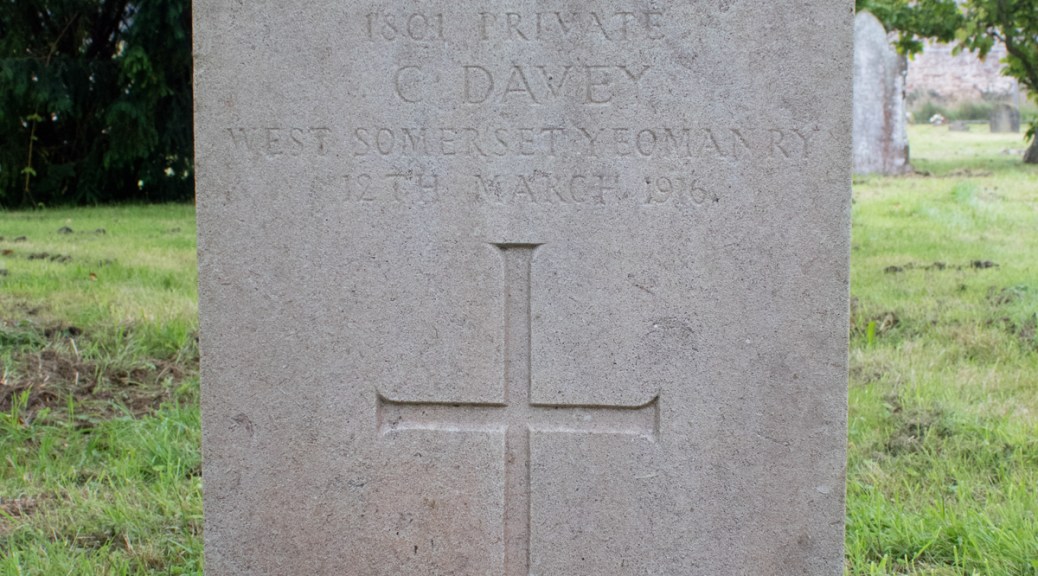
Private Charles Davey

Private Charles Davey

Charles Davey was born in Nether Stowey, Somerset, in the autumn of 1893. The second of six children, his parents were publican-turned-labourer Charles Davey and his wife, Mercy. The 1911 census found the family living in a four-roomed house, with Charles Sr and Jr and the younger Davey son, Walter, all employed in farm work.

When war came to Europe, Charles was called upon to play his part for King and Country. Sadly his service records have been lost to time, but it is clear that, by September 1915, he had enlisted in the West Somerset Yeomanry. Attached to the 3rd/1st Battalion, Private Davey would have been employed on home service. He was billeted at the Aliwal Barracks at Tidworth, Wiltshire.

The only other record relating to Private Davey is his entry in the Army Register of Soldiers’ Effects. This confirms that he passed away in Taunton, on 12th March 1916. The cause of his death is not recorded, but he just was 22 years of age.

The body of Charles Davey was taken back to Somerset for burial. He was laid to rest in the peaceful graveyard of St Mary’s Church in Nether Stowey.


Private Richard Birch

Private Richard Birch

Richard George Birch was born on 8th July 1878, in Westminster, Middlesex. One of nine children, his parents were Samuel and Alice Birch. Samuel started work as a messenger for the House of Lords, and went on to be a military cap maker by the time of his son’s baptism.

When he finished his schooling, Richard found employment as a printer and compositor. He married Evelyn Groom in 1906, and the couple went on to have three children: Harry, Doris and Richard Jr.

The 1911 census showed a change in circumstances for the family. They were living in Farnham, Surrey, and their household was made up of Richard, a pregnant Evelyn, Harry, Doris and a servant, Florence. Richard had now left the printing business, as was employed as a comedian.

When war came to Europe in August 1914, Richard stepped up to play his part. Having enlisted by the spring of 1917, he initially joined the East Surrey Regiment, although at some point he made the transfer to the Royal Fusiliers.

Little information remains available about Private Birch’s military life. Attached to the 22nd (Service) Battalion, he seems not to have served overseas. It appears that he either served in Somerset, or was sent there to recuperate following an illness or injury, as he was in Burnham-on-Sea by the autumn of 1917. He passed away in the town on 19th September, the cause of his passing not freely recorded. He was 39 years of age.

Richard George Birch’s body was not taken back to Surrey, possibly because of financial constraints. Instead laid to rest in Burnham Cemetery, Somerset.


Private Edward Ham

Private Edward Ham

Edward John Ham was born in Berrow, Somerset, in the spring of 1886. The second of seven children – all boys – his parents were Edward and Mary Ham. Edward Sr was a plasterer, but when he finished his schooling, his son found work as a jobbing gardener and nurseryman.

On 2nd October 1906, Edward married Annie Paddy. A carter’s daughter, three years older than her new husband, she was working as a domestic servant when the couple wed at St John the Evangelist’s Church in nearby Highbridge. They went on to have four children: Edward, Rose, Gladys and Horace.

The 1911 census recorded the family as living in Love Lane, Burnham-on-Sea, Edward continuing with his gardening work. War was on the horizon, though, and he was soon called upon to play his part.

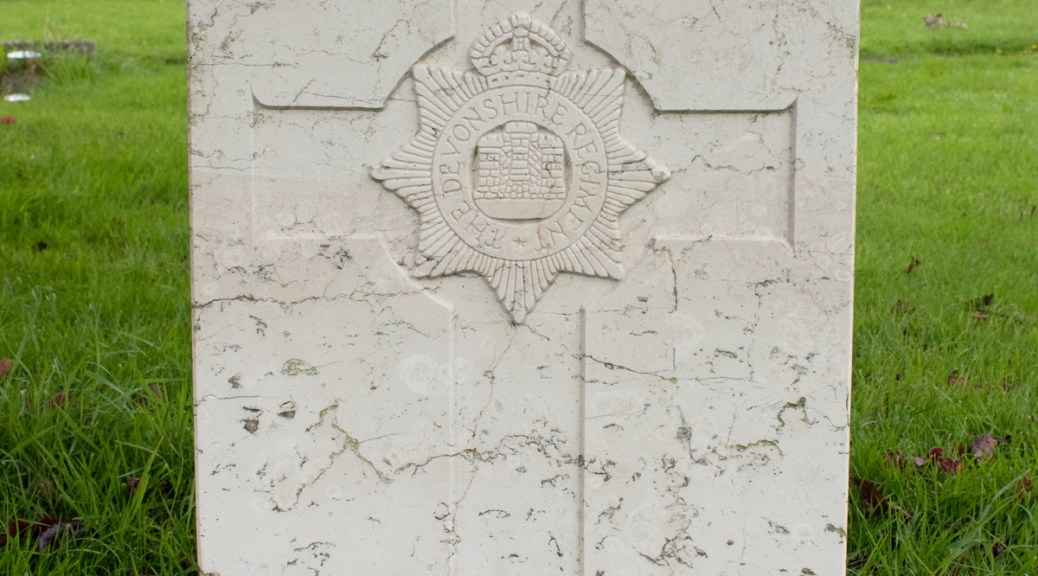
Full service records are not available for Edward, but he had enlisted by the summer of 1917. Private Ham initially joined the Devonshire Regiment, but at some point transferred across the to Labour Corps. Edward was attached to the 149th Company and was based in Enfield, Middlesex.

At this point, Private Ham’s trail starts to cool. He passed away on 25th December 1917 at the age of 31 years old. The cause of his death is unclear, but his body was brought back to Somerset for burial.

After a service in Burnham’s St Andrew’s Church, Edward John Ham was laid to rest in the town’s cemetery.


Pioneer Joseph Maguire

Pioneer Joseph Maguire

The early life of Joseph Maguire is challenging to decipher. Born in Dublin in 1878, his name is sadly too common to pin down any specific family relationships. Later records suggest that he had a sister, Jane, but again, this does not help narrow down documentation.

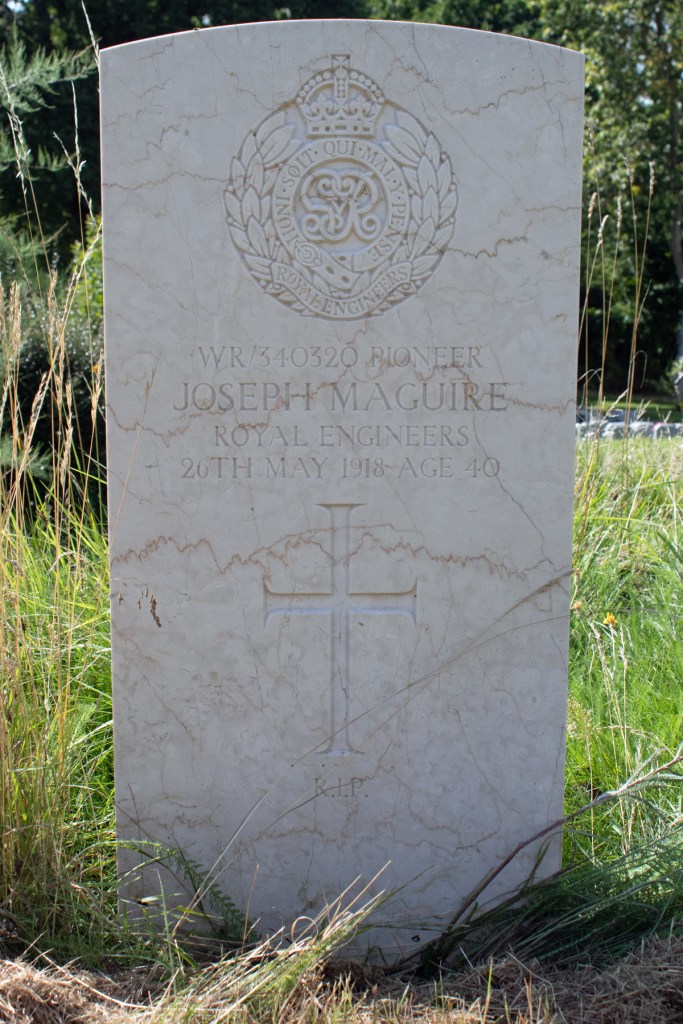
It would appear that he had moved to England for work by the time war broke out: he enlisted in the Royal Engineers in Carlisle by November 1917. As a Pioneer, he was attached to the Inland Water Transport Battalion, although it is not possible to ascertain whether he served on the Home or Western Fronts.

Pioneer Maguire died at the Second Southern General Auxiliary Hospital in Weston-super-Mare, Somerset. The cause of his passing is not freely documented, but it seems likely to have been the result of an illness. He was 40 years of age.

Joseph Maguire was laid to rest in the sweeping ground of Minehead Cemetery. Commonwealth War Grave Commission records note that he is interred in the Roman Catholic section of the grounds, and that, when it was erected, his CWGC headstone was paid for by the Honourable Secretary of the British Legion.


Pioneer Joseph Maguire
(from findagrave.com)

Private Ernest Badman

Private Ernest Badman

Ernest John Badman was born in Wick St Lawrence, Somerset, on 28th September 1898. The second youngest of ten siblings, although only six survived childhood, his parents were farm labourer William Badman and his wife, Fanny.

There is little specific documentation for Ernest. War came to Europe in the summer of 1914, and he had enlisted in the Wiltshire Regiment by the winter of 1916.

Attached to the 4th (Reserve) Battalion, Private Badman seems to have been in his initial training period by the following spring. However, this was not to last long. He passed away while on home soil on 21st March 1917: he was just 19 years of age.

Ernest John Badman was brought back to his home village for burial. He was laid to rest in the sleepy graveyard of St Lawrence’s Church.


Private Joseph Staddon

Private Joseph Staddon

Joseph Frederick Staddon was born at the start of 1899, the oldest of seven children to John and Mary Ann Staddon. John was a farmer from Luccombe in Somerset, and it was in this small village that the family were born and raised.

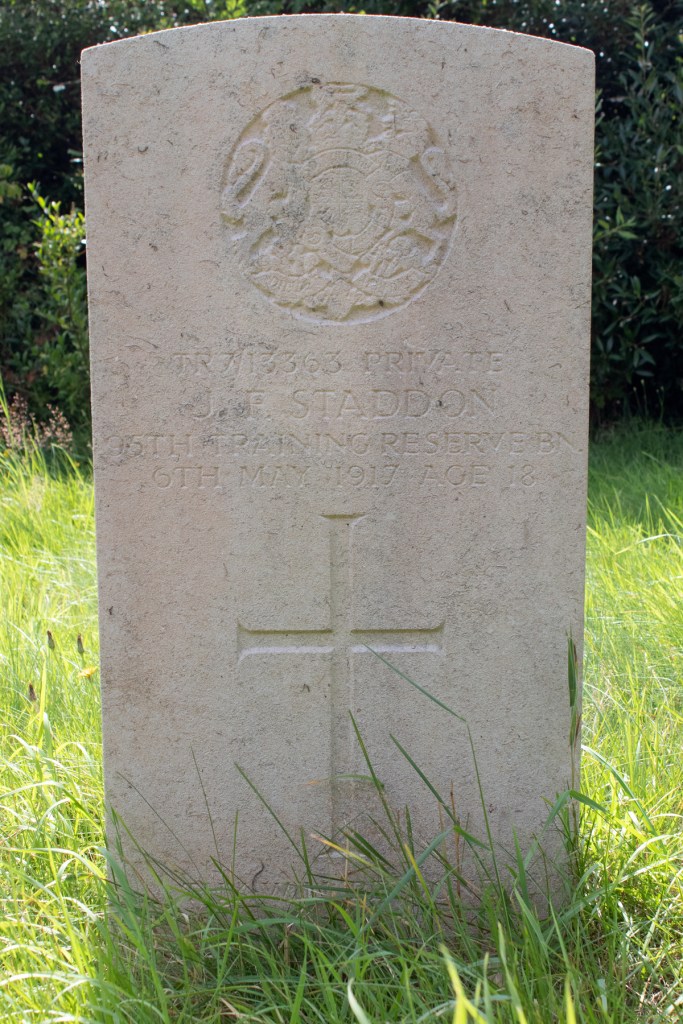
There is little documentation to expand on Joseph’s life. He enlisted in the Duke of Cornwall’s Light Infantry when he turned 18, and was initially attached to the 95th Training Reserve Battalion.

Private Staddon was barracked in Chiseldon, Wiltshire, but his time in service was not to be a lengthy one. Admitted to a military hospital near the camp, he passed away from what was probably an illness on 6th May 1917. He was just eighteen years of age.

Joseph Frederick Staddon’s body was brought back to Somerset for burial. He was laid to rest in the cemetery extension to St Mary’s Church, Luccombe.


Tragedy was to strike again when, ten months after his son’s passing, John also died. Mary was left picking up the pieces, while supporting her six remaining children, the youngest of whom, Dorothy, was not even two years old.

The family survived, Mary running the farm with her oldest boy, Edward. She passed away on 4th August 1937, at the age of 63 years old.


Private Albert Daymond

Private Albert Daymond

Albert Daymond was born on 7th June 1893, in Porlock, Somerset. The youngest of seven children, his parents were Devon-born Albert and Maria, who was also born in Porlock. Albert Sr was a wall mason, and, by the time of the 1901 census, his work had moved the family to the sleepy village of Luccombe.

When he finished his schooling at the village’s Church of England School on 20th December 1908, Albert found employment in a bakery. This was the employment he would continue in until, in the summer of 1914, war broke out across Europe.

Albert enlisted on 9th October 1914, joining the West Somerset Yeomanry as a Private. Little information about his military service is available, although the Commonwealth War Grave Commission records note that he was known by the surnames of Daymond and Daiman.

Tragically, Private Daymond’s time in the army was not to be a long one. He passed away while in a camp in Minehead, Somerset, on 10th December 1914. The cause of his passing is not known, but he was just 21 years of age.

Albert Daymond was brought back to Luccombe for burial. He was laid to rest in the village’s St Mary’s Churchyard.


Albert’s older brother, Alfred, also served in the First World War. Read his story here.

Private Alfred Daymond

Private Alfred Daymond

Alfred Daymond was born on 9th July 1891, in Porlock, Somerset. The second youngest of seven children, his parents were wall mason Albert Daymond and his wife, Maria. By the time of the 1901 census, Albert’s work had moved the family to the sleepy village of Luccombe.

When Alfred finished his schooling, he followed his father into wall building. This was the career he was still following when, in 1914, war broke out.

Alfred was quick to play his part for King and Country. He enlisted on 4th November 1914, joining the Somerset Light Infantry. Private Daymond’s service records show that he was 5ft 10ins (1.78m) tall, with good vision and a fair physical development.

Initially serving as part of a territorial force, Alfred remained on home soil until September 1916. At this point he was transferred over to the Duke of Cornwall’s Light Infantry, and became attached to the 7th (Service) Battalion. Details of his time in the army are sketchy, but his troop certainly fought at the Somme in 1916, and at Ypres the following year.

In May 1917, Alfred returned to British shores. His health appears to have been suffering, although it is not clear from what ailment. On 8th February 1918, Private Daymond was discharged from army service as being no longer physically fit.

Alfred’s trail goes cold at this point. It is likely that he returned home to Luccombe, and this is where he passed away, on 11th November 1918, Armistice Day. He was 27 years of age.

Alfred Daymond was laid to rest in the family plot of St Mary’s Church, Luccombe. He was interred alongside his younger brother, Albert.


Alfred’s younger brother, Albert, also enlisted for war service. Read his story here.