Category Archives: Aberdeenshire

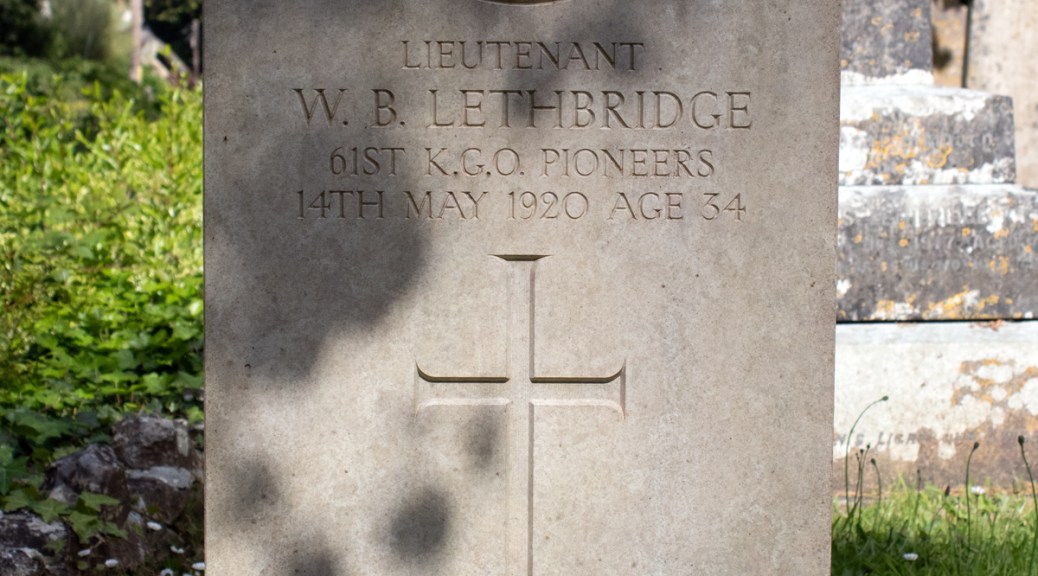
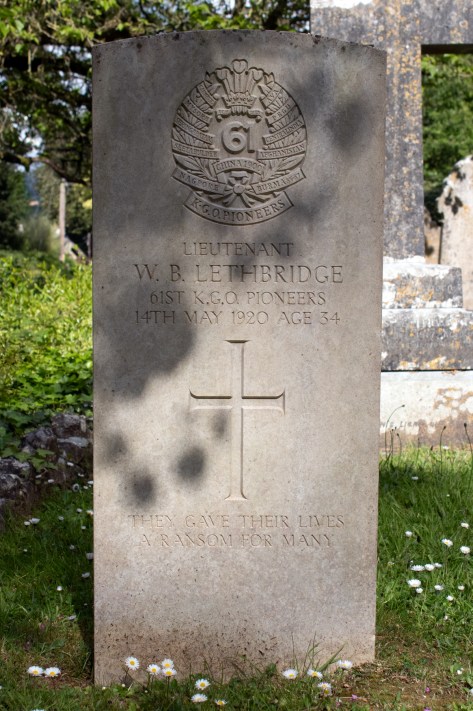
Lieutenant William Lethbridge

Lieutenant William Lethbridge

William Bernard Lethbridge was born in Cheltenham, Gloucestershire, in the summer of 1886. The seventh of eight children, his parents were Robert and Mary Lethbridge. William’s baptism record gives his father’s profession as gentleman, while the 1891 census return gives him as being an indigo merchant.

The family were living in Bedford by this point, in a large house on Shakespeare Road. The oldest of the children was 13, but the family had two live-in servants, and shared their neighbourhood with army surgeons, wine merchants and barristers.

Robert died in 1897, and at this point, the family’s trail goes frustratingly cold. Mary and three of her daughters pop up in 1911, living in Kensington, Middlesex, but of William there is no sign. It may be that he travelled abroad, either with the army, or for business, but with no documentation to support this, it remains speculation.

Lieutenant Lethbridge’s probate record confirms that, at the time of his passing, he was living in the Devon village of Musbury, but passed away in the village of Murtle, near Aberdeen, Scotland. The CWGC documentation states that he died on 14th May 1920 from a sickness contracted in German East Africa. During the war he was connected to the 61st King George’s Own Pioneers, and this unit of the Indian Expeditionary Force was based in Africa during the conflict.

The body of William Bernard Lethbridge, who was 33 years old, was taken back to Devon for burial. He was laid to rest in the tranquil setting of St Michael’s Churchyard, Musbury.


William’s younger brother, Patrick, also served in the First World War. A former medical student, he went on to become a Captain in the King’s Own Scottish Borders.

Captain Lethbridge was killed on 25th September 1915, during the Battle of Loos. Just 27 years of age, he is commemorated on at Dud Corner Cemetery.
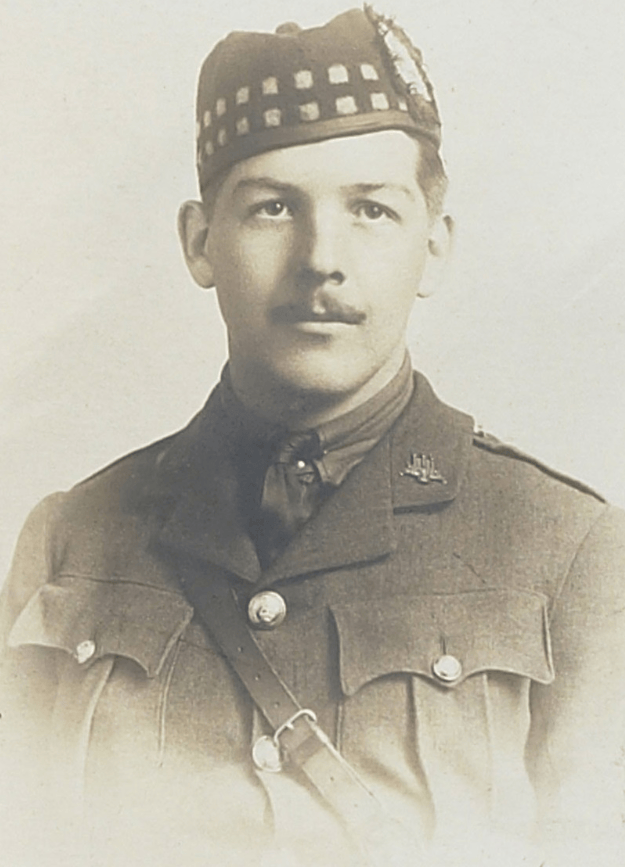
Captain Patrick Lethbridge
(from findagrave.com)

Engineman John Foreman

Engineman John Foreman

John Kerr Foreman was born in Aberdeen, Scotland, on 18th December 1878. The son of Thomas and Jessie, details of his early life are sparse. The 1881 census records him living on York Street with Jessie, while the next return notes him as living just round the corner at 4 Links Street with his paternal grandfather, Jessie Kerr.

Thomas’ absence from the documents would suggest that he was away at the time the details were taken. John’s grandfather was a fish labourer, and the family lived next to the port. It is likely that Thomas was a fisherman or part of a boat crew, and a life at sea was something that his son also fell into.

John does not appear on either the 1901 or 1911 census returns. In the early 1900s he married Lily Craig, the daughter of another fish worker. They went on to have five children between 1905 and 1916 but, like her husband, there is no record of Lily or the family in the early 20th century.

When war broke out, John stepped up to play his part. Joining the Royal Naval Reserve – another hint at an undocumented life at sea – on 26th May 1916, his papers note that he was 5ft 8ins (1.73m) tall, with grey eyes and a fair complexion. He was also recorded as having a number of tattoos: a pierced heart, thistle and the word Scotland on his right arm, and an anchor and his initials on his left.

Engineman Foreman’s time in the navy was actually spent on shore. For eighteen months he was attached to HMS Gunner, the shore base at Granton Harbour, near Edinburgh. In August 1917, however, he was transferred south. He arrived at his new home, HMS Pembroke, the Royal Naval Dockyard in Chatham, Kent, on 4th August 1917.

The dockyard was a particularly busy place that summer, and temporary accommodation was set up. John found himself billeted at Chatham Drill Hall, away from the main barracks.

On the night of 3rd September 1917, Chatham suddenly found itself in the firing line, as the German Air Force launched a bombing raid. One of the bombs landed squarely on the Drill Hall, and Engineman Foreman was badly injured. He was taken the naval hospital in the town, but died from his injuries the following day. He was 38 years old.

The body of John Kerr Foreman was taken back to Scotland for burial. He was laid to rest in Aberdeen’s Trinity Cemetery, a short walk from where his family still lived.


Engineman John Foreman
(from findacrage.com)

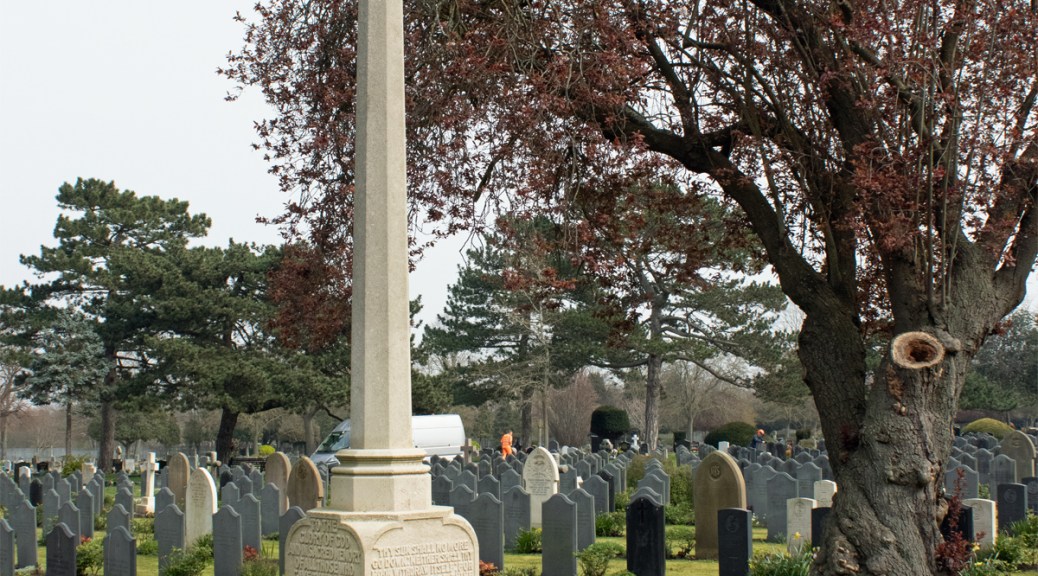
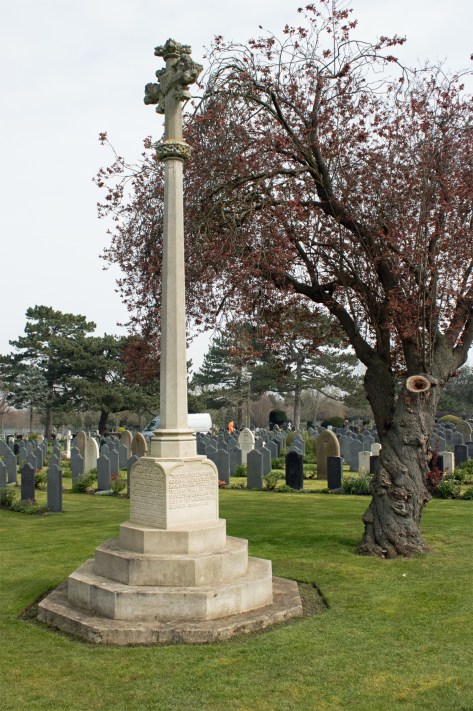
[Note: the photo above is of the memorial to the Chatham Air Raid victims, close to the mass grave for those whose bodies were not identified, in Woodlands Cemetery, Gillingham, Kent.]