
Tag Archives: Chatham Air Raid

Stoker 1st Class Robert Collett

Stoker 1st Class Robert Collett

Robert William Collett was born on 20th April 1893 in Barnsbury, now part of Islington, Middlesex. Little information about his early life remains available – he does not feature on any census records – although later records confirm than his parents were called George and Sarah.

When he completed his schooling, Robert found work as a baker, but he had bigger and better things in mind. On 24th August 1911, he enlisted in the Royal Navy. His service papers show that he was 5ft 1.5ins (1.56m) tall, with dark brown hair and eyes, and a fresh complexion.

Stoker 2nd Class Collett was sent to HMS Pembroke, the Royal Naval Dockyard in Chatham, Kent, for his training. In February 1912, he was given his first assignment, on board the battleship HMS Berwick. She would be his home for the next year, during which time he was promoted to Stoker 1st Class.

After a further spell on shore, Robert transferred to another battleship, HMS Swiftsure. She would spend much of the war serving in the Mediterranean, with Stoker Collett on board. He seems to have had a rebellious nature, and this led to his time aboard Swiftsure not being smooth sailing.

During his time on the battleship Robert spent three separate period in the brig: three days in October 1914, and seven days in June 1915. In October that year, things came to a head, and he was convicted of threatening to strike an Engine Room Artificer. For this he was incarcerated again, for 42 days.

Stoker Collett left Swiftsure in May 1916, and transferred to another vessel, the battlecruiser HMS Repulse. After an eight-month stint on board, he returned to Chatham while waiting for a new posting. His time here was not without incident, however, and he was thrown in the brig for a further seven days for an unrecorded misdemeanour.

HMS Pembroke was overcrowded in the summer of 1917, and when he was released Stoker Collett was billeted in temporary accommodation in the dockyard’s Drill Hall.

By this point in the war, the German Air Force was looking to minimise daytime casualties, and was, instead, trialling night raids; on 3rd September, Chatham found itself in their flight path. The Drill Hall received a direct hit, and Stoker 1st Class Collett was killed, along with close to 100 others. He was just 24 years old.

The body of Robert William Collett was taken back to London for burial. He was laid to rest in Islington Cemetery, not far from where his parents were still living.


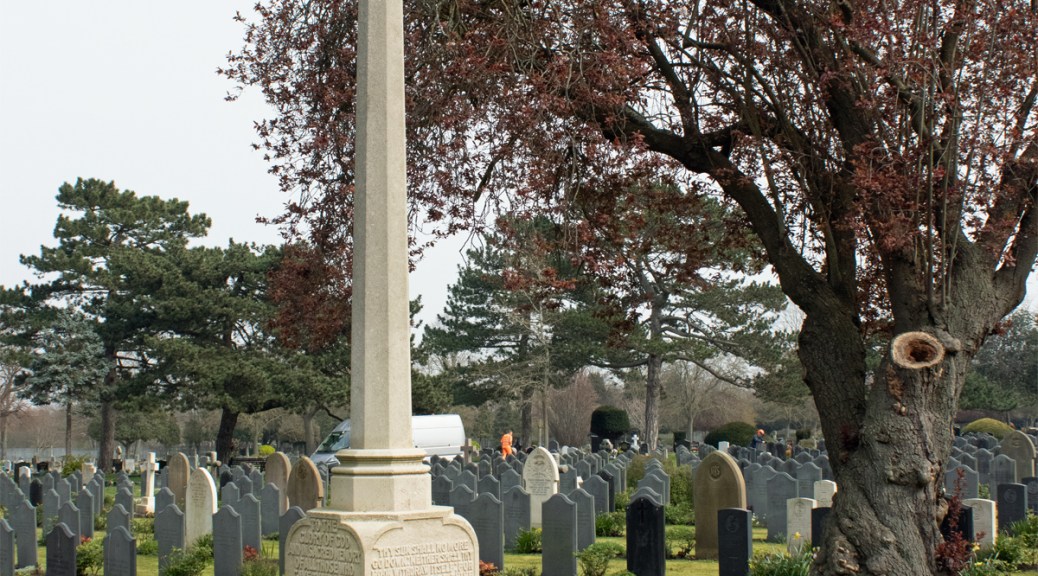
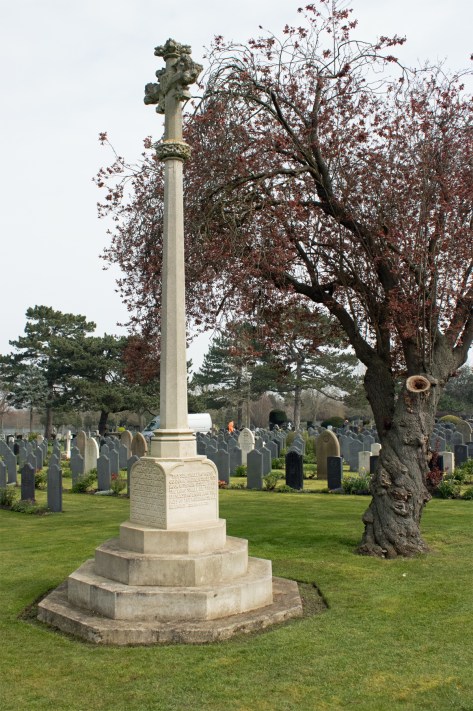
[Note: the photo above is of the memorial to the Chatham Air Raid victims, close to the mass grave for those whose bodies were not identified, in Woodlands Cemetery, Gillingham, Kent.]


Engineman Charles Clarke

Engineman Charles Clarke

Charles Alfred Clarke was born in Lowestoft, Suffolk on 1st June 1888. The middle of eleven children, his parents were William and Jane Clarke. William was a fisherman, and, according to the 1901 census, the family lived at Coopers Cottages, on Hemplands, close to the town centre, and not far from the seafront.

Given his father’s trade, and the fact that his older brothers also followed suit, it is no surprise that Charles found work as a fisherman. The 1911 census recorded him as one of eight crew on board the John & Sarah, a 36t steam boat, that had moored in Penzance, Cornwall. Charles was noted as being an engineman and fish packer.

Away from the sea, Charles had found love. Clara Fletcher was two years his junior, and was the daughter of publican Samuel, who ran the Mechanic’s Arms on Lowestoft’s Crown Street. The couple exchanged vows in the summer of 1916, the wedding being registered in Mutford, to the south east of their home town.

By this point, and with war raging across Europe, Charles had been called into military duty. Attached to the Royal Naval Reserve from May 1915, he was attached to the torpedo gunboat HMS Halcyon, which acted as a depot ship off the Suffolk coast. His service papers note that he was 5ft 6ins (1.68m) tall, with hazel eyes and a fresh complexion.

Engineman Clarke remained with Halcyon until the summer of 1917, when he was transferred to HMS Pembroke, the Royal Naval Dockyard in Chatham, Kent. The base was a particularly busy place at that point in the war and temporary accommodation was set up. Engineman Clarke found himself billeted at The Drill Hall, away from the main barracks.

On the night of 3rd September 1917, Chatham suddenly found itself in the firing line, as the German Air Force launched a bombing raid. Two bombs landed squarely on the Drill Hall, shattering its glass roof, and Engineman Clarke was amongst the dozens killed. He was 29 years of age.

The body of Charles Alfred Clarke was taken back to Suffolk for burial. He was laid to rest in the town’s cemetery on Normanston Drive.


[Note: the photo above is of the memorial to the Chatham Air Raid victims, close to the mass grave for those whose bodies were not identified, in Woodlands Cemetery, Gillingham, Kent.]


Stoker 2nd Class William Berwick

Stoker 2nd Class William Berwick

William George Berwick was born in Norwich, Norfolk, on 12th July 1896. He was the oldest of two children – his younger sibling, sister Agnes, was born thirteen years after him – to William and Lucy Berwick.

The family lived at 29 Fishergate, close to the River Wensum. The 1901 census recorded William Sr working as a brush maker, while Lucy was a silk weaver. Fast forward a decade, and while they were living in the same house, William Sr was a licenced victualler, with his son assisting him in the business.

War broke out in 1914, and William Jr would eventually be called upon to serve his country. He enlisted in the Royal Navy on 11th January 1917, giving up his then job as a boot and shoe operator to work as a Stoker 2nd Class. His service papers show that he was 5ft 5ins (1.65m) tall, with brown hair, blue eyes and a fresh complexion. His was recorded as having an appendix scar.

Stoker Berwick was sent to HMS Pembroke, the Royal Naval Dockyard in Chatham, Kent, for his training. After six months he was giving his first posting, HMS Wallington, the shore base on the Humber estuary. Just a few weeks later, he was sent back to Pembroke, in anticipation of his first sea-going assignment.

The dockyard was a particularly busy place in the summer of 1917, and temporary accommodation was set up. William found himself billeted at Chatham Drill Hall, away from the main barracks.

On the night of 3rd September 1917, Chatham suddenly found itself in the firing line, as the German Air Force launched a bombing raid. One of the bombs landed squarely on the Drill Hall, and Stoker 2ns Class Berwick was killed. He was just 21 years old.

The body of William George Berwick was taken back to Norfolk for burial. He was laid to rest in Norwich Cemetery, not far from where his parents and sister still lived.


[Note: the photo above is of the memorial to the Chatham Air Raid victims, close to the mass grave for those whose bodies were not identified, in Woodlands Cemetery, Gillingham, Kent.]


Stoker 1st Class Frederick Benmore

Stoker 1st Class Frederick Benmore

Frederick George Benmore was born in Blackwall, Middlesex, on 5th November 1895. The middle of nine children, his parents were William and Emily Benmore. William was a barge builder, and the family grew up around the docklands, first taking rooms as 212 Leven Road, Bromley-by-Bow, then at 5 Oak Road, Canning Town.

By the time of the 1911 census, Frederick was working as a labourer, picking iron to earn his keep. His was one of three wages coming into the household: his older brother William was a dock labourer, boiling pitch, while William was employed as a sawyer, building barges.

When war broke out, London’s docks were a key focal point. Keen to play his part, keen to earn a regular pay packet, Frederick stepped up, and enlisted. He joined the Royal Navy on 29th July 1915, as a Stoker 2nd Class. His service papers show that he was 5ft 5.5ins (1.66m) tall, with brown hair, brown eyes and a fresh complexion. He had a number of tattoos on both forearms.

Stoker Benmore’s base would be HMS Pembroke, the Royal Naval Dockyard in Chatham, Kent. He was quickly put to work, and was assigned to the depot ship HMS Tyne. She would remain his home until the end of May 1917, by which point he had been promoted to Stoker 1st Class. His annual reviews note a very good character, and a satisfactory ability.

By the summer of 1917, Frederick was back at HMS Pembroke. It was a particularly busy place at that point in the war and temporary barracks had been set up. Stoker Benmore found himself billeted at The Drill Hall, waiting for his next posting.

On the night of 3rd September 1917, Chatham suddenly found itself in the firing line, as the German Air Force launched a bombing raid. One of the bombs landed squarely on the Drill Hall, and Stoker 1st Class Benmore was among the dozens to be killed. He was 21 years of age.

The body of Frederick George Benmore was taken back to London for burial. He was laid to rest in the East London Cemetery, Plaistow.


[Note: the photo above is of the memorial to the Chatham Air Raid victims, close to the mass grave for those whose bodies were not identified, in Woodlands Cemetery, Gillingham, Kent.]


Stoker 1st Class Herbert Bavister

Stoker 1st Class Herbert Bavister

AN AIR-RAID VICTIM

Killed in Barracks After Passing Through Many Battles

A Cambridge family which already had a splendid record suffered another loss by air raid on the Chatham-Sheerness district on Monday night in the death of Stoker Herbert Bavister. It will be remembered that a bomb fell on the naval barracks at Chatham, causing terrible casualties…

Stoker Bavister, the son of Mrs Bavister, of 68, New-street, was 28 years of age, and had been in the Navy over seven years. He had a grand record, having taken part in the Battle of Falkland Isles on December 8th, 1914, in the attack on the Dardanelles, both in the attack on the outer forts on February 19th and on the Chanak Forts on March 18th, 1915, and in the Battle of Jutland on March 31st-June 1st, 1916. He did not receive a scratch in any of these battles.

There are three brothers in the Army, on of whom – Pte. J Bavister, of the Rifle Brigare – was taken prisoner by the Germans during the retreat from Mons. The other two are Pte. W Bavister, of the Bedford Regiment, and Pte. A Bavister, of the Middlesex Regiment. Stoker Bavister was well known in Cambridge, and will be greatly missed by a wide circle of friends.

[Cambridge Daily News: Saturday 8th September 1917]

Herbert Lewis Bavister was born in Cambridge on 31st July 1889. The youngest of eight children, his parents were farm labourer William, and his wife, Ann. The 1891 census found the family living at the long-since-gone 8 Wellington Passage, to the east of the city centre.

By the time of the 1901 census, it seems that family were splitting. William was missing from the document and, given his age, and his passing a few years later, it may be that he had been admitted to a hospital or institution. Anne was living in a small cottage at 9 Albert Street, and was working as a charwoman. She was supported by three of her sons – Simon, Alfred and William – all of whom were employed as carters on a farm, while 11-year-old Herbert completed the household.

The 1911 census found a further moved for Ann and Herbert. The other children having flown the nest, it was just the two of them, living at 64 New Street, a one-up, one-down cottage on the outskirts of the city. Now 66 years of age, Ann was not working, and it was down to Herbert, employed as a fishmonger’s assistant, to bring in the money.

Supporting his widowed mother was clearly important to Herbert, and his shop salary was not enough to provide for her properly. He needed a regular pay packet, and the Royal Navy seemed to offer that security. On 30th May 1911 he enlisted, and was sent to HMS Pembroke, the Royal Naval Dockyard in Chatham, Kent, for his training. With the rank of Stoker 2nd Class, his papers show that he was 5ft 4ins (1.63m) tall, with brown hair, grey eyes and a fair complexion.

Following his induction, Stoker Bavister was given his first assignment, on board the battlecruiser HMS Inflexible. She would be his home for the next six years, and the newspaper article both outlines his time on board and his promotion to Stoker 1st Class, which came in June 1912.

The summer of 1917 found Herbert back on dry land in Chatham, his tenure aboard Inflexible at an end. HMS Pembroke was a particularly busy place at that point in the war and temporary accommodation was set up. Stoker Bavister found himself billeted at The Drill Hall, away from the main barracks.

On the night of 3rd September 1917, Chatham suddenly found itself in the firing line, as the German Air Force launched a bombing raid. One of the bombs landed squarely on the Drill Hall, and Stoker Bavister was amongst the dozens killed. He was just 28 years old.

The body of Herbert Lewis Bavister was taken back to Cambridgeshire for burial. He was laid to rest in the city’s Mill Road Cemetery.


[Note: the photo above is of the memorial to the Chatham Air Raid victims, close to the mass grave for those whose bodies were not identified, in Woodlands Cemetery, Gillingham, Kent.]


Ordinary Seaman John Diaper

Ordinary Seaman John Diaper

John Dolby Diaper was born in Stowupland, Suffolk, on 1st June 1898. He was the second youngest of ten children to George and Martha, and the older of two sons. George was a cattleman turned gardener, and it seems that John went into farm work when he completed his schooling.

When war broke out, John was called upon to play his part. He enlisted in the Royal Navy on 6th June 1917, joining as an Ordinary Seaman. His service records show that he was 5ft 4.5ins (1.63m) tall, with brown hair, grey eyes and a fair complexion.

Ordinary Seaman Diaper was sent to HMS Pembroke, the Royal Naval Dockyard in Chatham, Kent, for his training. The summer of 1917 was a particularly busy for the base, and temporary accommodation was set up in the Drill Hall; this is where John was billeted.

On the night of 3rd September 1917, Chatham suddenly found itself in the firing line as a wave of German aircraft bombed the town. The Drill Hall received a direct hit, and Ordinary Seaman Diaper was badly injured. He was admitted to the Royal Naval Hospital in the town, and would remain there for some time.

John’s injuries were severe and, although his treatment was ongoing, the impact on his overall health was detrimental. Ultimately, the air raid weakened his system, and his heart gave out. He died on 18th April 1918, more than seven months after the bombing: he was 19 years of age.

John Dolby Diaper was laid to rest in Woodlands Cemetery, Gillingham, alongside those who had given their lives on 3rd September.


Seaman Albert Cluett

Seaman Albert Cluett

Albert Cluett was born on 2nd August 1896, one of three children to fisherman Richard Cluett and his wife, Johanna. The couple were third generation immigrants to North America, and had made their home on the remote Fogo Island, to the north of Newfoundland.

There is little concrete information about Albert’s life; given his father’s occupation, it seems likely that he would have had a good working knowledge of seafaring, and this led him to enrol in the Newfoundland Royal Naval Reserve when war broke out.

Details of Seaman Cluett’s military life are scant. All that we know is that, by the summer of 1917, he was based at HMS Pembroke, the Royal Naval Dockyard in Chatham, Kent. He was billeted in the Drill Hall, which had been set up with temporary accommodation because the barracks themselves had become overcrowded.

On the night of the 3rd September 1917, the German Air Force carried out an air raids on Chatham. The town was heavily bombed and the Drill Hall received a direct hit. Seaman Cluett was badly injured and died of his wounds in hospital the following day. He had just celebrated his 21st birthday.

Albert Cluett was laid to rest, along with the other victims of the Chatham Air Raid, in the Woodlands Cemetery, Gillingham.


Seaman Albert Cluett
(from ancestry.co.uk)

Another young man from Fogo, Seaman Thomas Ginn, also died during the bombing raid; given the remoteness of the Newfoundland town, it seems very unlikely that he and Albert did not know each other.


Ordinary Seaman William Nolan

Ordinary Seaman William Nolan

William John Nolan was born in County Kildare, Ireland, on the 8th October 1892, one of ten children to agricultural labourer Thomas Nolan and his wife, Anna.

There is little documentation connected to his early life, but when he left school, William found work as a porter, and is was this that he was doing up until war broke out in 1914.

William was conscripted on 1st March 1915, joining the Royal Navy as an Ordinary Seaman. His service records show that he stood 5ft 5.5ins (1.66m) tall, had brown hair, brown eyes and a fresh complexion. He was also noted as having tattoos on his forearms, and a scar on his right one.

Ordinary Seaman Nolan was sent to HMS Pembroke, the Naval Dockyard in Chatham, Kent, for training. Within a month, he was given his first posting, on board the armoured cruiser HMS Lancaster. He spent fifteen weeks aboard and, over the next two years, he served on four more ships, returning to his base in Chatham after each voyage.

William came back to HMS Pembroke in July 1917: the base was particularly busy and cramped that summer, so much so that additional temporary accommodation was set up in the barracks’ Drill Hall. This is where Ordinary Seaman Nolan was billeted.

On the night of the 3rd September 1917, Chatham was bombarded by a German air raid, and the Drill Hall received a direct hit. Tragically, Ordinary Seamen Nolan was amongst those killed. He was just 24 years old.

William John Nolan’s body was laid to rest in the Woodlands Cemetery in Gillingham, alongside the other victims of the Chatham Air Raid.


Trimmer Gilbert McLoughlin

Trimmer Gilbert McLoughlin

Gilbert McLoughlin was born in Grimsby, Lincolnshire, on 19th August 1896, one of eight children to Charles and Isabella McLoughlin. Being a fishing port, it is likely that Charles was involved in the industry, and it is no surprise that Gilbert and his siblings followed suit.

When war came to Europe, his skills at sea led to him being brought into the Royal Naval Reserve, and indeed Gilbert joined up on 20th March 1916. His service records show that he stood 5ft 2.5ins (1.59m) tall, had brown eyes and a sallow complexion, and had tattoos on his left arm.

Trimmer McLoughlin was based at HMS Pekin, a shore establishment in Grimsby, from which he would have served on ships patrolling the Lincolnshire coast. He remained posted in his home town until the end of 1916, at which point he moved down the coast to HMS Ganges, the naval base in Ipswich.

Gilbert made a further move in July 1917, when he was posted to HMS Pembroke, the Royal Naval Dockyard in Chatham, Kent. The base was particularly crowded that summer, and he was billeted in temporary accommodation set up in the barracks’ Drill Hall.

On the night of 3rd September, Chatham came under attack from a German air raid, and the Drill Hall received a direct hit. Trimmer McLoughlin was among those to be killed that night. He was just 20 years of age.

Gilbert McLoughlin was laid to rest in the Woodlands Cemetery in Gillingham, Kent, alongside the other victims of the Chatham Air Raid.


Gilbert’s older brother Joseph McLoughlin was also a victim of the First World War. As the conflict began, he continued his work as a trawlerman, although the role of his ship – the Kilmarnock – now also included elements of mine location.

On the afternoon of the 22nd September 1914, the Kilmarnock left Grimsby on a routine trip. She was around thirty miles offshore when the captain spotted floating mines ahead.

The skipper put out a buoy to mark the position, and intended returning to port to report the matter to the Admiralty authorities, but seeing some naval vessels in the distance he made towards them instead with the object of reporting.

Whilst doing so an explosion occurred amidships, and the vessel was blown into two parts, which sank immediately.

The skipper was blown to pieces on the bridge and the chief engineer badly injured.

The naval vessels, attracted by the explosion, hurried to the spot, picked up the wounded engineer, mate, and one member of the crew.

Boston Guardian: Saturday 26th September 1914

Joseph was one of the six crewmen to be killed in the incident. He was just 19 years of age.


Stoker 1st Class Michael Brown

Stoker 1st Class Michael Brown

Michael Brown was born on 25th October 1891 in Kirkdale, Lancashire, one of four children to James and Julia Brown. James was a sailor who died when Michael was just a boy. While Julia tried to make ends meet by taking in washing, it must have worried her when her son then fell into a sea-going life when he left school.

Michael enlisted in the Royal Navy on 19th February 1910, by which time he was already a seaman in the merchant fleet. His service records show that he was 5ft 4.5ins (1.64m) tall, had bark brown hair, brown eyes and a dark complexion. He also had a number of tattoos on his forearms, including a shamrock and a cross.

Recruited as a Stoker 2nd Class, Michael served on a number of vessels in the lead up to the outbreak of war, including the scout ship HMS Patrol, which served from Harwich Harbour, Essex. It was here that he gained promotion to Stoker 1st Class in February 1911.

When not at sea, Stoker Brown was based at HMS Pembroke, the Royal Naval Dockyard in Chatham, Kent. When war broke out in 1914, however, he was in the middle of a three-year stint on board HMS St George, a cruiser that went on to guard the Humber Estuary on the east coast of Yorkshire and Lincolnshire.

By the spring of 1916, he was back in Chatham and from this point on, remained firmly on dry land, with assignments in Kent and at HMS Victory, the Royal Naval Dockyard in Portsmouth, Hampshire. By the summer of 1917, though, Stoker Brown returned to HMS Pembroke once again.

The naval base was particularly busy and cramped at that point in the war, and temporary overflow accommodation was set up in the barracks’ Drill Hall. This is where Michael came to be billeted.

On the night of the 3rd September, the German Air Force conducted the first night time raid on England. Chatham came in the firing line, and the Drill Hall received a direct hit. Stoker 1st Class Brown was among those to be killed. He was just 24 years of age.

Michael Brown was laid to rest in the Woodlands Cemetery in nearby Gillingham, along with the other victims of the Chatham Air Raid.