Category Archives: Training Reserve Battalion

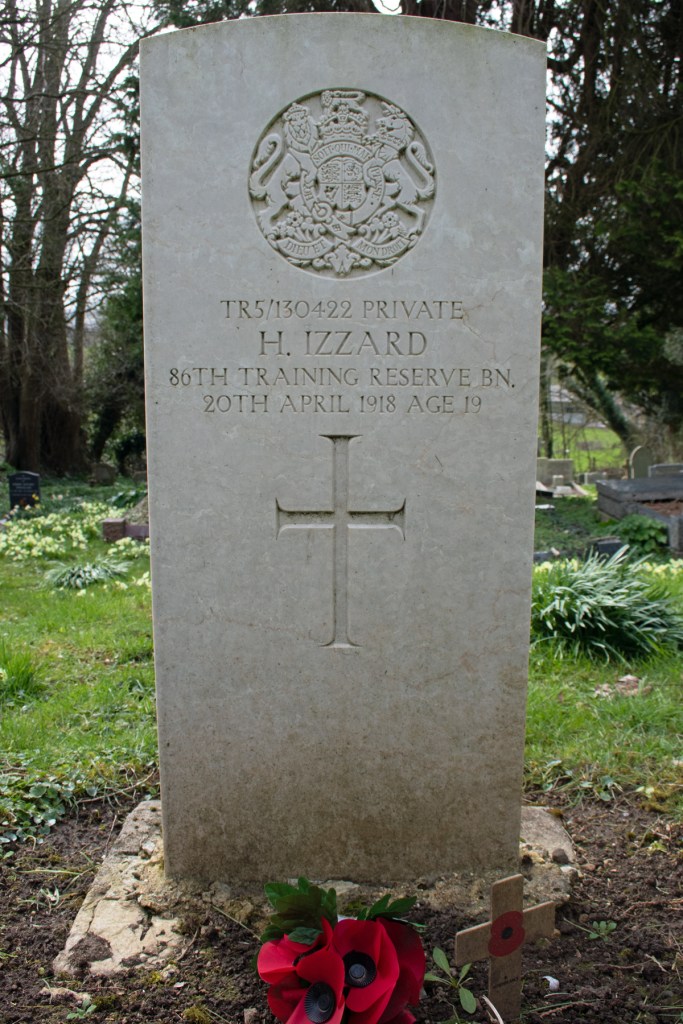
Private Harry Izzard

Private Harry Izzard

Harry Izzard was born early in 1900, in Chiswick, London and was one of six children to Albert and Florence Izzard. Albert was a groom, but when he died in 1905, Florence, left with a young family to raise, remarried. Things seem not to have gone well between Harry and his stepfather, Richard Warren, and he soon found himself resident of the Church Army Home in London.

In 1914, his schooling complete, he was sent to the village of Clandown in Somerset, where he was employed at the local colliery. He seemed to have flourished in his new life, and he “made friends with all he came in contact with, being of a bright and cheerful disposition and associated with the football club, Wesleyan Young Men’s Bible Class and an ardent temperance worker.” [Somerset Guardian and Radstock Observer: Friday 26th April 1918]

Harry was one of the village’s batch of miners passed for the Army ballot, but seemed eager not to wait to be officially called up. On the day of the ballot, he instead joined up voluntarily, enlisting in the 86th Training Reserve Battalion.

On enlistment he was sent to Clipstone Camp, Notts, where he quickly made friends. He, however, was placed on the sick list… and underwent [an] operation for appendicitis from which operation he never recovered.

Somerset Guardian and Radstock Observer: Friday 26th April 1918

Private Izzard died on 20th April 1918, aged just 19 years old, a life of new promise cut tragically short. His connection with Clandown, and his disconnection from his family in London, was such that his body was brought back to Somerset for burial.

Harry Izzard was laid to rest in the quiet Holy Trinity Churchyard, his sister Mabel being the only family member represented at the service.


Harry’s older brother Herbert Izzard also served in the army. He had found work as a laundry labourer when he left school, and went on to marry Maud Woodage on 14th February 1915. The couple had a daughter, Winifred, later that year.

Herbert enlisted in the London Regiment as a Rifleman, and was assigned to the 17th Battalion, also known as the Poplar and Stepney Rifles. He soon found himself in France and was killed at the Somme on 19th April 1916. He is buried at the Cabaret-Rouge British Cemetery in Souchez.

Tragically, Herbert’s widow died in Oxfordshire in December 1918, leaving young Winifred an orphan at just three years old. She went on to live a long life, dying in 1997, at the age of 81.


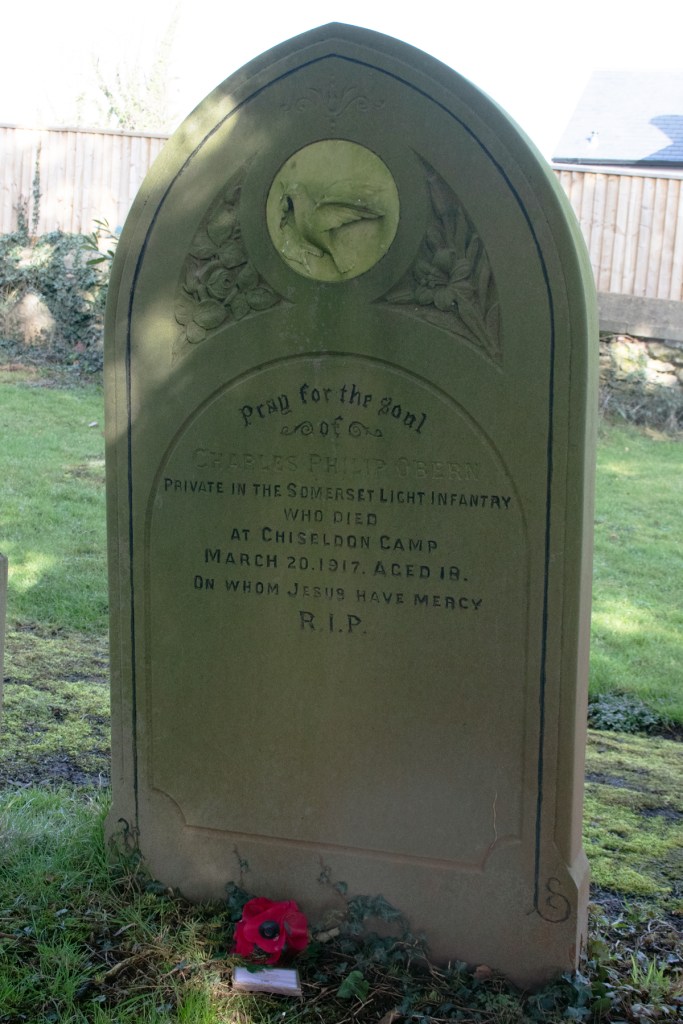
Private Charles Oborne

Private Charles Oborne

Charles Philip Oborne was born in Mosterton, Dorset, early in 1899. He was the middle of three children to Charles Oborne. Charles Sr had been married before, to a woman called Martha, and the couple had a son, Joseph. Martha died in the mid-1890s and Charles remarried, to a woman called Elizabeth. They went on to have two children, of which Charles Jr – better known as Charley to avoid confusion with his father – was the older.

There is little documentation for the Oborne family. Charles Sr was a farm labourer, and the family moved from Dorset to Stratton-on-the-Fosse, near Shepton Mallet in the early 1900s. At the time of the 1911 census, Charley was a student, and there is no direct evidence of what he went on to do when he finished his schooling.

Nor are there many documents relating to his military service. Private Oborne joined the Training Reserve, and was assigned to the 94th Battalion. The troop had formed from the 16th (Reserve) Battalion of the Gloucestershire Regiment, and was based in Chiseldon, to the south of Swindon in Wiltshire. There is nothing to confirm when he enlisted, but given his age, and when he passed, it is likely to have been during the winter of 1916/17.

What is clear is that while Private Oborne was training, he contracted pneumonia, and, on 20th March 1917, he passed away from the condition. He was just 18 years of age.

The body of Charles Philip Oborne – Charley to his friends and family – was brought back to Somerset for burial. He was laid to rest in the graveyard of St Benedict’s Roman Catholic Churchyard in the village of Downside, a mile to the north of Shepton Mallet, and not far from Stratton-on-the-Fosse, where his family were still living.


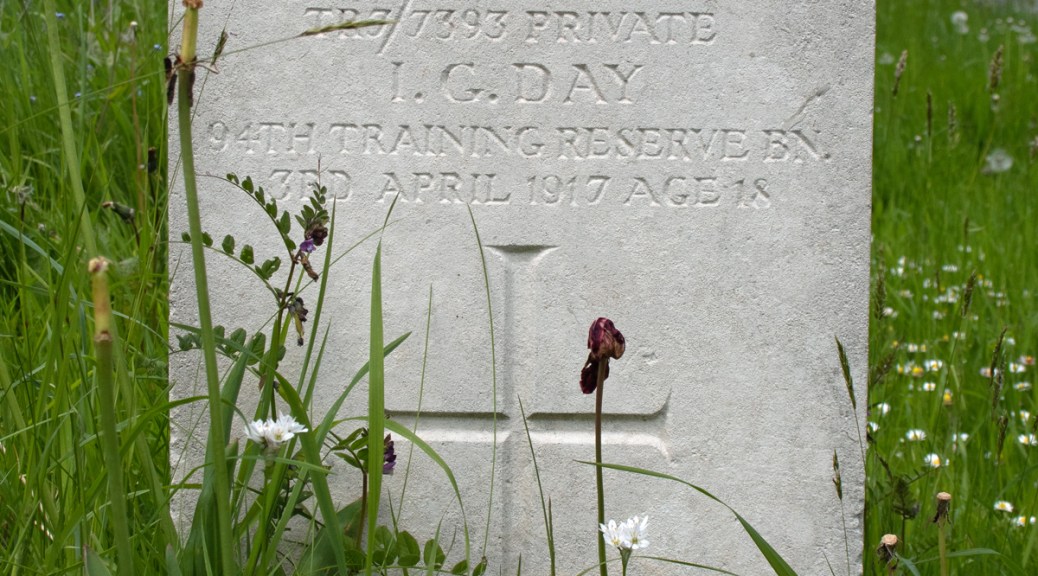
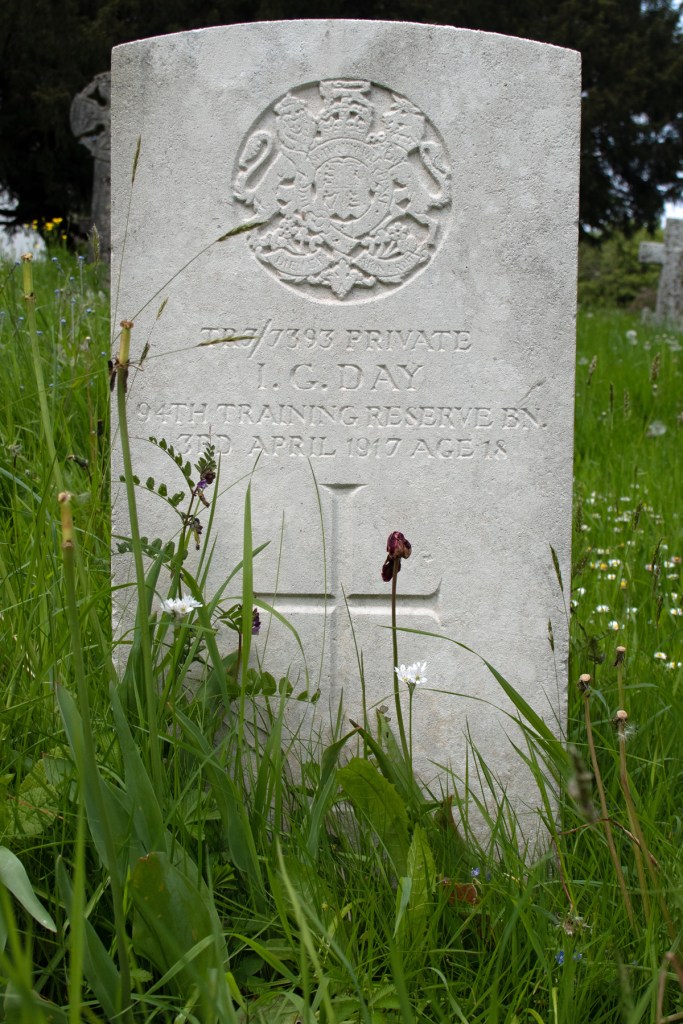
Charles was not alone in succumbing to pneumonia at Chiseldon Camp that spring. Two Somerset soldiers from battalions based there, Private Everett Ferriday, and Private Ivan Day, passed away in the same hospital just days after Charles.

You can read their stories by following the links above.

Sapper Walter Wigginton

Sapper Walter Wigginton

Walter Wigginton was born in the Leicestershire village of Illston-on-the-Hill in the summer of 1880. The second of seven children, his father John was a grazier, managing cows over a six-acre pasture. His mother, Rebecca, who was also born in Leicestershire, raised the family and managed the home.

Walter turned his hand to carpentry, and, by the time of the 1901 census, he was boarding with a widow in Frimley, Surrey, employed for his woodworking skills. By 1905, his journeyman life had taken him to the Somerset village of Trull. It was here that he met and married Annie Oaten, and here that the couple settled down to raise their family. They had two children, Dorothy, born in 1906, and Winifred, who was born two years later.

War was closing in on Europe and, by the summer of 1916, Walter had joined up to play his part. Initially assigned to the 65th Training Reserve Battalion, he had not long transferred across to the Royal Engineers as a Sapper when he fell ill.

Sapper Wigginton was admitted to the Kinmel Park Military Hospital near Abergele on the North Wales coast, suffering from bronchial pneumonia. Sadly, this lung condition was to get the better of him, and he passed away at the hospital on 29th December 1916, at the age of 36 years old.

Walter Wigginton’s body was brought back to Somerset for burial. He was laid to rest in the graveyard of All Saints’ Church in Trull, where his widow and children still lived.


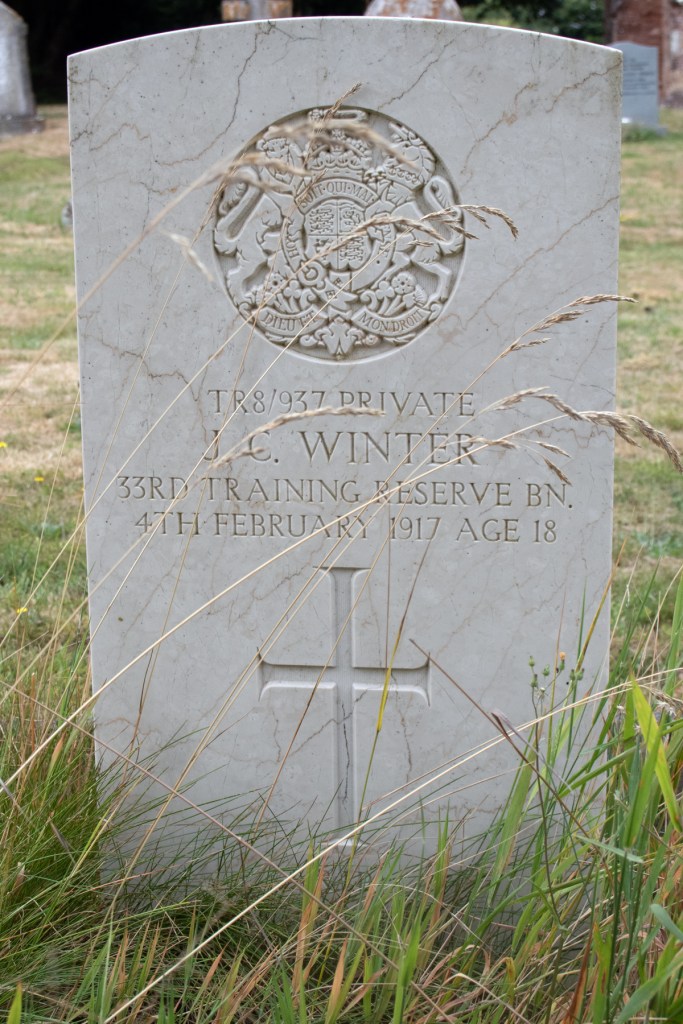
Private John Winter

Private John Winter

John Charles Winter was born in the summer of 1898, the younger of two children to James and Henrietta Winter. James was an agricultural labourer and carter from the village of Oake in Somerset. Henrietta had been born in Ontario in the USA, and was the daughter of English immigrants.

Little is documented about John’s early life. The 1911 census shows him living with his parents and his mother’s widowed brother, an army pensioner. At 12 years old, John was still at school.

War was coming to Europe by this point, and, as soon as he was able to (and probably encouraged by his uncle), John enlisted. He joined the 33rd Training Reserve Battalion, which was connected to the Warwickshire Regiment, at some point after August 1916.

Again, the details of his military service are scarce, but it seems that he soon fell ill, presumably from one of the medical conditions that tend to run rife in barracks crowded with men from across the country. The illness was to get the better of him and, on 4th February 1917, Private Winter passed away. He was just 18 years of age.

John Charles Winter was laid to rest in the graveyard of St Bartholomew’s Church in his home village of Oake.


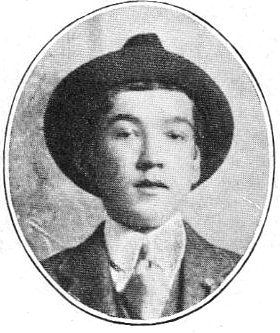
Private John Winter
(from findagrave.com)

Private Alfred Northway

Private Alfred Northway

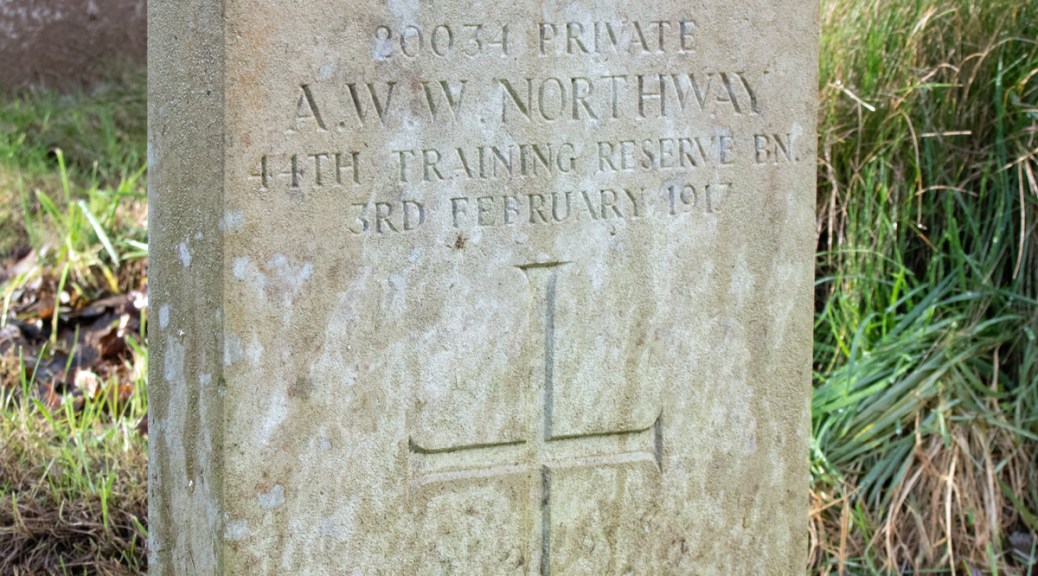
Alfred William Winsor Northway was born on 3rd December 1870 in Barnstaple, Devon. He was the only child to farm labourer John Northway and his wife Susan. By the time Alfred was a few months old, John had moved the young family to Ashburton.

On 2nd March 1890, Alfred married Susanna Raddon in Newton Abbot. The couple went on to have eleven children – Susanna already had two children when they married; there is no indication as to whether they were also Alfred’s.

By the time they married, Alfred was working as a farm labourer. This was a job he continued to do to support his rapidly growing family. War was coming to Europe, however, and the stability of life in Ashburton was soon to change. During this time, he volunteered for the 3rd Battalion of the Devonshire Regiment and this stood him in good stead moving forward.

At least two of Alfred and Susanna’s sons enlisted when the First World War broke out; not to be outdone, Alfred also joined up on 11th September 1914. Assigned to the 11th (Reserve) Battalion of the Devonshire Regiment as a Private, there is no indication that he saw any time abroad. Instead it seems that he served at the regiment’s depot in Wareham, Dorset, supporting the Training Reserve.

By the end of 1916, Private Northway had fallen ill. Admitted to the Sidney Hall Hospital in Weymouth with pneumonia, sadly the condition got the better of him. He passed away on 3rd February 1917, at the age of 46 years old.

Alfred William Winsor Northway was brought back to Ashburton for burial. He was laid to rest in the graveyard of St Andrew’s Church in the town.


Private Everett Ferriday

Private Everett Ferriday

Everett Ferriday was born in February 1899 in the Cornish town of Camborne. The second of four children, his parents were Methodist minister Jonah Ferriday and his wife, Elizabeth. Jonah’s calling took the family around the country, and, by the time of the 1911 census, they had settled in Frome, Somerset.

When Everett left school, he found employment at a motorcycle works in Bristol, and left home to move to the city. War was coming to Europe, however, and things were soon to change.

Everett got the call to join up in January 1917, just shy of his eighteenth birthday. His enlistment papers give his height as 5ft 11ins (1.8m) tall, and confirm that he weighed in at 126lbs (57.2kg). They also confirmed that he had found new employment as an insurance agent.

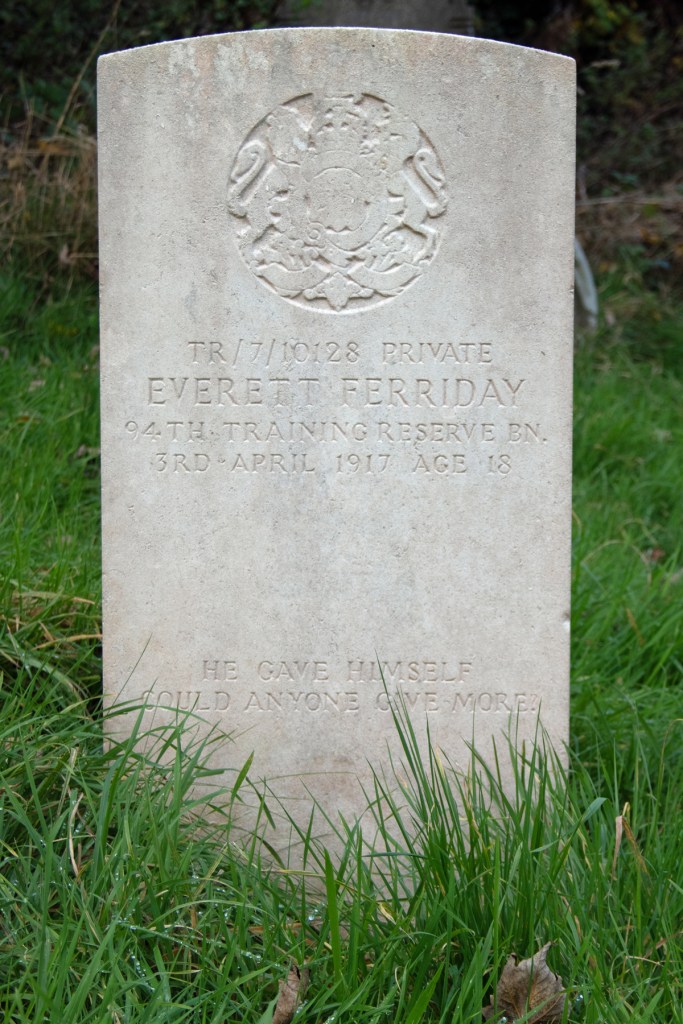
Private Ferriday was assigned to the 94th Training Reserve Battalion and sent to the army camp at Chiseldon, near Swindon at the beginning of March. Tragically, within a matter of weeks, he was admitted to the camp hospital with bronchial pneumonia. Sadly, this was too much for his body to take; he died at the hospital on 3rd April 1917, at just eighteen years old.

Everett Ferriday’s body was brought back to Frome; he was laid to rest in the Vallis Road Cemetery in the town.


Everett was not the only Somerset soldier to succumb to pneumonia at Chiseldon Camp that spring. Private Charles Oborne, died from the same condition a few weeks before him. Private Ivan Day, of the 93rd Training Battalion, passed away in the same hospital on the same day as Everett, also from pneumonia.

You can read their stories by following the links above.