Tag Archives: bronchitis

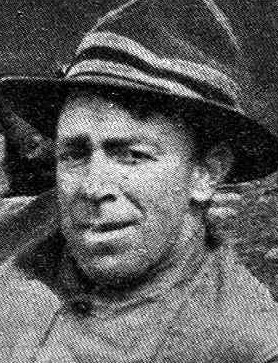
Private Francis Moody

Private Francis Moody

Francis Robert Moody was born on 8th September 1876, in the town of Kihikihi, on New Zealand’s North Island. There is little information about his early life, but his parents were Hampshire-born Francis Moody and his Irish wife, Mary.

When he completed his schooling, Francis Jr found work as a carter. When war broke out, however, he was called upon to play his part, enlisting in the New Zealand Canterbury Regiment on 18th June 1917. His service papers show that he was 5ft 10ins (1.77m) tall, and weighed 140lbs (63.5kg). A Roman Catholic by birth, he had brown hair, blue eyes and a medium complexion.

Private Moody’s unit left New Zealand on 13th October 1917, making the two-month voyage to Britain on board the HT Corinthic. Francis disembarked in Liverpool, Lancashire, before being marched into camp in Sling, Wiltshire.

Over the next month, Private Moody received further training, but by this point, and following the lengthy journey, his health was beginning to suffer. He was admitted to the No. 3 New Zealand General Hospital in Codford, Wiltshire, on 30th January 1918, suffering from bronchitis.

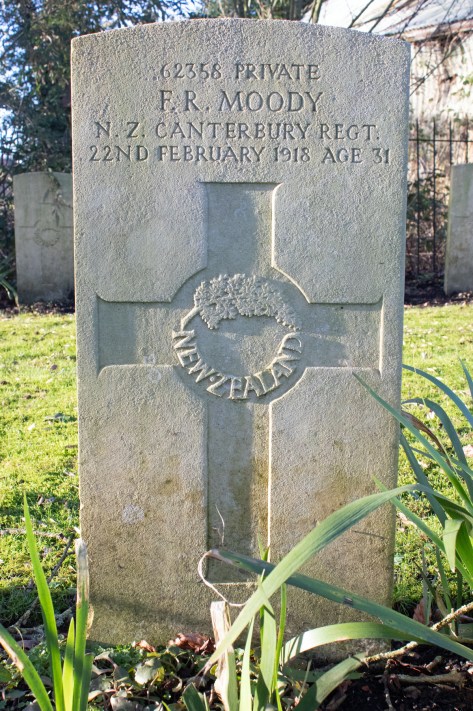
Francis’ health continued to deteriorate, and he developed tuberculosis. The condition would prove fatal, and he passed away on 22nd February 1918, at the age of 41.

Thousands of miles from home, Francis Robert Moody was laid to rest alongside his colleagues in the graveyard extension of St Mary’s Church, Codford.


Private Francis Moody
(from findagrave.com)

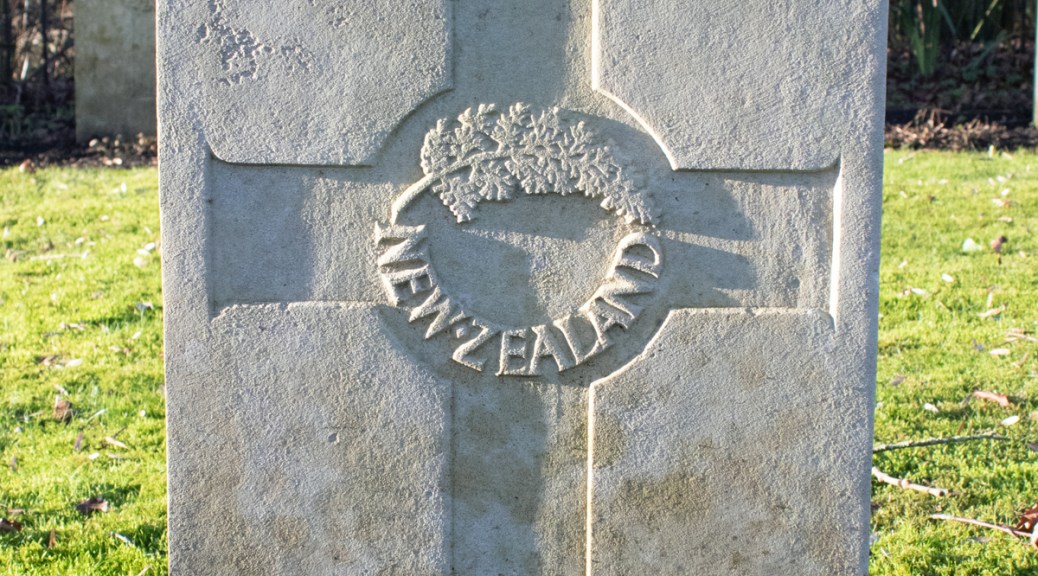
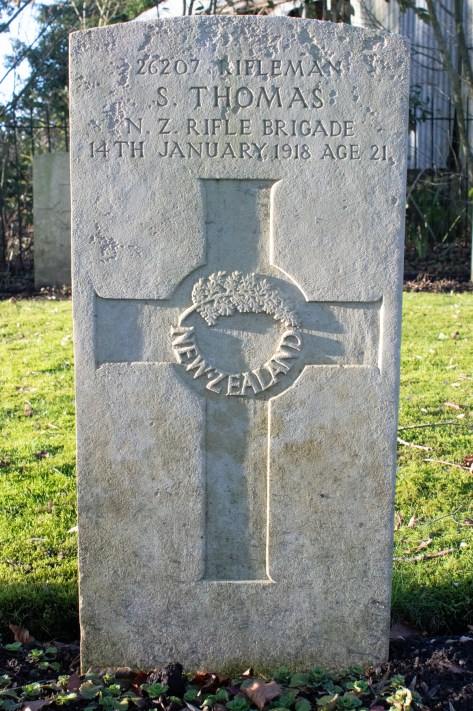
Rifleman Samuel Thomas

Rifleman Samuel Thomas

Samuel Thomas was born in Pukehinau, New Zealand, on 17th February 1896. There is little concrete information about his early life, but his parents were Isaac and Annie Thomas, and he was one of at least two children to them.

When he finished his schooling, Samuel found work as a teamster, or wagon driver. When was broke out, however, he was called upon to play his part, and he enlisted on 30th May 1916, joining the New Zealand Rifle Brigade. His service record shows that he was 5ft 10ins (1.77m) tall and weighed 147lbs (66.7kg). He had light brown hair, grey eyes and a fair complexion; a round scar on the front of his left shin was also recorded.

Deemed fit for service, Rifleman Thomas spent the next four months training. On 25th September 1916, his unit departed from Wellington for the two month voyage to Britain. During the journey, he had fallen ill, and, on disembarking in Devonport, Devon, he was admitted to a hospital with influenza.

When he was well enough, Samuel was moved to hospital in Codford, Wiltshire, eventually joining his unit in a camp at Sling on 15th January 1917. His time there was brief, however, and he was admitted back to the Codford hospital just three weeks later. It would not be until July that he was well enough to be sent to France.

From Étaples, Rifleman Thomas was sent to the front line. Within a matter of weeks, he had been wounded by shrapnel, which had caught his right side and his neck. He was medically evacuated to Britain for treatment, and was admitted to the No. 2 New Zealand General Hospital in Walton-on-Thames, Surrey.

Samuel would spend the next three months recuperating, initially in Hornchurch, Essex, then in Codford. During this time, love blossomed and, on 18th November 1917, he married Gertrude Berry, a horse dealer’s daughter from Plaistow, Essex. It is unclear how or when the couple had met: she may have been working at the hospital where he was being treated.

At the end of December 1917, he was back in hospital again, however, suffering from a bout of bronchitis. His condition would worsen, and he passed away on 16th January 1918, from the rupture of an abscess in his throat. He was 21 years of age.

The body of Samuel Thomas was laid to rest in the graveyard extension of St Mary’s Church, Codford, not far from the hospital in which he had passed.


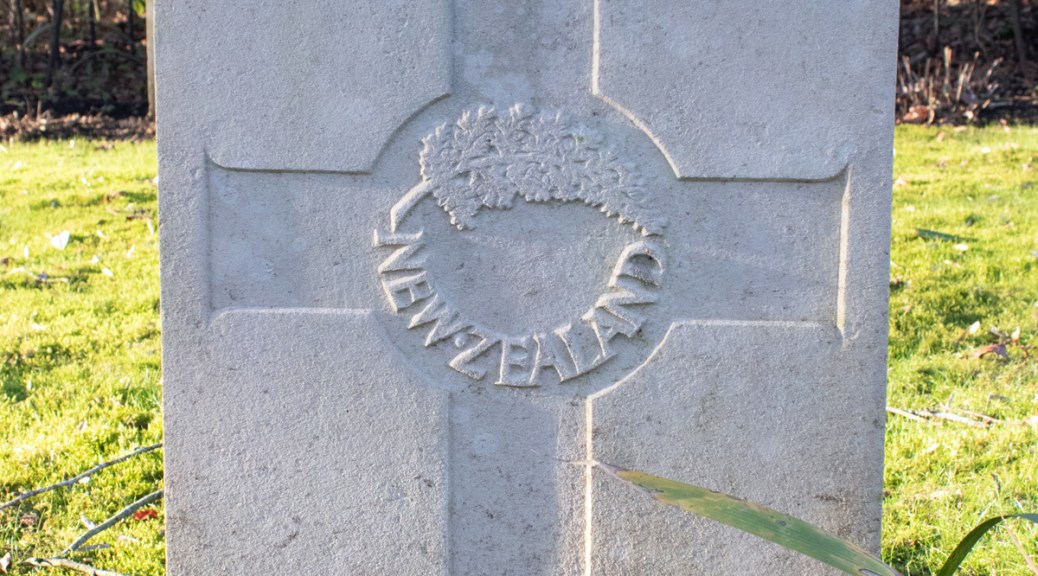
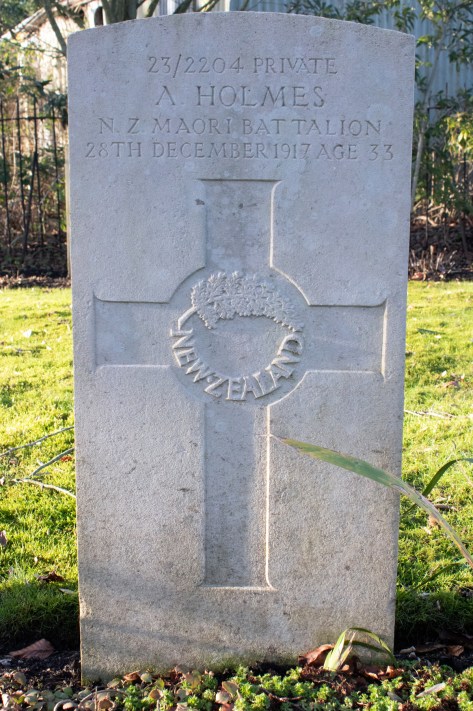
Private Arthur Holmes

Private Arthur Holmes

In the extension to St Mary’s Churchyard in Codford, Wiltshire, is the grave of Private A Holmes of the NZ Maori Battalion. Much of his life has been lost to time, but his military records give some glimpses into his time in the army.

Arthur Holmes was born on 22nd June 1884 in Auckland, New Zealand. His service papers show that he was working as a labourer in the Waihara region of North Island when he joined up, and gave his next-of-kin as his sister Mrs E Dixon (although this was later amended to his half-brother William Marshall-Muir).

By the time he joined the army on the 9th December 1915, he was 5ft 5ins (1.65m) tall, and weighed 10st 5lbs (65.8kg). He was described as having had brown hair, grey eyes and a fair complexion. The medical record also noted that two toenails on his right foot had been ‘chopped off in childhood’.

Private Holmes’ unit set off for Europe in the spring of 1916 and, after a three week pause in Suez, Egypt, he arrived in Étaples, France, on 9th June.

Arthur’s time in the army seems to have been beset by illness, with hospital admissions in June, July and August 1916. He seems to have spent eighteen months in France, and fought at the Somme and Messines Ridge.

At the end of 1917, after another short spell in hospital, Private Holmes was given leave in Britain, but was again admitted to a medical unit, having come down with bronchitis. Initially hospitalised in Surrey, by 19th December he had been moved to the No. 3 New Zealand General Hospital in Codford, Wiltshire. By this point, however, his health had been severely impacted, and he passed away on 28th December 1917, at the age of 33 years old.

The body of Arthur Holmes was laid to rest in the graveyard extension of St Mary’s Church, Codford.


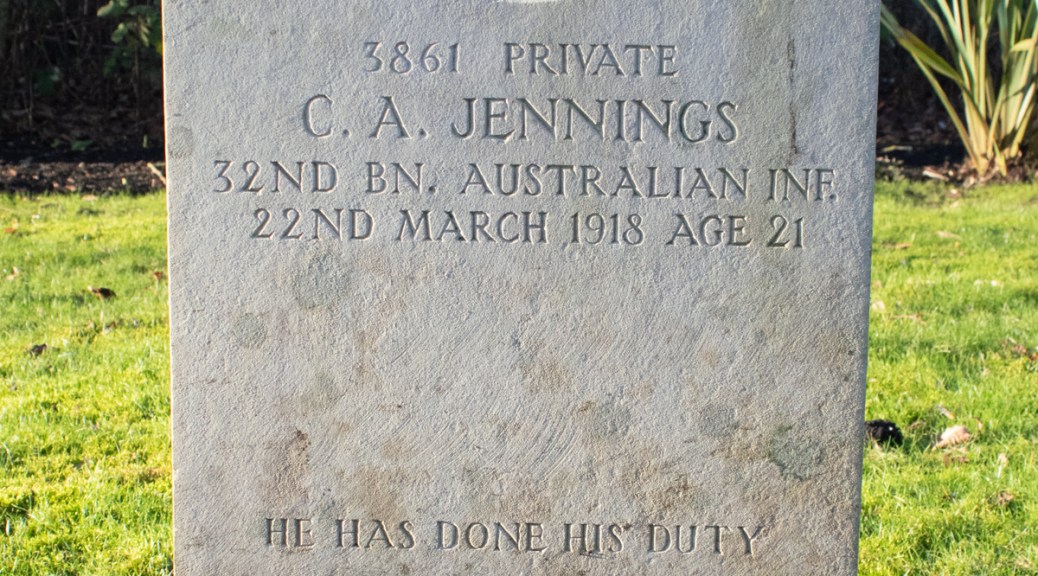
Private Clarence Jennings

Private Clarence Jennings

Clarence Albert Carrison was born on 6th June 1896 in Port MacDonnell, South Australia. His early life is a challenge to uncover: his father is noted as being Robert Carrison, while his mother was Mary Jennings. His parents had eleven other children, whose surnames vary between Carrison and Jennings.

Papers confirm that Clarence went to Mount Schank School from 29th July 1902 to 10th November 1904, although his attendance seems to have been a little haphazard. Intriguingly, his parents are not recorded, but Mr H Ulrich, a carpenter, is noted as being his guardian.

When he finished his schooling, Clarence found work as a labourer. War broke out on the other side of the world in the summer of 1914, and he was called upon to play his part. He enlisted in the Australian Imperial Force on 30th June 1917, and, Robert having passed away nine years earlier, he seems to have reverted to his mother’s name, Jennings.

Private Jennings’ service papers outline the young man he had become. He was a little over 5ft 7ins (1.7m) tall, and weighed 168lbs (76.2kg). He was recorded as having brown hair, blue eyes and a medium complexion.

Clarence spent the next three months training. On 30th October 1917, his unit left Australia for Europe, a journey that would take some eight weeks. The voyage was not uneventful for Private Jennings: he spent a night in the ship’s hospital with seasickness, then three weeks back there with mumps. His gratitude to be back on dry land when the HMAT Aeneas docker in Devonport on 27th December is likely to have been palpable.

Private Jennings was marched into camp in Sutton Veny, Wiltshire. Attached to the 33rd Battalion of the Australian Infantry, he moved to the nearby ANZAC base in Codford on 2nd January 1918, and would remain there for the next few months. This was not without its hiccups either, and he went AWOL from midnight on 7th February until 9:30am on 12th February. For this offence, he forfeited thirteen days’ pay.

By the end of that month, Clarence had fallen ill again. He was admitted to the No. 3 New Zealand General Hospital in Codford, suffering from measles and bronchitis. This combination of ailments would prove Private Jennings’ undoing: he passed away on 22nd March 1918, at the age of just 21 years old.

Thousands of miles from home, the body of Clarence Albert Jennings was laid to rest in the newly extended graveyard of St Mary’s Church, Codford.


Interestingly, Clarence’s burial report presents a clean slate to his family. He was noted as being “a keen soldier [whose] conduct was exemplary. He was very popular and his loss is very keenly felt.”


Private Frank Cattermole

Private Frank Cattermole

Frank James Cattermole was born in 1899 in the Australian town of Jeparit, Victoria. The third of eight children, his parent were William and Amelia Cattermole.

When Frank completed his schooling, he found work as a baker’s assistant but, when war broke out in Europe, he was keen to step up and play his part. He enlisted on 1st February 1917, joining the Australian Imperial Force.

After a year’s training on home soil, Private Cattermole’s unit – the 48th Battalion of the Australian Infantry – set off from Sydney on 22nd March 1918. The troop ship he was assigned to – A54 HMAT Runic – would take two months to reach its destination, London. Frank spent three weeks of the journey admitted to the ship’s hospital, although the condition is unclear.

Once disembarked, Private Cattermole was marched to the ANZAC camp in Codford, Wiltshire. He arrived there on 24th May 1918, to begin preparations for a move to the Western Front. This was not to happen, however, as he was admitted to the camp hospital on 1st June, suffering from bronchitis.

Over the next two weeks , Frank’s condition worsened, and eventually his body was too weak to take any more. He passed away on 14th June 1918, aged just 18 years old.

Thousands of miles from home, Frank James Cattermole was laid to rest alongside others from his battalion, in the ANZAC extension to St Mary’s Churchyard, Codford.


Private Frank Cattermole
(from findagrave.com)

Private Sydney Clarke

Private Sydney Clarke

The early life of Sydney Clarke is a challenge to piece together. Born in St George, Queensland, Australia, his birth parents are not recorded, and his military records give his friend and foster mother Mrs Ellen Noud.

What can be determined is that he was working as a stockman when he enlisted in the army in April 1917, and was living in the town of Warwick.

Sydney’s service records give a little more information about the man he was. Aged 27 years and two months old, he was 5ft 3ins (1.6m) tall, and weighed 109lbs (49.4kg). He had black hair, hazel eyes and a dark complexion.

Part of the Australian Imperial Force, Private Clarke left Australia on 31st October 1917. His journey on board the troop ship HMAT Euripides was not without incident, and Sydney was placed in the brig for seven days and docked two days’ pay for “neglecting to obey an order given by a superior officer”. The ship reached Britain in December 1917, and he marched in to the ANZAC base in Codford, Wiltshire, on Boxing Day.

The next six months would prove trying for Sydney’s health. On 9th January 1918, he was admitted to the camp hospital with bronchitis. This developed into pneumonia, and he would remain admitted until 18th May, when he was sent to his unit, the 49th Battalion of the Australian Infantry.

Less than a month later, however, Private Clarke was back in hospital, this time with influenza. This time his health would fail him, though: he passed away from the condition on 23rd June 1918, and the age of 28 years old.

Thousands of miles from home, Sydney Clarke was laid to rest in the newly extended graveyard of St Mary’s Church in Codford, not far from the base in which he had been billeted.


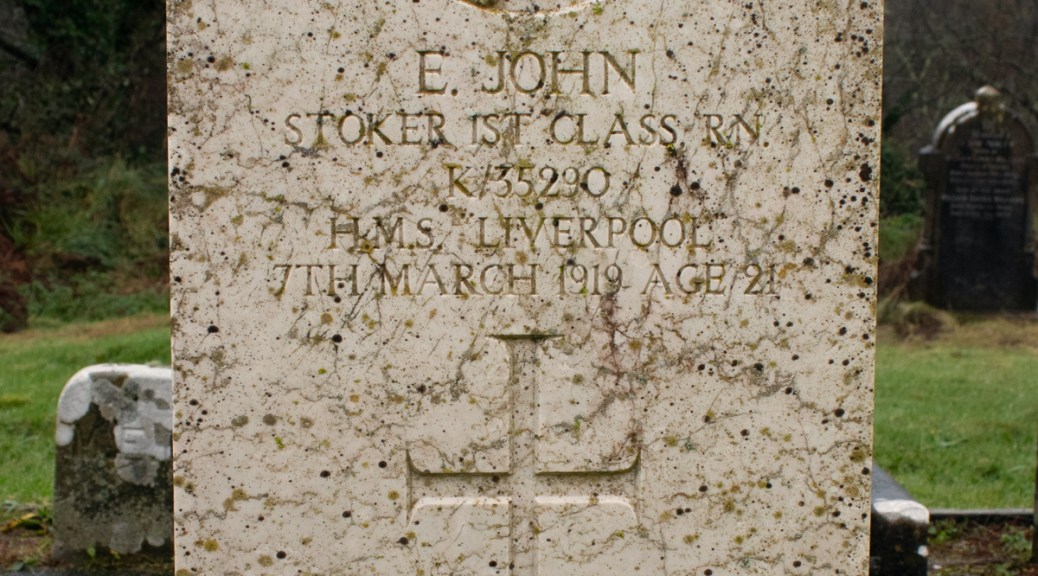
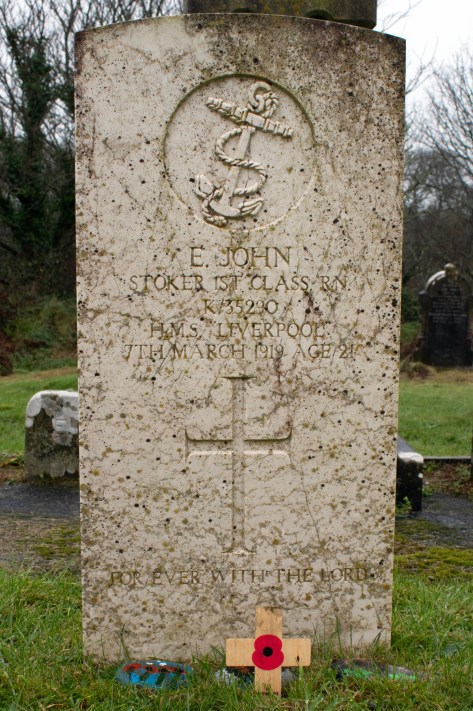
Stoker 1st Class Edwin John

Stoker 1st Class Edwin John

Edwin John was born in St David’s, Pembrokeshire, on 18th February 1898. The youngest of nine children, he was the son of farmer Henry John and his wife, Caroline. Edwin’s mum died when he was just five years old, and Henry was left to raise the family alone.

When he finished his schooling, Edwin found work on the farm. When war broke out, however, he was called upon to play his part and, on 19th July 1916, he enlisted in the Royal Navy. His service papers show that he was 5ft 4ins (1.63m) tall, with dark hair, grey eyes and a dark complexion.

Stoker 2nd Class John was sent to HMS Vivid, the Royal Naval Dockyard in Devonport, Devon, for his training. He remained there for three months, before being given his first assignment, the light cruiser HMS Liverpool. She spent the second half of the conflict patrolling the Mediterranean, and this is where Edwin would serve his time.

Edwin’s time in the navy was uneventful. He was promoted to Stoker 1st Class in March 1917, and, while he was consistently noted as being of very good character, his ability was recorded as being satisfactory.

On 28th April 1918, Stoker 1st Class John returned to shore to be demobbed. Given the war had another seven months to run, it is unclear why he was stood down, although it may have been on medical grounds. At this point his trail goes cold, but it is likely that he returned home.

Edwin’s health was certainly suffering by this point, and, on 7th March 1919 he passed away from bronchitis. He was just 21 years of age.

Edwin John’s body was laid to rest in St David’s Parish Cemetery, Pembrokeshire, not far from where his father and siblings still lived.


Serjeant Richard Ford

Serjeant Richard Ford

Richard Oscar Ford was born in Williamstown, Australia, in July 1891. The oldest of four children – and the only son – his parents were Anthony and Mary Ford. Anthony was a soldier, but Richard chose a different route and took work as a labourer when he completed his schooling.

There is little information available about Richard’s early life, but when war broke out, he stepped up to play his part. He enlisted in the Australian Imperial Force on 9th November 1914.

By this point he was working as a bushman, and his service papers reveal something of the man he had become. Standing 5ft 7ins (1.7m) tall, he weighed 140lbs (63.5kg), Private Ford had auburn hair, blue eyes and a fair complexion.

Assigned to the Light Horse Regiment, Richard left Australia for Europe on in March 1915. His unit arrived on the Gallipoli Peninsula on 15th July, and he would remain there for the next five months.

In December 1915, Richard came down with a bout of influenza, and was medically evacuated to the island of Mudros, then on to Alexandria, Egypt. In January 1916, he was admitted to hospital again, this time suffering from gonorrhoea and, after treatment, he re-joined his unit on 2nd February.

Private Ford’s unit spent that spring training in Egypt, but on 29th May, they set sail for the Western Front. Within a week they had disembarked in the French port of Marseilles and headed north to Etaples.

The next couple of years would prove a little disjointed. Richard switched units in August 1916, and given the rank of Gunner, but within two months his role had changed to Driver. His service records suggest that he managed to avoid injury during the fighting he was involved in, but that did not mean that he avoided hospital completely.

In January 1917 Driver Ford was admitted to the 51st General Hospital with a heart murmur, returning to his unit on 16th March. He had a second spell in hospital in February 1918, having come down with laryngitis.

In July 1918, having spent some time at the 4th Army Corporal School, Richard was reassigned to the 3rd Australian Field Artillery. This move seemed to have been the focus he needed. Initially promoted to Bombardier, within a month he rose to Lance Corporal, and by December 1918 he was a full Sergeant.

After the Armistice was signed, Richard was given three weeks’ leave, which he spent in Britain. By January 1919, however, his health was becoming an issue again, and he was admitted to the military hospital in Fovant, Wiltshire, suffering from influenza. The condition worsened, and Sergeant Ford passed away from bronchopneumonia on 4th February 1919. He was 27 years of age.

Richard Oscar Ford was laid to rest in Highgate Cemetery, Middlesex. While there seems to be no direct connection between the location and the man, his father, Anthony, had been born in Hackney, so it can be assumed that there was a family link to the area.


Private Edward Boland

Private Edward Boland

Edward James Boland was born on 14th August 1885 in the town of Darfield, on New Zealand’s South Island. Details of his early life are sketchy, but he was the fourth of nine children to Francis and Annie Boland.

When he finished his schooling, Edward found work as a farm labourer. In 1906, he married Ellen – or Nellie – Shea: their first child, son Raymond, was born the same year, and they would go on to have three more children by the time war was declared.

On 18th June 1916, Edward answered the call to serve the Empire. Enlisting in Trentham, he joined the New Zealand Canterbury Regiment as a Private. His service record notes that he was 5ft 8.5ins (1.74m) tall and weighed 144lbs (65.3kg). A Catholic, he had light brown hair, blue eyes and a fair complexion. A scar on his right thigh was also recorded as a distinguishing mark.

On 16th October 1916, Private Boland left from Wellington on board the steam ship Willochra. His unit – the 18th Reinforcements – arrived in Devonport, Devon, ten weeks later. They were then marched to their base at Sling Camp near Bulford, Wiltshire.

The journey from New Zealand, impacted Edward’s health. At the end of January 1917, he was admitted to the 3rd NZ General Hospital in Codford, Wiltshire, suffering from broncho-pneumonia. His condition deteriorated and would take his life. Private Boland died on 4th February 1917: he was 31 years of age.

As he was thousands of miles from his home, Edward James Boland was instead laid to rest in the newly extended graveyard attached to St Mary’s Church in Codford.


Private Edward Boland
(from findagrave.co.uk)

Rifleman Bertram Winterburn

Rifleman Bertram Winterburn

Bertram Winterburn was born in the city of Hutt, on New Zealand’s North Island, on 23rd April 1877. The oldest of eleven children, his parents were Arthur and Ada Winterburn. Arthur was a postmaster from South Island, and it would be here that he and Ada would raise their family.

There is little concrete information about Bertram’s life. The 1913 Post Office Directory records him as working as a labourer, and living in Otaki, a town back on North Island. He seems to have moved wherever the work took him, however, and, by the time war broke out, he was living in Hunterville, 110km (68 miles) further north.

Bertram stepped up to serve the empire when the call came. He enlisted in Trentham on 27th June 1916, and was assigned to the New Zealand Rifle Brigade.

Rifleman Winterburn left from Wellington on board the steam ship Willochra on 16th October 1916. His unit – H Company, 18th Reinforcements – would not arrive in Devonport, Devon, until 29th December. They were then marched to their base at Sling Camp near Bulford, Wiltshire.

The journey from New Zealand, would take its toll on the new recruits, with many falling ill before, or shortly after, they arrived. Bertram would not be immune from this and, at the end of January 1917, he was admitted to the 3rd NZ General Hospital in Codford, suffering from influenza. His condition worsened, developing into bronchitis, and this would take his life. Rifleman Winterburn died on 4th February 1917: he was 39 years of age.

Thousands of miles from his home, Bertram Winterburn was laid to rest in the newly extended graveyard attached to St Mary’s Church in Codford.