Category Archives: Seaman

Seaman George Gunn

Seaman George Gunn

George Gunn was born on 15th October 1891, the middle of three children to William and Hughina Gunn. The family lived in the hamlet of Skerray on the North Scottish coast.

Sadly, there is little information about George’s life. When was broke out, he enlisted in the Royal Naval Reserve, which suggests that he had experience of going to sea, although this is likely, because he lived in a coastal village.

George’s service records show that he was 5ft 10.5ins (1.79m) tall, had grey eyes and a fresh complexion. Under ‘personal marks’ the document noted that he had a dimple in his chin.

Seaman Gunn spent most of his time on land; he was initially posted to HMS Pembroke, the Royal Naval Dockyard in Chatham, Kent. In June 1915, however, he was assigned to the minelayer HMS Orvieto, and spent the next year patrolling the North Sea.

By the spring of 1916, George was back in Chatham; by August he was on the move again, this time to London, where he spent twelve months at HMS President, the Royal Naval Base in London. He returned to HMS Pembroke on 3rd September 1917, a move that was to prove fatal.

The base was a particularly busy place that summer, and George was billeted in overflow accommodation in the barracks’ Drill Hall.

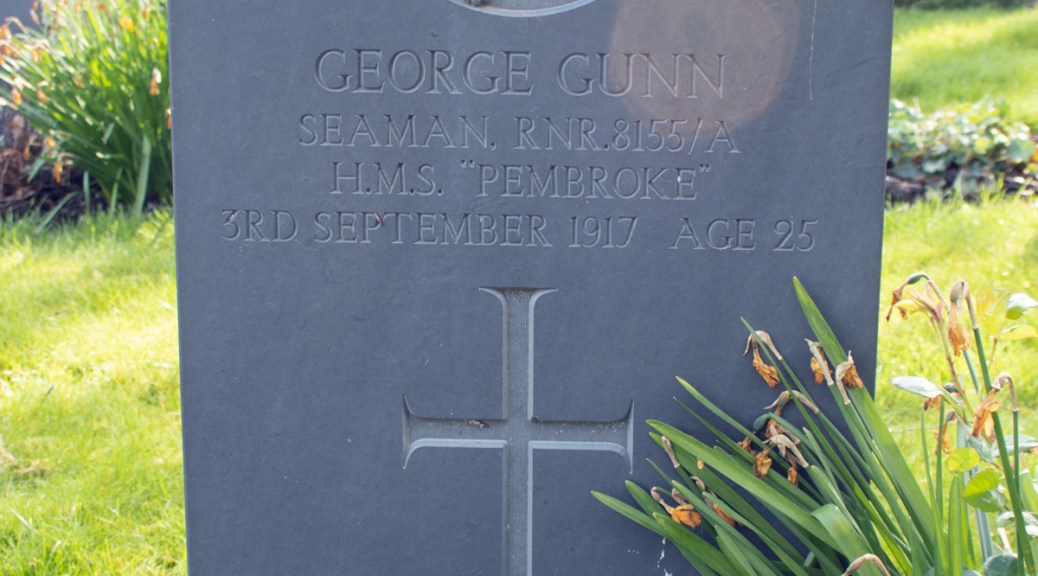
That night, Chatham was bombarded by a German air raid, and the Drill Hall received a direct hit. Tragically, Seamen Gunn was among those killed. He was just 24 years old and has been at HMS Pembroke for a matter of hours.

George Gunn’s body, along the other victims of the Chatham Air Raid, was laid to rest in the Woodlands Cemetery in Gillingham, more than 500 miles from home.
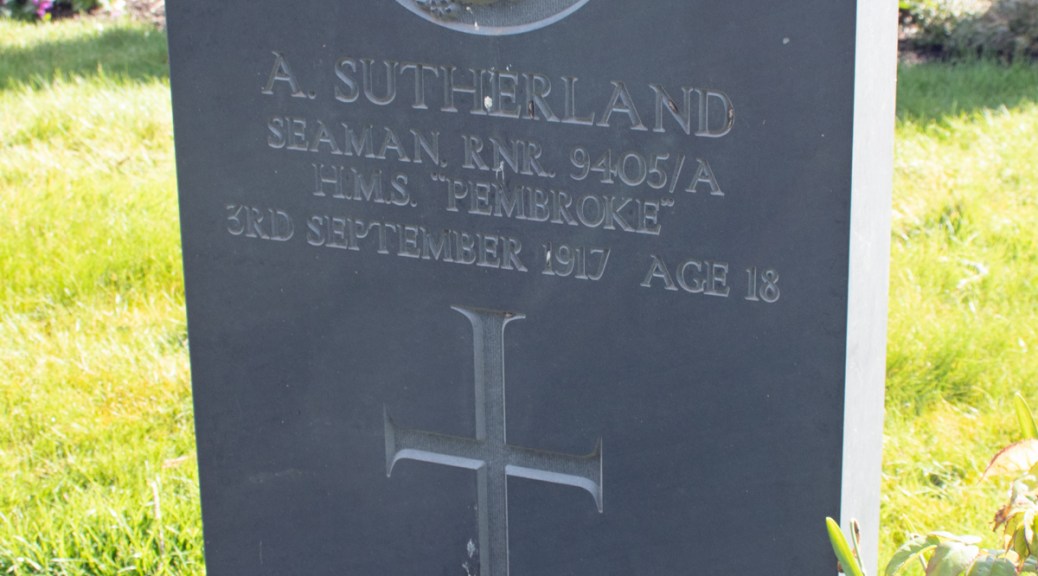
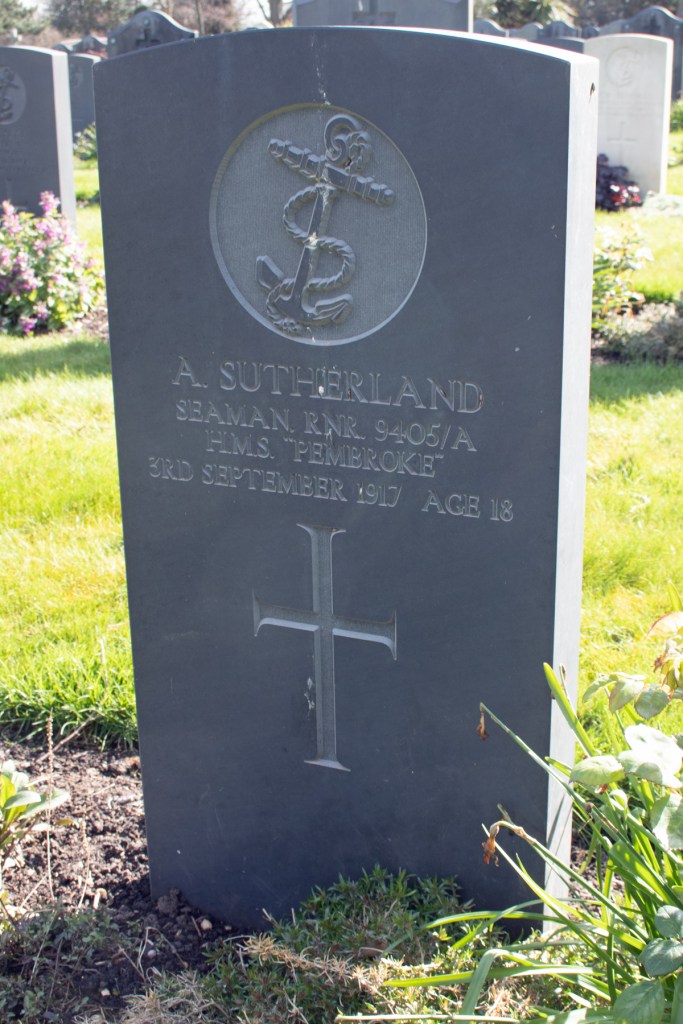
Seaman Alexander Sutherland

Seaman Alexander Sutherland

Alexander Sutherland was born on 20th May 1899 in the Scottish town of Brora. His parents were Peter and Jane Sutherland and he was one of four children, although, tragically, all three of his siblings died before they turned five.

There is little information documented about Alexander’s life: the 1901 census recorded him and his parents living with his paternal grandparents, but give little additional information. Peter died in March 1917, although, again, there is nothing to confirm a cause of death.

The document that provides the most detail about Alexander is his service record. He was too young to enlist when war broke out, but in August 1917, having turned 18, and possibly spurred on by the passing of his father, he joined the Royal Naval Reserve as a Seaman. The record shows that he was 5ft 11ins (1.8m) tall, had fair hair, blue eyes and a fresh complexion. He was also noted as having a scar on the left side of his neck.

Seaman Sutherlands’s first posting was at HMS Pembroke, the Royal Naval Dockyard in Chatham, Kent and he arrived there on 23rd August 1917. The base was a particularly busy place that summer, and Alexander was billeted in some overflow accommodation in the barracks’ Drill Hall.

On the night of the 3rd September 1917, Chatham was bombarded by a German air raid, and the Drill Hall received a direct hit. Tragically, Seamen Sutherland was amongst those killed. He was just 18 years old and had been at the base for just ten days, and on active service for just over a fortnight.

Alexander Sutherland’s body was laid to rest in the Woodlands Cemetery in Gillingham, alongside the other victims of the Chatham Air Raid.


Alexander’s death was particularly tragic for his mother, Jane. She had lost three children early on, and both her husband and last child within six months. Her torment must have been unimaginable.

Seaman Thomas Ginn

Seaman Thomas Ginn

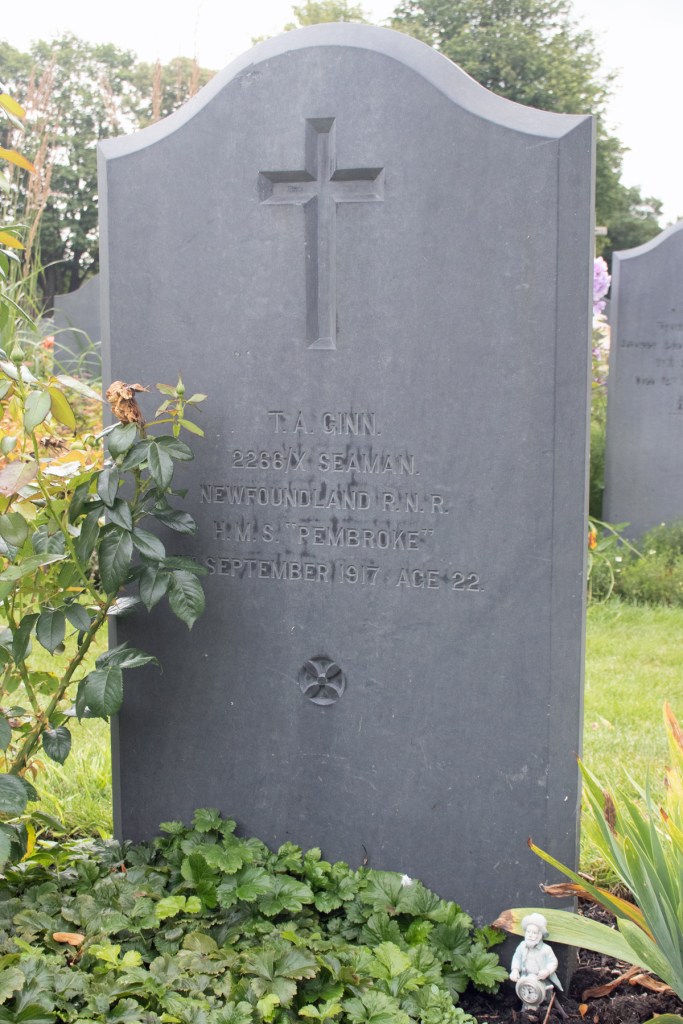
Thomas Albert Ginn seems destined to remain one of those people whose lives are lost to time. He was born on 4th February 1895 in Cape Fogo on the island of Fogo in Newfoundland. His father was Walter Scott Ginn, but beyond that, no concrete information remains.

What is clear is that, when was broke out, Thomas joined the Newfoundland Royal Naval Reserve as a Seaman. Sent to Europe, he found himself based at HMS Pembroke, the Royal Naval Dockyard, at Chatham, Kent.

He was billeted in the Drill Hall, which had been set up with temporary accommodation during 1917, when the barracks themselves became overcrowded.

On the 3rd September 1917, the German Air Force carried out one of its first night-time air raids on England: Chatham was heavily bombed and the Drill Hall received a direct hit. Seaman Ginn was badly injured and died of his wounds in hospital the following day. He was just 22 years of age.

Thomas Albert Ginn was laid to rest, along with the other victims of the Chatham Air Raid, in the Woodlands Cemetery, Gillingham.


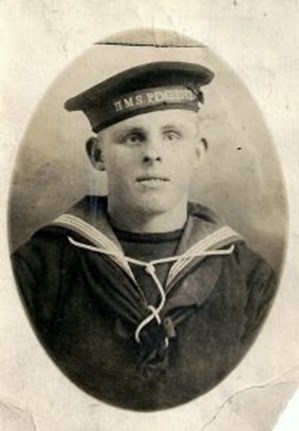
Seaman Thomas Gunn
(from westernfrontassociation.com)

Another young man from Fogo, Seaman Albert Cluett, also died during the bombing raid; given the remoteness of the Newfoundland town, it seems very unlikely that he and Thomas did not know each other.


Seaman Francis Crocker

Seaman Francis Crocker

Francis Thomas Crocker was born on 5th February 1895 to Job and Irene Crocker. One of eleven children, the family were born and raised in the small Newfoundland town of Trout River.

Sadly, there is little documentation about Francis’ life. What is clear, however, is that, when war broke out, he volunteered for the Royal Naval Reserve.

By 1917, Seaman Crocker was based at HMS Pembroke, the Royal Naval Dockyard in Chatham, Kent. The base was overly busy that summer, and Frances was billeted in temporary accommodation in the town’s Drill Hall.

On the 3rd September 1917, the first night air raid carried out by the German Air Force scored a direct hit on the barracks and Drill hall; Seaman Crocker was killed instantly. He was just 21 years old.

Francis Thomas Crocker was laid to rest, along with the other victims of the Chatham Air Raid, in the Woodlands Cemetery, Gillingham, some 2500 miles (4000km) from his Canadian home.


Seaman Nathaniel Gooby

Seaman Nathaniel Gooby

Nathaniel Gooby was born on 28th October 1897, the only son of William Gooby and his third wife, Margaret. Both of William’s previous wives – Tryphena and Amelia – had died before their time, but Nathaniel had six half-siblings, up to forty years older than him.

William was a carpenter, who had been born in England, but had moved to Newfoundland when he was young, and this is where he lived and raised his families.

Sadly, very little documentation remains to evidence Nathaniel’s life. He enlisted as a Seaman in the Royal Naval Reserve, potentially after war was declared (he would have been 16 years old at the outbreak of the conflict). By the summer of 1917 he was based at HMS Pembroke – the Royal Naval Dockyard in Chatham, Kent.

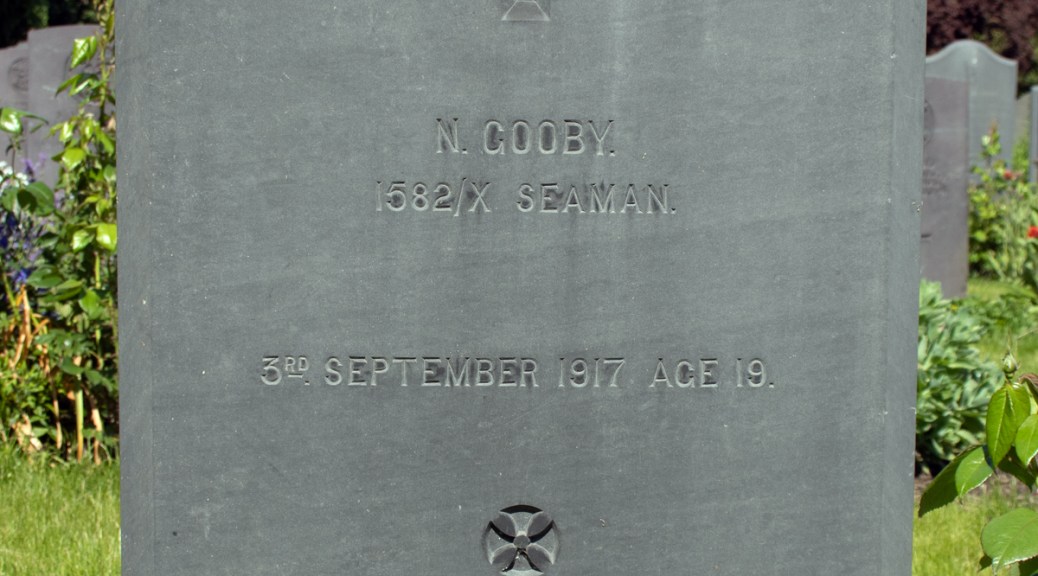
That summer was a busy time for the Dockyard, and temporary accommodation had been set up for the influx of military personnel based there. Seaman Gooby was billeted at Chatham Drill Hall and was sleeping there when the first night air raid was carried out by the German Air Force on 3rd September 1917. The Drill Hall received a direct hit, killing 98 servicemen – Nathaniel included. He was just 19 years of age.

Nathaniel Gooby was laid to rest in the Woodlands Cemetery in nearby Gillingham, along with the other victims of the Chatham Air Raid.