
Tag Archives: Duke of Wellington’s (West Riding Regiment)

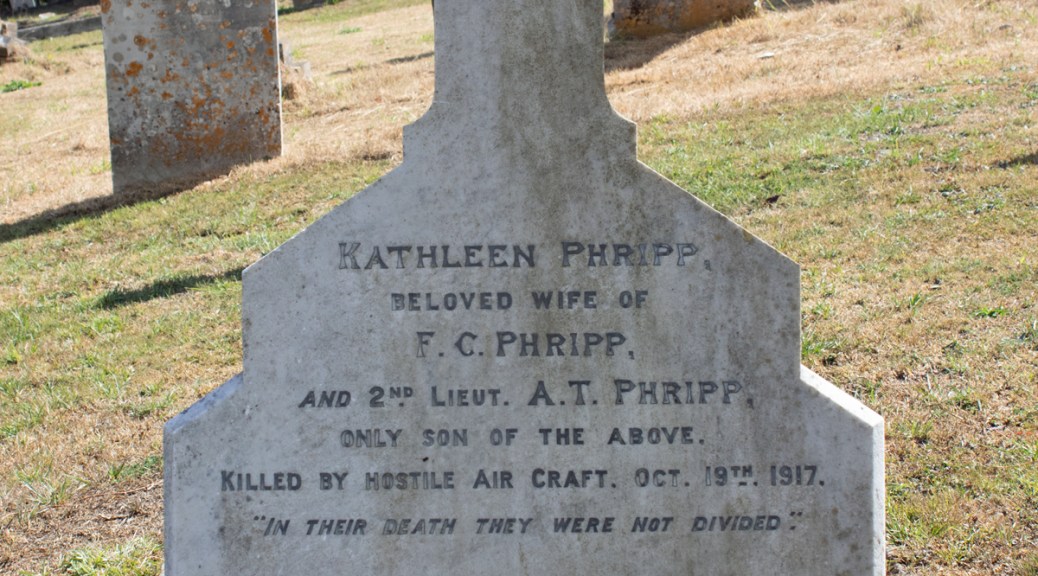
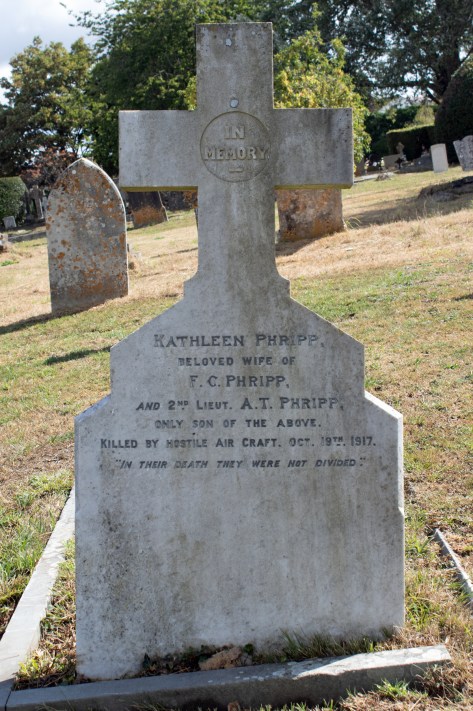
Second Lieutenant Arthur Phripp

Second Lieutenant Arthur Phripp

Arthur Frederic Thornton Phripp was born in Gillingham, Dorset, in the summer of 1894. The middle of three children, and the only son, his parents were Frederick and Kate Phripp. Frederick was a farmer, and the family lived in Slaughter Gate, to the west of the town centre.

The 1911 census recorded Frederick and Kate managing the farm, and raising their youngest child, daughter Lucy. Arthur, however, is missing, and it seems that he had taken started working for the Post Office as a boy clerk. Where he was living is unclear, but later documents suggest that he may have moved to London.

When war broke out, Arthur stepped up to play his part, joining the 1/21st (County of London) Battalion of the London Regiment, which was also known as the First Surrey Rifles. Private Phripp arrived in France on the 16th March 1915 and, over the next couple of years, fought at Loos, the Somme and Messines. He rose through the ranks, reaching Sergeant and, in the autumn of 1917, he was awarded a commission to Second Lieutenant.

Arthur returned to Britain to formally take the commission, and was transferred to the Duke of Wellington’s (West Riding) Regiment. Back on home soil, it was a chance to see family again, but tragedy was to strike.

A painful sensation was created in the town when it became known that Mrs Kate Phripp, 65, of Slaughtergate Farm, and her son, Arthur TF Phripp, 23, had been killed in the Zeppelin raid on Friday.

At the inquest on seven of the victims on Monday evidence was given that Mr Phripp was stopping with some friends, and his mother went up from Gillingham on Friday to see him. Evidence given by the police showed that warning had been given in every principal thoroughfare in the district where the fatalities occurred, and the theatres had been warned. The bomb came quite unexpectedly. Besides the killed nine people were seriously injured and nine slightly injured. A great amount of glass was smashed. It was mentioned that Mrs Phripp and her son had been attending the theatre, where is was announced that the warning had been given, and that the play would continue until the guns were heard. The play was continued to the end, and the deceased left at their own risk. The Coroner observed that it was clear that some people took the optimistic view that the raid was over. If people went out into the street after a warning they did to at their own risk. A formal verdict was returned, and they commended the work of the police, special constables and ambulance workers, who, they said, had acted promptly and pluckily…

[Bridport News: Friday 26th October 1917]

The Zeppelin that raided London that night had originally been one of eleven aircraft tasked with attacking Britain’s northern industrial towns. But strong winds disrupted the operation, and one airship – L45, commanded by Kapitänleutnant Waldemar Kölle – was blown south instead.

Meanwhile, Second Lieutenant Phripp and his mother had just left His Majesty’s Theatre in the Haymarket, where they had been watching the comedy Chu Chin Chow, and were making their way across Piccadilly Circus, returning to their friend’s house.

By ill twist of fate, at that moment Kölle released a 100kg (220lb) bomb, which exploded in the road outside the Swan & Edgar department store. The resulting explosion destroyed the building’s frontage and left a crater in the road some 10ft (3m) across and 4ft (1.2m) deep. Seven people were killed: this included Kate and her son.

The bodies of Kate and Arthur Phripp were taken back to Dorset for burial. They were laid to rest together in Gillingham Cemetery, not far from where Frederick and Lucy were grieving.


[Note: My thanks go to Tony Otton for his insight into the event that led to the passing of Arthur and his mother.]

Serjeant Frederick Reid

Serjeant Frederick Reid

Frederick William Reid was born in January 1876 in Liverpool, Lancashire. Little information is available for his early life, and his trail only really becomes traceable when he joined the Royal Irish Regiment at the age of 16 years old.

Frederick’s service records confirm that his mother was called Elizabeth, who lived in Bedminster, near Bristol. He was already volunteering for the regiment when he enlisted, and was working as a musician when he joined up. His papers confirm that he was 5ft 4ins (1.63m) tall, and weighed 112lbs (60.8kg). He had brown hair, hazel eyes and a fresh complexion.

Frederick was given the rank of Drummer when he joined up and was attached to the Royal Irish Regiment’s 3rd Depot. He spent more than seven years on home soil, rising to the rank of Corporal in May 1898. The following January he reverted to the rank of Private at his own request, but his superiors obviously saw something in him, and he was supported in a new role – Lance Corporal – just a month later.

In October 1899, however, Frederick’s life was to take a new turn, when he was sent to India with his troop.

Corporal Reid was based in Lahore, and had found the life that he was seeking. Over the next forty months, he successfully took on a variety of clerical roles. He was promoted to Lance Sergeant in October 1901 and given oversight of the Officers’ Room.

In March 1903, Frederick returned to Britain. With the move came a further promotion, to the rank of full Sergeant, again, overseeing the Officer’s Room. He seems to have been based in Gloucestershire by this point, as, on 18th November 1903, he married Isabella Jane Parke at a Registry Office in Bristol. There is no further record for the young couple, however, so the new Mrs Reid is destined to remain a mystery.

Frederick was destined to return to India, and in January 1905, that is exactly what he did. His regiment returned to Lahore, and he was given the role of Clerk Steward at one of the Lawrence Memorial Asylum. The name is misleading, as the asylums were a series of four military-style boarding schools across India. Sergeant Reid’s records do not confirm which of the four he was attached to, but it would have been Sanawar, Mount Abu, Lovedale or Ghora Gali.

Given his military background, it seems that the role of clerk was something Frederick settled into quite happily. He was recalled back to army service in November 1909, and, within seven months, he requested a discharge from the army. This was granted, as he had, by this point, completed more than eighteen years’ service.

Frederick remained in India, however, and on 28th September 1913, he married Elizabeth Marshall in Lahore. They had two children, Florence, who was born in Quetta on 2nd September 1914, and Lily, who was born on 1st January 1916 in Lahore.

War had come to the world by this point, and in spite of his age – he was 39 by now – Frederick felt it only right to step up and play his part again. On 28th October 1914, he enlisted again, and was assigned to the 1st Battalion of the Duke of Wellington’s (West Riding Regiment). His new medical noted that he was 5ft 7ins (1.7m) tall, and weighed in at 9st (57.2kg). His complexion was recorded as pale, while he had a number of tattoos on his left forearm: the crossed swords, harp and crown of the Royal Irish Regiment, along with the initials VR.

While part of the West Riding Regiment, Sergeant Reid was attached to the 3rd Mule Corps of the Indian Supply & Transport Corps. He was involved in arranging provisions for the various battalions who needed them.

By March 1916, his battalion had been sent to Salonika, and it was here that Frederick contracted tuberculosis. Medically evacuated to Britain, he was admitted to the Southwark Military Hospital. He was confirmed as no longer being medically fit for army service and was discharged on 16th August 1916. His medical report noted that he “is anxious to have sanatorium treatment, but is not an insured man, owing to having been stationed in India.”

On his discharge, Frederick moved to Weston-super-Mare, Somerset, which is where his mother was by now living. His wife and children also came to live in England and, the family settled in Pawlett, near Bridgwater.

After leaving the army, Frederick’s trail goes cold. The next confirmation of his life is that of his passing. He died on 12th October 1919, presumably from his lung condition. He was 43 years of age.

Frederick William Reid, who had been born in Liverpool, who had had two separate careers in the army, and who had lived and married in India, was laid to rest in the peaceful graveyard of St John the Baptist’s Church in Pawlett, Somerset.