
Robert William Collett was born on 20th April 1893 in Barnsbury, now part of Islington, Middlesex. Little information about his early life remains available – he does not feature on any census records – although later records confirm than his parents were called George and Sarah.
When he completed his schooling, Robert found work as a baker, but he had bigger and better things in mind. On 24th August 1911, he enlisted in the Royal Navy. His service papers show that he was 5ft 1.5ins (1.56m) tall, with dark brown hair and eyes, and a fresh complexion.
Stoker 2nd Class Collett was sent to HMS Pembroke, the Royal Naval Dockyard in Chatham, Kent, for his training. In February 1912, he was given his first assignment, on board the battleship HMS Berwick. She would be his home for the next year, during which time he was promoted to Stoker 1st Class.
After a further spell on shore, Robert transferred to another battleship, HMS Swiftsure. She would spend much of the war serving in the Mediterranean, with Stoker Collett on board. He seems to have had a rebellious nature, and this led to his time aboard Swiftsure not being smooth sailing.
During his time on the battleship Robert spent three separate period in the brig: three days in October 1914, and seven days in June 1915. In October that year, things came to a head, and he was convicted of threatening to strike an Engine Room Artificer. For this he was incarcerated again, for 42 days.
Stoker Collett left Swiftsure in May 1916, and transferred to another vessel, the battlecruiser HMS Repulse. After an eight-month stint on board, he returned to Chatham while waiting for a new posting. His time here was not without incident, however, and he was thrown in the brig for a further seven days for an unrecorded misdemeanour.
HMS Pembroke was overcrowded in the summer of 1917, and when he was released Stoker Collett was billeted in temporary accommodation in the dockyard’s Drill Hall.
By this point in the war, the German Air Force was looking to minimise daytime casualties, and was, instead, trialling night raids; on 3rd September, Chatham found itself in their flight path. The Drill Hall received a direct hit, and Stoker 1st Class Collett was killed, along with more than 100 others. He was just 24 years old.
The body of Robert William Collett was taken back to London for burial. He was laid to rest in Islington Cemetery, not far from where his parents were still living.
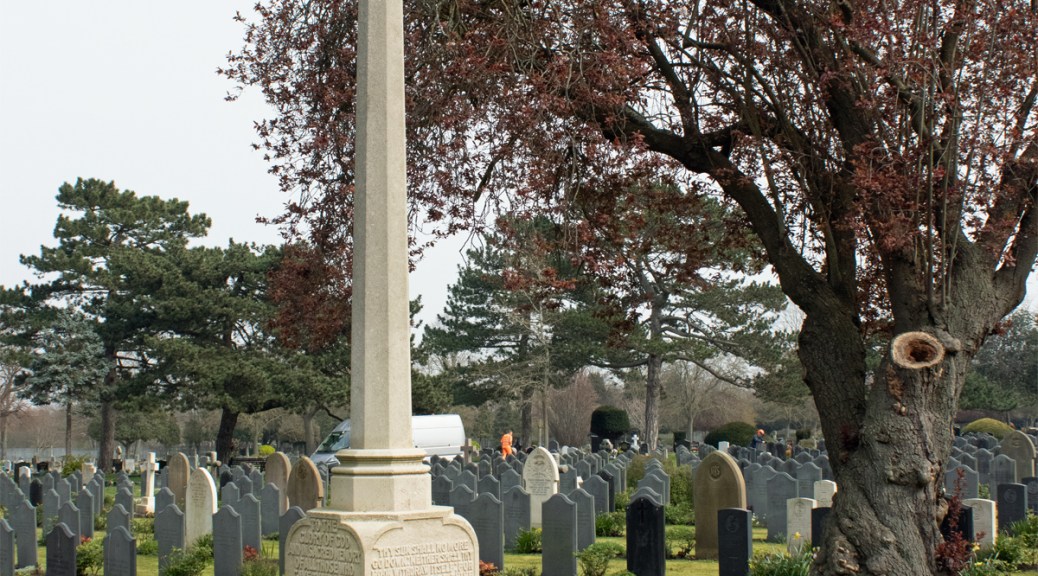
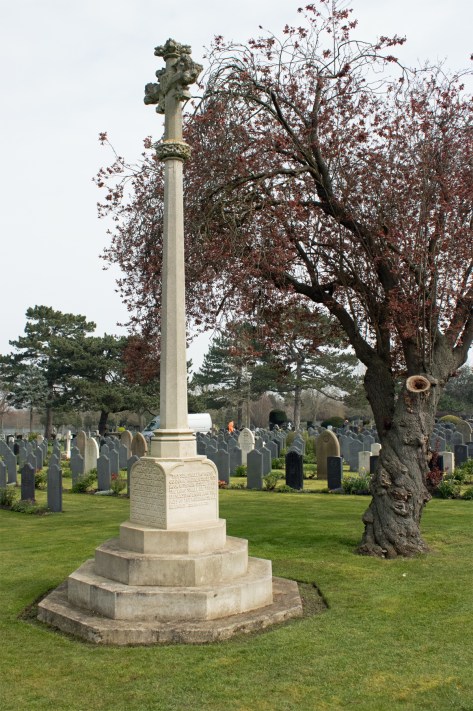
[Note: the photo above is of the memorial to the Chatham Air Raid victims, close to the mass grave for those whose bodies were not identified, in Woodlands Cemetery, Gillingham, Kent.]

