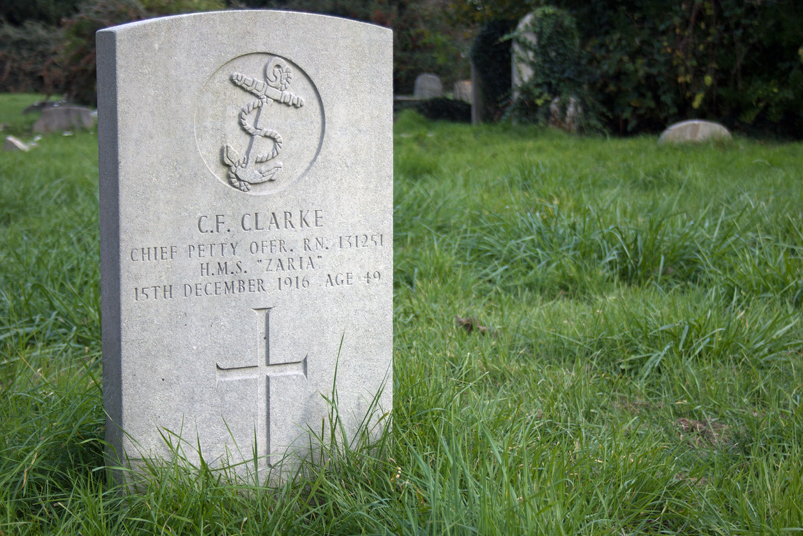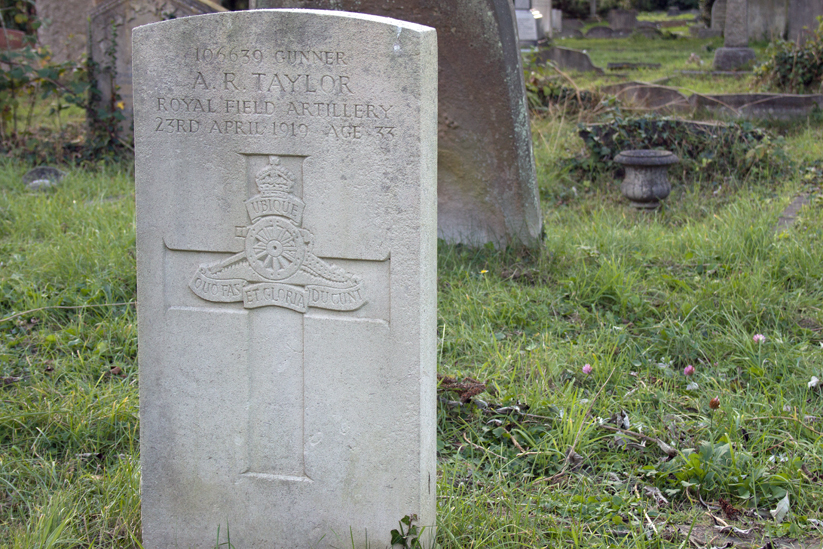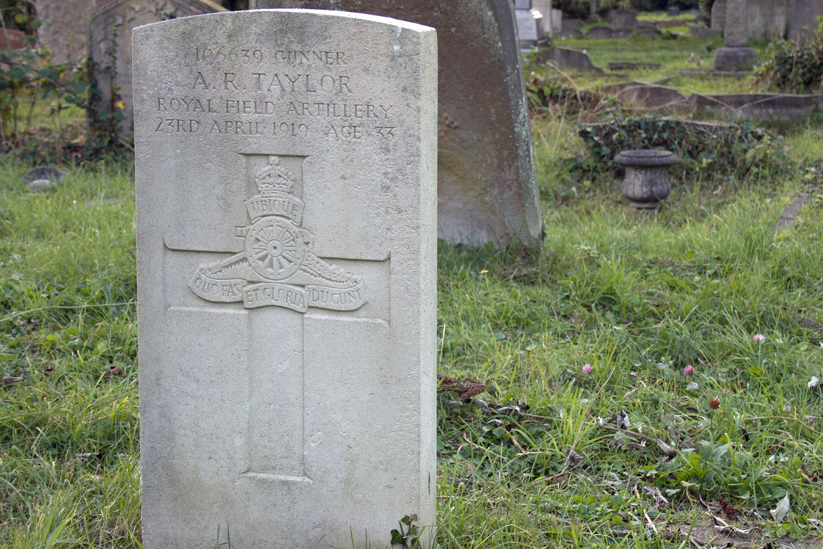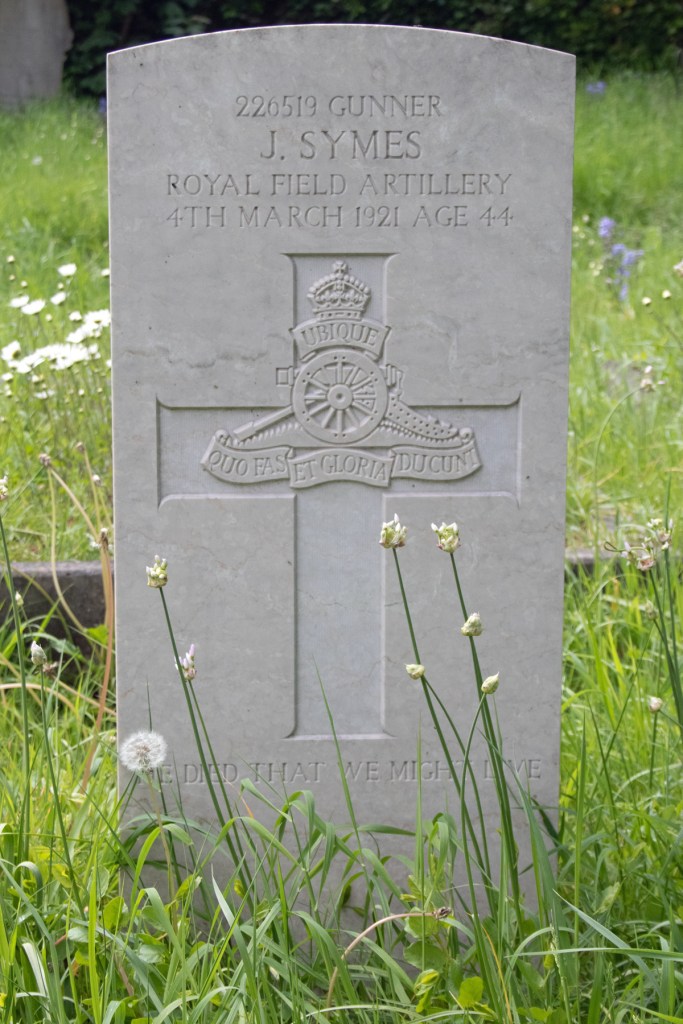
In a quiet corner of a cemetery in Somerset stands a gravestone to Private HJ Cowles. It confirms that he passed away on 26th April 1920, and that he was in the Bedfordshire Regiment during the First World War.
Little additional information on HJ Cowles is available. One document, the Medal Roll Index Card, confirms his first name as Henry, and that he had initially joined the Somerset Light Infantry. He was awarded the British Medal for his war service.
Cowles is a fairly common name in the Somerset area, and, without any additional information – date of birth, familial connections – it is impossible to narrow down the name on the gravestone to a specific Henry Cowles from the area or beyond.
There is also nothing in any contemporary newspapers to suggest that Private Cowles’ passing was anything out of the ordinary.
Sadly, therefore, he remains a name lost to history. Henry J Cowles, whoever he was, and however he died, lies at rest in the Milton Cemetery in Weston-super-Mare, Somerset.
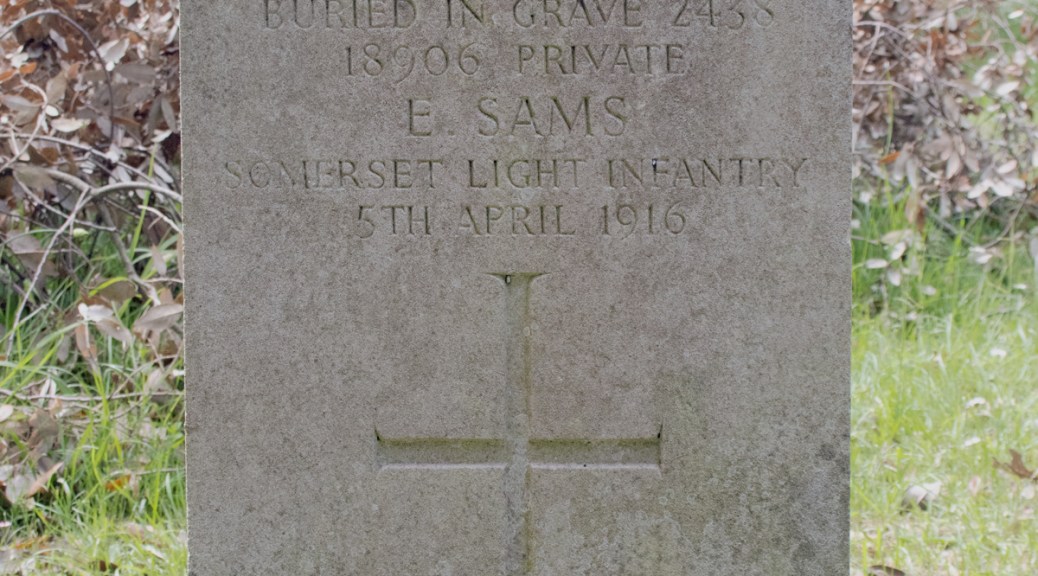
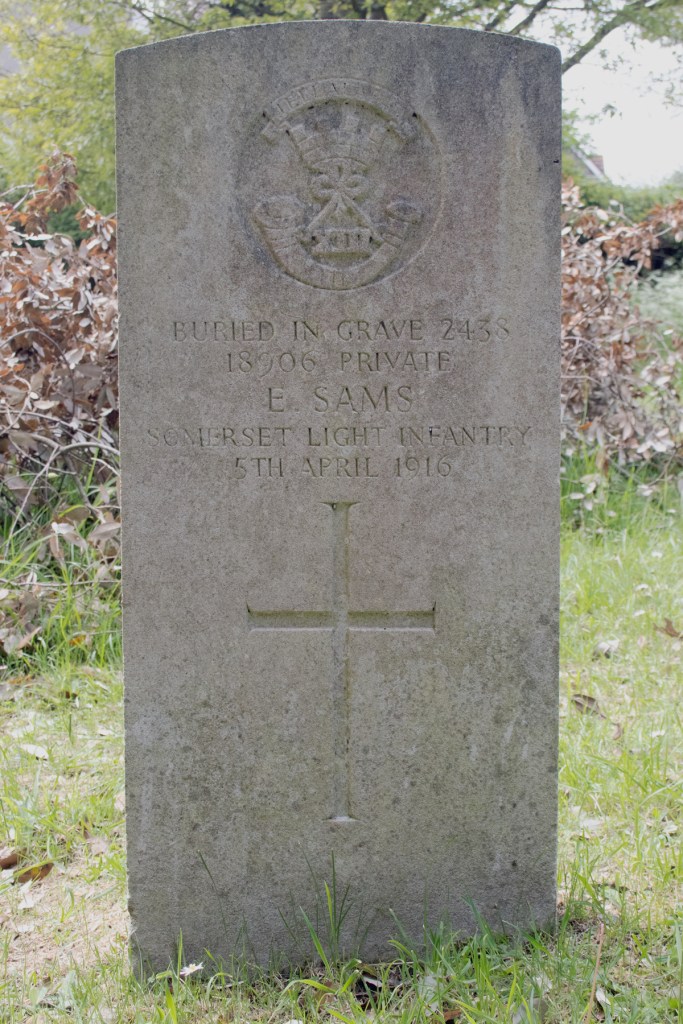
In a corner of the Milton Cemetery in Weston-super-Mare, Somerset, stands the gravestone of Edward Sams. It gives little information away, other than the fact that he passed away on 5th April 1916, and that he served as a Private in the Somerset Light Infantry.
There is no documentation – military or otherwise – that can be concretely connected to Private Sams. None of the available documents for Edward Sams include the service number on his gravestone, and there is nothing to provide a definite date of birth or familial connections.
Sams was not an uncommon Somerset name at the start of the twentieth century, and there are a number men by that name called Edward in the area at the time. Again, however, the information is lacking that allows us to directly connect any of these names with the gravestone in the Weston-super-Mare cemetery.
There is nothing in any contemporary newspapers to suggest that Private Sams’ passing was anything out of the ordinary.
Sadly, therefore, he remains a name lost to history. Edward Sams, whoever he was, and however he died, lies at rest in a Somerset cemetery.
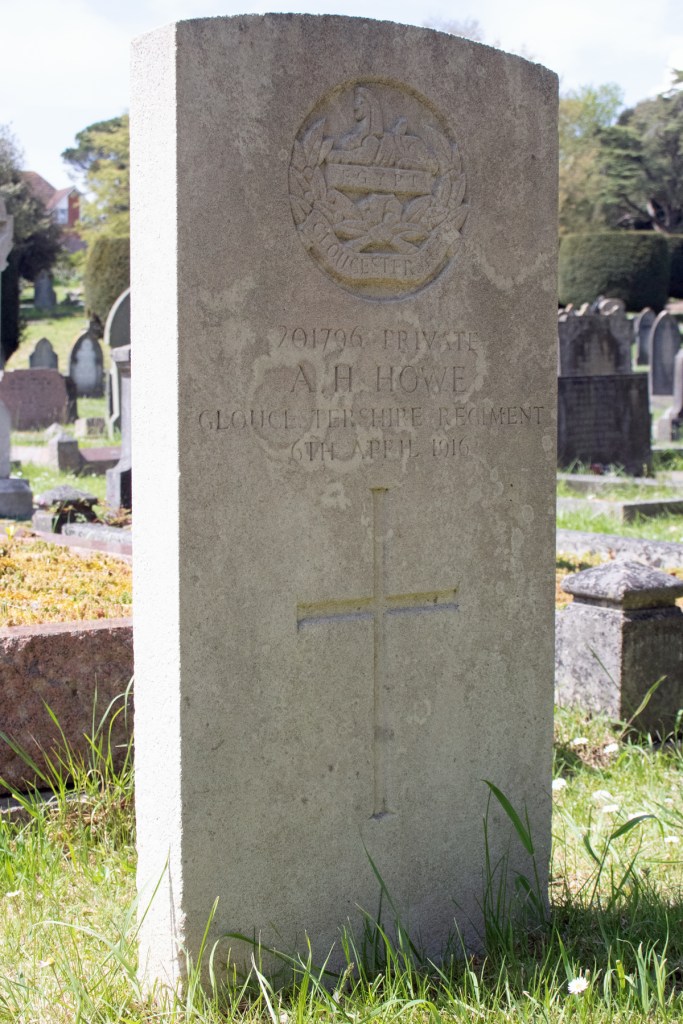
In the Milton Cemetery in Weston-super-Mare is a gravestone to Alfred Harry Howe. He seems destined, sadly, to be one of those servicemen whose stories are lost to time. The stone confirms that he died on 6th April 1916 and that he was a Private in the Gloucestershire Regiment. Further research adds that he was assigned to the 3rd/4th Battalion.
The UK Army Register of Soldier’s Effects gives his father’s name as William. It also confirms that he was not eligible for a war gratuity, as he had insufficient service; given the date of his death, it is likely, therefore, that he enlisted on or after October 1915.
Beyond this information, however, there is little documentation to confirm exactly who Alfred was. As there is no date or place of birth, it is difficult to get an exact match. There are at least three William/Alfred matches in the Somerset/Bristol area, but nothing to connect them to the headstone in Weston-super-Mare, and nothing to even confirm that Alfred was from the South West.
There is nothing in any contemporary newspapers to suggest that Private Howe’s passing was anything out of the ordinary.
Sadly, therefore, he remains a name lost to history. Alfred Harry Howe, whoever he was, and however he died, lies at rest in a Somerset cemetery.
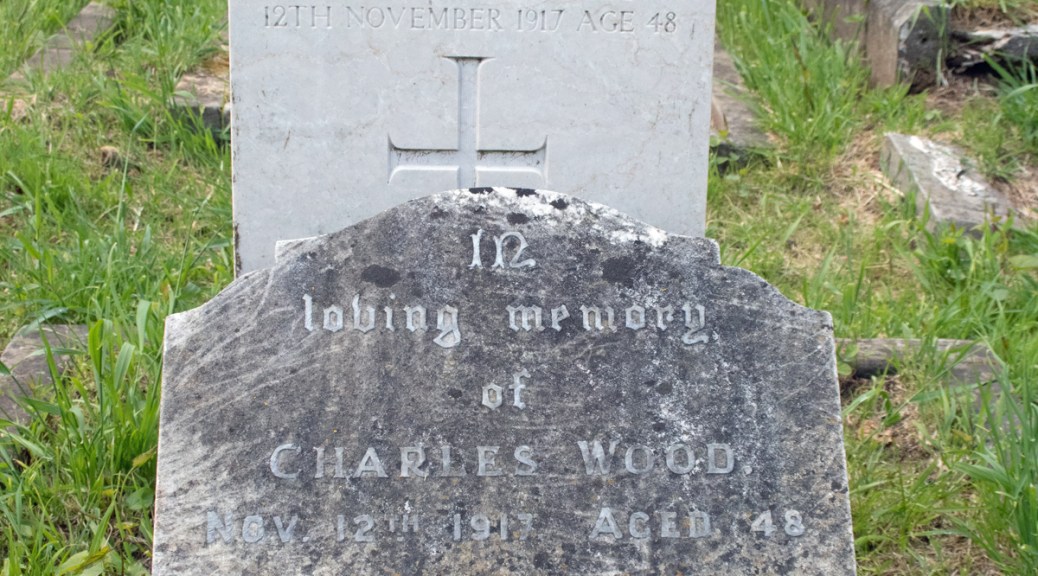
Charles Wood is destined to be one of those servicemen whose lives remain shrouded in mystery.
He was laid to rest in the Milton Cemetery in Weston-super-Mare, and his widow, Ellen, is buried with him. There are two headstones on the site – a family one, and a more recent war grave.
The Commonwealth War Graves Commission website give his age – 48 years old when he died – and states that he was a Private in the 263rd Company of the Royal Defence Corps and gives his service number. This was a territorial force, so it is probable that he served on home soil.
The only remaining military document relating to him is the Army Register of Soldier’s Effects. This confirms that he died in the Red Cross Hospital in Portishead on 12th November 1917, and that his belongings passed to his widow. It does highlight that he received a war gratuity, which was only applicable to soldiers who had completed at least six months’ service, so we know that he enlisted before May 1917.
There are a number of censuses available for the Weston-super-Mare area, but there at least two men called Charles Wood who married women called Ellen, so it is a challenge to identify which is the man buried in this grave.
A usual source of information would be his service record – which, in addition to his military activity, would give an address as well as other family members. However, this document is not available for Private Wood.
There is no mention of his passing in any of the contemporary newspapers, so it seems unlikely that his death was anything out of the ordinary.
Charles Wood is, sadly, lost to time, one of the countless men and women who gave up their lives for King and Country.
Cecil William Beresford was born in June 1875, the oldest of five children. He shared the same first name as his father, so became known as William. Cecil Sr was a barrister in London and he and his wife, Caroline, brought the family up in Kingsbury, London.
Things certainly went well for the Beresford family. By 1901, Cecil was a county judge, and had relocated the family to Devon. William, by this time, was training to be a barrister, and lived with his parents, siblings and four servants in Weare Hall, overlooking the village of Weare Giffard, near Bideford.
From this point on, information about William is a bit sketchy. He does not appear on the 1911 census – by this time Cecil and Caroline had moved to Weston-super-Mare, where Cecil died a year later. It is likely that William had enlisted in the army by this point, and was posted overseas.
William’s military records are not available, but when war broke out in 1914, he joined the Royal Defence Corps and, through his service, had attained the rank of Major.
In October 1917, a number of the local newspapers ran this brief report:
The death has occurred in a military hospital at Weymouth of Major Cecil William Beresford (RDC), eldest son of his Honour, the late Judge Beresford and Mrs Beresford, late of Wear Gifford Hall, and subsequently of Penquarry, Weston-super-Mare. He was 42 years old.
Western Times: 17th October 1917
Sadly, this is all that remains to document Major Beresford’s passing. There is nothing to confirm whether he had been wounded or had fallen ill, and there are no newspaper reports around his funeral.
Cecil William Beresford was laid to rest in the Milton Cemetery in his mother’s adopted home town of Weston-super-Mare.
Ralph Henry Edwards was born in December 1883, the oldest of six children to Charles and Emma. Charles was a house painter from Somerset, and raised his family in the coastal town of Weston-super-Mare.
When he left school, Ralph followed in his father’s footsteps, taking over the business when Charles passed away in 1909. By the time of the census two years later, Ralph was living with his mother Emma, his two younger brothers and Emma’s brother Harry. Harry was also a house painter, while Ralph’s siblings were working a grocer’s assistants. The family were living in a five-room, semi-detached house within walking distance of the town centre.
War was on the horizon, and Ralph was keen to do his part. Full details of his service are no longer available, but what is certain is that he enlisted in the Gloucestershire Regiment and was assigned to the 8th (Service) Battalion. Initially formed in Bristol, the battalion spent the first year of the war on home soil, before being sent to France in July 1915.
By the middle of the war, Ralph had been promoted to the rank of Corporal. He transferred over to the Labour Corps and was attached to the 106th Prisoner of War Company. Initially, German POWs had been shipped to England, but by 1916 those with useful skills were retained in France and drafted into the Forestry Companies, Army Service Corps and Royal Engineers. Corporal Edwards’ role would have been to oversee such men. (Whether this was in France or back in England is unclear.)
At this point, Ralph’s trail goes cold. He served out the war, passing away back at home on 11th March 1919, although the cause of his death has been lost to time. He was 35 years of age.
Ralph Henry Edwards lies at rest in the Milton Cemetery in his home town of Weston-super-Mare.
Percy Prince was born in 1890, one of seven children to John and Eliza Prince. John was an agricultural labourer and coal merchant, and brought his family up on the Somerset/Wiltshire border, near Bruton.
Percy followed in his father’s line of work when he left school, eventually moving to Frome. He met and married a woman called Florence Stickler in July 1909, setting up home in Water Lane, to the south of the town centre.
War was soon beckoning, and Percy enlisted in the Somerset Light Infantry as a Private. Sadly, his service records are lost to time, and so details of him time in the army are not available. What we do know is that he was assigned to one of the depots, although which one is not clear.
Sadly, that is about the limit of information available about Private Prince. He died on 11th April 1918, at the Military Hospital in Taunton. There is nothing to confirm a cause of death, but he just was 28 years old.
Percy Prince was buried in St James’ Cemetery in Taunton.
Henry Matthew Baber was born in the spring of 1859, the second of six children to Henry and Jane Baber. Henry Sr was a cordwainer – or shoemaker – and the family lived in Bristol. Or, at least, most of them did. The 1871 and 1881 censuses show Henry Sr and Jane happily living with their children, but Henry Jr is noticeable in his absence.
In August 1887, Henry married Sarah Jane Hardwidge in the village of Paulton, near Bath. His younger brother Alfred and two of his sisters, Annie and Ellen, all bear witness to the wedding, at which Henry gives his profession as coachman.
The newlyweds settle down in Weston-super-Mare, and go on to have two children, Henry and Kathleen. Sadly, the couple’s happiness was to be cut short, when, in 1891, Kathleen passed away, followed just two years later by Sarah, at the age of just 32 years old.
With a young boy to bring up, Henry sought a new companion and, just over a year after Sarah’s death, he married Alma Quantick, who was fourteen years Henry’s junior. Together, they went on to have six children and, by the time of the 1901 census, the family were living in the Somerset village of Yatton. Henry, by this time, was working as an insurance agent for Prudential, a profession that was to last him through to the start of the First World War.
From the early 1890s, Henry had enlisted in the local Yeomanry. While only a reserve force, he had a short spell in Egypt, fighting at Tel-el-Kibir in 1882. Harry worked his way up through the ranks, eventually attaining the role of Colour Sergeant. He was brought out of reserve status on 4th August 1914, at the age of 55, and was assigned to the 4th Battalion of the Somerset Light Infantry.
There is little else to confirm his military career during the Great War; he was discharged in November 1914, but there is nothing to confirm whether he had seen active service during those four months or not.
Colour Sergeant Baber’s passing is also shrouded in mystery. He died on 12th April 1915, but the cause of his death is lost to time. He was 56 years old when he died.
Henry Matthew Baber lies at rest in the graveyard of St Mary’s Church in Yatton, Somerset.
Henry and Alma’s eldest son William Albert Baber is also interred in the family grave and, within eighteen months, Alma had lost both her husband and her eldest son. William was 19 years old when war broke out, and his story can be found here.
Hubert Stanley Parsons was born towards the end of 1892, the eldest of eight children to Frank and Emily Parsons. Frank was a burner, working in the lime kilns in his home village of Yatton, in Somerset. When he left school, Hubert followed in his father’s footsteps, while his younger siblings found work in the local paper makers and bakers.
Sadly, a lot of Hubert’s military records are lost to time. What is clear is that he enlisted on 22nd September 1915, joining the 10th Battalion of the Devonshire Regiment as a Private. He served on the Western Front, gaining the Victory and British Medals and the 1915 Star in the process.
In November 1915, Private Parsons’ battalion was moved to Salonika, Greece, to help fight on the Serbian front. Whether Hubert ever fought in the Balkans is not known; the next – and last – time he appears in documentation is in the Register of Soldiers’ Effects. This confirms simply that he died in hospital on 27th March 1917. The cause and location are not known, but he was just 24 years of age.
Hubert Stanley Parsons lies at rest in the graveyard of St Mary’s Church in Yatton, Somerset.
In a quiet corner of the St Mary’s Cemetery in Taunton, Somerset, sit a pair of headstones.
Both are adorned with the word Portugal, and have the word Trabalhador (translated as Worker) and the phrase Corpo de Lenhadores Portugueses (or Portuguese Forestry Corps) inscribed on them.
During the Great War, vast quantities of timber were required by the Army in France. Initially imports from Canada provided most of what was needed but, as the war progressed, ships were required for other essential supplies, so imports of timber fell dramatically.
In 1916, the British government asked the country’s oldest ally, Portugal, to send workers to assist with the war effort. Soon both the Portuguese Forestry Corps and Canadian Forestry Corps had teams working all across the United Kingdom, totalling many thousands of men.
This side of the war effort was not without its casualties, and those serving were accorded Commonwealth War Graves.
There is no information readily available for Manuel Ferreira Maio. He would have come to England from Portugal at some point in 1916, but the only record of him is that of his passing.
He died on 7th October 1918, although the cause of his death and the age at which he passed are lost to time.
Manuel Ferreira Maio lies at rest in St Mary’s Cemetery in Taunton, Somerset.