Francis George Marchant was born in the autumn of 1894, the fourth of five children to William and Emma Marchant. William – who went by his middle name, Walter – was a gamekeeper from the village of Uplyme in Devon, and this is where the family were born and raised.
Sadly, there is little specific information about Francis’ life. When war was declared, he stepped up to play his part, joining the Coldstream Guards as a Guardsman. Attached to the Machine Gun Corps, he would have spent time overseas, but details about his time in the military are long since lost.
By the end of the conflict, Guardsman Marchant was based in Hampshire, billeted in Witley Camp. While here, for reasons unknown, he was admitted to the Connaught Military Hospital. It was here, on 4th April 1919, that he passed away: he was 24 years of age.
Francis George Marchant was taken back to Devon for burial. He was laid to rest in Uplyme’s Ss. Peter & Paul’s Church.
Ernest Richards was born in Bath, Somerset, 1886, and was the youngest of four children to Emma Richards. Emma was widowed when Ernest was an infant, and no baptism records remain to confirm who he was.
The fate of the Richards family is outlined through the consecutive census records. The 1891 document shows Emma and her children living at 4 Camden Row, to the north of the city centre. Emma was employed as a needlewoman, while Ernest’s oldest brother, Herbert, was working as an errand boy. The family shared their home with widowed laundress Emily Clarke, helping with the bills.
By the time of the 1901 census, the family had moved to 1 Claremont Row. A bit further out of the centre of the city, this offered more space for the growing children. Emma was still working as a needlewoman, but three of the children were gainfully employed: Ernest as a printer’s errand boy, Herbert as a grocer’s carter, and their brother William as a book shop porter.
The 1911 census found Emma still living at 1 Claremont Row. She was 53 by this point, and no longer working, but three of her children were still living there, and bringing in an income. William was a milkman, Ernest a porter, and her youngest child, daughter Gladys, was a machinist.
War was closing in on Europe by this point, but from here on in, Ernest’s trail gets a bit sketchy. Later records confirm that he had enlisted by the summer of 1916, and they he had joined the Coldstream Guards. Attached to the 5th (Reserve) Battalion, Private Richards appears to have been based on home soil.
Ernest seems to have been hospitalised in February 1917. Sadly, there is little additional information about his condition. While his regiment was based in Windsor, Berkshire, there is no evidence to confirm whether his barracks where also there, so it isn’t clear to which hospital he was admitted.
Private Richard would succumb to his ailment. He passed away, while in hospital, on 10th February 1917: he was 30 years of age.
Ernest Richards’ body was taken back to Somerset for burial. He was laid to rest in Bath’s majestic Locksbrook Cemetery, not far from his family home.
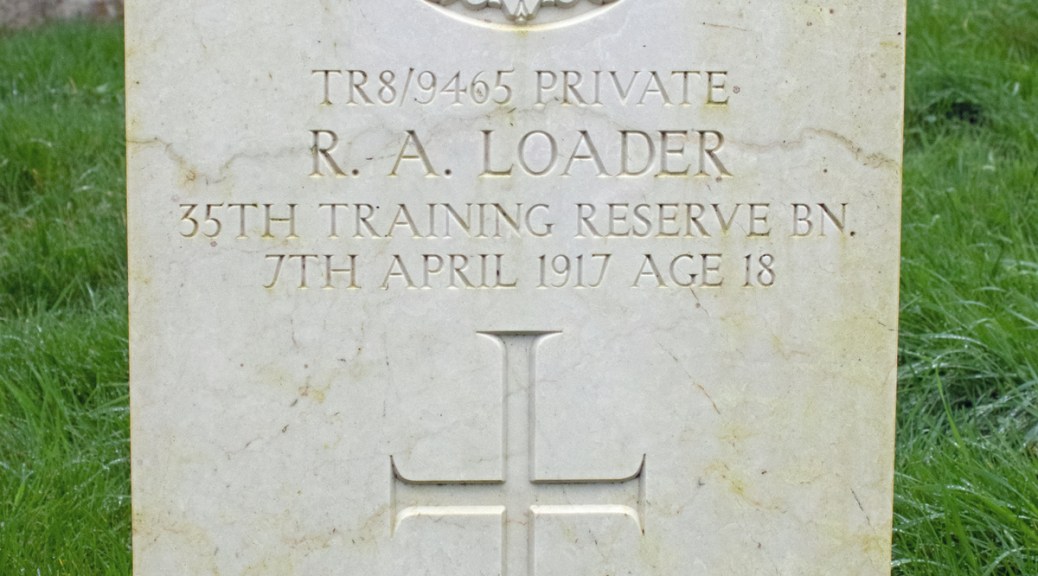
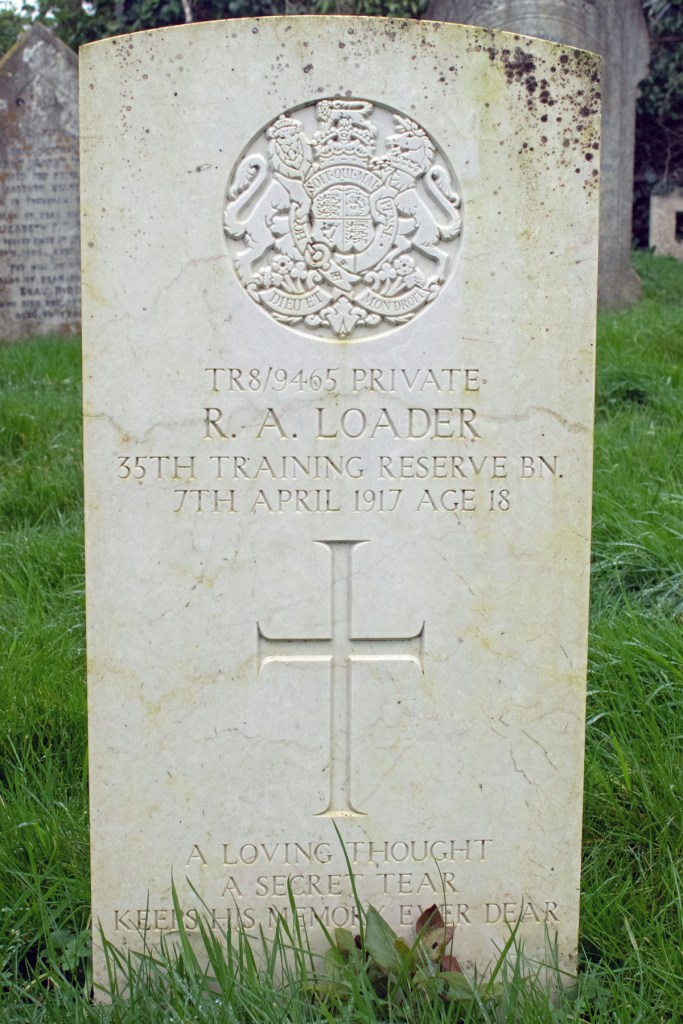
Reginald Alfred Loader was born in the autumn of 1898, and was the eighth of nine children. His parents – Robert and Amelia – both came from the Dorset village of Lillington, and this is where they raised their family.
Sadly, there is little specific information on Reginald’s life. When war broke out, he stepped up to play his part, and enlisted in the Training Reserve Battalion at some point after October 1916. His unit, the 35th Battalion, was based in Wool, Dorset, but there is no further information about his time there.
The only other concrete information about Private Loader confirms his passing. He died in hospital – through causes unknown – on 7th April 1913. He was just 18 years of age.
Reginald Alfred Loader’s body was taken back to Lillington for burial. He was laid to rest in the graveyard of St Martin’s Church in the village.
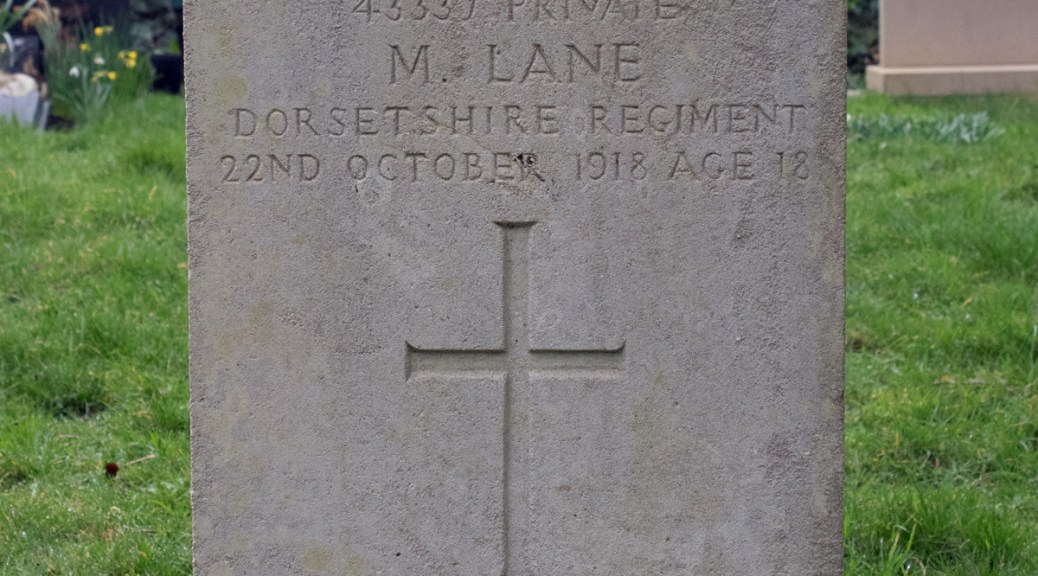
Mark Lane was born in the summer of 1900 in Thornford, Dorset. One of ten children, his parents were estate drainer Albert Lane and his wife, Sarah. Sadly. there is little concrete information about Mark’s life.
When war broke out, his eldest brother, Gilbert, served in the 5th Battalion of the Dorsetshire Regiment, rising to the rank of Serjeant. Having fought at, and survived, Gallipoli. his unit moved to France in July 1916. Involved in the Battle of the Somme, Gilbert was killed and was laid to rest at Bulls Road Cemetery in France.
His oldest brother dead, Mark seems to have wanted to serve his country and do Gilbert’s memory proud. He did not turn 18 until the summer of 1918, and he seems to have used this as an opportunity to enlist. He also enlisted in the Dorsetshire Regiment and, as part of the 4th (Reserve) Battalion was sent off to do his training.
Unfortunately, details of what happened to Private Lane are lost in the mists of time. He was admitted to a military hospital in the autumn of 1918, and died there on 22nd Octover. He was just 18 years of age.
The body of Mark Lane was laid to rest in the graveyard of St Mary Magdalene Church in his home village of Thornford.
Percival Osmond Bean Boyce was born in Calcutta, India, in January 1887. The oldest of seven children, his parents were Edward and Mary. While details of his early life are not readily available, it would seem that Edward had some military connections. He had been born in Calcutta in 1859, while Mary was Welsh. Most of Percival’s siblings had been born in India, although two – Cecil in 1891, and Dorothy in 1896 – had been born in Somerset.
The 1901 census recorded Percival as boarding at Keyford College in Frome, Somerset. His family do not appear on that census return, nor does he appear on any other census document. He went on to study at Bristol Grammar School, Gloucestershire, making the First XI rugby team.
In May 1915, Percival married Florence Cooper. There is little information available about her, but the couple exchanged vows in Paignton, Devon.
Percival seemed to have taken to a life at sea by this point, and was the Chief Officer of the cargo ship SS Indore. On 25th July 1918, she was torpedoed by the German submarine U-62, off the Irish coast. The Indore was beached, and two of the crew were killed. Chief Officer Boyce managed to get the ship re-floated and safely back to shore.
At this point, Percival’s trail goes cold again. He survived the war, but died in Scotland on 27th November 1918, the cause of his passing unknown. He was 30 years of age.
In a traditionally Edwardian obituary, it was noted that “great sympathy is felt for Mr JH Cooper, Chairman of Paignton District Council, in the death of his son-in-law, Mr Percival OB Boyce, master mariner, at Glasgow. Both of Mr Cooper’s daughters are now widows, and he lost a son not long since.” [Western Times: Tuesday 3rd December 1918]
Percival Osmond Bean Boyce was laid to rest in Paignton’s sweeping cemetery.
In the regimented Woodlands Cemetery in Gillingham, Kent, stands the headstone dedicated to Stoker James Clark of the Royal Naval Reserve. The grave marker, and associated documents, confirm James’ age at the time of his passing as 48 years, but gives no details of next of kin or any relatives.
Stoker Clark’s service records are sparse, but confirm a date and place of of birth – 13th December 1867 in Glasgow, Scotland – and his parents’ names, William and Catherine. Sadly, while the document also gives the names of two of James’ siblings – Mary and William – it has not been possible to match these with any census documents from the Glasgow area.
James’ service records state that he joined the Royal Naval Reserve on 1st October 1897. He was 5ft 8.5ins (1.74m) tall, with grey eyes and a fresh complexion. He was also noted as having a number of tattoos on his right arm, including a sunrise and a heart.
Stoker Clark’s time in the Royal Naval Reserve are a bit patchy, but it seems that he was called into full duty in 1914. Over the next couple of years he served on three different ships, each time returning to HMS Pembroke, the Royal Naval Dockyard in Chatham, Kent.
While his overall service seems to have gone well, in July 1915, he deserted. Full details are not evident, but he was captured, and seems to have returned to duty by the end of the month.
The next record for Stoker Clark is that of his passing. His service records state that he “died suddenly at [Royal Naval Barracks] Chatham on 2nd May 1916 (cause of death at present unknown)”. There is no other information about his death, and, while his siblings were informed of his death, it appears they were unable – or unwilling – to bring his body back to Scotland for burial.
Instead, James Clark was laid to rest in Woodlands Cemetery, Gillingham, not far from the dockyard he had called his home.
Alexander Bertram Cain was born on 31st July 1885 in Ormskirk, Lancashire. He was the ninth of eleven children to concert promoter Robert Cain and his wife, Sarah.
By 1901, Robert and Sarah had moved the family to Jersey, setting up home in St Saviour’s. Robert was noted as living off his own means, but Alexander, who would have been 15 by this point, is noticeable by his absence and, in fact, does not appear on that year’s census return.
Robert died in 1909, and on 26th January 1911, Alexander married a woman called Hilda Bedford. They settled down in St Helier, and went on to have two children, daughters Yvonne and Elizabeth. The census taken three months after the couple’s wedding recorded Alexander as living on his own means, so money appeared not to be an issue for the young family.
When war came to Europe, Alexander was called upon to play his part. On 12th March 1917, he enlisted in the Royal Jersey Militia, and was attached to the regiment’s Garrison Battalion, stationed on the island. His service records confirm that he was 5ft 7ins (1.7m) tall, and that he had a scar on his left cheek. The document also suggests that he had spent time in the Gloucestershire Regiment, but no further information about this is available.
Private Cain spent the next two years in the army. Towards the end of this time, however, his health appears to have been impacted, to the point that, on 6th May 1919, he was medically discharged from the Royal Jersey Militia.
Whatever his condition, it was to prove fatal. Alexander passed away at home on 31st May 1919: he was 33 years of age.
Alexander Bertram Cain was laid to rest in the family plot in La Croix Cemetery in Grouville, Jersey, Hilda left widowed and with two children – Elizabeth just four months old – to raise.
Sydney William Ecobichon was the youngest of five children to French-born farmers Mathurin and Ann Ecobichon. The couple had moved to Jersey in the Channel Islands in the late 1860s, setting up home in St Peter’s by the time their children were born.
Mathurin passed away in 1895, aged 53 years old, leaving Ann and the children to managed the farm. By the time of the 1901 census, Sydney’s older brother Ernest was the farm manager, with Ann remaining head of the household.
When Sydney finished his schooling, he also started work on the farm. The 1911 census recorded Ernest and his family living in on part of the farm, with Ann, and Sydney living in their own accommodation with Sydney’s sister Anna, her husband and two children.
On 28th February 1917, Sydney married Lilla Amy, a farmer’s daughter from St Ouen. Sydney’s trade was listed as farmer, and it seems likely that the young couple married ahead of his conscription into the army.
Details of Sydney’s military service are lost to time. It is clear from his headstone that he enlisted in the Royal Jersey Militia, and the Commonwealth War Graves Commission records suggest that he was attached to the regiment’s Garrison Battalion.
The only other details for Private Ecobichon’s life are that of his passing. Sydney died on 19th October 1918, and was laid to rest in St Ouen’s Churchyard. The cause of his death is unclear, but he was 30 years old when he died.
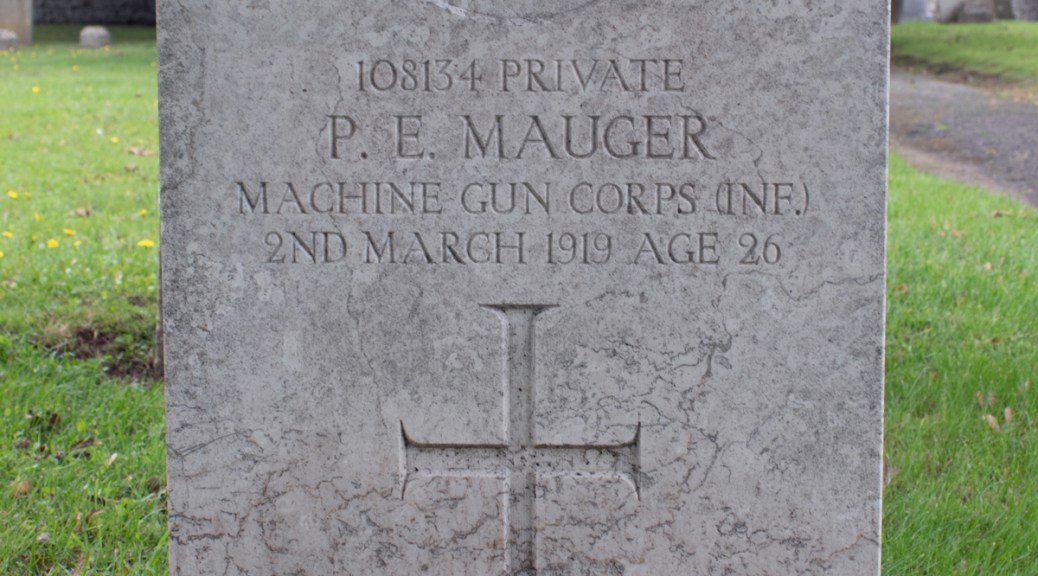
Philip Mauger was born in 1893 in the St Peter’s area of Jersey, Channel Islands. He was the oldest of six children to Albert and Jane Mauger. Albert was a labourer, alternating between road-building and farm work, depending on the time of year. When he finished his schooling, however, Philip fund work as a wheelwright’s assistant.
On 10th February 1917, Philip married Florence Dimmick, a shoemaker’s daughter from St Ouen. Their marriage certificate confirms Philip was a farmer by this point, and it seems likely that the young couple tied the knot ahead of his conscription the army.
Full details of his military service are lost to time, but it is clear that Philip enlisted in the Machine Gun Corps. Private Mauger survived the conflict, but here his trail fades. All that can be confirmed is that he passed away on 2nd March 1919, at the age of 26 years old. He was laid to rest in St Ouen’s Churchyard.
After her husband’s passing, Florence did not remarry. The couple had not had children, and it appears that she reverted to her maiden name. Husband and wife were reunited, however, when Florence passed away in 1937, and she was buried alongside Philip.
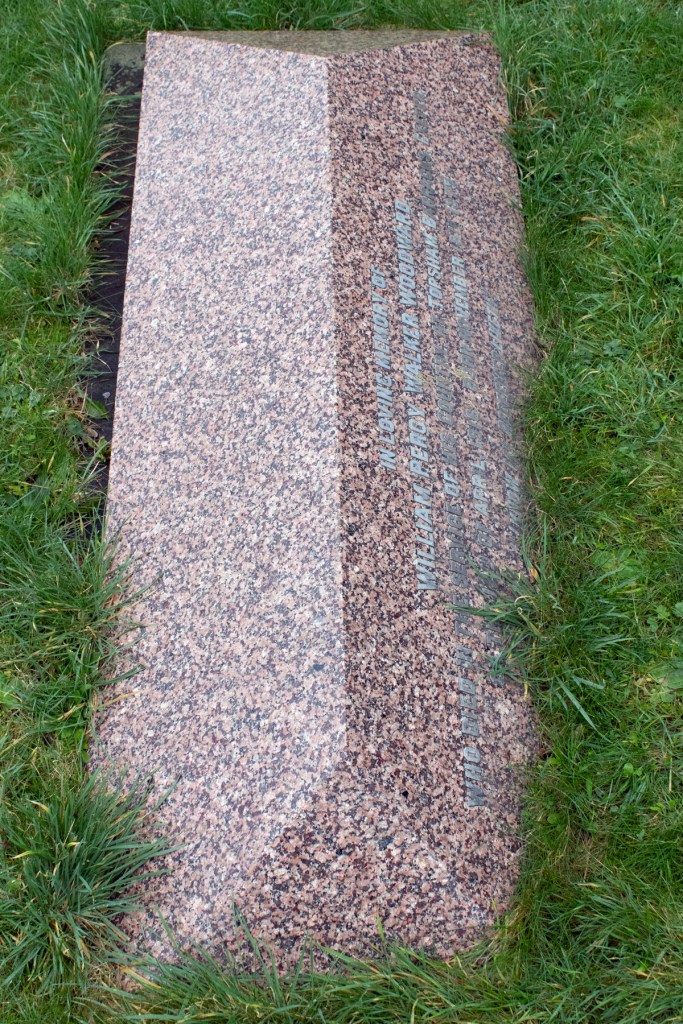
William Percy Walker Woodward was born on 18th November 1879, and was the third of six children to James and Mary Woodward. James was a manufacturer of sanitaryware and had been born in Derbyshire, but it was in Ashby-de-la-Zouch, Leicestershire that he and Mary raised their family.
James passed away in the spring of 1886, leaving Mary to raise the family on her own. His obituary in the local media underlined the business that he had built up: “Mr Woodward succeeded his father and eldest brother to the fire brick business, established by the late Mr John Hunt of Swadlincote, of 1790.In 1856 Mr Woodward added to the above trade that of glazed sewerage pipe and terra cotta earthenware, and in 1873 that of general sanitary appliances, and by industry, perseverance, and foresight developed the same into one of the largest manufactories of the kind in the Midland counties, and became well known throughout the greater part of the kingdom as a leading manufacturer of these goods. He was a large employer of labour, kind and considerate, always manifesting great interest in the welfare of his employees.” [Hinckley News – Saturday 15 May 1886]
Mary was left to raise six children, but, thanks to the business, did not do so without support. The 1891 census found the family living at High Fields in Ashby, with a cook, housemaid, children’s maid and a coachman and his family living next door. William and his siblings were all taught at home by their governess.
By the time of the next census, William seemed to have taken on the running of his late father’s business, along with two of his brothers, James and Harold. Things were to change for the Woodward family, however, as they began to go their separate ways.
The 1911 censes shows a divide: James was living on his own means in Snarestone, Leicestershire, with his young family and household retinue. Harold, meanwhile, had emigrated to Canada with another sibling, younger brother Ernest, where they had both set up as farmers.
Mary had also moved, setting up home in Weston-super-Mare, Somerset. She lived on Clarence Road South with William and her daughter, Lilian. The house – Glencathara – was twelve-roomed property, and they had a live0in cook, Emily Young, supporting them. Notably, William’s employment was listed as ‘none, on account of health’, so the move to the coast may have been brought about for medical reasons.
When war came to Europe in summer of 1914, William stepped up to play his part. His service records have been lost, but he had enlisted in the Royal Field Artillery no earlier than the autumn of 1915. He was attached to the 18th Reserve Battery, and came to be based in Topsham Barracks in Exeter.
Little is known of Gunner Woodward’s time in the army, but it was to be brief. He passed away, through causes unknown, on 13th April 1916, at the age of 36.
It is unclear where Mary was living at this point. The body of William Percy Walker Woodward was taken to Dorset for burial, and he was laid to rest in the peaceful graveyard of St Hippolyte’s Church, in Ryme Intrinseca. Interestingly, the parish records note that William was ‘a personal friend of [the] rector’.







 Death and Service