Category Archives: Berkshire

Air Mechanic 1st Class William Pomeroy

Air Mechanic 1st Class William Pomeroy

William Carrow D. Pomeroy was born at the start of 1892 in Worthing, West Sussex. One of six children, his mother was Sarah Pomeroy. She had been born in the Clifton area of Bristol, Gloucestershire, but by the time William was born, she had moved to Worthing.

According to the 1901 census, Sarah was a widow, and was running a lodging house at 3 Warwick Road. The next census return found the family living at the same address, where Sarah’s lodging house was now noted as being apartments.

William had completed his schooling by this point, and had found work as a cycle mechanic. His dedication and skill eventually took him to London, where, by the outbreak of war, he was employed as a mechanic with the London Fire Brigade in Southwark, Surrey.

The First World War brought new opportunities, and, on 14th January 1916, William enlisted in the Royal Flying Corps. Details of his military service are sketchy, but it is clear that he was an Air Mechanic 1st Class, and was based at in Reading, Berkshire.

Air Mechanic Pomeroy was transferred over to the Royal Air Force on its creation on 1st April 1918. Within weeks, however, he had been admitted to Reading War Hospital, suffering from pneumonia. The condition was to get the better of him, and he passed away on 18th July, at the age of 26 years old.

The funeral of First-Class Air Mechanic E [sic] Pomeroy, who died at Reading last week, from complications following an attack of influenza, took place at Broadwater Cemetery on Monday afternoon, with full Military honours.

The deceased, who was twenty-five years of age, was the son of the late Mr Pomeroy, well-known locally as a former Inspector of Weights and Measures.

[Worthing Gazette: Wednesday 24th July 1918]


William’s headstone gives his name as CDW Pomeroy. All other records, including the registration of his birth, give his name as William Carrow D Pomeroy. There is no record of what the D stood for.


Gunner James Cole

Gunner James Cole

James Rees Cole was born in the spring of 1881, and was the oldest of four children to Thomas and Jane. Thomas was a groom from Pembrokeshire, Wales, and, at the time of James’ birth, he and Jane were living in the village of Chancery, to the south of Aberystwyth, Ceredigion, Wales.

The 1901 census recorded that the Cole family had relocated to England and had set up home at 15 Woolley Street, Bradford-on-Avon, Wiltshire. Thomas was employed as a domestic coachman, while James, now 19 years old, was an ironmonger’s assistant.

By 1911, James was boarding with widow Sarah Goodman in the Devon village of Withycombe Raleigh, now a suburb of Exmouth. His was engaged by this point, and just a couple of months later, on 5th July, he married his sweetheart, Bessie Livings, in Christ Church, Bradford-on-Avon. The couple went on to have two children, Irene and Dennis.

When war was declared, James stepped up to play his part. He enlisted in December 1915, by which point he and Bessie had moved to Reading, Berkshire. His service papers show that he was 5ft 9ins (1.75m) tall, and weighed 135lbs (61.2kg). He had blue eyes, brown hair and a fresh complexion.

Assigned to the Royal Garrison Artillery, Gunner Cole was not formally mobilised until June 1917. Initially sent to Plymouth, Devon, by the following spring, he had moved to Fareham, ahead of his unit being sent to France. James would spend the next six months in France, before being medically evacuated back to Britain.

Gunner Cole had crushed the metatarsals in his left foot, although his medical notes are difficult to read, it is clear that he was inconsiderable pain. He was admitted to the war hospital in Reading, Berkshire, and remained there for a couple of weeks. When he was discharged, he was transferred to the 2nd Siege Artillery Reserve Brigade in Catterick, North Yorkshire, while he recuperated.

James would only be out of hospital for a matter of weeks. He contracted influenza and was admitted to the camp hospital, but the condition would prove too severe. He passed away on 1st January 1919, at the age of 37 years old.

The body of James Rees Cole was taken back to Wiltshire for burial. He was laid to rest in the graveyard of Christ Church, Bradford-on-Avon, not far from where his widow and children were living.


Boy 1st Class Harry Jerrom

Boy 1st Class Harry Jerrom

Harry Herbert Jerrom was born in the parish of Shinfield, Berkshire, on 26th July 1897. The oldest of eight children, his parents were caller Harry and Alice. Harry Sr was a farm labourer, and the family lived in Three Mile Cross.

Details of Harry Jr’s short life are scarce. Certainly when war broke out he stepped up to play his part, and had enlisted in the Royal Navy by the autumn of 1914. He was under the age to fully enlist by this point, and so held the rank of Boy 1st Class.

Harry was assigned to the battleship HMS Bulwark. Part of the Channel Fleet, she was tasked with patrolling and defending Britain’s southern coast. On 26th November 1914, Bulwark was moored in the River Medway, close to Sheerness, and was being stocked with shells and ammunition. That morning, some poorly stowed cordite charges overheated, detonating the shells stored nearby. The resulting explosion ripped through the battleship, and more than 740 crew were killed. Boy 1st Class Jerrom’s was among the bodies to be recovered: he was 17 years of age.

Those who were killed in the explosion were laid to rest in the naval section of Woodlands Cemetery, Gillingham, Kent. As his body had been identified, Harry Herbert Jerrom was laid to rest in a marked grave.


Boy 1st Class Harry Jerrom
(from findagrave.com)

Flight Cadet Douglas Baker

Flight Cadet Douglas Baker

Douglas Walter Baker was born in Newbury, Berkshire, in 1898. One of seven children, his parents were Henry and Rosa Baker. Henry was a commercial traveller for a cornmeal, cake and flour merchants, and the family lived at 91 Crescent Road, Reading at the time of the 1901 census, then at 196 King’s Road, Reading, ten years later.

There is little concrete information about Douglas’ early life. When war broke out, he enlisted in the 4th Battalion of the Royal Berkshire Regiment, later documents seeming to suggest that he had added three years to his age to enable him to do so. His unit served in France from April 1915, but, as his army service records have been lost, it’s unclear when or if Private Baker went with them.

Douglas seemed to want more, though, and, on 18th December 1915, he transferred to the Royal Flying Corps. Given the rank of Air Mechanic 2nd Class, he was attached to No. 1 Aircraft Repair Depot. By March 1917, he had been promoted to Air Mechanic 1st Class. Again, however, he sought more and, just a few months after the Royal Air Force was formed, he started flying lessons.

The now Flight Cadet Baker had transferred to 29 Training Depot Station in Hampshire. Based at an aerodrome near Beaulieu, Douglas was taught in a Sopwith Camel. Two months into his instruction, he was undertaking a routine flight, when his aircraft got into a spin he was unable to get out of. The machine fell to the ground, and Douglas was killed instantly.

A report of the incident noted that: “the cause of the accident was in our opinion due to the machine spinning to the ground from about 500ft. The reason the pilot could not regain control of the machine is unknown.” [Royal Air Force Casualty Card]

Douglas Walter Baker was just 20 years of age when he died on 26th October 1918. His body was taken to the graveyard of St Paul’s Church, East Boldre, not far from the air base at which he had been billeted.


Flight Cadet Douglas Baker
(from findagrave.com)

The life of a WW1 pilot was notoriously dangerous. On the same day of Douglas’ death, and at the same airfield, fellow pilot Second Lieutenant Malcolm Vande Water lost his life in a separate incident.


Sapper William John

Sapper William John

In the Hermon Baptist Burial Ground in Fishguard, Pembrokeshire is a headstone dedicated to Maggie and Willie John. The inscription reads: “In memory of Maggie, the beloved wife of Willie John, builder. Daughter of JR & E Owen of High Street Fishguard, who fell asleep in Jesus May 27, 1911, aged 26 years. A faithful member & organist of Hermon Church… Also of the above Willie John, who fell asleep in Jesus May 26, 1917, age 34 years.”

The early life of Willie – or William – John is a challenge to piece together. He and Maggie – Margaret – married in Hermon Chapel on 30th March 1907, and went on to have a son, Owen, who was born in May 1908.

Willie was employed as a builder and mason, and, after Maggie’s death, sought work wherever he could find it. When war broke out, he was living at 16 Bryn Bedw, Blaengarw, Glamorganshire, although it is unclear whether Owen was with him as well.

Willie’s trade made him an ideal candidate for the Royal Engineers, and he was assigned to the 38th Signal Company when he enlisted on 6th March 1915. Sapper John’s service records show that , he was 5ft 6ins (1.68m) tall, with black hair, dark eyes and a sallow complexion.

Sapper John was sent to Biggleswade, Bedfordshire, for his training, and it was while there that things took a downturn. On 17th September he had a standard inoculation against typhoid, and from there on in felt unwell. Over the following days and weeks he became anaemic and had bouts of giddiness and pains in the back. His medical report notes that he was breathless on waking, and when he walked more than a few hundred yards.

Over the next few months Willie’s condition was monitored, but his condition did not improve. Ultimately he was medically discharged from the army on 10th May 1916, as he was no longer fit enough to serve.

At this point, Willie John’s trail goes cold. He seems to have returned to Pembrokeshire, and it was here, on 26th May 1917, that he passed away. He was reunited with Maggie in the Fishguard burial ground.


Drummer Malcolm Vacher

Drummer Malcolm Vacher

Born at the start of 1902, Malcolm Edward James Vacher was the younger of two children to James and Alice Vacher. James was a domestic coachman and both he and Alice were born in Milton Abbas, Dorset. By the time Malcolm was born, the family had relocated to the village of Mortimer, Berkshire.

Alice died when her youngest was just five, and James moved the family to the village of Kelstern in Lincolnshire, possibly for work. Sadly, James passed away in 1916, leaving Malcolm and his older sister, Gladys, as orphans.

By this point war was raging across Europe, and it seems that Malcolm looked to the army as a new family. He enlisted in the Sherwood Foresters (Notts and Derby Regiment), although his service papers have been lost to time.

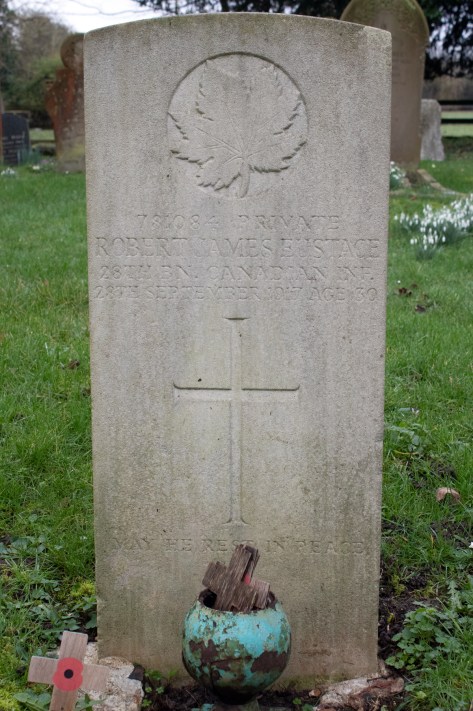
It is unclear how or where Drummer Vacher served. He survived the war, however, and by the autumn of 1919, found himself on furlough in Wiltshire. His death certificate records that died on 26th October, from a combination of appendicitis and heart failure. Just 17 years of age, his sister was by his side when he passed.

Malcolm Edward James Vacher was laid to rest in St John’s Churchyard, Warminster. The Grave Registration Form notes that the headstone was paid for by his uncle.


By this point, Gladys had lost her parents and her brother. Twenty-one years of age when her sibling died, she nonetheless found the resilience to carry on.

The 1921 census recorded Gladys living at 1 Corporation Street, Kidderminster. Boarding with Jane Smith, she was working as garage assistant for the motorcycle department of the Castle Motor Co Ltd on Vicar Street.

In the spring of 1925, Gladys married radio engineer and dealer George Whitford. By the time of the 1939 Register, the couple were living at 81 New Road, Kidderminster. Gladys was helping her husband with the business, and was recorded as being a radio dealer and travel agent.

Gladys Whitford, née Vacher, passed away in the spring of 1960. An obituary outlined the life she had forged for herself after losing her brother:

Mrs Gladys Mary Whitford, who has died at her home in New Road, Kidderminster, aged 63, had conducted one of the oldest travel agencies in the Midlands for 30 years. The firm, founded by her husband’s grandfather in 1856, arranged emigration for many families seeking a new life in the Commonwealth.

Mrs Whitford joined the Women’s Legion in 1916 and was one of the first motor-cycle despatch riders attached to the Royal Army Service Corps. She was a member of the Kidderminster Chamber of Commerce and of the committee of the Kidderminster Retail Traders’ Association. She is survived by her husband, Mr George Whitford, a radio and television dealer.

[Birmingham Daily Post – Tuesday 12 January 1960]


My thanks go to Peter Calver and the members of the Lost Cousins website for their help in filling in details of Gladys’ life after the loss of her family.


Company Sergeant Major George Mote

Company Sergeant Major George Mote

George Arthur Mote was born on the 25th August 1888 in Islington, Middlesex. The oldest of three children, his parents were Arthur and Norah Mote. The 1891 census recorded Arthur as a shoemaker’s finishing ink maker and the family had taken rooms at 45 Wyatt Road in Islington.

The next census return, taken in 1901, found that Arthur had been promoted, and was now a foreman or a leather dyer. The family had moved around the corner from the old address, and were living in rooms at 193 Blackstock Road.

At this point, George’s trail goes cold. By the autumn of 1914, he had emigrated to Canada, and was working as a corset cutter in Quebec. With war having broken out in Europe, it was here that he enlisted to serve his empire.

Goegre’s service records confirm the young man he had become. Standing 5ft 8ins (1.72m) tall, he had black hair, blue eyes and a dark complexion. A number of scars were also noted on his left forearm, the middle finger of his right hand, and on the left side of his neck.

While back in Britain, George had volunteered for the Middlesex Regiment, and this experience stood him in good stead, as he enlisted with the rank of Sergeant.

Attached to the 3rd Battalion of the Canadian Infantry, Sergeant Mote arrived in St Nazaire, France, on 11th February 1915. His unit was thrown into the deep end from the start, and George’s actions at the Second Battle of Ypres that spring won him the DCM. By the autumn, he had been promoted to Company Sergeant Major.

George continued to serve on the Western Front, but his luck was to change. On 5th June 1916, he was badly injured, receiving gunshot wounds to his right shoulder and back. Medically evacuated to Britain, he was admitted to Fort Pitt Hospital in Chatham, Kent. His medical records noted than he was paralysed, and, in October 1916, he was transferred to the Duchess of Connaught Hospital in Taplow, Berkshire.

Company Sergeant Major Mote spent the next four months admitted to the hospital, but his wounds would prove too severe to overcome. He passed away on 6th February 1917 at the age of 28 years old.

George Arthur Mote’s body was taken back to Middlesex for burial. He was laid to rest in the majestic Highgate Cemetery.


Leading Seaman Frederick Tillier

Leading Seaman Frederick Tillier

Frederick Francis Charles Vizzard was born on 12th December 1894 in Ottershaw, Surrey. The younger of two children, his parents were nurseryman Frederick Vizzard and his wife, Frances.

Details of Frederick Jr’s life are a challenge to unpick. Frederick Sr had died in 1909, and is seems that from this point on, he used his mother’s maiden name, Tillier, as his own. He found work as a labourer, and this is what he was doing when war broke out.

By this point Frederick had moved to Reading, Berkshire, and he was living in a small terraced house at 12 Highgrove Street. He enlisted in the Royal Naval Division on 18th October 1915, and was mobilised six months later.

Frederick’s records show that he was 5ft 7.5ins (1.71m) tall, with brown hair and grey eyes. He joined as an Able Seaman, which would suggest some previous experience, although there are no records to confirm this.

Able Seaman Tillier’s time in the navy seems to have been spent on shore. He was initially sent to Portsmouth, Hampshire, where he served on HMS Victory and HMS Excellent. On 19th December 1916, Frederick was reassigned to the Royal Naval Volunteer Reserve as a Leading Seaman, and sent to HMS President, the unit’s shore base near Tower Bridge in London.

Frederick would remain attached to HMS President for the next couple of years. The next entry on his service papers states that he was admitted to the Cottage Hospital in Dartmouth, Devon, as he was very seriously injured. What those injuries were, and how he received them is unclear, but Leading Seaman Tillier would succumb to them on 26th May 1918. He was 23 years of age.

Frederick Frances Charles Tillier was laid to rest in the graveyard of St Clement’s Church in Dartmouth.


Leading Seaman Tillier
(from ancestery.co.uk)

Bombardier Frank Sloman

Bombardier Frank Sloman

Frank Sloman was born in the autumn of 1887, and was the youngest of five children to Frank and Emma. Frank Sr was a mason from Jersey, in the Channel Islands, but it was in Tiverton, Devon, that he and Emma made their home and raised their family. The 1891 census found the family living on Castle Street, but by 1901 they had moved down the road to St Peter’s Street.

Frank Jr found work as a painter when he finished his schooling, but he sought adventure and a career. He was already a volunteer for the Devonshire Regiment, and, on 7th May 1904, he officially enlisted as a paid member of the troop. Private Sloman’s records show that he was 5th 10.5ins (1.79m) tall, and weighed 129lbs (58.5kg). He was noted as having brown hair, grey eyes and a fresh complexion.

Private Sloman spent two years on home soil. He quickly extended his contract, and this led to more opportunities. By December 1906 his unit was in India, and he would go on to spend five and a half years there.

In December 1907, Frank transferred to the Royal Garrison Artillery. He initially held the rank of Gunner, before being promoted to Bombardier in January 1912, and Corporal just three months later. In October, Frank returned to Britain, and was stood down to reserve status. He returned to Tiverton, and found work as a porter at the local station.

War was on the horizon, however, and when conflict broke out, Frank was called upon to play his part once more. Initially taking up the rank of Corporal in the Royal Field Artillery, he reverted to the role of Gunner at his own request. By this point, his unit was in France, and he would remain there for the next eight months.

On 6th May 1915, Frank returned to Britain, and was attached to 2B Reserve Brigade. He was based at the training facility in Bettisfield Park in Clwyd, and would spend the next eighteen months there. In June 1916, he was once again promoted to the rank of Bombardier.

Love was on the cards, and, on 17th June 1916, Frank married Frances Hadlow. There is little information available for her, but the couple exchanged vows at the Register Office in Windsor, Berkshire.

By the autumn of 1916, Frank’s health was becoming an issue. He contracted phthisis, or tuberculosis, and was sent to the the south coast for recuperation. His condition would ultimately render him unfit for continued military service, and Bombardier Sloman was discharged from the army on 17th December 1916.

His papers show that he had grown to 6ft 2.5ins (1.89m) in height, and, while physically unfit, he was a steady, sober and reliable man. He and Frances had taken rooms at 7 Hawley Street, Margate, Kent, but it seems that the couple soon moved back to Devon. Their new home was a small cottage at 3 Westbrook Place in Tiverton.

At this point, Frank’s trail goes cold. It is unclear whether he took up work again – or was able to do so – but his lung condition was ultimately to get the better of him. He passed away on 3rd June 1918, at the age of 30 years old.

Frank Sloman was laid to rest in Tiverton Cemetery, on the outskirts of the town in which he had grown up.


Lieutenant Charles Vanstone

Lieutenant Charles Vanstone

Charles Douglas Howard Vanstone was born in Paignton, Devon, on 27th October 1888. The fourth of seven children, he was the second son to Frederick and Charlotte Vanstone. Frederick was an architect’s surveyor and civil engineer, and the family lived comfortably in the seaside town.

The 1891 census found them living at Sorrento, a villa on Esplanade Road, overlooking the sea. By the time of the next census, they had moved to Torbay Park, and lived in a 12-room property. The family’s three sons all followed in their father’s trade, and, according to the 1911 return, four of the Vanstones were recorded as being civil engineer architects and surveyors.

When war came to Europe, Charles stepped up to play his part. He received a commission in August 1915 and, as a Second Lieutenant, was assigned to the Rifle Brigade. Attached to the 15th (Reserve) Battalion, the records suggest that he was in France by 23rd March 1916.

Lieutenant Vanstone seems to have been part of a Trench Mortar unit at the Somme. Wounded during the battle, he was medically evacuated to Britain for treatment. Admitted to the Reading War Hospital in Berkshire, his injuries were to prove too severe. Charles passed away on 7th February 1917: he was 28 years of age.

Charles Douglas Howard Vanstone’s body was brought back to Devon for burial. He was laid to rest in his home town’s sweeping cemetery.


Charles’ death was the third loss for the Vanstone family in as many years. His older sister, Constance, had died in 1914, while his younger brother, Stanley, a Lieutenant in the 20th Royal Fusiliers, died of wounds he received on the Western Front in October 1915. Just 25 years of age, he is buried in Merville Communal Cemetery, France.