Category Archives: Pembrokeshire

Corporal James Stuckey

Corporal James Stuckey

James Oscar Stuckey was born in the summer of 1886, in Milford Haven, Pembrokeshire. The second of eight children, his parents were James and Minnie Stuckey. James Sr was a carter from Langport in Somerset, and his work took him across the country. James Jr’s older sister was born in Sandown, on the Isle of Wight, and, when his next sibling was born, the family had moved back to Somerset and were living in the village of Curry Rivel.

By the time of the 1901 census James Sr was working as a warehouseman. James Jr had also left school and found employment as an agricultural labourer.

On 24th March 1913, James married Margaret Beatrice Tilley – who was better known as Beattie. The couple set up home in Curry Rivel, and went on to have two children, Cecil and James.

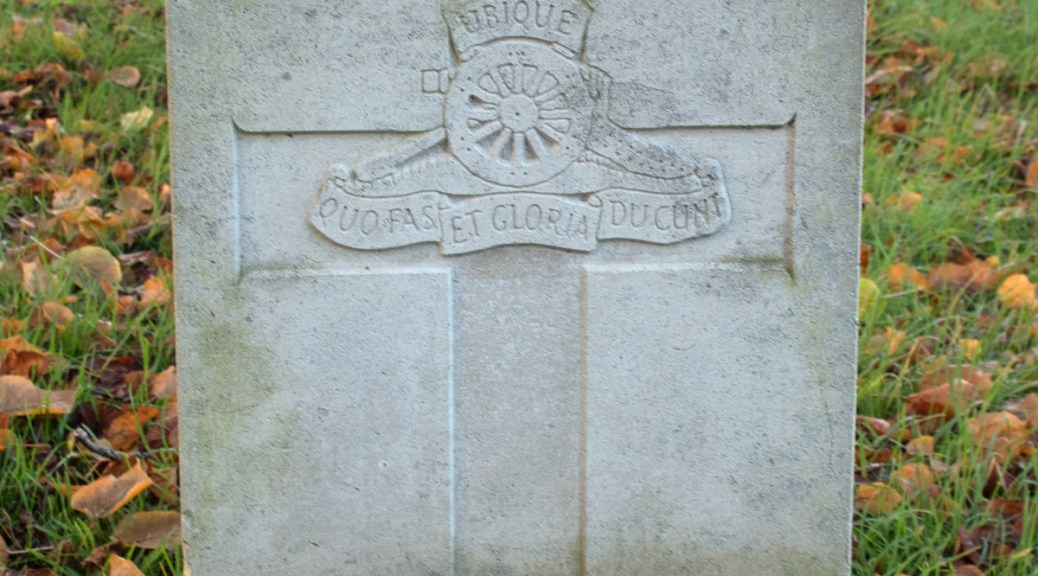
By this time war was coming to Europe and, in January 1915, James stepped up to play his part for King and Country. He enlisted in the Royal Field Artillery, and was given the rank of Gunner. Over the next couple of years, he served in France and Italy, rising through the ranks to Bombardier and Corporal.

During this time, however, James’ health was being impacted. His troop was gassed while in France, and he was hospitalised a couple of times with bronchitis and tuberculosis, and it was TB that saw him evacuated to Britain for treatment in September 1918.

His condition was such that Corporal Stuckey was medically discharged from the army on 23rd November 1918, as he was no longer fit for duty. He returned to civilian life, and settled back into Curry Rivel.

He was well-known in the district, and being of a jovial disposition, was liked by everyone with whom he came into contact. He was a member of the Curry Rivel Male Friendly Society.

Langport & Somerton Herald: Saturday 11th December 1920

James’ lung conditions were to get the better of him. After a protracted illness, he finally succumbed, breathing his last on 3rd December 1920. He was just 34 years of age.

James Oscar Stuckey was laid to rest in the graveyard of St Andrew’s Church, in Curry Rivel.

Flight Lieutenant Richard Bush

Flight Lieutenant Richard Bush

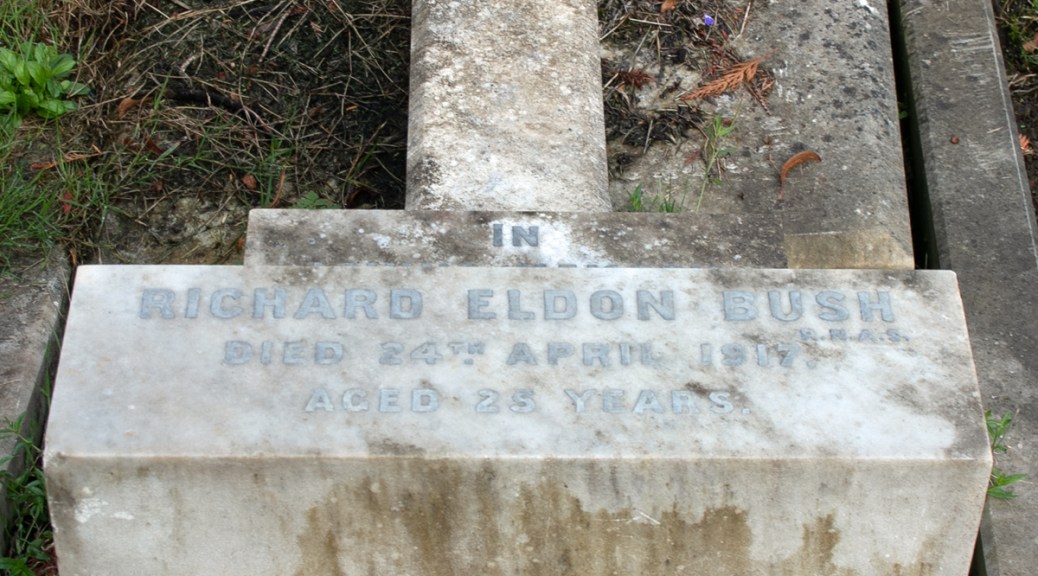
Richard Eldon Bush was born on 16th June 1891 in Keynsham, Somerset. The second of four children (all of whom were boys), his parents were Philip and Maria Bush. Philip was a solicitor, and with that status came opportunity for his children.

The 1911 census recorded the Bush family living in Keynsham with two servants – cook Clara Jones and parlour maid Laura Day. The two older boys – Richard and his older brother, Whittington, were both listed as Cambridge undergraduates, while his two young brothers were boarding at a private school in Repton, Yorkshire.

Richard had aspirations for a good life. In March 1914, he set sail for a life in Canada, looking to take up architecture in the colony. His time overseas wasn’t to be long, though, and, when war broke out in Europe, he returned home.

Full details of Richard’s military service are not available, but he joined the Royal Naval Air Service and, on 20th August 1915, he gained his wings. Richard rose to the rank of Flight Lieutenant, but tragedy was ahead.

On 24th April 1917, he was piloting a scout seaplane around the harbour in Fishguard, Pembrokeshire.

[He] failed to clear some overhead wires, and the seaplane swerved against the cliff with considerable violence, smashing the machine, which the petrol set alight, and crashed to the earth. When liberated from the blazing machine Lieutenant Bush rolled and extinguished his burning clothes.

Somerset Guardian and Radstock Observer: Friday 27th April 1917

Sadly, Flight Lieutenant Bush’s injuries proved too severe. He passed away a couple of days later, on 24th April 1917, at the age of 25 years old.

Brought back to Somerset for burial, Richard Eldon Bush was laid to rest in the cemetery of his home town, Keynsham.


Flight Lieutenant Richard Bush
(from astreetnearyou.org)

The same newspaper report noted that Richard’s brother Graham was an officer in the Royal Flying Corps. He had also been badly injured in a flying accident, but was, according to the report, “flying again now.


Engine Room Artificer Archibald Callon

Engine Room Artificer Archibald Callon

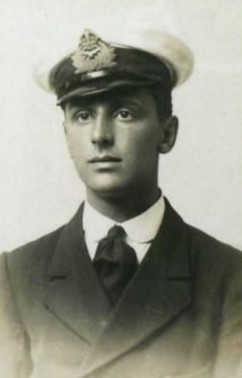
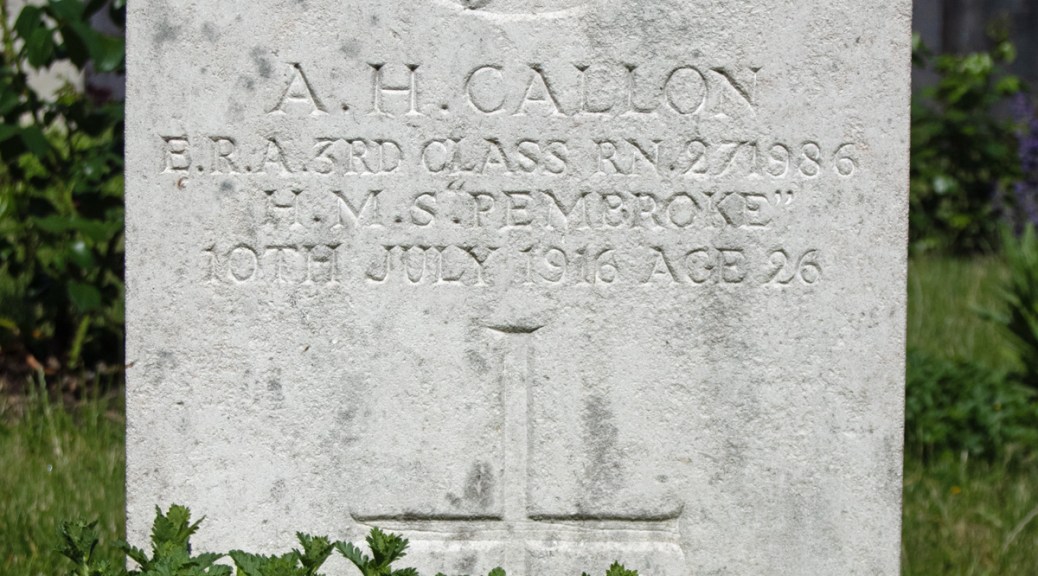
Archibald Hubert Callon – also known as Archie – was born on 2nd January 1890 in Pembroke Dock, South Wales. One of eight children, his parents were shipwright Michael Callon and his wife, Mary. Soon after Archie was born, Michael moved the family to Gillingham, Kent, presumably as work at the nearby Naval Dockyard was plentiful.

The sea was clearly in his blood as, in 1905, Archie joined the Royal Navy, initially as a Boy Artificer, before taking on full employment there once he reached the age of 18. The 1911 census found him working as an Engine Room Artificer 4th Class, one of a crew of 57 aboard the torpedo destroyer HMS Swale, moored in Grimsby.

Archie slowly rose through the ranks and, by 1913, had become Engine Room Artificer 3rd Class, while serving on HMS Clio. He remained on this vessel through to April 1916, before returning to HMS Pembroke, the shore-based naval establishment in Chatham, Kent.

Sadly, Archie’s time back home was short. The next record for him is stark; it is noted that on 10th July 1916, he committed suicide, during temporary insanity. I have been unable to uncover anything further about his passing. He was just 26 years old.

Archibald Hubert Callon was laid to rest in the Woodlands Cemetery in Gillingham, Kent, not far from where his family lived.


Able Seaman Percy Strong

Able Seaman Percy Strong

Percy William Strong was born in April 1897, the youngest of five children to Albert Strong and his wife Elizabeth. The family lived in Shepton Mallet, Somerset, where Albert worked as a mason’s labourer.

Percy was keen to make his own way in the world. By the 1911 census, and having left school, he was working as a farm boy on Kingsdown Farm in Shepton, alongside a couple of other paid, and boarding, employees.

He seemed to have been after adventure in his life too; in January 1913, he enlisted in the Royal Navy, getting his training on a number of vessels, even before the start of the Great War. In his six years of service, he was promoted from Boy to Able Seaman, and served on nine ships.

Able Seaman Strong’s final assignment was at HMS Idaho, the naval base in Milford Haven, Pembrokeshire, which he joined in May 1918. It was while he was stationed at HMS Idaho that tragedy would strike.

A boat belonging to a Government Patrol-boat capsized in Milford Haven, when three members of the crew lost their lives. They were Sub-Lieutenant Lever (20), Birkenhead; Leading Seaman Thomas Palmer (30) Shepton Mallet; and AB Percy Strong (21), Shepton Mallet.

The boat, containing six men, had come ashore in a rough sea. It left Milford Haven Naval stage on return to the ship at eleven am. A sharp squall caught the men when well out on their return journey, and this the craft failed to weather, and was capsized. The six occupants were cast into the sea, and despite the efforts of men in boats from other vessels, the three named were drowned, and the others had a narrow escape.

Western Mail: Friday 11th October 1918

Able Seaman Strong has lost his life on 9th October 1918. He was just 21 years old.

Percy William Strong’s body was returned to Shepton Mallet, the town of his birth, and lies at rest in the cemetery there.