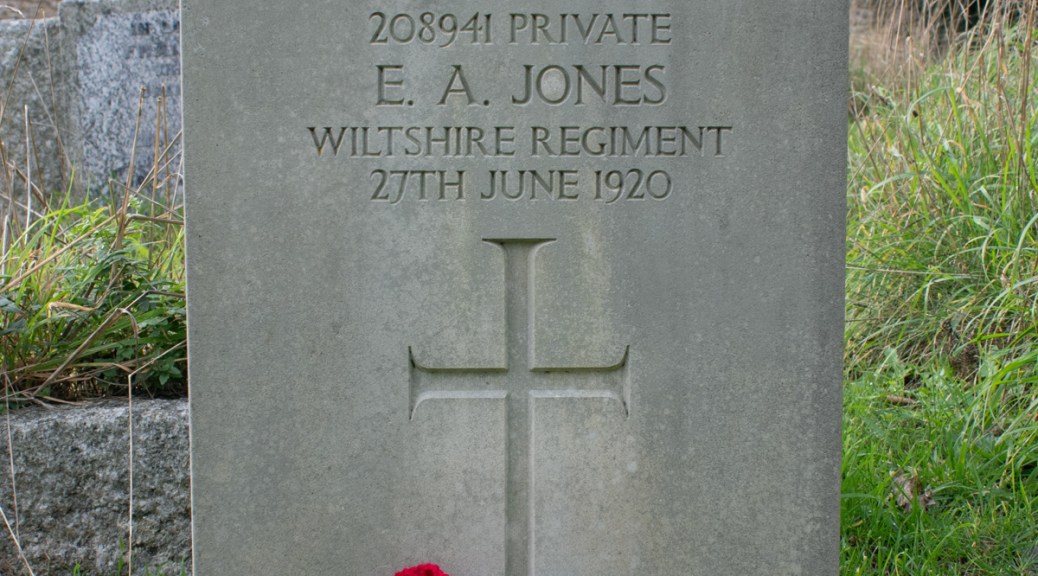
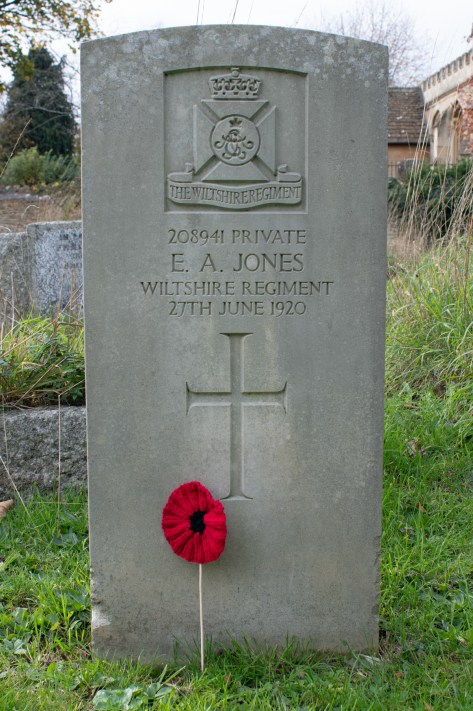
Ernest Albert Jones was born in the spring of 1878. The sixth of seven children, he wad the youngest son to Thomas and Maria Jones. Thomas was an agricultural labourer, and the family lived in a cottage on The Rank in the Wiltshire village of Holt.
Ernest found work as a gardener’s assistant when he completed his schooling, but, by the time of the 1911 census, he was employed as a leather dresser for a local fellmonger. According to the document, he was the only one of the Jones children to still be living at home, bringing in money to support his parents.
Maria died in the spring of 1911, and it is likely that Ernest remained at home to support his father. When war broke out, he stepped up to serve his country and, although his service papers have been lost to time, the documents that have survived suggest he joined the Royal Warwickshire Regiment. His time there was not lengthy, however, and he soon transferred to the Wiltshire Regiment.
It is unclear where or how Private Jones served. He was attached to the 6th (Royal Wiltshire Yeomanry) Battalion, who served on the Western Front from 1915 onwards, but nothing in Ernest’s remaining records suggest he spent any time overseas.
Ernest survived the war, and returned to the family home. He passed away on 27th June 1920, through causes unknown, at the age of 42.
The body of Ernest Albert Jones was laid to rest in Hold Old Cemetery, not far from the home in which his family had lived for more than four decades.
Thomas passed away nearly two years after his son, at the age of 87 years old. By this point, his granddaughter, Nellie, had moved in to look after him: it was she who Ernest had nominated as his next of kin.
George Henry Babb was born on 6th October 1900 in the village of Halberton, Devon. One of ten children, his parents were stonemason Clem Babb and his wife, Emily.
There is little documented about George’s life. The 1911 census records that he was still at school, and there is nothing to confirm the work he found when he completed his education.
George was not yet 14 years old when was was declared, and the Army Register of Soldiers’ Effects suggests that he didn’t enlist until the late spring of 1918. He was assigned to the Royal Warwickshire Regiment and was attached to the 5th Battalion.
Private Babb was sent to the north east for training, and it seems that he became unwell while there. He was admitted to the 1st Northern General Hospital in Newcastle-upon-Tyne, suffering from a combination of influenza and pneumonia. The conditions were to prove fatal: Private Babb passed away on 8th November 1918, a month after his eighteenth birthday.
George Henry Babb was taken back to Devon for burial. He was laid to rest in the peaceful graveyard of St Andrew’s Church in his home village of Halberton.
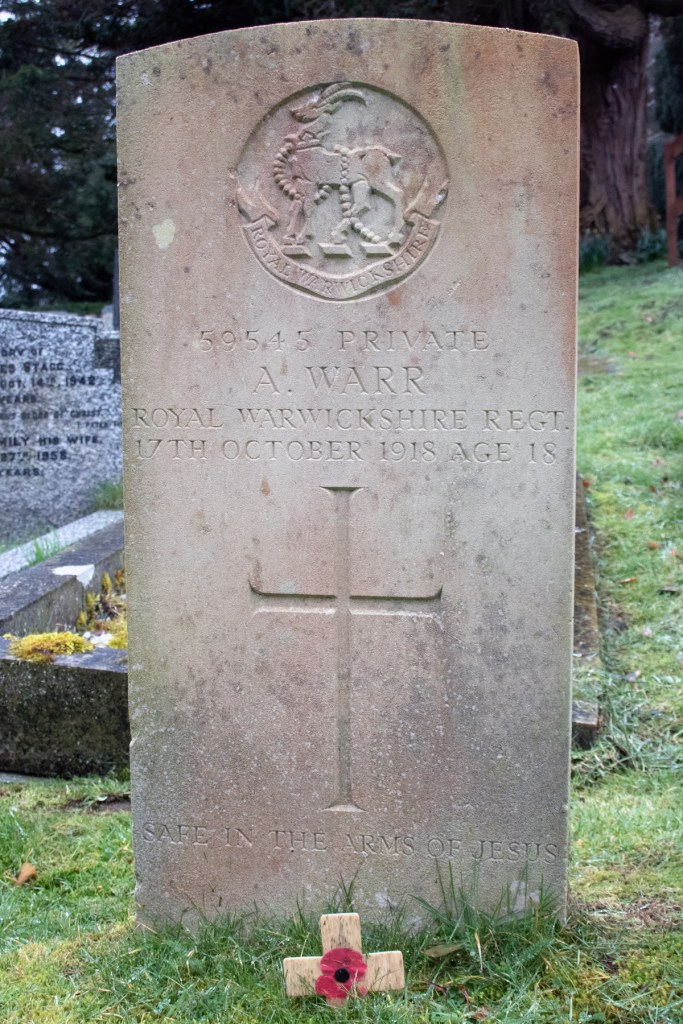
Albert Warr was born in Chaffcombe, near Chard, Somerset, in the spring of 1900. He was the middle of three children to William and Edith. Edith, who was also known as Sophie or Sophia, was nine years older than her husband, and had been married previously. When her first husband passed away, she was left with three children under ten years old – half-siblings to Albert – and so married William to provide them and her a home.
William was an agricultural labourer, but by the time of the 1911 census, the family had moved east to Crewkerne, where both he and Edith took up work in a laundry. The household was complemented by the two older of Edith’s children – Edith, who helped with the laundry work, and Samuel, who was a fishmonger.
Little information is available for Albert’s military service, so his time in the army is a challenge to piece together. He enlisted no earlier than April 1918, and was assigned to the 5th Battalion of the Royal Warwickshire Regiment. Private Warr’s troop fought in France and Italy, although it is unlikely that he saw any action overseas.
All that can be confirmed is that he was admitted to the 1st Northern General Hospital in Newcastle-upon-Tyne, although his condition is unknown. Private Warr passed away on 17th October 1918, aged just 18 years old.
The body of Albert Warr was brought back to Somerset for burial. He was laid to rest in the Townsend Cemetery, within walking distance of the family home in Crewkerne.
Private Warr’s pension ledger notes that Edith had passed away, and that the beneficiary was to be William instead. As this document is not dated, it is not possible to determine when Albert’s mother died, but it is likely to have been between 1917 and 1919.
William John Lydston Poulett was born on 11th September 1883, in Belsize Park, London. The oldest child to William Poulett, 6th Earl Poulett, and his third wife, Rosa, William Jr was known by the title Viscount Hinton.
When William’s father died in January 1899, a battle ensued for the title of the 7th Earl Poulett. The 6th Earl had married his first wife, Elizabeth, in 1849, separating from her within a couple of months, when he learnt that she was pregnant. The alleged father was Captain William Turnour Granville, and when the 6th Earl died, Elizabeth’s son, another William Poulett, claimed the right to take the title. In July 1903, the judge decreed that William and Rosa’s son held the valid claim, and William John Lydston Poulett succeeded him, becoming the 7th Earl. At this point, he was living in Ayston, Rutland, expanding his education and boarding with a Clerk in Holy Orders.
In 1908, William married Sylvia Storey. She was the daughter of actor and dancer Fred Storey, and was herself an actress and Gaiety girl. Given Earl Poulett’s status, it seems this might not have been the most appropriate of matches, as a contemporary newspaper reported:
Another marriage alliance of the stage with the aristocracy, and one of the most remarkable of them all, was brought about yesterday by a quiet ceremony at St James’ Church, Piccadilly, uniting Earl Poulett and Miss Sylvia Lilian Storey, the well-known comedienne.
Besides contracting parties, there were only one or two persons present, including the family solicitor and Lady Violet Wingfield, sister of the bridegroom [who was also a Gaiety girl]. There were no bridesmaids.
Before the ceremony, some consternation was caused by an untoward event. The wedding ring was dropped, and there were some perturbing moments while a scrambling hunt was made for it on the floor. Finally it was discovered and pounced upon by the verger.
The time and place of the ceremony had been kept quite a secret, and the bride and bridegroom were on their way from London before the news of their marriage became known. The sudden announcement which was then made greatly enhanced the romance of the affair.
The Earl is just twenty-five years of age, and the new Countess is eighteen…
Shields Daily News: Thursday 3rd September 1908
The secret nuptials couple went on to have two children – George and Bridget – and, by the time of the 1911 census, the family were living in some luxury at Hinton House in Hinton St George, Somerset.
William had also had a distinguished military career by this point. In 1903 he received a commission as Second Lieutenant in the 4th Battalion of the Royal Welch Fusiliers, before being transferred to the 4th Highland Light Infantry.
On 26th February 1913, he was recommissioned, as a Second Lieutenant in the Warwickshire Royal Horse Artillery and, when war broke out, he was sent to France. By November 1915, he had been promoted to Captain, but after three years on the Western Front, his health was beginning to suffer.
Captain Poulett was transferred back to Britain, and assigned to the Royal Warwickshire Regiment. By 1918, he was serving as part of the Anti-Aircraft Corps in Middlesbrough, when he contracted pneumonia. This was to take his life, and he breathed his last on 11th July 1918, at the age of just 34 years old.
William John Lydston Poulett, 7th Earl Poulett, was brought back to Somerset for burial. He was laid to rest in the graveyard of St George’s Church in Hinton St George.
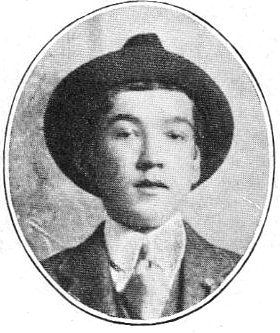
Captain William Poulett (from ancestry.co.uk)
William’s death meant that his nine-year-old son, George, inherited his title and his £187,200 estate (worth £8.2m today). The 8th Earl served during the Second World War, working as an engineer at Woolwich Arsenal and becoming an Associate of the Institute of Railway Signal Engineers and the Institute of British Engineers.
George married three times: he divorced his first wife, Oriel, in 1941; outlived his second wife, Olga, who died in 1961; and was survived by his third wife, Margaret, when he passed away in 1973. When he died, with no children, all of his titles became extinct.
William Edgar Saunders was born in the summer of 1900 in Limington, Somerset. He was one of nine children to labourer and drainage contractor William Saunders and his wife, Rhoda.
There is little further information documented about William Jr’s life. During the First World War, he enlisted in the Royal Warwickshire Regiment, and was assigned to the 5th Battalion which served in France and Italy. All that can be confirmed, however is that he joined after March 1918 – presumably once he came of age – and was sent to the North of England for training.
Tragically, Private Saunders’ tale is a common one for young men of his age. Billeted at close quarters with other men from across the country, disease was rife, and he was not immune. William was admitted to the 1st Northern General Hospital in Newcastle-upon-Tyne, suffering from a combination of influenza and pneumonia.
This combination of conditions was to prove too much for young Private Saunders’ body to bear. He passed away on 25th October 1918, aged just 18 years old.
William Edgar Saunders’ body was brought back to Somerset for burial. He was laid to rest in the graveyard of St Mary’s Church in his home village of Limington.
Cyril Robert Pratt was born on 31st October 1899 in the Somerset village of Halse. The younger of two children, his parents were local baker Robert Pratt and his wife, Elizabeth.
Little information about Cyril’s early life remains. He enlisted in the army not long after his eighteenth birthday, joining the Royal Warwickshire Regiment as a Private in November 1917. He was sent to Salisbury Plain for training, and was barracked in Larkhill, just north of Stonehenge.
Sadly, this seems to have been Private Pratt’s undoing. As with numerous other soldiers at the time, being billeted in cramped quarters with other men from across the country meant that disease was quick to spread. During his first winter at the camp, Cyril contracted pneumonia, and was admitted to the local Fargo Hospital. The lung condition was to get the better of him, and he passed away on 28th February 1918, at the age of just 18 years old.
Cyril Robert Pratt was brought back to Somerset for burial. He was laid to rest in the graveyard of St James’ Church in his home village, Halse.
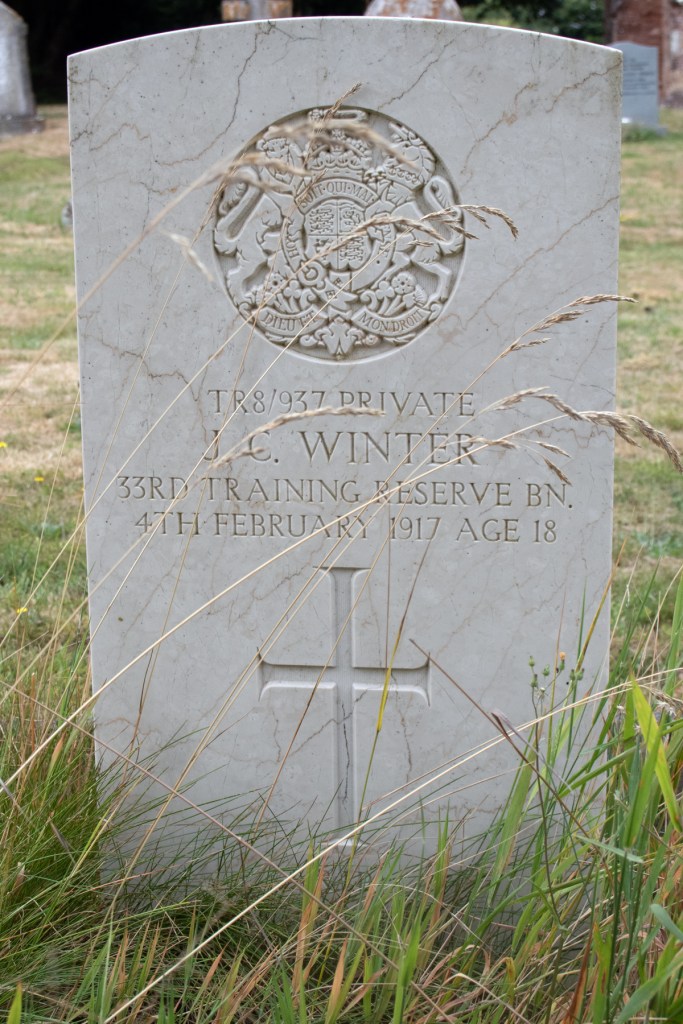
John Charles Winter was born in the summer of 1898, the younger of two children to James and Henrietta Winter. James was an agricultural labourer and carter from the village of Oake in Somerset. Henrietta had been born in Ontario in the USA, and was the daughter of English immigrants.
Little is documented about John’s early life. The 1911 census shows him living with his parents and his mother’s widowed brother, an army pensioner. At 12 years old, John was still at school.
War was coming to Europe by this point, and, as soon as he was able to (and probably encouraged by his uncle), John enlisted. He joined the 33rd Training Reserve Battalion, which was connected to the Warwickshire Regiment, at some point after August 1916.
Again, the details of his military service are scarce, but it seems that he soon fell ill, presumably from one of the medical conditions that tend to run rife in barracks crowded with men from across the country. The illness was to get the better of him and, on 4th February 1917, Private Winter passed away. He was just 18 years of age.
John Charles Winter was laid to rest in the graveyard of St Bartholomew’s Church in his home village of Oake.
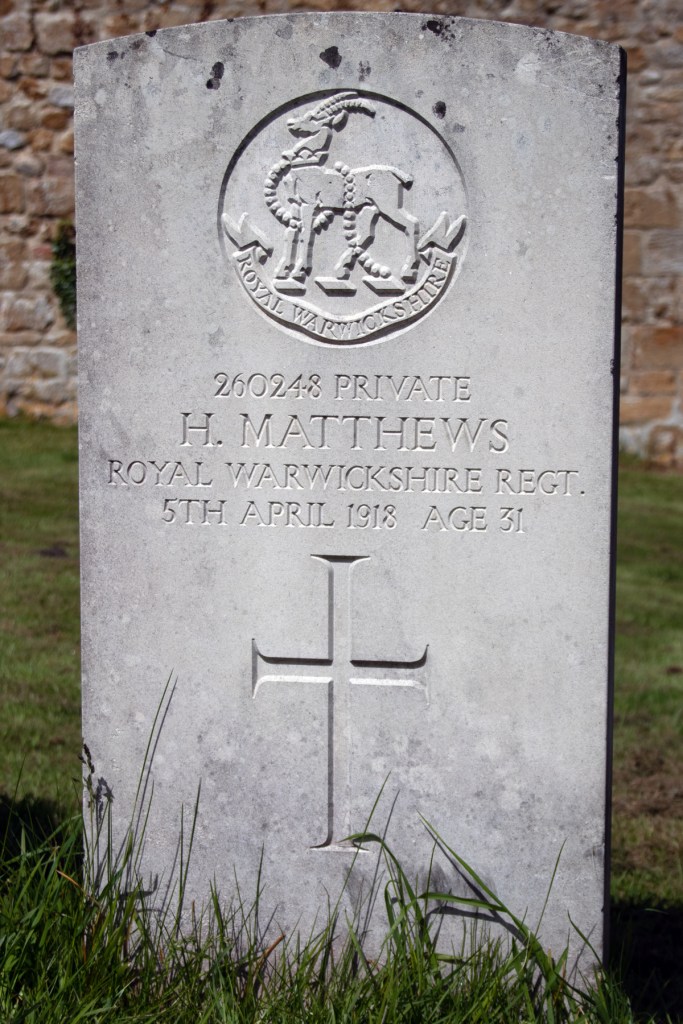
Herbert George Matthews was born in the autumn of 1886 in the Somerset village of Chillington. He was the oldest of two children to George and Elizabeth (known as Rosa) Matthews, and was baptised in the village church on Christmas Day that year.
George was a farm labourer, and this is work into which Herbert also followed. Rosa passed away in December 1910, leaving George a widow after 26 years of marriage.
War came to Europe in 1914, and Herbert signed up to play his part for King and Country. Full details of his service are not available, but he initially enlisted in the Somerset Light Infantry. He soon transferred across to the Royal Warwickshire Regiment (although the date of this is unclear) and was assigned to the 2nd/6th Battalion.
Private Matthews’ troop spent the war on the Western Front, and was involved at Fromelles, Ancre, Ypres and Cambrai. In the spring of 1918, he was caught up in the Battle of St Quentin – part of that year’s battles on the Somme. He was wounded, and medically evacuated to England, where he was admitted to the University War Hospital in Southampton.
Sadly, Private Matthews’ wounds proved too severe; he passed away from his injuries on 5th April 1918, at the age of 31 years old.
Herbert George Matthews was laid to rest in Chillington Cemetery, not far from where his mother was buried, and within walking distance of where his father still lived.
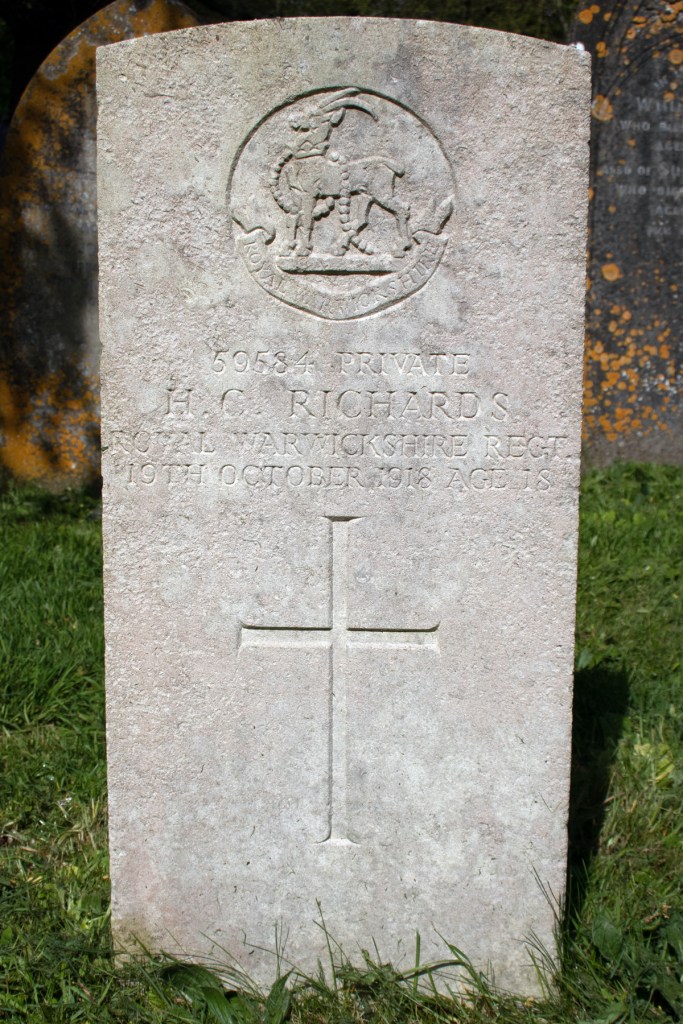
Howard Charles Richards was born in the summer of 1900, the youngest of seven children to George and Henrietta Richards. George was a sewing machine salesman from Combe St Nicholas in Somerset, and this was where the family were raised.
Howard was too young to join up when war was declared, but it seems to have been important to him. He enlisted in the 5th Battalion of the Royal Warwickshire Regiment soon after his eighteenth birthday and was sent for training.
Tragically, Private Richards’ time in the army was to be a short one. The next record for him confirms that he was admitted to the 1st Northern General Hospital in Newcastle-upon-Tyne, and that he passed away on 19th October 1918. The cause of his passing is not recorded, but he was just 18 years of age.
Howard Charles Richards’ body was brought back to Somerset for burial. He lies at rest in the graveyard of St Nicholas’ Church in his home town.
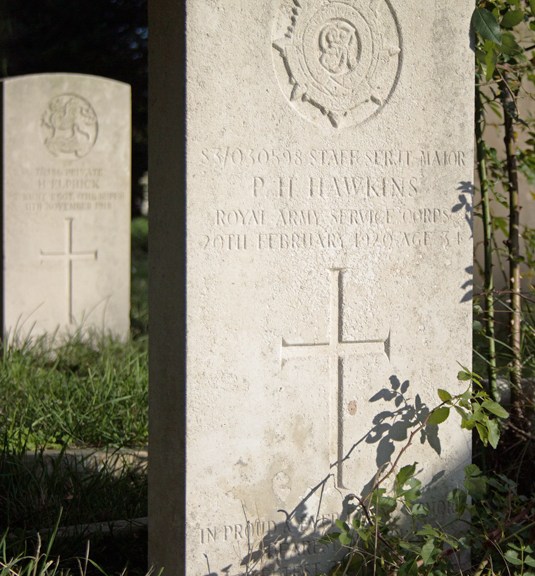
Percy Harry Hawkins was born in Waltham Green, London, in 1886. One of five children, all boys, his parents were Frederick and Elizabeth Hawkins. Frederick initially worked as a brewer’s collector – collecting rent from tenant pub managers on behalf of the brewery – before working as a tobacconist.
In July 1908, Percy married Gladys Parnell. Sadly, tragedy was to strike and, over the next couple of years both Elizabeth and Frederick passed away in 1909 and 1910 respectively.
By the time of the following year’s census, Percy and Gladys were boarding with a dispensing doctor (or GP), and his wife. Percy listed his occupation as a ‘traveller’, was probably employed as some kind of salesman.
Tragedy was to strike Percy again. Months after the couple had their first child in July 1911, Gladys also passed away, leaving him as a widower and single parent at just 26 years old.
From his later military documentation, it seems that Percy married again in August 1915, this time to a woman called Mildred, and, by September 1919, he had gone on to have three children in total; one boy and two girls.
When war broke out, Percy was quick to enlist. He joined up in Birmingham on 10th August 1914, and gave his profession as a commercial traveller. His records show that he was 28 years and 120 days old, stood 5ft 6ins (1.69m) tall and weighed 131lbs (59.5kg).
After initially joining the Royal Warwickshire Regiment, Private Hawkins was transferred to the Royal Army Service Corps, and was assigned to one of the supply companies.
Over the four years of the war, Percy served on home soil, and was promoted a number of times, rising from Private to Lance Corporal, Staff Sergeant to Quartermaster Staff Sergeant. In September 1917, he was again promoted, this time to Staff Sergeant Major, a position he held for the remainder of the conflict, and on into 1919, when he volunteered for an extra year’s service, rather than being demobbed.
In February 1920, Staff Serjeant Major Hawkins fell ill; he was admitted to the military hospital that had been set up in Brighton Pavilion, Sussex. The diagnosis was heart failure, and, sadly, it was to this that he was to succumb. He passed away on 20th February 1920, aged just 34 years old.
Percy’s family was, by this time, living down the coast in Worthing; his body was brought there for burial and he lies at rest in the Broadwater Cemetery in the town.








 Death and Service