Charles Davey was born in Nether Stowey, Somerset, in the autumn of 1893. The second of six children, his parents were publican-turned-labourer Charles Davey and his wife, Mercy. The 1911 census found the family living in a four-roomed house, with Charles Sr and Jr and the younger Davey son, Walter, all employed in farm work.
When war came to Europe, Charles was called upon to play his part for King and Country. Sadly his service records have been lost to time, but it is clear that, by September 1915, he had enlisted in the West Somerset Yeomanry. Attached to the 3rd/1st Battalion, Private Davey would have been employed on home service. He was billeted at the Aliwal Barracks at Tidworth, Wiltshire.
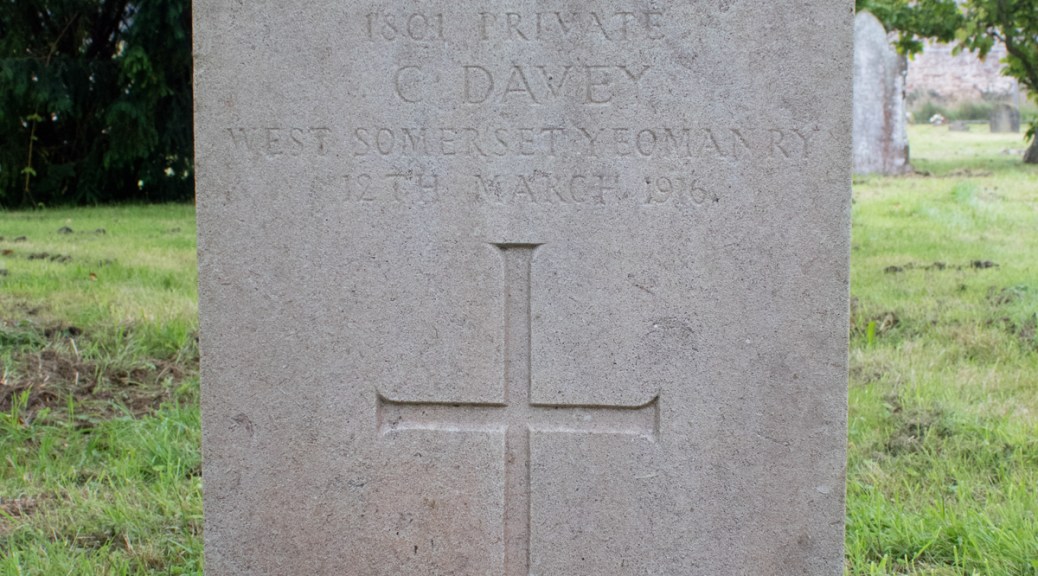
The only other record relating to Private Davey is his entry in the Army Register of Soldiers’ Effects. This confirms that he passed away in Taunton, on 12th March 1916. The cause of his death is not recorded, but he just was 22 years of age.
The body of Charles Davey was taken back to Somerset for burial. He was laid to rest in the peaceful graveyard of St Mary’s Church in Nether Stowey.
Richard William Gale was born in the autumn of 1897 in the Devon village of Sidbury. The third of six children, he was the son of George and Emma Gale. George was a bricklayer and labourer, and the family had moved to Burnham-on-Sea, Somerset, by the time Richard was ten, as this is where he had found work.
When Richard finished his schooling, he found employment as an errand boy for a school outfitters. By the time oft he 1911 census, there were four wages coming into the Gale household. Besides Richard and his father, his older brother, Frederick was working as a grocer’s apprentice, and his sister, Laura, was a dressmaker.
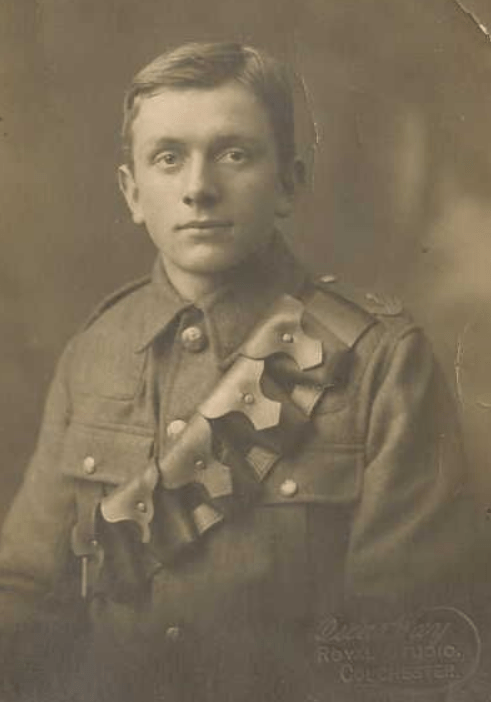
War was declared in the summer of 1914, and Richard was called upon to play his part. His service records no longer exist, so it is not possible to fully track his time in the army. However, he initially joined the 2nd/1st Battalion of the West Somerset Yeomanry and was sent for training in East Anglia.
As some point, Private Gale transferred to the Labour Corps, and became attached to the 949th Employment Company. Based in the London area, Richard’s duties are unclear, and his troop would have taken on any of a wide range of roles, from cooking and store work, to salvage, traffic control and telephone operating. Whether his previous work at the outfitters came into play is unclear, although Employment Companies were also involved in tailoring, shoemaking and laundry work.
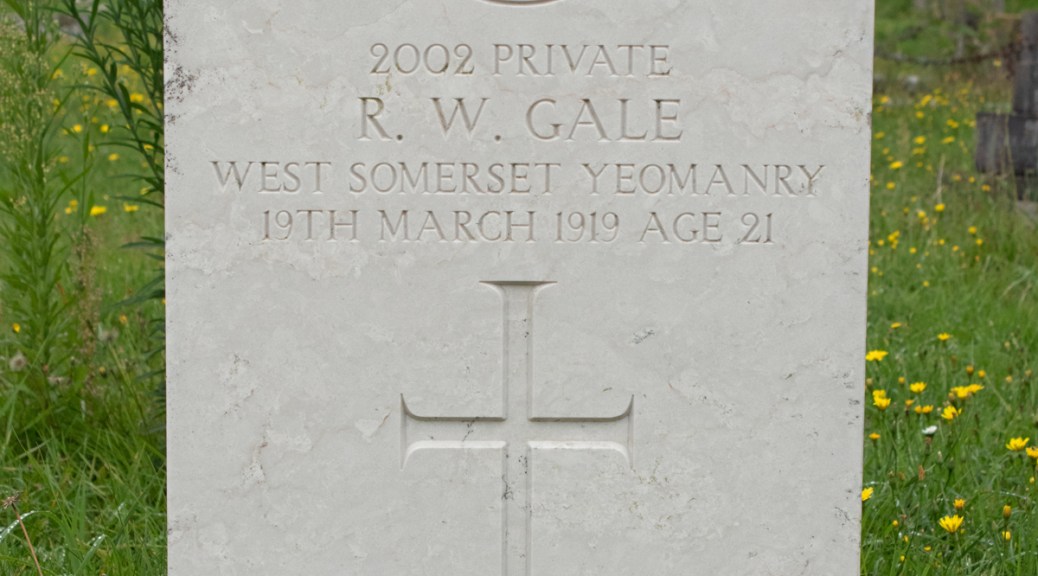
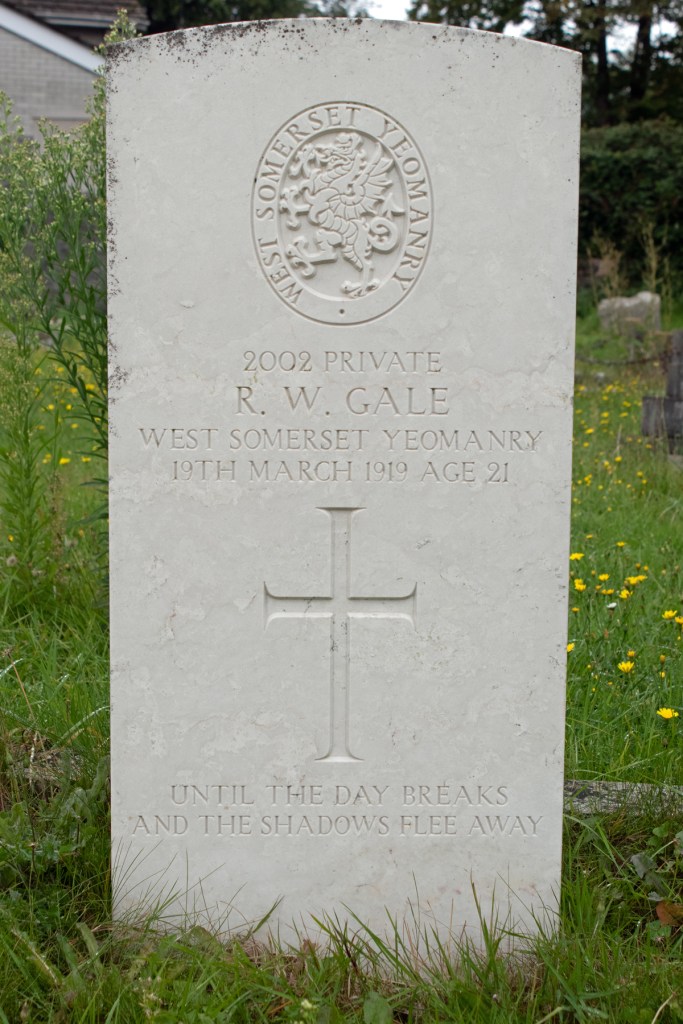
Private Gale survived the conflict, and seems to have been based in the the Nottingham area after the Armistice. By March 1919, he had become unwell and, having contracted pleurisy, he was admitted to the Berridge Road Military Hospital. The condition took its toll on Richard, sadly, and he passed away on 19th March 1919. He was just 21 years of age.
Richard William Gale’s body was taken back to Somerset for burial. He was laid to rest in the cemetery of Burnham-on-Sea, a short walk from where his family lived.
Albert Daymond was born on 7th June 1893, in Porlock, Somerset. The youngest of seven children, his parents were Devon-born Albert and Maria, who was also born in Porlock. Albert Sr was a wall mason, and, by the time of the 1901 census, his work had moved the family to the sleepy village of Luccombe.
When he finished his schooling at the village’s Church of England School on 20th December 1908, Albert found employment in a bakery. This was the employment he would continue in until, in the summer of 1914, war broke out across Europe.
Albert enlisted on 9th October 1914, joining the West Somerset Yeomanry as a Private. Little information about his military service is available, although the Commonwealth War Grave Commission records note that he was known by the surnames of Daymond and Daiman.
Tragically, Private Daymond’s time in the army was not to be a long one. He passed away while in a camp in Minehead, Somerset, on 10th December 1914. The cause of his passing is not known, but he was just 21 years of age.
Albert Daymond was brought back to Luccombe for burial. He was laid to rest in the village’s St Mary’s Churchyard.
Albert’s older brother, Alfred, also served in the First World War. Read his story here.
Gilbert Henry Hurford was born in the spring of 1896, the second of five children to George and Elizabeth. George was a farmer from North Petherton, Somerset, but it was on Parsonage Farm, in nearby Kingston St Mary, that the family were raised.
Gilbert was helping his father on the farm when war broke out. At the time he was also a volunteer in the West Somerset Yeomanry, and in May 1916, he stepped up to play a full part in the conflict. His service records confirm that he was assigned to the 22nd (Service) Battalion of the Middlesex Regiment.
Private Hurford spent the first six months of his service on home soil, before being shipped off to Europe on 1st December 1916. He had not been in France for long when, on 10th February 1917, he was injured. His documents confirm this was a gun shot wound to his head, but, as he was treated on site, it thankfully appears not to have been too serious an injury.
Trouble struck a second time, however, on 4th September 1918, when Gilbert was injured again. This time his records confirm multiple gun shot wounds, and he was medically evacuated home for treatment. He was admitted to the 3rd Southern General Hospital in Oxford, and remained there for some three months.
This time, Private Hurford’s injuries proved too severe for his body to overcome. He passed away on 29th December 1918, at the age of just 22 years old.
Gilbert Henry Hurford’s body was brought back to Somerset for burial. He was laid to rest in the peaceful churchyard of St Mary’s Church, in his home village of Kingston St Mary.
Cecil St John Harris was the son of Reverend Percy and Constance Harris. Born in Kilver, Staffordshire, on 13th July 1891, he was one of nine children, although, by the time of the 1911 census, four of them had passed away. The Harris family had, by this point, moved from Staffordshire, to Devon, to Cornwall, and had settled in Staplegrove, Somerset, where Percy had become the rector at St John’s Church.
According to the census record, Cecil was studying engineering. He was keen at sports, being a keen member of the village’s cricket club. When war broke out, he enlisted in the West Somerset Yeomanry, but soon took a commission as a Second Lieutenant in the Somerset Light Infantry.
Cecil’s troop, the 3rd/5th Battalion remained on home soil, and he was based in Somerset for the duration of his time in the army. This was not to be for a long time, however, as, in the summer of 1915, he fell ill with appendicitis. He underwent an operation, and made a slow recovery, before relapsing. He passed away on 10th September 1915, aged just 24 years old.
Cecil St John Harris was laid to rest in the north east corner of St John’s Churchyard, Staplegrove, where his father was still the vicar. His grave is now lost to time, but Second Lieutenant Harris is commemorated on a special memorial, close to the entrance of the building.
Ernest Rowsell was born in the spring of 1894, in the Somerset town of South Petherton. One of nine children, his parents were John and Bessie Rowsell. Builder and wheelwright John had been married before Bessie, and Ernest had five half-siblings as well.
When Ernest left school, he found work with a blacksmith – presumably, a connection made through his father. In his spare time, he joined the West Somerset Yeomanry, building on his skills and training.
War came to Europe in 1914, and it was a natural progression for Ernest to play his part, He formally joined the regiment he had previously trained with, enlisting on 24th September 1914. Given the rank of Farrier, Ernest was sent to a camp in Minehead for training.
His service records show that he was 5ft 3ins (1.6m) tall, had good vision and was of good physical development. Something came up during the medical examination, however, which was held on 1st February 1915. Farrier Rowsell was deemed medically unfit for army service and discharged.
Ernest returned home, but, whatever the condition was, it was to swiftly get the better of him. He passed away at home on 13th February 1915, at the age of just 21 years old.
Ernest Rowsell was laid to rest in South Petherton Cemetery, a short walk from where his parents lived.
David Percy was born in 1896, one of ten children to Elizabeth Percy. By the time of the 1901 census – the first one on which David appeared – Elizabeth was widowed, so there is no record of who his or his siblings’ father was.
Elizabeth, working to make ends meet, found employment as a cook at Taunton Boys’ School, in her home town. The 1911 census shows her two youngest sons – David and his older brother Douglas – were living with her, as was a lodger, Owen Howe. David, by this time, had left school and found work as a labourer, while Douglas was employed as a carter.
David soon found a new job as a printer for Hammett & Co. in the town, but war was beckoning across the Channel. In October 1914 he enlisted, joining the West Somerset Yeomanry as a Private and was sent to Minehead for training.
The local newspaper picked up his story:
He there caught a chill and was in hospital for some time. At Easter [1915] he was removed to the Taunton Hospital, and subsequently sent home.
Taunton Courier and Western Advertiser: 26th May 1915
Sadly, after Private Percy’s discharge home, he passed away from his ‘chill’, breathing his last on 15th May 1915. He was just 19 years old.
David Percy was buried in St James’ Cemetery in his home town of Taunton.
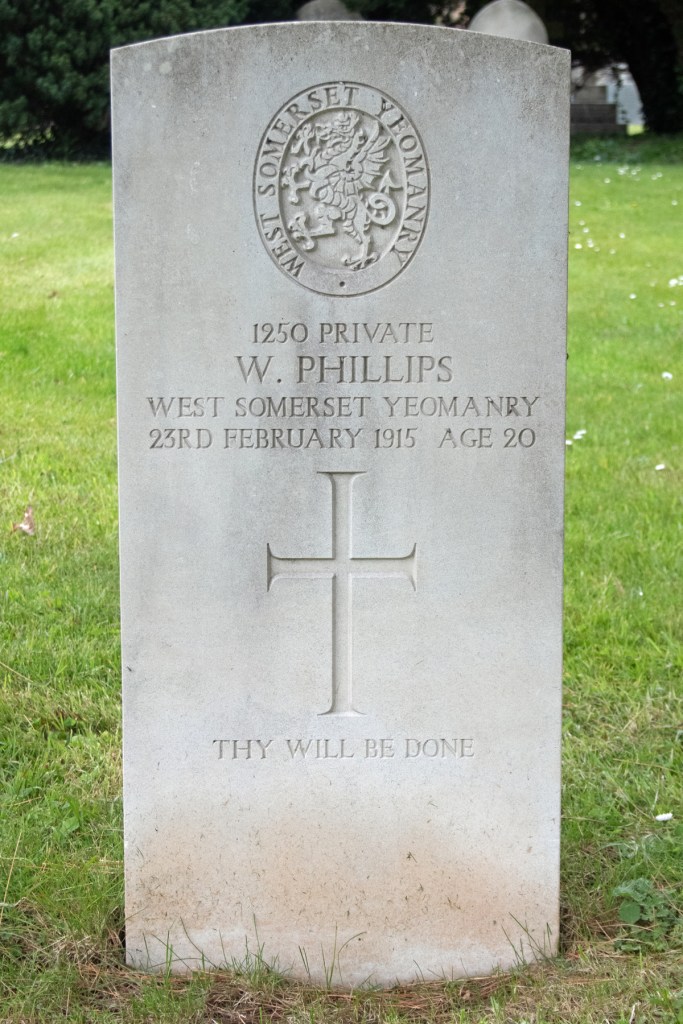
William Phillips was born in 1895, the youngest of seven children to Frank and Emily Phillips. Frank was a joiner and carpenter and, while his young family initially grew up in his home village of Thurloxton, Somerset, he and Emily soon moved them to nearby Taunton, where there would be more work and more opportunities.
By the time of the 1911 census, the young family were all tied up with different jobs. While William had become an office boy for an accountant when he left school, his siblings all had varying different roles: one was a boiler cleaner, another a mason, a third a cellarman and the fourth a shop assistant. With Frank’s own work, this meant that there were five wages coming into the home, albeit on a much smaller scale that we are used to these days.
War was coming, however, and, at the beginning of 1915, William enlisted in the West Somerset Yeomanry. Little information remains of his military service, but it is known that Private Phillips’ experience as a clerk was made use of, and he worked in admin at the reserve depot in Minehead.
William had, by this time, got himself a lady friend, who worked at the hospital in Taunton, and, while they did not see each other a lot, they corresponded regularly.
His new-found freedom from the family home seemed to have led to William being a bit freer with his money than his parents would like, and it appears that he may have run up a few debts He reassured his mother that he did not want to worry them with any business that he had. However, financial matters may well have played on his mind more than he would have liked to admit.
On Saturday 20th February 1915, Private Phillips travelled to Taunton to see his girlfriend; she was working, but he caught up with his sister instead, before returning to the base in Minehead that evening.
The following Tuesday morning, he received a letter from his girl and was last seen heading to breakfast in the hotel digs where he was billeted.
That afternoon, a local engineer was walking along the seafront, when he saw a body lying on the foreshore, about four feet (1.21m) from the high-water mark. The body – which was later identified as William – was wearing some clothing, but other bits were scattered around him. The police were called and Private Phillips’ body was taken to nearby Dunster.
The coroner confirmed William had drowned; the letter he had received was amongst his clothing, but there was nothing in it to suggest that anything was amiss. At the inquest, he suggested that “he could hardly suppose at this time of year that the deceased had taken off his clothing in order to bathe. [His conclusion was that William] got into the water with intent to drown himself.” [Taunton Courier and Western Advertiser: Wednesday 3rd March 1915]
The jury at the inquest returned the verdict of ‘found drowned’. Private Phillips was just 20 years old.
William’s body was brought back to Taunton for burial. He lies at rest in the St James Cemetery there.
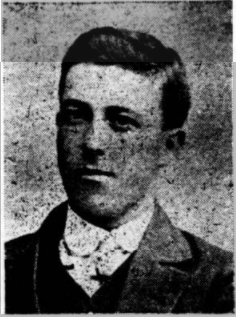
William Phillips (from britishnewspaperarchives.com)
Albert Rudolph Percy was born in April 1889 in Taunton, Somerset. His parents were William Percy, a draper, and his wife, Elise, who had been born in Baden Baden, Germany. Elise’s background certainly influenced the naming of the couple’s five children, all sons with middle names ranging from Rudolph and Frederick, to Leopold and Felix.
All but the eldest of William and Elise’s children followed their father into the drapery business; after initially doing so when he left school, Albert’s older brother Frederick took holy orders, a following he continued for the rest of his days.
On the outbreak of war 1914, Albert volunteered for military service, leaving his father’s business behind him. Enlisting in the West Somerset Yeomanry, he was shipped off to to Colchester in Essex for training.
While taking two days’ leave in September that year, Private Percy returned home, and, on the first evening complained of feeling unwell. A doctor was summoned and diagnosed spinal meningitis. Albert was swift to succumb to the illness, passing away on 4th October 1914. He was just 25 years old and likely one of the first from Taunton to die whilst on active service.
Albert Rudolph Percy lies at rest in St Mary’s Cemetery in his home town of Taunton, Somerset.
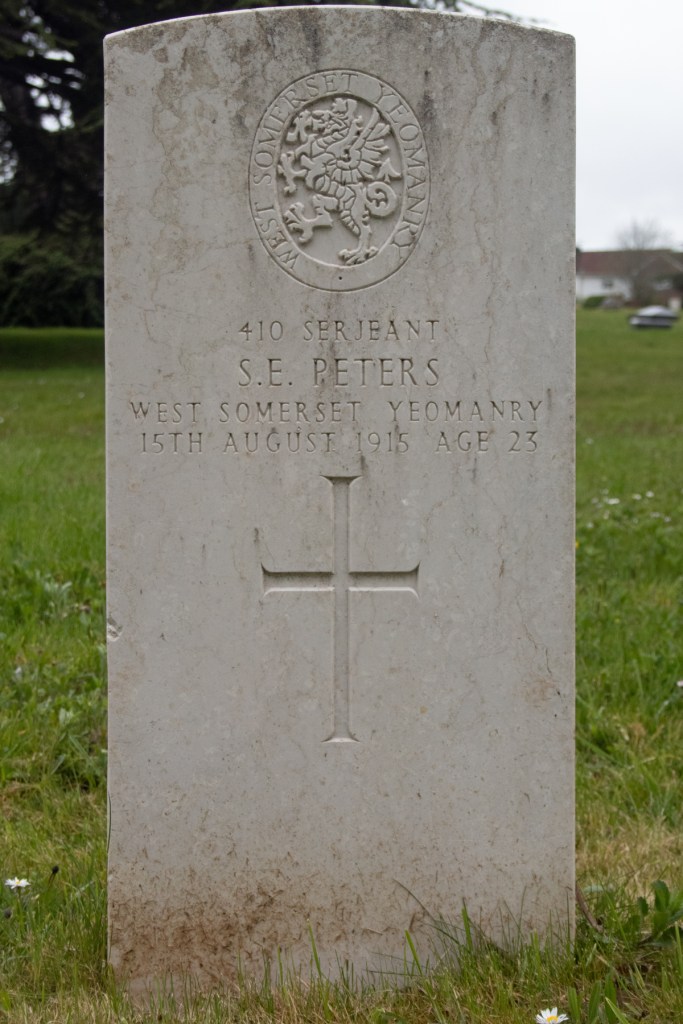
Sydney Edward Peters was born at the end of 1891, the only child to farmers Edward and Annie Peters. The family lived in Bishop’s Hull, near Taunton, where Edward also employed two members of staff to help with the household and his dairy herd.
Sydney went on to manage the neighbouring farm to his father, and looked to be making a living with this. Keen on sport, he went on to captain the village cricket team, and took an interest in physical fitness.
War broke out and Sydney was quick to enlist. Joining the West Somerset Yeomanry, he was assigned to the 1st Battalion. Initially the regiment were based on home turf, and he spent a lot of that time in East Anglia. He must have made a positive commitment to the troop, and was soon promoted to Serjeant.
In the early summer of 1915, he returned to Taunton, to help drill recruits at the Territorial Depot there. A short while after returning to his Essex he fell ill, and before the battalion were due to be shipped overseas, Serjeant Peters went back to Somerset on leave.
By the time he reached home, however, he was severely ill, and very quickly died from what turned out to be blood poisoning. Serjeant Peters was just 23 years old.
Sydney Edward Peters was buried in St Mary’s Cemetery in his home town of Taunton.







 Death and Service